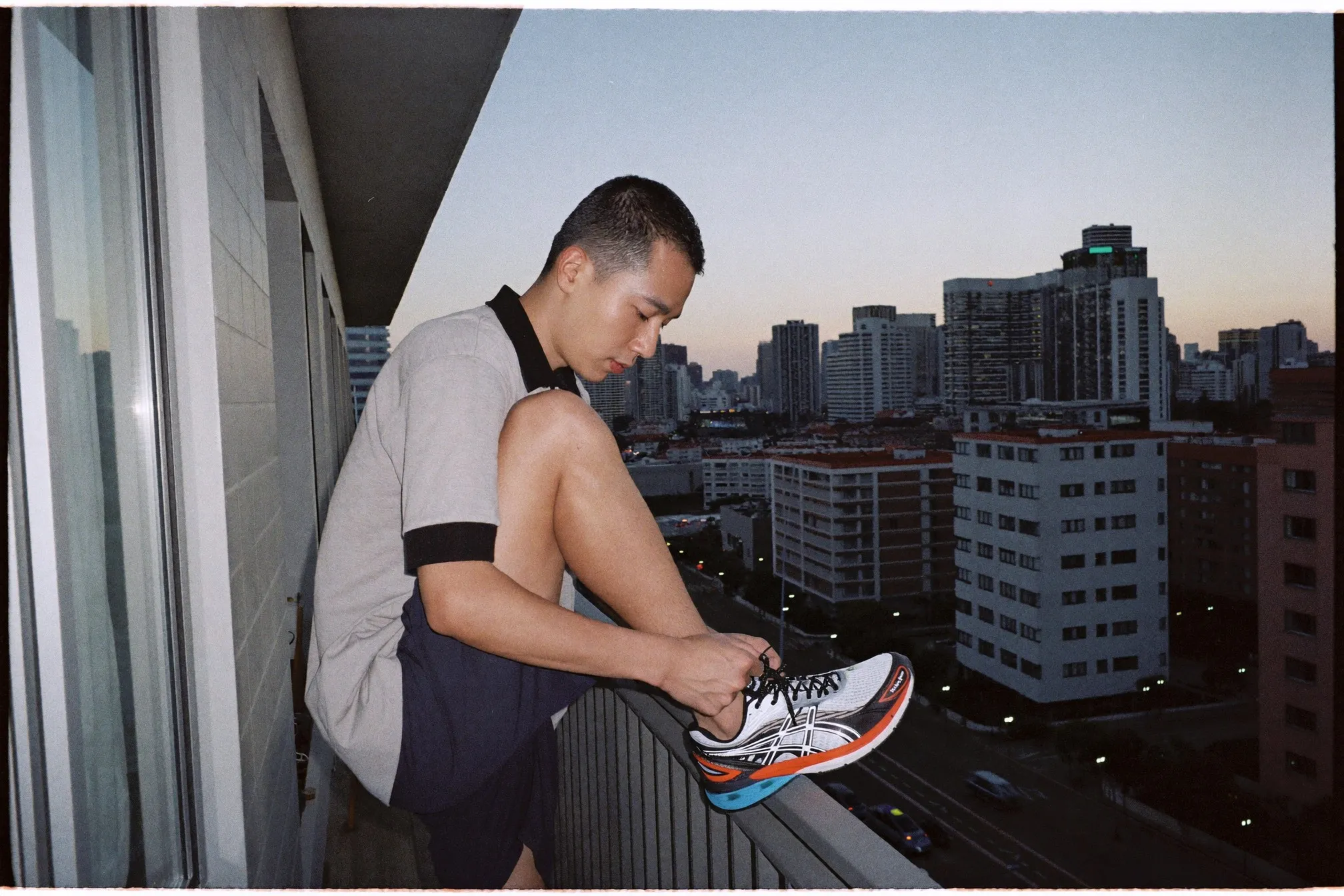
Becoming that guy, the one who walks in put-together, talks like he reads, and seems to have his life quietly handled, is a stack of boring habits executed in the right order for about 90 days. There is no secret. There is a sequence, and the sequence matters, because each habit funds the next one.
This is the whole program: body, face, wardrobe, mind, money and a craft. Everything links to a deeper guide on this site when you’re ready to go further. Bookmark this page, start at phase one, and resist the urge to do everything in week one, which is how every January transformation dies by February.
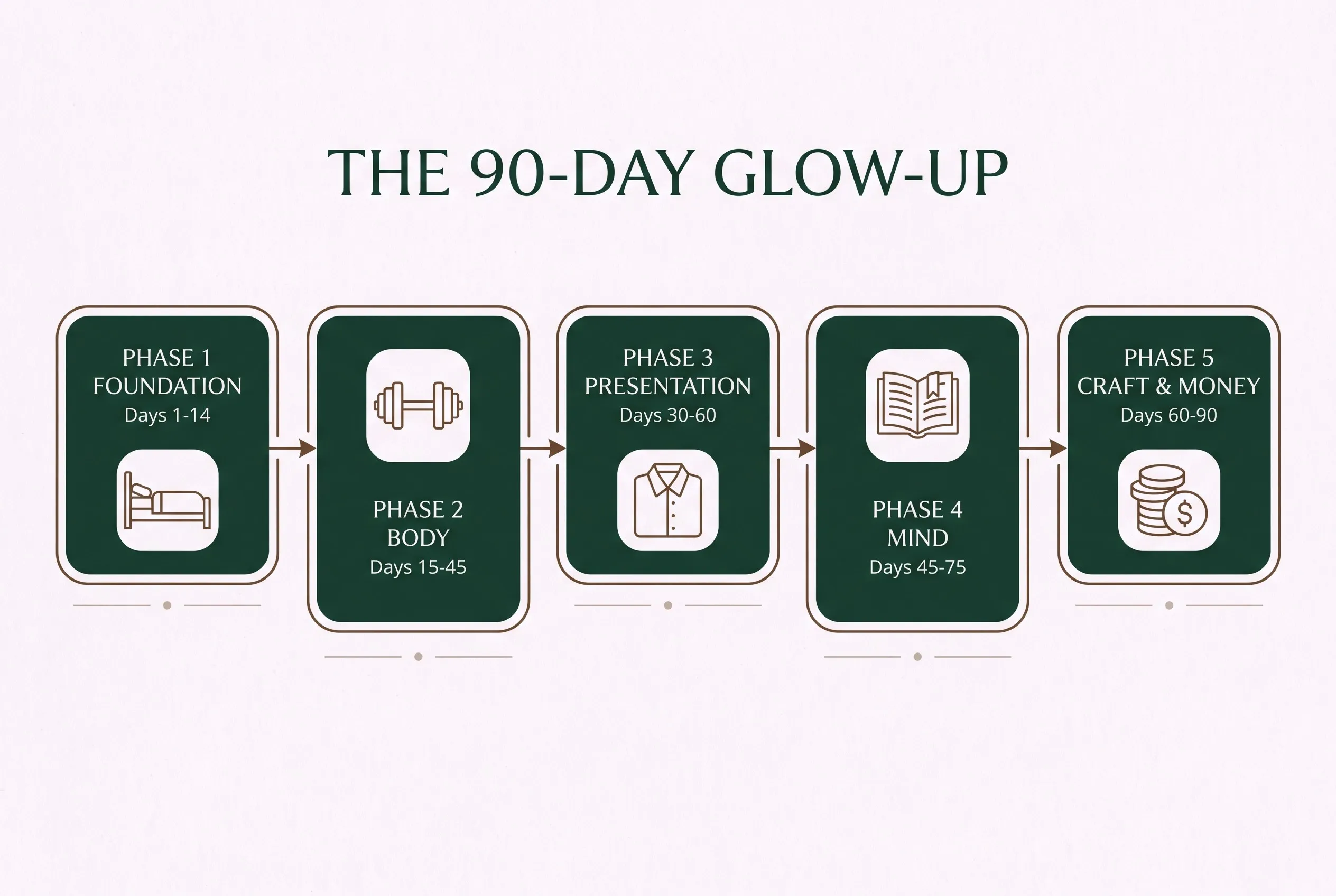
The 90-day map
| Phase | Days | Focus | The win |
|---|---|---|---|
| 1. Foundation | 1–14 | Sleep, haircut, skincare, deodorant | Look fresher in two weeks |
| 2. Body | 15–45 | Gym 3×/week, protein, walking | Clothes start fitting differently |
| 3. Presentation | 30–60 | Wardrobe reset, fragrance, posture | People start commenting |
| 4. Mind | 45–75 | Reading habit, phone discipline | Better conversations, calmer head |
| 5. Craft & money | 60–90 | One skill or side project, automated savings | Something to talk about, something growing |
The phases overlap on purpose. You are stacking, not switching.
Phase 1: Why do you start with sleep and a haircut?
Because one multiplies everything and the other pays off same-day. Seven hours of sleep is the difference between a gym session that builds and one you survive, between skin that cooperates and skin that rebels, between reading a chapter and rereading a paragraph four times. Fix the sleep window first: same wake time daily, phone charging outside arm’s reach, aircon timer set.
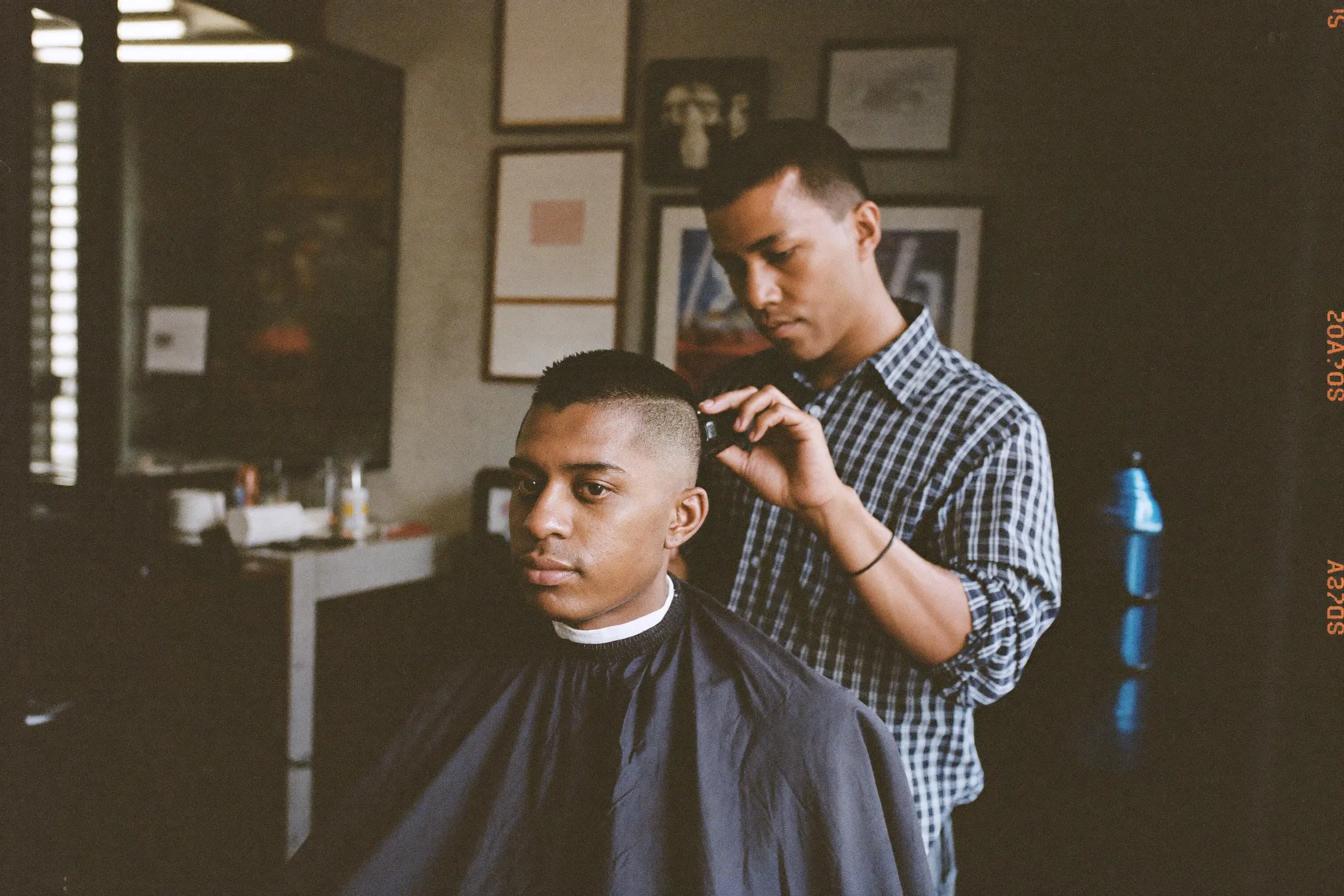
The haircut is the single largest appearance upgrade per ringgit in existence. Go to a proper barber, not the RM15 express chair, and if you don’t know what to ask for, our fade guide and haircut dictionary turn you into a client barbers enjoy. Book the next one before you leave; that guy is never overgrown, because his next cut is already scheduled.
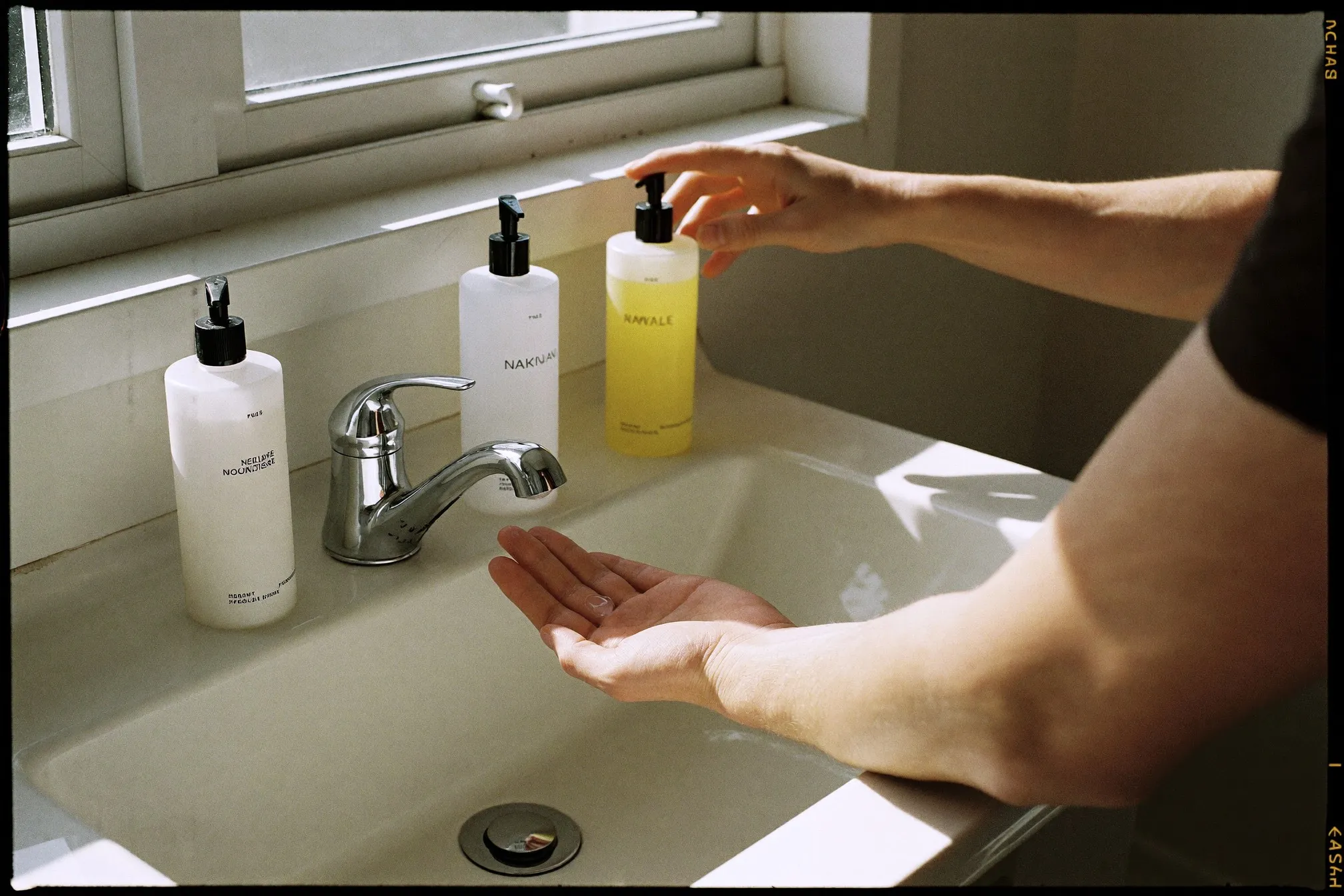
Then the two-minute layers: a three-step skincare routine (cleanser, moisturiser, sunscreen), and sorting your deodorant situation honestly. Total time cost per day: under five minutes. Total effect by day fourteen: visible.
Phase 2: What does the gym actually change?
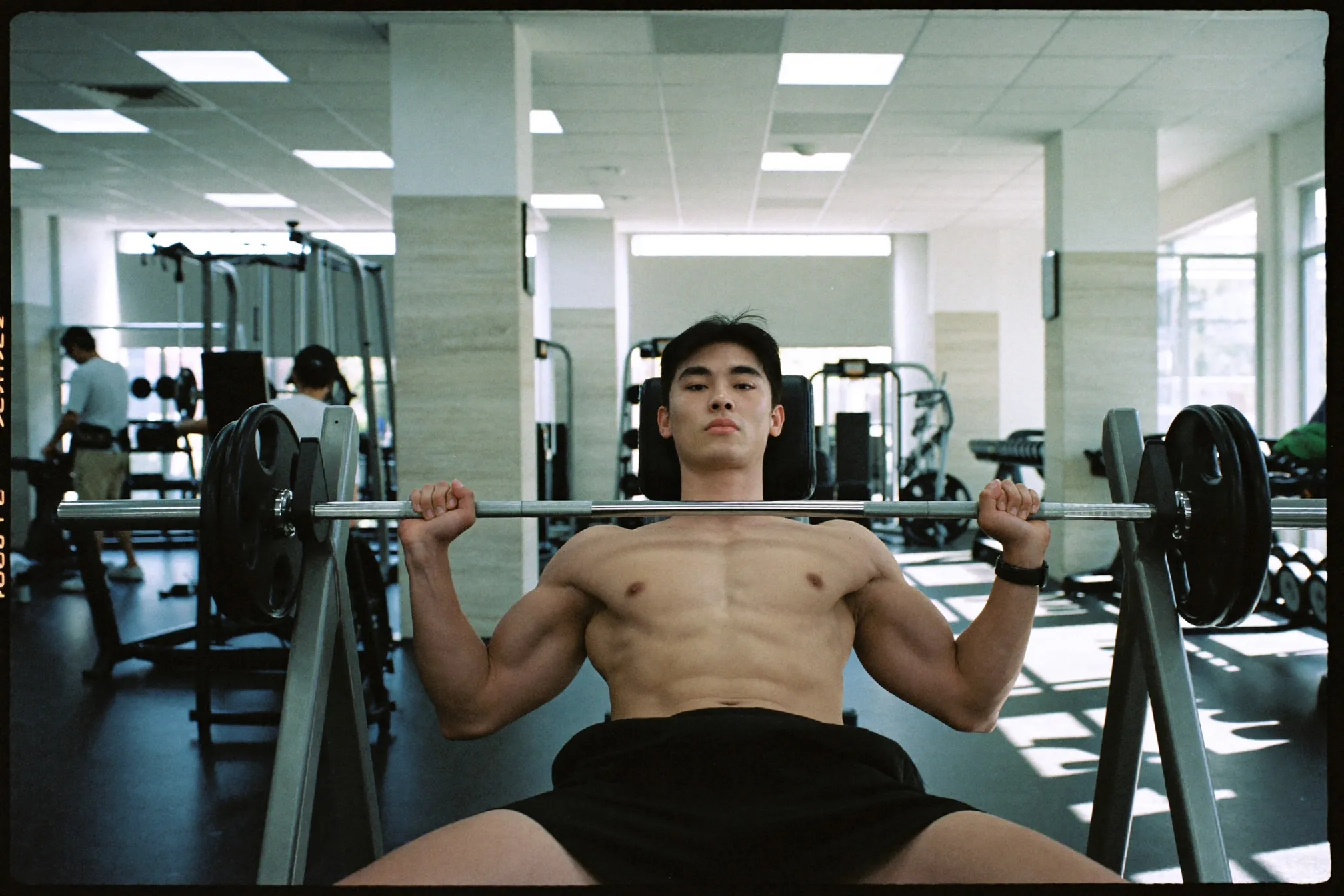
Everything downstream: how clothes sit, how you stand, how you sleep, and how you handle a hard week. You do not need a program with Bulgarian split squats in week one. You need your first month at the gym done without drama: three sessions a week, compound movements, progressive weight, and a protein target you can hit at a mamak, which our hawker protein guide makes embarrassingly easy.
Can’t face a commercial gym yet? Home workouts and a 15-minute ab circuit start the engine. The rule that survives all programs: never miss twice. One skipped session is life; two is a new habit forming in the wrong direction.
Walk on the off days. Ten thousand steps in KL or Singapore is two MRT stops of not taking the train, and it quietly handles what our belly fat guide explains no ab exercise can.
Phase 3: How do you dress like you have taste?
You delete, then buy. Most wardrobes fail from excess, not shortage: twenty mediocre shirts hiding the three good ones. The capsule wardrobe method rebuilds you to about twenty pieces that all work together; the short version is navy, white, grey, olive and tan, properly fitted, in fabrics that survive this climate.
Add exactly one fragrance you wear daily, chosen with our perfume rotation guide, and applied like our longevity guide teaches, which is to say lightly. That guy is remembered as smelling good; nobody remembers the man who announced himself from the lift.
Posture is the free multiplier nobody works on. Two cues cover most of it: ribs down, shoulders back without puffing, and phone at eye level instead of neck-cranked. The gym handles the rest over time, because rows and deadlifts are posture training with a barbell attached.
Phase 4: Why does reading make the list?
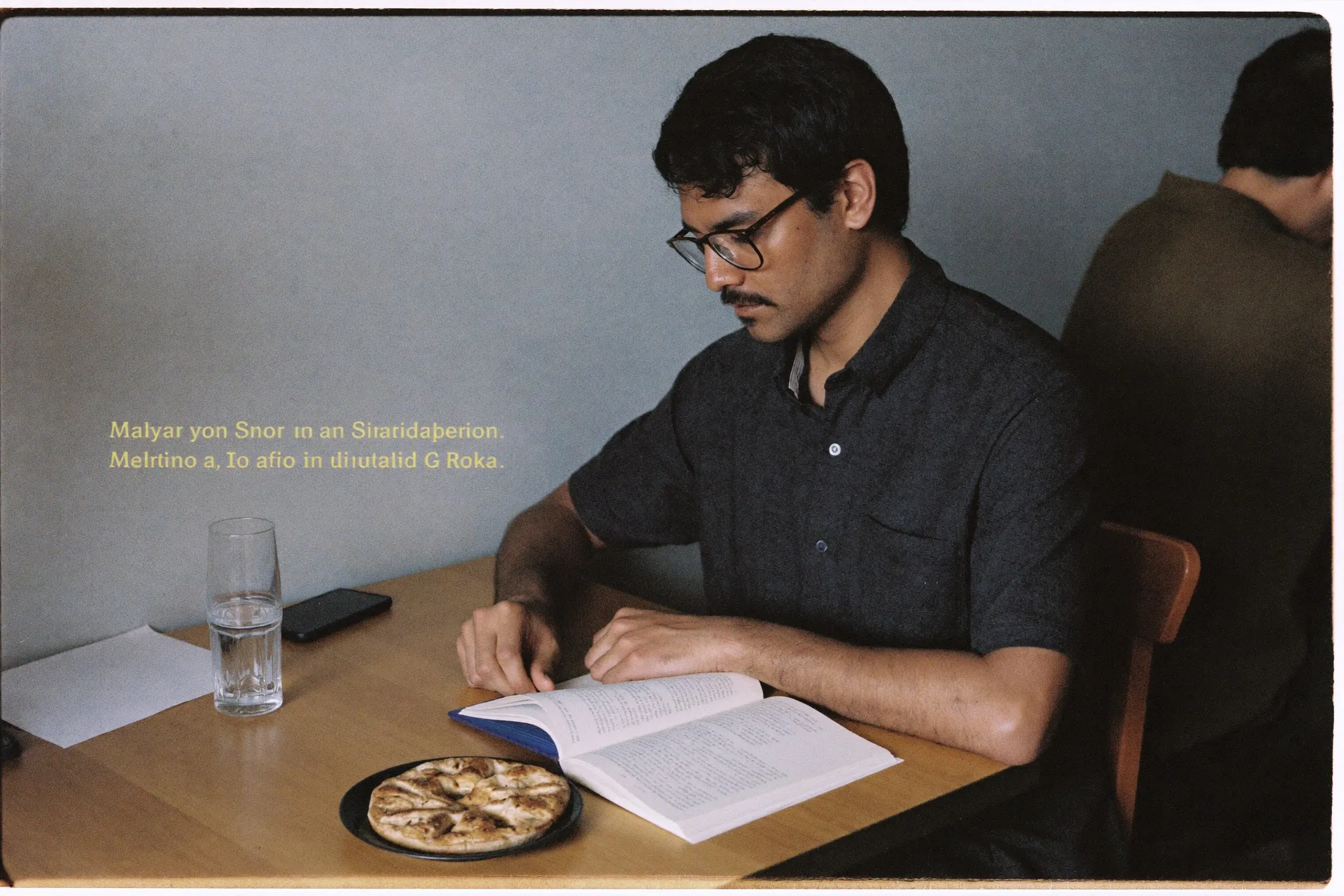
Because that guy is interesting to talk to, and interesting is downstream of input. A man who reads twenty pages a day finishes roughly two books a month, which is more perspective per year than most people gather in five. It shows up everywhere: better questions at dinner, calmer takes at work, and something to say beyond last night’s football.
Make it frictionless. One book at a time, physical or Kindle, twenty pages minimum, attached to an existing anchor like the morning kopi or the commute. Start with whatever pulls you, fiction included; the habit matters more than the syllabus. The phone is the enemy here, so give it rules: no phone for the first thirty minutes awake, greyscale after 10pm, and the doomscroll apps moved off the home screen. You don’t need a monk mode. You need twenty pages before the feed gets you.
Phase 5: What separates that guy from a well-dressed nobody?
He builds something and his money is boring. The craft can be anything with a skill curve: cooking properly, a language, photography, coding, carpentry, a small business on the side. The test is that it produces something you can point at. Six months of one hour a day beats six years of “I’ve been meaning to”. Pick one, schedule three sessions a week like gym, and refuse to switch projects before day 90.
The money side is deliberately unsexy: automate your savings on payday, understand your payslip and EPF or CPF, and skip the first-year traps, the too-early car and the stacked instalment plans. Nothing kills a glow-up like financial stress leaking into your face and your temper. That guy isn’t rich at 26. He’s unpanicked, which reads better.

What do you cut while you build?
Half the glow up is subtraction, and the subtractions are free. The additions above compete for time and energy against habits that quietly drain both, so run the cuts in parallel:
- The 1am scroll. It taxes tomorrow’s gym session, skin and mood simultaneously. The phone-outside-the-bedroom rule from phase one kills it structurally, not through willpower.
- The daily sugared drinks. Two teh ais a day is a kilogram a month of quiet sabotage against phase two. Swap to kosong or plain water on weekdays; keep the weekend one and enjoy it properly.
- The complaint circle. Every office has a lunch table whose entire culture is grievance. Eat there less. That guy is known for solutions and silence, not commentary.
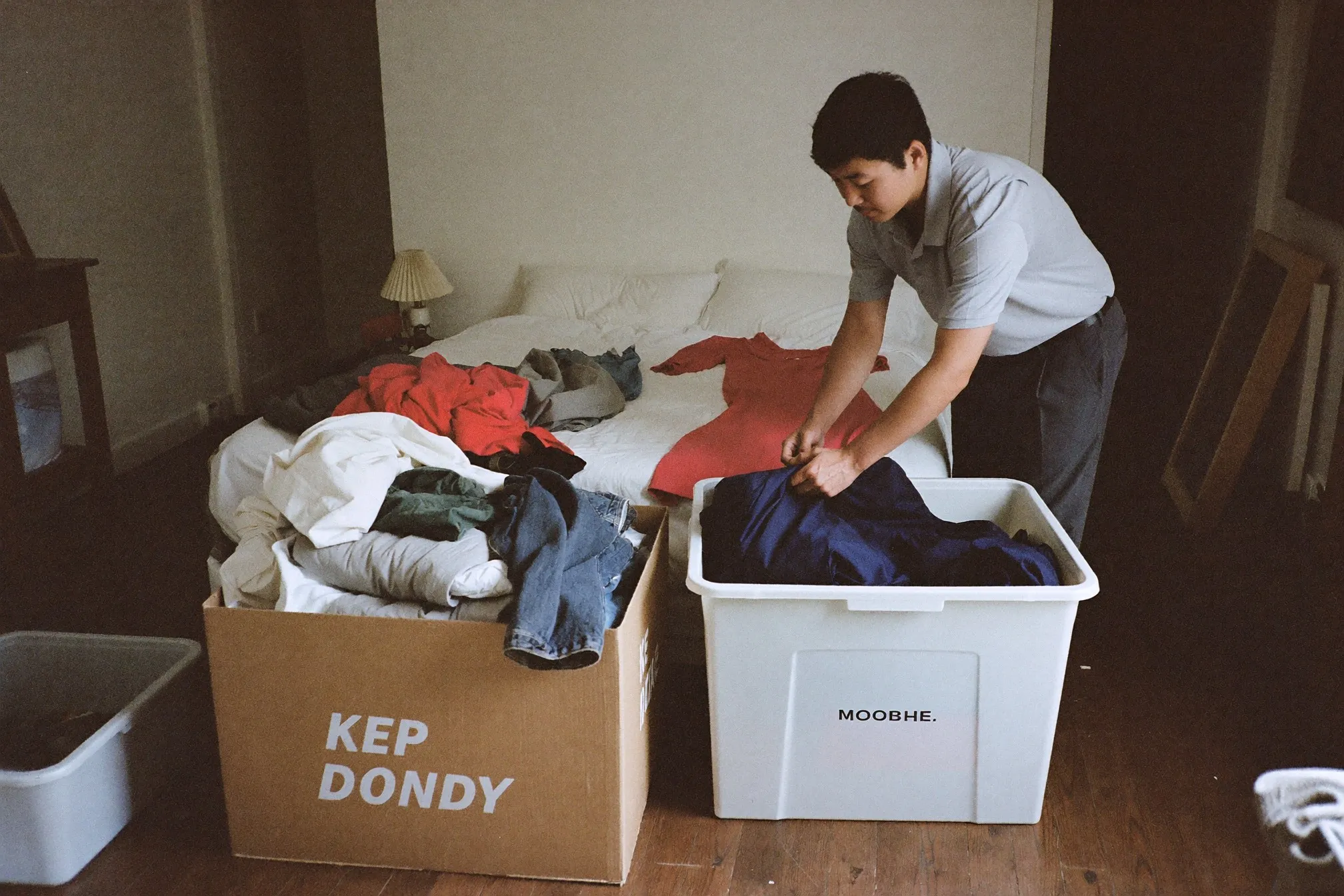
- The wardrobe of almosts. Clothes kept for a body you had in 2021 or a style you never actually wear. The capsule cull handles this, and the bag going to donation is a physical version of the whole program.
- Games and shows without a budget. Not zero, budgeted. Two nights a week, chosen deliberately, beat the ambient four hours that eat the reading and the craft.
The pattern across all five: replace decisions with defaults. That guy doesn’t win nightly battles against the scroll and the sugar; he built a day where the battles don’t happen. Every cut above returns thirty to sixty minutes or a few hundred calories, and phases four and five are funded entirely out of those returns.
How do you make it stick past day 90?
Systems, streaks and scheduled maintenance. The habits that survive are the ones with infrastructure: standing barber booking every three weeks, gym sessions in the calendar like meetings, savings that transfer themselves, a book always in the bag. Motivation started this; the calendar finishes it.
Run a monthly review, ten minutes with your notes app: what stuck, what slipped, what’s next. Add one upgrade per month at most, a better shoe rotation, a watch that means something, hosting your friends properly, a harder gym program. That guy at month twelve is unrecognisable from day one, and he got there one boring, scheduled habit at a time.
Start tonight: set tomorrow’s alarm for the same time as today’s, book the barber, and put a book beside your bed. Three minutes of admin. Day one done.
Quick answers
How long does a glow-up take for men?
Visible changes take about 90 days: skin settles into a routine in 4 to 8 weeks, a haircut works immediately, and consistent training shows in the mirror around month three. The deeper changes, reading, money habits and a craft, compound for years. Ninety days is the honest minimum, not the finish line.
What should a men's glow-up start with?
Sleep and a haircut. Sleep multiplies everything else you attempt, and a good haircut is the largest single-day appearance upgrade money can buy. Start those in week one, add skincare and training in week two, and let each habit settle before stacking the next.
How much does a glow-up cost?
Less than one gadget. A quality haircut, three skincare products, gym access and two wardrobe fixes run roughly RM400 to RM700 or S$150 to S$250 to start. The expensive-looking parts, fit, posture, grooming consistency, are nearly free. Time is the real currency.
Is a glow-up just about looks?
No, and the ones that stick never are. Appearance changes buy you confidence quickly, but the reading habit, the savings rate and the craft you build are what change how you carry yourself in a room. Do both tracks at once; each makes the other easier to keep.