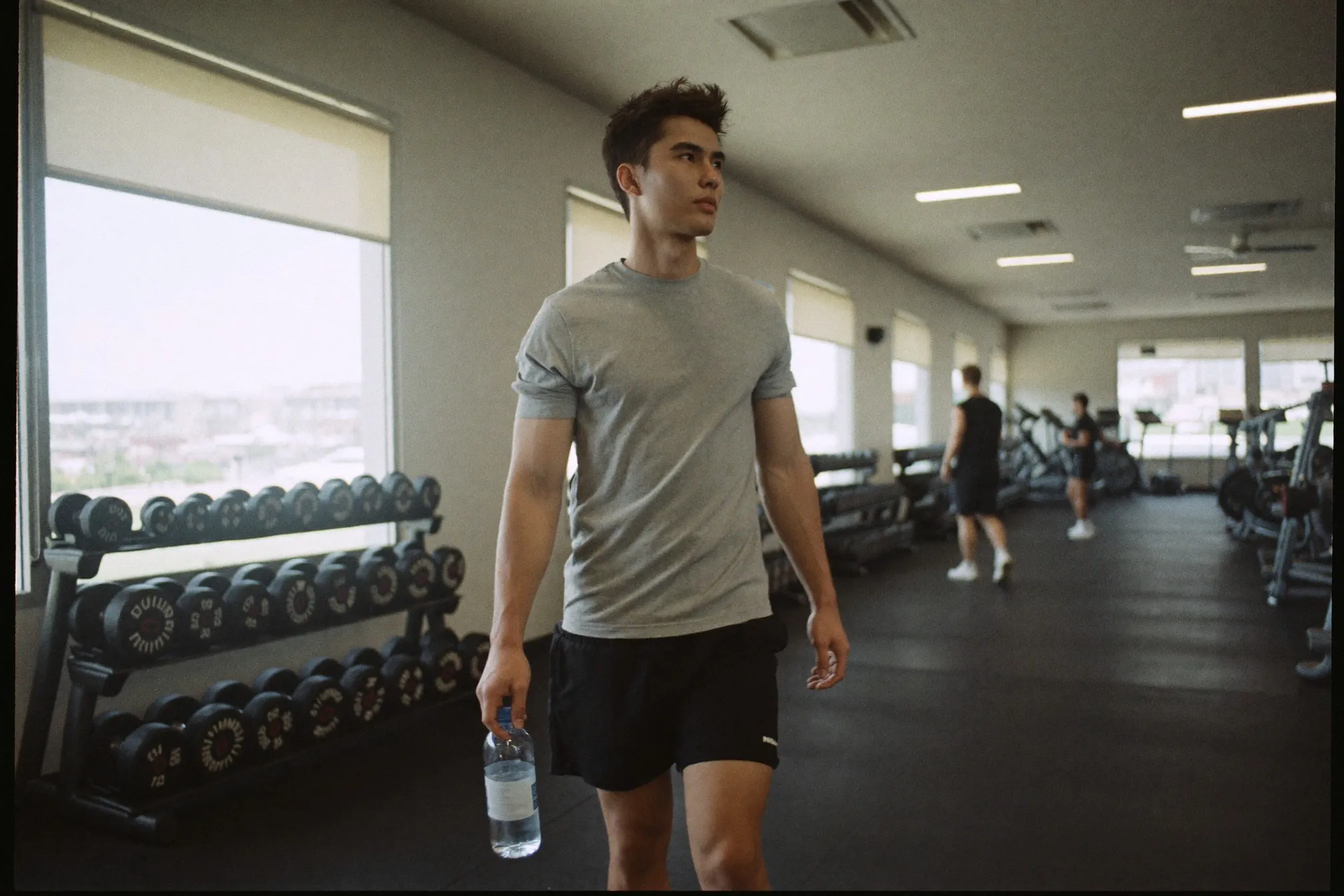
Go three times a week, train your whole body each session, and keep the weights light enough that every set ends with two reps left in you. That is the entire first month of gym for beginners. The splits, the supplements and the tracking apps can all wait for month two.
The hard part is not the training. It is walking past the regulars at the dumbbell rack while you work out how a seat adjusts. So this guide handles both problems: a plan simple enough to follow when tired, and enough gym literacy that you stop feeling like a tourist by week two.
Which gym should you join?
The cheapest decent gym within ten minutes of home or work. Distance kills gym habits faster than laziness does, and a fancy gym 25 minutes away loses to a basic one downstairs every single time. In Singapore, ActiveSG gyms let you test the habit for pocket change per entry before you commit to anything.
Match the gym to your stage, not your ambition:
| Option | Rough cost | Best for |
|---|---|---|
| Condo or HDB estate gym | Free with your address | Finding out whether you will go at all |
| ActiveSG gyms (SG) | A few dollars per entry | Learning the basics with zero contract |
| Budget chains (MY/SG) | Around RM60-100 / S$70-100 a month | Most beginners, most goals |
| 24-hour mid-tier chains | Around RM150-250 / S$120-200 a month | Odd working hours, wider equipment range |
| Boutique studios | RM300 / S$250 and up | Not month one. Come back later |
Visit at the time you would normally train before you pay anything. A gym that looks spacious at 3pm can be a queue for every bench at 7pm, and the 7pm version is the one you are buying.
Sign nothing longer than a month to start. Sales staff push annual packages hardest at people who look new, and there is a reason for that. Pay monthly until you have gone consistently for six weeks, then take the longer deal if the maths works.
What do you do on day one?
Book the free induction, go at an off-peak hour, and spend 45 minutes learning the machine versions of five movements. That is a complete first session. Off-peak means mid-morning, mid-afternoon or after 9.30pm. The 6pm to 8pm rush is the worst possible time to learn anything.
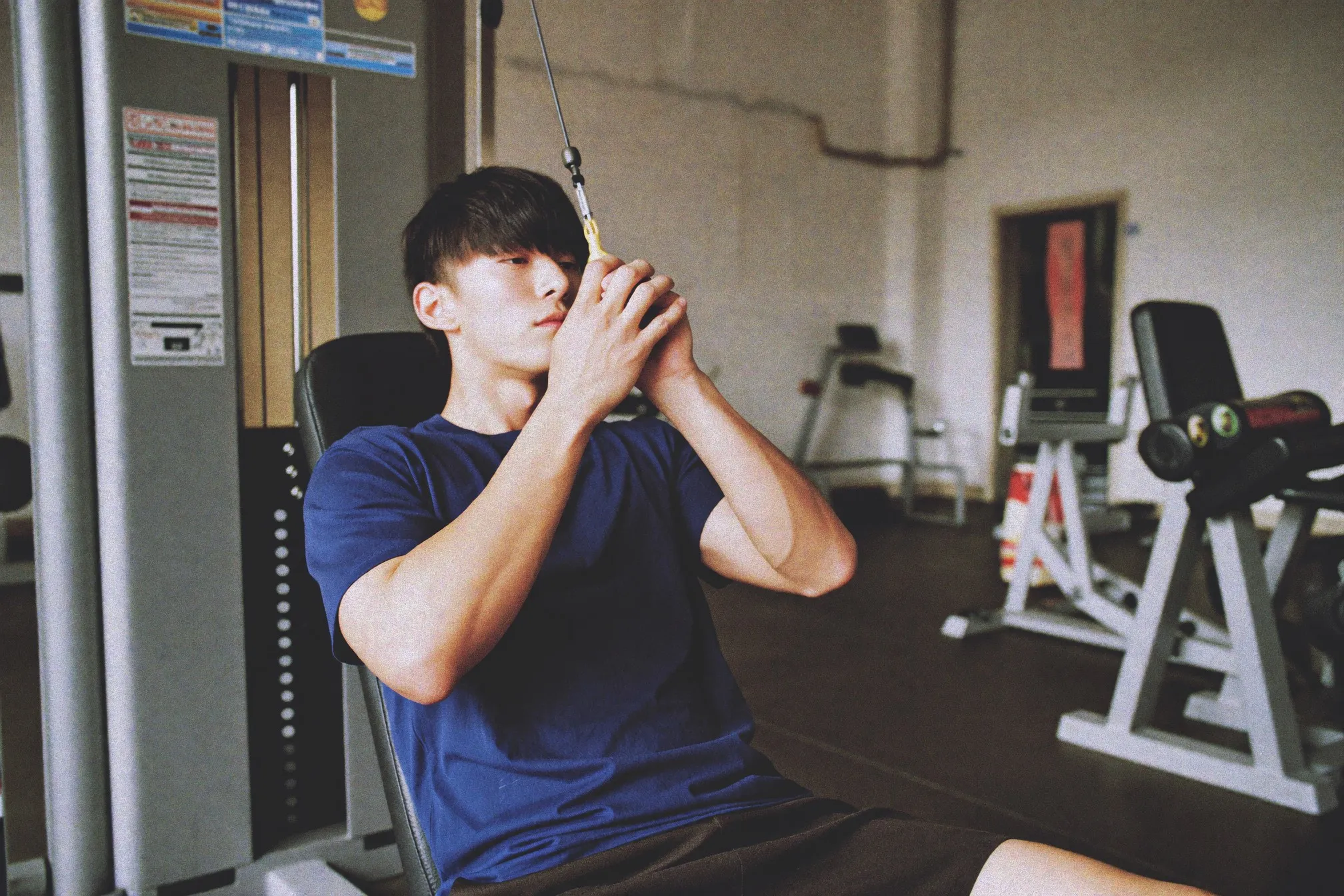
Machines get sneered at online. Ignore that. They lock you into a safe movement path while you learn what a working muscle feels like, and each one carries its own instruction diagram. Nobody earns a medal for wobbling under a barbell in week one.
A realistic first visit: five minutes of brisk incline walking on the treadmill to warm up, then one or two easy sets on each machine from the table below, then go home. You are not chasing a pump. You are collecting information about seat heights and pin settings so that session two runs on autopilot.
And on the fear itself: nobody is watching you. The lifters you assume are judging you are staring at their own reflection between sets, counting rest seconds. A gym at 10am on a Tuesday is one of the least judgmental rooms in KL or Singapore. The kopitiam uncles watching you parallel park are a far harsher audience.
What should your first month of training look like?
Repeat one full-body workout three times a week: a squat, a push, a pull, a hinge and some core work, at two or three sets of eight to twelve reps each. When every set of an exercise feels comfortable, add the smallest available weight increment the following session.
| Movement | Start here (weeks 1-2) | Graduate to (weeks 3-4) |
|---|---|---|
| Squat | Leg press | Goblet squat with a dumbbell |
| Push | Chest press machine | Dumbbell bench press |
| Pull | Lat pulldown | Seated cable row |
| Hinge | Back extension | Dumbbell Romanian deadlift |
| Core | Plank, 20-30 seconds | Longer holds, side planks |
Rest 60 to 90 seconds between sets. The whole session, warm-up included, fits inside an hour, and 45 minutes is plenty once you know the machines. Write down your weights in your phone notes. Progress in month one comes from adding a little weight or a rep, not from new exercises, and the notes are what tell you it is happening.
Two things about how it will feel. Soreness for the first two weeks is normal, especially the day-after-leg-day stairs situation, and it fades as your body adapts. Sharp pain during a movement is different. Stop the exercise, and see a GP or physio if it lingers beyond a few days.
Core work stays simple this month. When planks start feeling like admin, the ab workout guide has the next level.
What are the unwritten rules?
Wipe equipment after you use it, return weights to where you found them, and let others work in during your rest periods. Those three cover most gym etiquette in MY and SG. The rest is basic awareness: headphones on does not mean invisible, and shared space stays shared at peak hour.
The specifics that mark out someone who gets it:
- Rerack your weights. The person after you may not lift what you lift, in either direction. Leaving plates on the leg press is the gym equivalent of abandoning your tray at the food court.
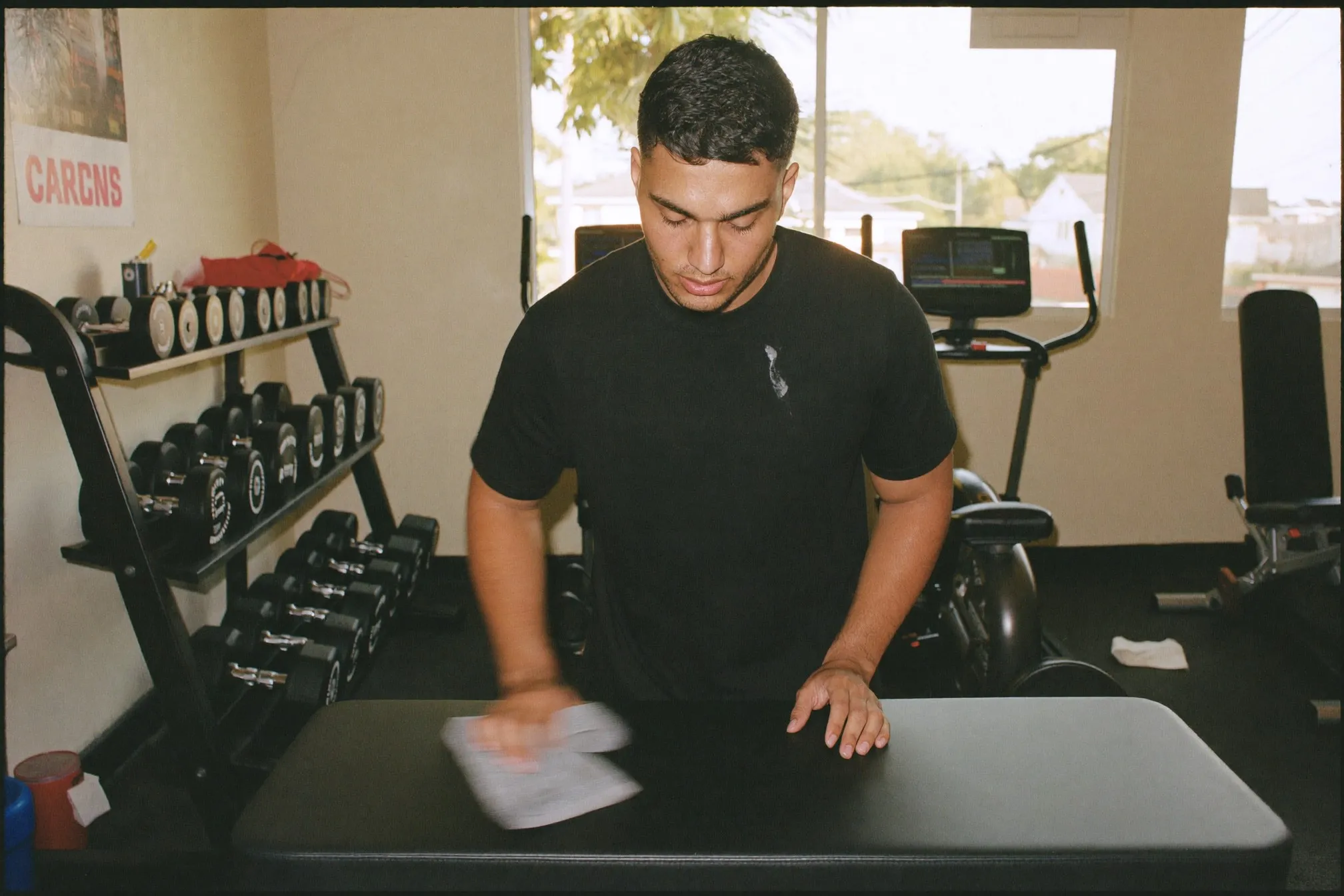
- Wipe the bench. Equatorial humidity means everyone drips. The paper towel dispenser and spray bottle exist for you, not for the cleaner.
- Rest, don’t camp. Sitting on a machine between sets is normal. A ten-minute scroll on the leg press during the evening peak is not.
- Ask “how many sets left?” Standard phrase, used daily, in every gym on both sides of the Causeway. The answer is usually “last one” and everyone moves on.
- Deodorant before, shower after. Your gym has smelled the alternative. The deodorant guide covers options that survive a training session.
None of this is policed by staff. It is policed by the quiet economy of nods and spotted sets that makes a gym pleasant, and beginners who follow it get adopted by regulars surprisingly fast.
What gear do you actually need?
Flat, stable shoes, two sets of workout clothes, a water bottle and a small towel. Decathlon covers the whole list for well under RM200 or S$80. Skip the lifting belt, the straps, the gloves and the pre-workout tub; none of them helps a beginner and some get in the way.
Your existing running shoes are fine for month one. If you get serious about squats later, a flat-soled pair gives you a more stable base, and Decathlon sells those too for less than a chain gym’s joining fee. Two shirts in rotation respects laundry reality; training in yesterday’s shirt is a violation of rule five above.
Bring a padlock for the lockers, because most budget gyms in MY and SG do not provide one. Shower at the gym when you can. Sweat that sits under a shirt through a Grab ride home is how back breakouts start, and the five-minute version of the skincare routine for men handles the rest.
That is the complete kit. The men in expensive lifting gear at your gym mostly bought it in year three, not week three.
What separates the ones who stick with it?
They make starting cheap and repetition easy, then let the habit compound. Nothing about month one requires discipline in the movie-montage sense. It requires a gym close to your route home, a workout short enough to finish, and clothes already packed the night before.
Miss a session and go to the next one; a missed Tuesday means nothing across a year of training. Once the three-day rhythm holds for six weeks, you have outlasted most January sign-ups, and the fitness hub has your next steps, from programme choices to conditioning.
Tonight, do the first rep of the habit: find the nearest gym on the map, check its off-peak hours, and book a trial or day pass for this week. Then pack the bag and leave it by the door. The 6.30am version of you needs every decision already made.
Quick answers
How many days a week should a beginner go to the gym?
Three days, with at least one rest day between sessions, covers your first month. Muscle adapts during rest, not during the workout, so going five or six days as a beginner mostly builds fatigue. Two days still counts on the weeks life goes sideways.
Should beginners start with cardio or weights?
Start with weights, then add ten to fifteen minutes of easy cardio at the end if you have time. Strength work gives a beginner faster visible returns, and a short treadmill walk works better as a warm-up than as the whole session.
How long before I see results from the gym?
Strength climbs within two to three weeks because your body learns the movements quickly. Visible change in the mirror usually takes eight to twelve weeks of consistent sessions and decent food. Take a photo in week one; comparisons across months beat daily mirror checks.
What if I don't know how to use the machines?
Every machine has a diagram printed on its side, and staff will walk you through seat settings if you ask. Book the free induction most gyms offer and you will know enough by your second session. Experienced lifters are watching their own reflection, not you.