
Deodorant controls smell. Antiperspirant controls sweat. Living in Malaysia or Singapore, you want both jobs done, and most cans and sticks sold as “deodorant” at Watsons or Guardian are combination products that quietly do the two at once.
The distinction still matters. If you’re sweating through office shirts by 10am, a smell-only product fixes nothing, and plenty of men buy exactly the wrong tool for their problem. This guide sorts out which one you need, why the best time to apply it is before bed, and why some men do everything right and still smell wrong by dinner.
What’s the difference between deodorant and antiperspirant?
Deodorant fights odour. It uses antibacterial ingredients and fragrance to stop the bacteria that create the smell. Antiperspirant reduces sweating itself, using aluminium salts that form temporary plugs in your sweat ducts. Check the label: if it says “anti-perspirant” or lists an aluminium compound, it does both jobs.
The part most men never learn is that fresh sweat barely smells. The odour arrives when skin bacteria get a few hours alone with it, feeding on the protein-rich sweat from the apocrine glands concentrated in your armpits. That’s why you can leave the house fine at 8am and fail the lift test on the 6pm ride home. Deodorant attacks the bacteria and masks their output. Antiperspirant removes their food supply at the source.
Humidity makes the whole equation worse here. Sweat cools you by evaporating, and at 90 per cent humidity it can’t, so your body keeps producing more while the first batch sits on your skin doing nothing. The five-minute walk from the LRT to the office undoes a cold shower. This is not a personal failing. It’s physics, and it’s why products built for European weather underperform in Puchong.
Which one do you need?
Most men here need an antiperspirant-deodorant combination, applied daily. Pure deodorant suits men who barely sweat or who want to avoid aluminium. If your problem is wet patches rather than smell, prioritise the antiperspirant function and apply it at night. For sweating that soaks through everything regardless, clinical-strength products are the next step.
| Your situation | What to buy | Honest price range |
|---|---|---|
| Aircon desk job, mild sweat | Any combo roll-on or stick | around RM10–20 / S$4–8 |
| Wet patches on office shirts | Antiperspirant, applied at night | around RM12–25 / S$5–10 |
| Gym, futsal, weekend sports | Combo stick, reapply after showering | around RM10–25 |
| Sensitive or freshly shaved skin | Fragrance-free, alcohol-free roll-on | around RM15–30 |
| Sweat that defeats everything | Clinical-strength antiperspirant | around RM30–60 / S$12–25 |
Clinical-strength versions carry a higher concentration of aluminium salts and usually live one shelf up from the regular range, at double the price. Worth trying before anything drastic. If even those fail and sweating interferes with work or social life, see a GP. Excessive sweating is a recognised medical condition with real treatment options, and no amount of pharmacy product solves it.
One honest note on that table: prices swing hard during Shopee and Lazada sales, and imported clinical brands often cost less online than in-store. Stock up when the 9.9 sale lands.
Why should you apply it at night?
Antiperspirant works best applied to dry skin before bed. The aluminium salts need a few hours to settle into sweat ducts, and overnight your glands are at their calmest. The plugs stay put through a morning shower. Applied at 7am to skin still damp from showering, half the product washes away in sweat before it ever starts working.
This is the single highest-value change most men can make, and it costs nothing. The routine: shower at night, dry your armpits properly (stand under the aircon or fan for a minute, since “towel-dry” in this humidity is optimistic), then apply. In the morning, shower as usual. The protection survives.
If you like the ritual of a morning application, keep it, but treat it as a fragrance top-up rather than the main event. The night layer is doing the real work. Same logic as fragrance generally: what you apply and when matters more than how much, a theme our perfume rotation guide covers for the smell-good half of the equation.
Stick, roll-on, spray or cream?
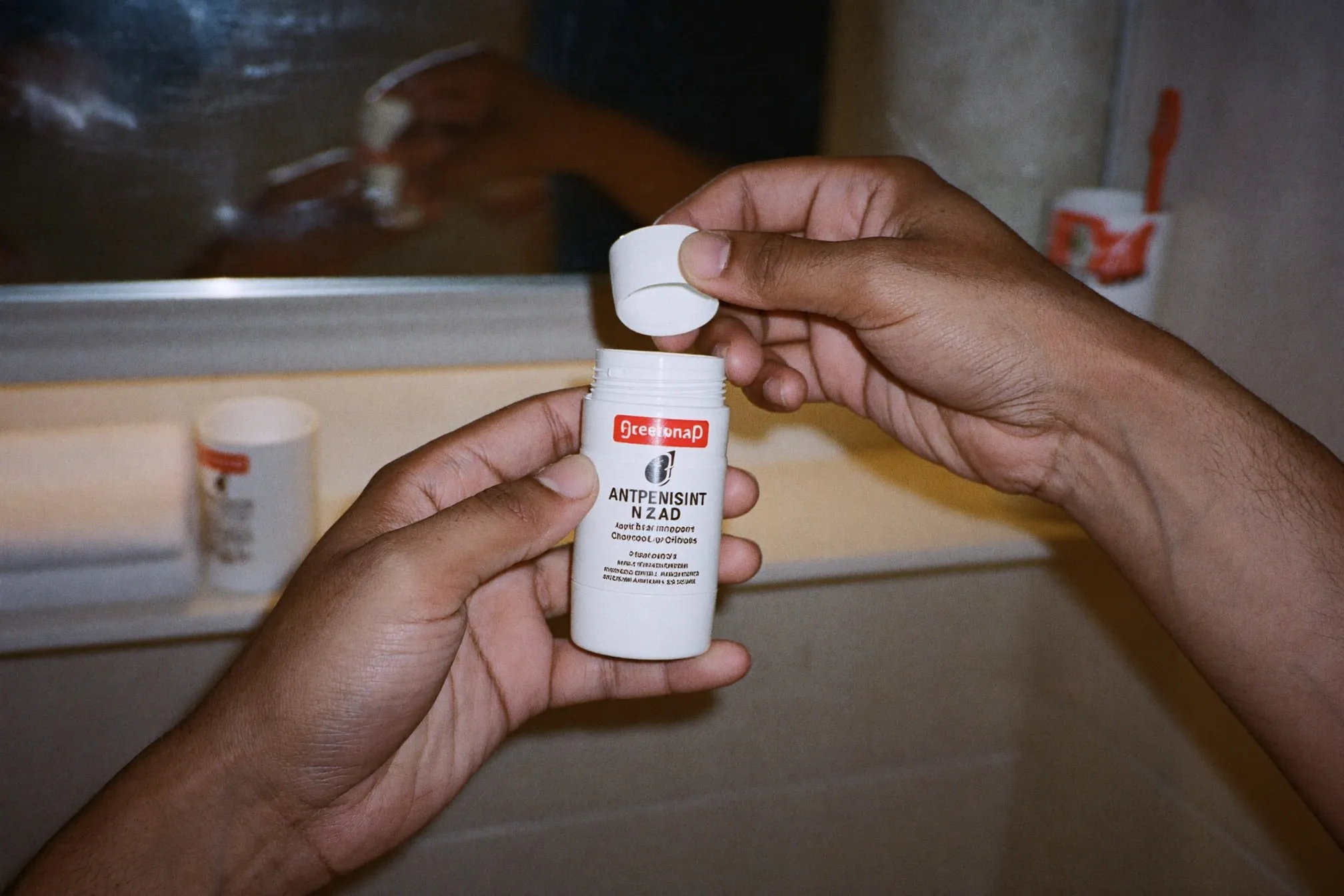
Sticks give the strongest, longest-lasting coverage and go on dry, so your shirt can follow immediately. Roll-ons cost less and work nearly as well, but need a full minute to dry first. Sprays feel refreshing and dry fastest, though a good share of each burst lands on the mirror instead of you.
The details that decide it:
- Stick. Best overall for this climate. Dry application, dense coverage, survives the commute. The white-mark risk on dark shirts is real, so let it set for thirty seconds before dressing.
- Roll-on. Cheapest per month and gentle formulas are easy to find. The catch is the wet application. Put a shirt on too early and you get damp patches that look worse than the sweat you were preventing.
- Spray. The gym-bag format. No skin contact means you can leave one in a shared space without it becoming a biohazard, and it goes over already-dressed touch-ups better than anything else. You pay more per use and the protection runs lighter.
- Cream and tube formats. Japanese and Korean brands sell strong, compact versions, and men who sweat heavily swear by them. Pricier, and mostly found on Shopee rather than pharmacy shelves.
If you shave or trim your armpits, switch to a fragrance-free roll-on or cream for the two days after. Alcohol-heavy sprays on freshly shaved skin is a lesson nobody repeats twice.
Are aluminium-free and natural deodorants worth it?
Aluminium-free deodorants handle smell, sometimes well, but nothing in them stops sweat. If wet patches bother you, they’re the wrong tool. Health scares linking aluminium to serious disease have circulated for decades without health authorities backing them. Choose aluminium-free for skin reasons or personal preference, not out of fear.
Within the natural category, the formula matters more than the branding. Baking-soda formulas control odour strongly but irritate a lot of skin, especially shaved skin, sometimes badly enough to leave marks. Magnesium-based versions run gentler. Expect around RM30 to RM60 for the popular natural brands, which buys a lot of regular antiperspirant.
A realistic plan if you want to switch: keep the natural stick for low-stakes days and hold a regular antiperspirant in reserve for presentations, dates and weddings. Carry the natural one for a midday reapply, because most of them need it. Anyone who tells you their natural deodorant lasted through a September afternoon in KL either works in a walk-in freezer or has stopped being able to smell themselves.
Why do you still smell by evening?
Usually the shirt, not you. Polyester and other synthetics hold onto odour compounds through normal washing, so a “clean” dri-fit shirt can smell within the hour. The other usual suspects: applying product to damp skin, rewearing shirts between washes, skipping undershirts, or heading from the gym to dinner without a shower.
Work through the list in order of likelihood:
- Retire the smelly synthetics. If a shirt smells the moment you sweat in it, the fabric has a permanent bacterial colony. Soak gym wear in a proper sports detergent or replace it. A RM25 dri-fit that stinks is worth RM0.
- Wear an undershirt with office shirts. It catches sweat before the outer layer shows or holds it, and it protects against the yellow aluminium stains. The smart casual guide makes the same case for reasons of appearance; the nose agrees.
- Shower after training, full stop. Deodorant over gym sweat buys you twenty minutes, not an evening. If you’re new to the gym and unsure of locker-room logistics, our first month at the gym guide covers the practical bits.
- Never fix smell with fragrance. Perfume layered over body odour produces a third smell worse than either ingredient. Fix the base layer first, fragrance after.
- Check the diet, gently. Heavy garlic, petai and alcohol show up in sweat. No need to change your life over it, but the night before a big meeting is a reasonable time to skip the extra sambal petai.
Body odour that survives all of the above, plus daily antiperspirant and clean clothes, deserves a GP visit rather than another product. Sometimes there’s a treatable cause, and a fifteen-minute consult beats a drawer of failed sticks.
More on staying presentable in this weather lives in the fragrance and body hub.
Tonight, then: shower, stand under the fan until your armpits are properly dry, and apply an antiperspirant stick before bed. Tomorrow at 6pm, on the ride home, check the result. The test costs about RM15 and settles the question better than any review, including this one.
Quick answers
What's better for sweat, deodorant or antiperspirant?
Antiperspirant. Only aluminium salts reduce the sweat itself; deodorant handles the smell after sweat happens. In Malaysian and Singaporean heat, buy a combination product, which most pharmacy deodorants already are. Check the label for the word anti-perspirant or an aluminium compound such as aluminium chlorohydrate.
Why do I still sweat through my shirt with deodorant on?
Your product is probably a pure deodorant, or you apply it to damp skin in the morning. Switch to an antiperspirant and apply it at night on fully dry skin, so the aluminium salts can settle into your sweat ducts. If heavy sweating persists, step up to a clinical-strength version.
Is the aluminium in antiperspirant safe?
Scare stories linking aluminium to serious disease have circulated for decades, but health authorities have not found convincing evidence and none currently advise avoiding it. If you prefer to skip it anyway, aluminium-free deodorants control odour fine. You give up sweat control, which is the harder trade in this climate.
How do I stop yellow stains on white shirts?
The stains come from aluminium in antiperspirant reacting with sweat and fabric, not from sweat alone. Use less product, let it dry before dressing, and wear an undershirt with white office shirts. Wash stained shirts soon after wearing, because heat from ironing or a dryer sets the yellow permanently.