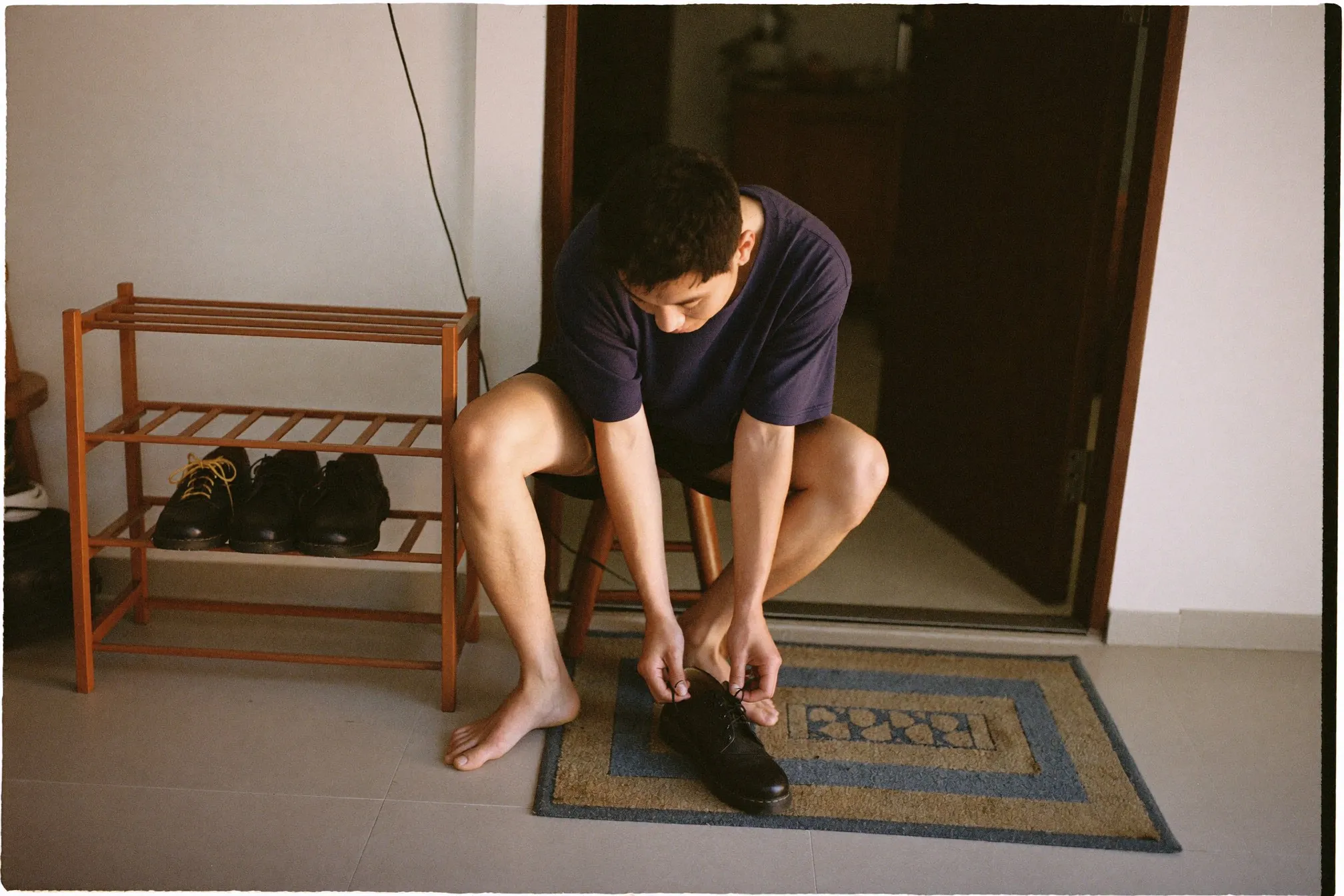
Smelly feet come from sweat trapped inside a shoe, not from dirty feet. The soles hold one of the densest concentrations of sweat glands on the body, and the bacteria living there feed on that sweat all day in a warm, sealed, zero-airflow box. Same mechanism, different address: a scalp that turns by 4pm and a groin that turns by lunch run on exactly the same fuel.
Armpits get all the attention and all the products. The body odour basics cover that half well enough. This is the other half, the parts nobody discusses at the mamak, in a climate that sits near 30°C and 80 per cent humidity every month of the year.
Why do feet smell worse than the rest of you?
Feet combine three things nothing else on your body does: a high density of sweat glands, a thick layer of skin for bacteria to work on, and eight to twelve hours a day inside a shoe with no ventilation. Fresh sweat has almost no smell. The by-products of bacteria breaking it down do.
Add local conditions and it compounds. You walk from an air-conditioned office into 33°C at lunch, your feet sweat inside leather, then you sit back down and the shoe never dries. By Thursday, that pair is a culture. The NHS lists sweaty feet and shoes worn on consecutive days as the standard causes of foot odour, and both are fixable without buying anything.
The other suspect is athlete’s foot. If the smell arrives with itching, peeling skin between the fourth and fifth toes, or soft white patches, you have a fungal infection rather than a hygiene problem. It spreads on wet floors, which in this part of the world means public showers, surau ablution areas, gym changing rooms and swimming pool decks. Pharmacies in MY and SG sell antifungal creams and sprays over the counter for around RM20 to RM35 or S$10 to S$18.
What stops smelly feet for good?
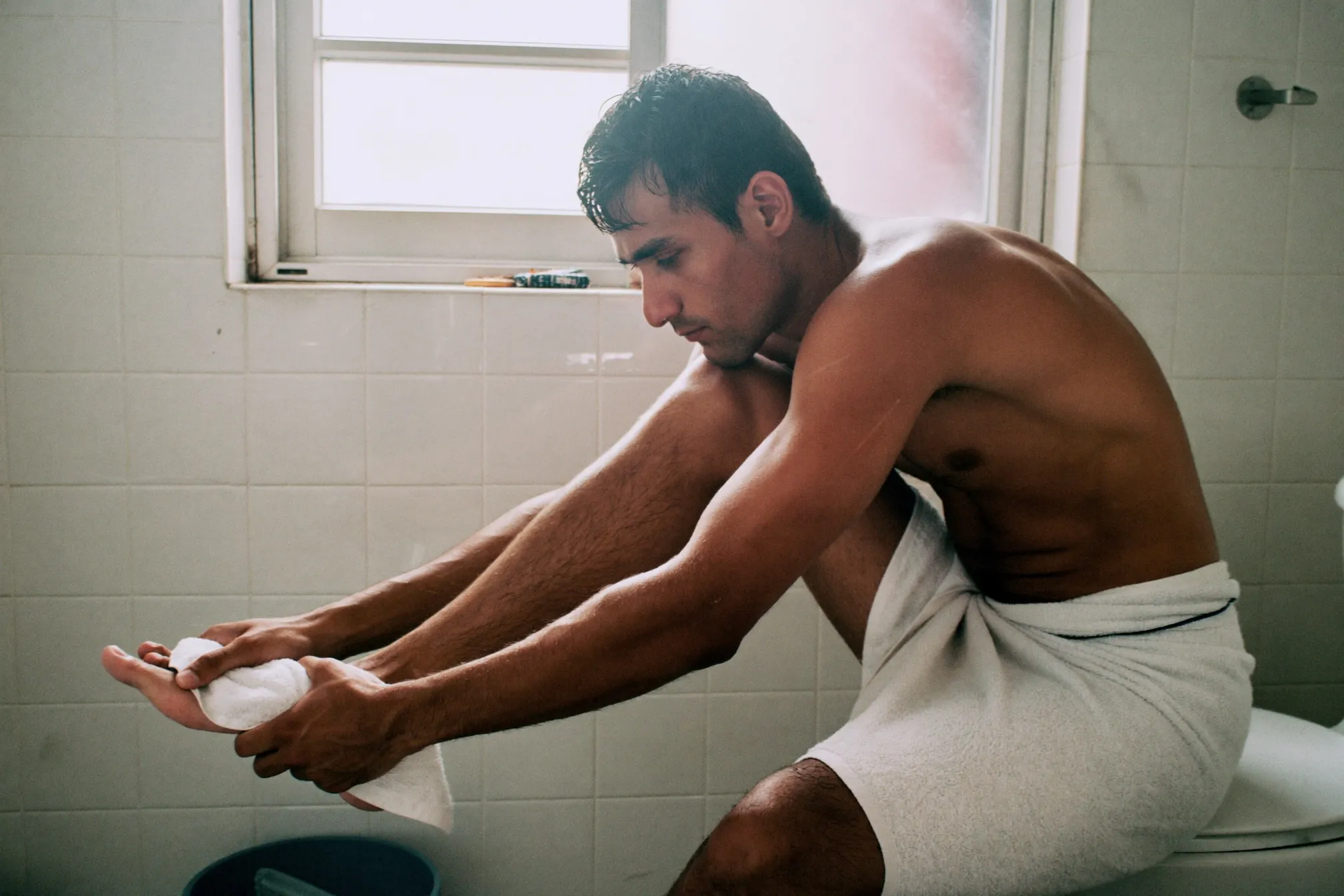
Rotation and drying do more than any product. Give every pair of shoes a full day off, dry between your toes after every shower, and wear socks that move moisture instead of trapping it. Most men fix foot odour with those three habits alone and never need a spray.
In order of how much each one buys you:
- Rotate your shoes. Two pairs minimum, three if you commute by bike. A shoe needs roughly 24 hours to dry out in this humidity, and yours has been getting about eight.
- Dry between the toes. The gap between the fourth and fifth toe stays damp longest and hosts the most bacteria. Ten seconds with a towel.
- Change your socks. Thin nylon dress socks hold sweat against your skin. Cotton, bamboo or a merino blend moves it out. Uniqlo and Decathlon both sell decent ones under RM30 a pack.
- Air the shoes properly. Not in a sealed shoe cabinet by the door. Outside the unit, on the corridor rack, or by an open window with the insoles pulled out.
- Wash the insoles. Removable ones go in the sink with soap once a month. They hold more smell than the shoe.
- Then add product. Antifungal foot powder, an antiperspirant spray meant for feet, or a cedar shoe insert. These work as maintenance, not as a rescue.
Canvas sneakers go in the washing machine. Leather does not, so wipe the lining with a damp cloth and let it dry away from direct sun. If a pair has crossed the line where nothing helps, replace it. Our guide to the shoes worth owning covers what to buy once.
Where does the smell come from, area by area?
| Area | What causes it | The fix that works | Worth a GP visit if |
|---|---|---|---|
| Feet | Sweat trapped in shoes, bacteria on thick skin | Rotate shoes, dry between toes, breathable socks | Itching, peeling or cracked skin between toes |
| Scalp | Oil glands plus sweat plus yeast, sealed under a helmet | Wash more often, dry hair fully before covering it | Flaking, redness or a scalp that itches constantly |
| Groin | Apocrine sweat glands, hair, damp fabric | Daily wash, dry fully, cotton underwear, trim | Ring-shaped rash, itching, or smell that no washing shifts |
| Behind the ears | Oil and sweat in a spot most men never soap | Two seconds in the shower | Crusting, weeping or pain |
| Navel | Sweat and skin cells in a fold that never dries | Finger and a soapy cloth, weekly | Discharge, redness or swelling |
Why does your scalp smell by evening?
The scalp carries a heavy concentration of oil glands, and that oil mixes with sweat and the yeast that lives on everyone’s skin. Trap the mix under a helmet, a cap or a work hairnet in tropical humidity and it turns within hours. Washing more often fixes most cases.
Two local habits make this worse than it needs to be. The first is putting a helmet on hair that is still damp from a shower, which creates a warm sealed environment for hours. Let it dry, or carry the helmet and put it on outside. The second is heavy pomade or wax used daily and washed out weekly. Product build-up holds oil against the scalp, so a clarifying wash once a week earns its place if you use styling products every day.
Skipping shampoo to “let your scalp balance itself” does not apply here. That advice comes from drier climates. If your scalp also flakes or itches, you are probably dealing with seborrheic dermatitis rather than plain odour, and the American Academy of Dermatology treats that as a medical condition with proper treatments. Our dandruff guide walks through which active ingredient to look for.
What about groin odour?
Your groin holds apocrine sweat glands, the same type responsible for armpit odour, plus hair and folds of skin that stay damp. A daily wash with plain soap, thorough drying and cotton underwear handles it. Never put deodorant or antiperspirant on the area.
The things that go wrong in this climate follow a pattern. You finish futsal, drive home in damp shorts, shower an hour later. You wear the same synthetic boxer briefs for a Saturday of errands. You dry your chest and shoulders and let the rest air-dry under your clothes. Each one buys the bacteria a few extra hours.
Trimming helps by cutting the surface area that holds sweat, which the manscaping guide covers in more detail than we will here. Loose cotton underwear beats tight synthetics on a hot day. Change out of gym gear before the drive home, not after.
If the smell comes with itching, a red ring-shaped rash or skin that flakes at the edges, that is a fungal infection rather than odour. The NHS lists it among the common ringworm-type infections, and pharmacy antifungal cream clears most cases in a couple of weeks. Scrubbing harder makes it worse by damaging the skin barrier.
When should you see a doctor?
Product fixes hygiene. It does not fix a medical cause. Book a GP appointment if your body odour changes character suddenly, if you sweat far more than the situation calls for, if you get night sweats, or if a smell survives two weeks of doing everything above.
The NHS treats heavy sweating that interferes with daily life as hyperhidrosis, a condition with real treatments including prescription-strength antiperspirants and other options a doctor can discuss. Persistent fungal infections that keep returning also deserve a proper look rather than a fourth tube of cream. In MY, a GP consult runs around RM35 to RM80 at most clinics; in SG, a polyclinic visit costs less than a private GP.
Pick your worst area and fix one thing tonight. If it is your feet, take the insoles out of the pair you wore today and put them by an open window. Tomorrow, wear a different pair. That single change does more than any spray you can buy, and it costs nothing. Once that habit sticks, work through the rest of the body and fragrance guides or sort out your deodorant for the armpits you have been ignoring while reading this.
Quick answers
How do I stop my feet from smelling?
Wash and dry your feet daily, especially between the toes, then rotate your shoes so no pair goes back on within 24 hours. Wear cotton or wool-blend socks instead of thin nylon ones. If the smell persists after two weeks of that, the NHS advises seeing a pharmacist or GP.
Why does my scalp smell by the end of the day?
Your scalp has a heavy concentration of oil glands, and in MY and SG humidity that oil mixes with sweat and yeast all day under a helmet or a cap. Wash more often with a proper shampoo, and let your hair dry before putting anything over it.
Is groin odour normal?
Some odour is normal because the groin holds apocrine sweat glands, the same type as your armpits. Persistent smell with itching, redness or a ring-shaped rash points to a fungal infection instead, which the NHS lists as common and treatable. See a pharmacist or GP rather than scrubbing harder.
Do I need a special soap for smelly areas?
A plain body wash used daily handles most of it. Antibacterial washes can help while you fix the underlying habit, but they do nothing if you put on the same shoes or the same shorts afterwards. Airflow and clean fabric beat product almost every time.