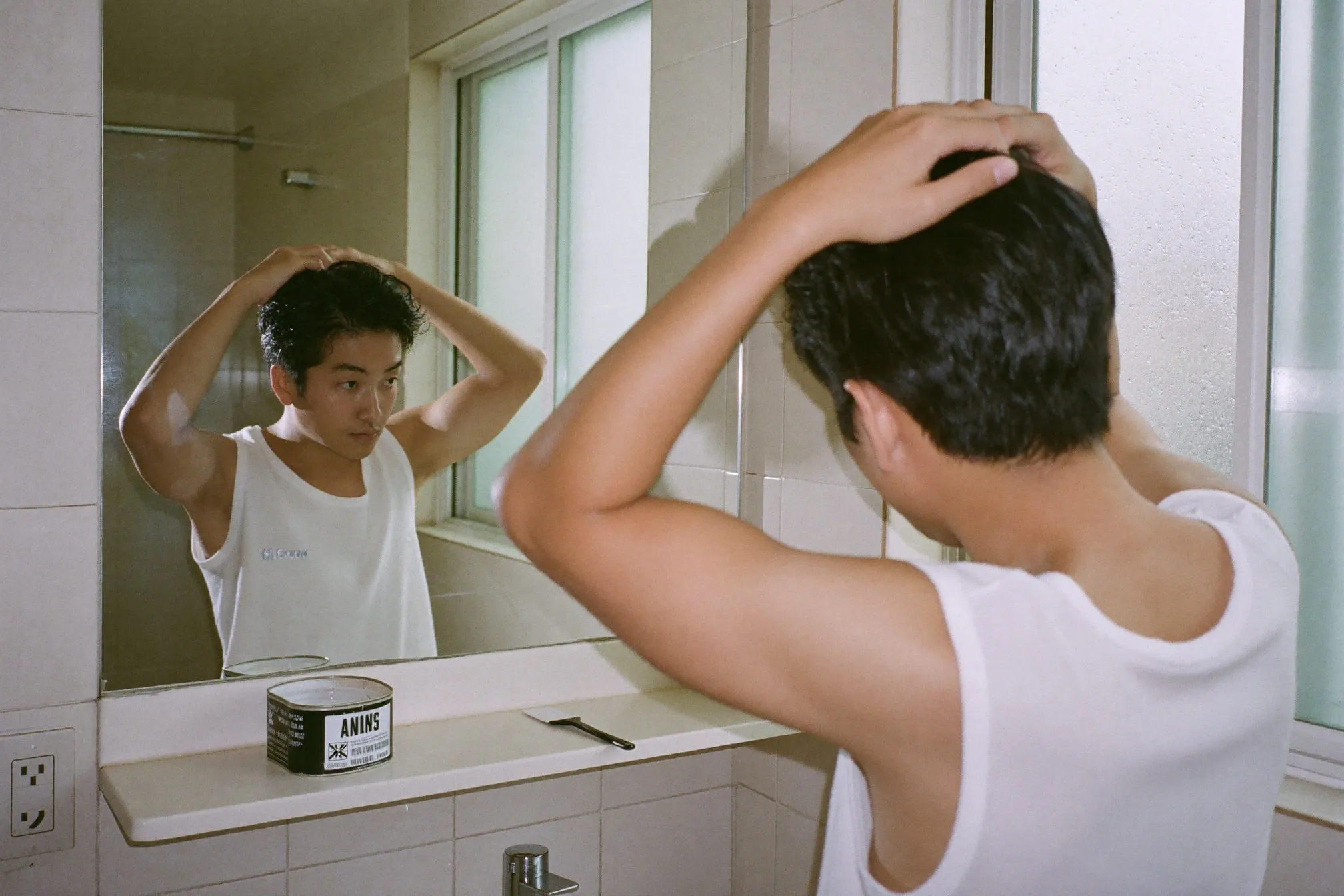
Pomade gives you shine and a slick finish you can comb back into place all day. Clay gives you matte texture and grip. Wax sits between them, medium hold with a low sheen. Powder adds volume at the roots for fine hair and does nothing else. Pick by the finish you want, then check the product survives a 33°C afternoon.
That last part is where most styling advice falls over. A product that behaves in dry London air becomes a different substance by the time you have walked from the LRT station to your office in Bangsar. The tin on the shelf at Watsons does not tell you which ones melt.
What is pomade, and how is it different from clay and wax?
Pomade is a shine-forward product, either oil-based or water-based, built for styles you comb into shape. Clay uses bentonite or kaolin to dry matte and grip the hair shaft, which reads as thickness. Wax and fibre sit in the middle with pliable medium hold. Powder is a dry volumiser you shake straight onto the roots.
| Product | Hold | Shine | Best for | Comes out with |
|---|---|---|---|---|
| Oil-based pomade | Medium, stays pliable | High | Slick backs and side parts | Degreaser or several shampoo passes |
| Water-based pomade | Medium to firm, sets | Medium to high | Same styles, less commitment | Water |
| Clay | Firm | Matte | Textured crops and messy fringes | Normal shampoo |
| Fibre or wax | Medium | Low to medium | Everyday separation and shape | Normal shampoo |
| Cream | Light | Low | Taming frizz, longer hair | Water |
| Powder | Medium, gritty | Matte | Root volume on fine hair | Normal shampoo |
The oil-versus-water split matters more than the brand on the tin. Oil-based pomade never fully dries, so you can run a comb through it at 4pm and rebuild the part. The cost is that it clings. Two shampoos and it is still there, which is why barbers sell degreasers. Water-based pomade sets after a few minutes, holds firmer, and rinses out under the shower. It also reactivates when your scalp sweats, which in this region happens before lunch.
Clay is the product most men here should try first. It absorbs oil rather than adding it, and a matte finish flatters thick straight hair that already reflects plenty of light. Fibre products stretch between your fingers like melted cheese and give separation without stiffness, useful if your hair is medium length and you want movement.
Which product suits your hair?
Match the product to your hair’s weight and texture, not to the style you saw on someone with a different head. Fine hair collapses under anything heavy. Thick coarse hair laughs at light creams. Curly hair needs moisture more than hold. Get this wrong and you will blame the product when the problem is the pairing.
Fine or thinning hair. Powder first, then a light clay or fibre. Shake powder at the roots, rub it in, and you get lift that no cream can produce. Skip pomade entirely; the weight and shine both work against you, and shine on sparse hair shows scalp.
Thick, straight, heavy Asian hair. This is the majority of readers, and it is stubborn. Your hair falls flat because of weight, not lack of product. Firm clay or a strong water-based pomade, applied to damp hair and dried into position, beats a heavier product applied dry. If your hair still drops by noon, the cut is the issue. A fade removes bulk at the sides and lets the top stand up.
Wavy hair. Fibre or cream. Both work with the wave instead of flattening it. A sea salt spray before your styler adds grit and makes the wave more defined.
Curly or coily hair. Cream or a curl-specific product. Clay dries curls out and turns definition into frizz within an hour. Look for glycerin or shea in the ingredients list.
Long hair, past the ears. Cream or light pomade, worked through damp. Heavy hold products on long hair look like you fell in something.
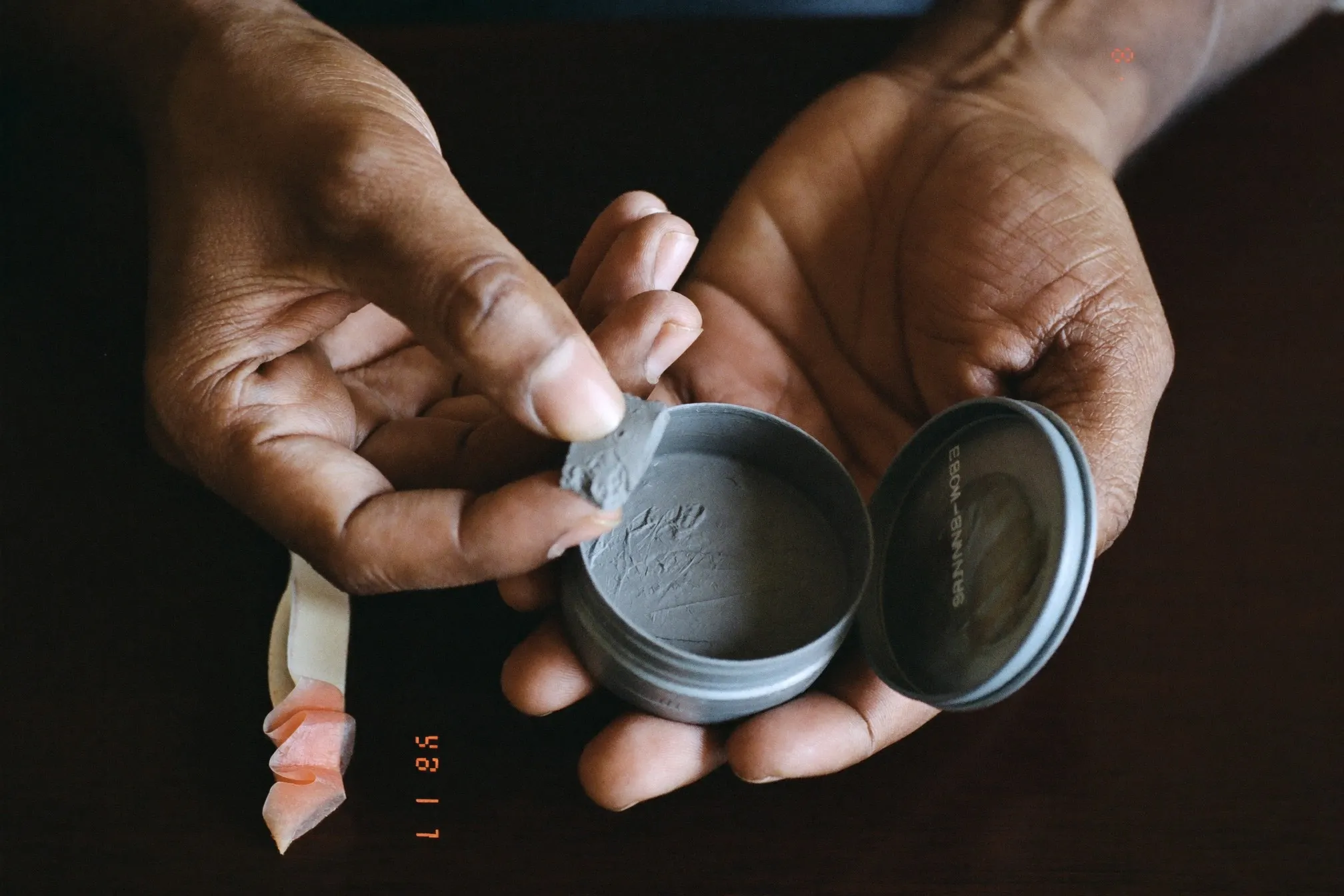
Which of these survives Malaysian and Singaporean humidity?
Clay and fibre win. Both dry down and stop responding to moisture, so your style at 6pm resembles your style at 8am. Water-based pomade softens once your scalp goes damp and can slide. Oil-based pomade holds structure but migrates, and on a hot bike commute it will end up on your forehead.
Humidity does two things to hair. It swells the strand, which is why straight hair goes puffy and wavy hair frizzes, and it makes your scalp produce oil that dilutes whatever you put on top. A product that only holds mechanically, like clay, keeps working. A product that depends on staying dry, like a stiff gel, cracks and flakes instead.
Three habits that help more than switching brands:
- Style on damp hair, not soaking or bone dry. Damp hair takes shape; the product then locks it as it dries.
- Blow dry the roots for thirty seconds before applying anything. Direction set by heat outlasts direction set by product.
- Keep a travel-size tin at your desk. A ten-second reshape after your commute costs nothing and fixes most of the damage.
If you ride a motorbike, accept that helmet hair beats every product ever made. Style after you arrive, not before you leave.
How do you apply it without the helmet look?
Most men use too much product and put it in the wrong place. The style collapses, so they add more, and by Thursday their hair looks wet and separated into greasy planks. The fix costs nothing.
- Towel dry until damp. Not dripping. Blot, do not rub, or you introduce frizz before you start.
- Blow dry with your fingers, pushing the hair up and back. Thirty to sixty seconds. This step does 70 per cent of the work and almost nobody bothers.
- Take a pea-sized scoop. Less than you think. You can always add more.
- Warm it between your palms until it goes thin and glossy. Cold clay applied in a lump lands as a lump.
- Work from the back forward, palms first, then fingertips for the front. Starting at the fringe dumps most of the product in the most visible spot.
- Shape last. A wide-tooth comb for slick styles, fingers for texture.
Two other notes. Do not touch your hair for the rest of the day; hands add oil and break the hold. And if you have a two-block cut, the disconnected top needs product only on the top layer, since the sides are short enough to stay put on their own.

What should this cost, and where do you buy it?
You can style your hair well for under RM50 a tin, and a 100g tin lasts three to four months at daily use. That works out cheaper per month than one kopitiam breakfast.
| Where | Typical price | What you get |
|---|---|---|
| Watsons or Guardian | Around RM25–45 / S$10–18 | Mass-market clays, waxes and gels. Fine for a first tin. |
| Barbershops (KL, PJ, SG) | Around RM50–80 / S$20–35 | Local barber-brand pomades and clays, often better formulated for this climate. |
| Shopee and Lazada | Around RM35–90 | Widest range and the best sale prices. Check seller ratings; counterfeit pomade is a real category. |
| Sephora or specialist stockists | Around RM90–150 / S$35–60 | Imported salon brands. Better texture, rarely better hold. |
Buy from the barber who cut your hair if you are unsure. He has watched the product sit on your exact hair type for the last twenty minutes and has no reason to sell you the wrong thing. Barbershop staff in KL and Singapore will also let you test a fingertip before you commit, which no pharmacy will.
Price and hold do not correlate. Some of the strongest clays sold in this region come from small local brands charging RM55, and some RM140 imports are cream with good packaging.
How do you get it out of your hair?
Wash styling product out every night you wear it. Water alone shifts clay and water-based pomade. Oil-based pomade needs shampoo, sometimes twice, or a dedicated degreaser sold at most barbershops for around RM40.
Product left in overnight is how hairline pimples start, and in this climate the sweat does the rest. If you already get bumps along your forehead or the back of your neck, wash your hair before bed rather than in the morning and see whether they settle. The wider habit sits in our five-minute skincare routine.
Build-up is the other cost of skipping washes. Clay plus scalp oil plus a week creates a film that stops new product gripping. A clarifying shampoo once a fortnight resets it. Daily shampoo strips too much, so on non-styling days rinse with water and condition the ends.
Start with one tin of medium-hold clay from Watsons or your barber, around RM40, and give it two weeks. Style on damp hair, blow dry the roots first, use half what you think you need. If it still falls flat by lunch, the problem is the cut, and the rest of the hair hub covers what to ask for in the chair.
Quick answers
What is the difference between pomade and hair clay?
Pomade leaves shine and stays pliable, so you can comb the style back into shape through the day. Clay dries matte and grips, which adds visible thickness and texture. Choose pomade for slick, combed looks and clay for messy or cropped styles.
Which styling product works best in Malaysian humidity?
Clay and fibre hold up best because they dry down and resist sweat. Water-based pomade softens once your scalp gets damp, and heavy oil-based pomade can migrate down your forehead. If you sweat through your commute, start with clay.
Does pomade cause hair loss or scalp acne?
Styling product does not cause male pattern baldness. Product left on the scalp for days can clog follicles and trigger pimples along the hairline, especially in this climate. Wash it out nightly and see a GP or dermatologist if the bumps persist.
How much pomade should I use?
Start with a pea-sized amount for short hair, or a fingertip scoop for anything over four inches. Warm it between your palms until it turns glossy and thin, then work it through damp hair. Add a second small scoop only if the first disappears.