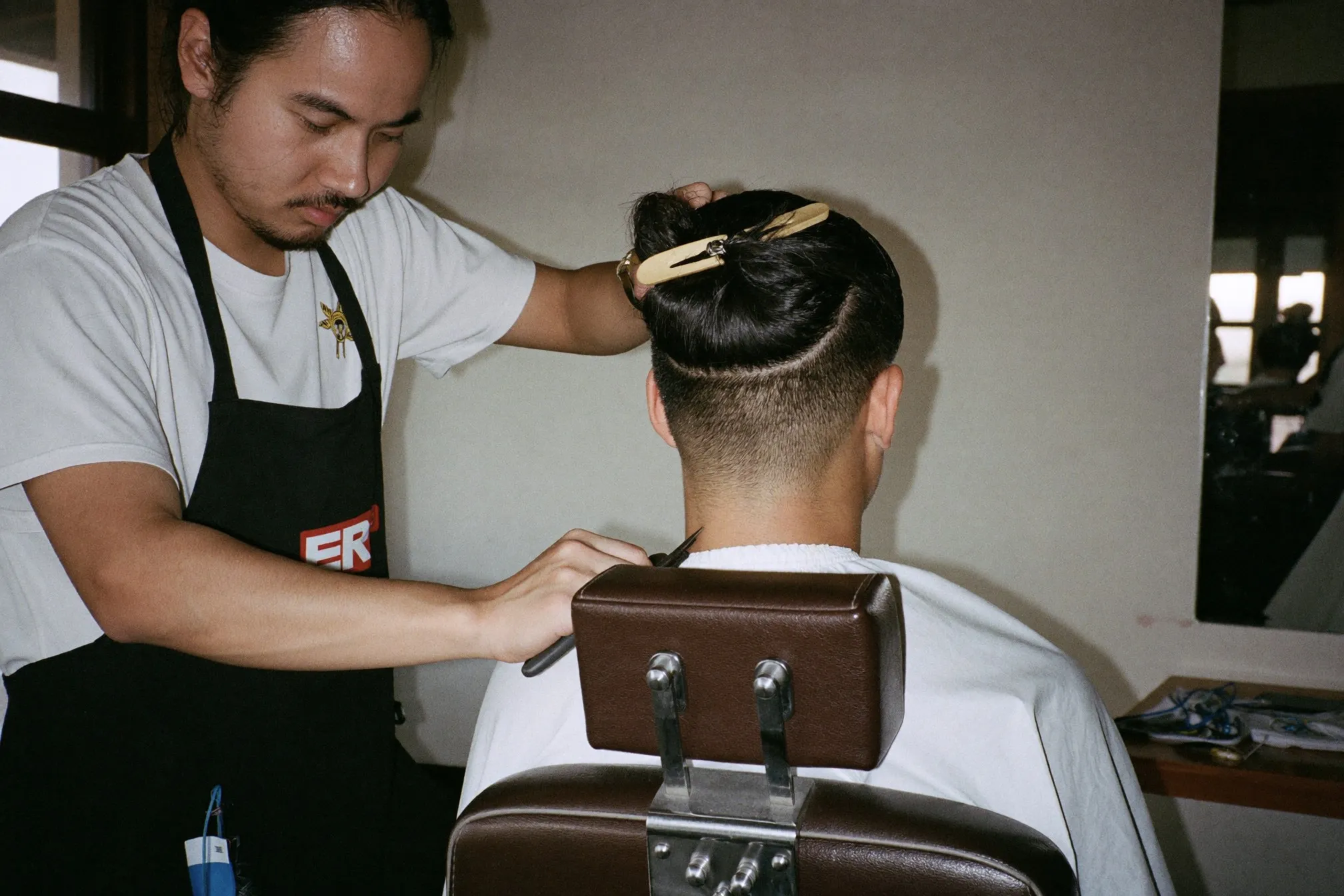
A two block haircut keeps the hair on top long, usually 5 to 10cm, and clips the back and sides short with a visible disconnection instead of a blend. Korea built it, K-pop exported it, and it has settled into Malaysian and Singaporean barbershops as the default request from men under 35 with thick, straight hair.
The name describes the structure. One block of long hair on top, one block of short hair underneath, and no gradient between them. This guide covers what to ask for, whether it beats a fade for your hair type, and how to keep it standing in 90 per cent humidity.
What is a two block haircut?
A two block splits your head into two zones. The top stays long, anywhere from 5cm to past your eyebrows. The back and sides get clipped or scissor-cut to one short length, and the zones never blend. When your hair is down, the long top hangs over the short section and hides the line.
That disconnection is the whole cut. A conventional short back and sides tapers gradually from long to short, and the barber spends most of the appointment blending. The two block skips the transition. Lift the top with your fingers and you see a clean shelf where long meets short.
It arrived in this region through Korean drama leads and idol groups in the early 2010s, and it stopped being niche a long time ago. Any barber in KL or Singapore under 40 has cut hundreds. The variations run from conservative, with the top just covering the parting and the disconnect sitting low near the ears, to a full curtain fringe with a middle part. Same skeleton underneath.
Why does it suit Asian hair?
Thick, straight East and Southeast Asian hair grows outwards before it grows down. That is why a normal medium-length cut puffs into a triangle by week three. The two block removes hair exactly where the puffing happens and keeps the weight on top, where straight hair needs it to sit flat and hold a shape.
Barbers usually fight dense straight hair with thinning shears and heavy product. The two block solves the problem with architecture instead. The sides physically cannot puff because they are 6mm long, and the top has enough weight to fall where you point it.
It also grows out gracefully. A fade looks untidy ten days after the chair because the gradient collapses. A grown-out two block just looks slightly fuller until the disconnect disappears around week six, and a cheap sides-only tidy resets it. Wavy hair takes the cut well too, with more texture on top. Tight curls change the physics of the fringe, so if that is your hair, browse the rest of our hair guides for cuts that work with the curl instead of against it.
Two block or fade: which should you get?
Get a two block if you want length, movement and a softer line that frames your face. Get a fade if you want sharp structure that looks identical at 7am and 11pm with zero styling. The fade reads athletic and precise. The two block reads softer, closer to a K-drama lead than a footballer.
| Two block | Fade | |
|---|---|---|
| Sides | One short length, disconnected | Gradient from skin upwards |
| Top | Long, 5cm and beyond | Short to medium |
| Daily styling | 3 to 10 minutes with a dryer | Near zero |
| Barber visits | Every 3 to 4 weeks, sides only | Every 2 to 3 weeks |
| Grow-out | Forgiving | Unforgiving |
| Best for | Thick straight hair, softer look | Defined jawline, low effort |
You can also merge them. A two block fade keeps the long disconnected top but fades the sides instead of leaving them one length, and it is a common request in Singapore. If you go that route, the numbers and taper heights are covered in our fade guide.
How do you ask your barber for it?
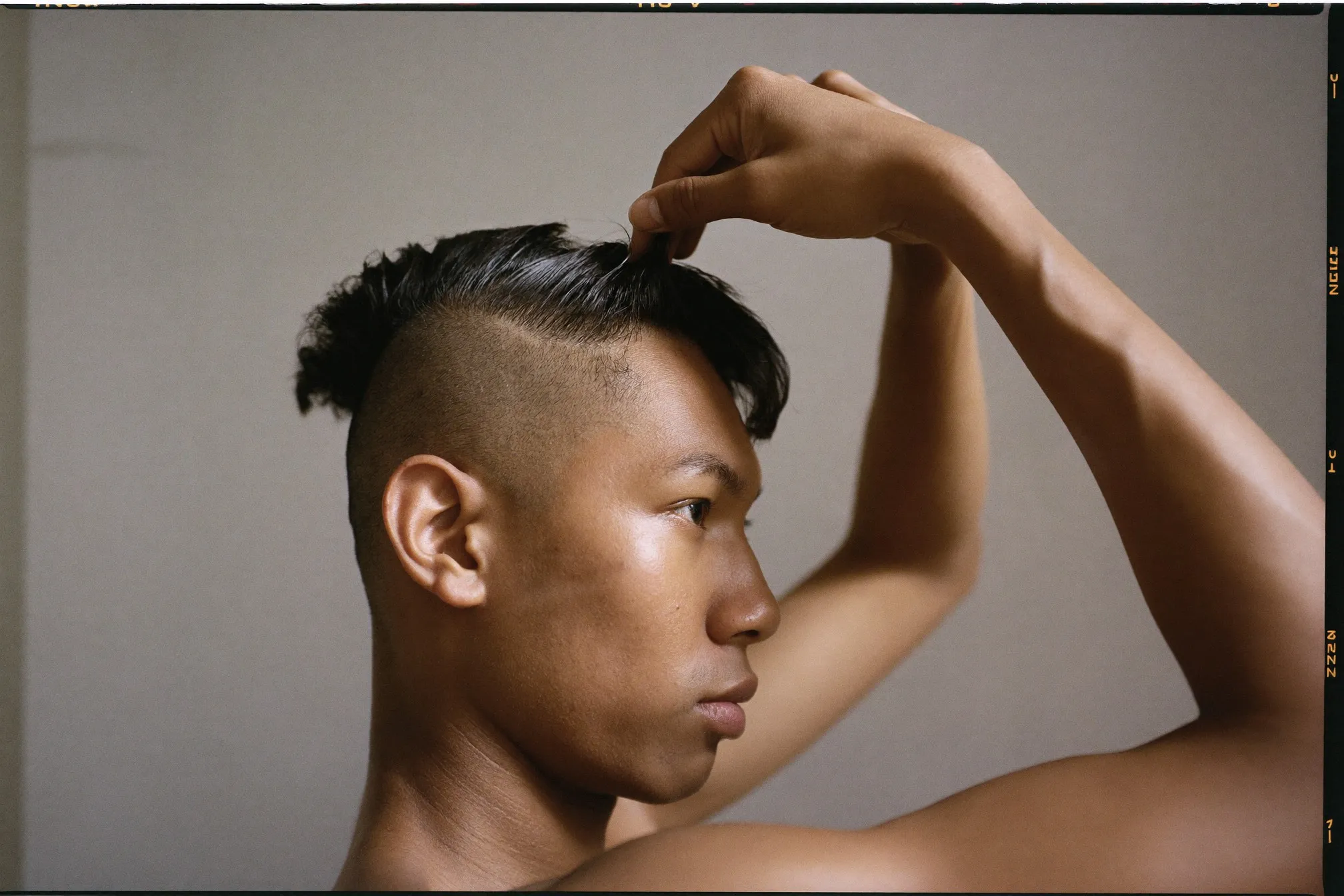
Say “two block” and most barbers in KL or Singapore will know exactly what you mean. Then specify three things: the clipper guard or length for the sides, how much stays on top, and how high the disconnection sits. Show a photo from the front and the side. The photo settles every argument before it starts.
If you want numbers, a number four to six guard on the sides is the conservative zone, and scissor-cut sides give a softer, more grown-in look at the cost of faster regrowth. Disconnection at the temple line is standard. Higher looks bolder and shows more contrast when the wind moves your fringe.
Where you go matters less than people think. A neighbourhood barbershop in MY does the job for around RM20 to RM40, and the Indian barbershops that have been running clippers for three generations handle the disconnect cleanly. Korean-style salons in Bangsar, Mont Kiara or around Tanjong Pagar and City Hall in SG charge around RM80 to RM150, or S$40 to S$80, and earn it on the first cut. They shape the top for your crown and cowlicks and will tell you honestly whether you need a perm. A sensible pattern: pay the salon once to establish the cut, then maintain it cheaply near home.
How do you style it in this humidity?
Blow-dry the top in the direction you want it to fall while the hair is still damp, then finish with a matte clay or a sea salt spray. The dryer does 80 per cent of the work. Skip it and the humidity decides your parting for you before you reach the MRT platform.
The full routine takes three minutes. Towel-dry, point the dryer from your crown forward for a fringe or outward from a middle parting for curtains, then rub a fingertip of product between your palms and work it through the ends only. Product at the roots flattens everything by lunch.
On products, sea salt spray gives hold you cannot see, and matte clay gives shape with a dry finish. Either runs around RM30 to RM60 at Watsons or Guardian, less during Shopee sales. Avoid pomade and wet-look gel. Both collapse into strings in this climate. If your clipped sides still jut out sideways after all this, that is what a down perm fixes. Korean salons here do them for roughly RM150 to RM300, or S$80 to S$150, and the sides sit flat for months.
The cut behaves itself in formal settings too. A tidy two block over a collared shirt passes at any office or wedding, and our smart casual guide covers the clothes half of that equation.
How do you stop it becoming a mushroom?
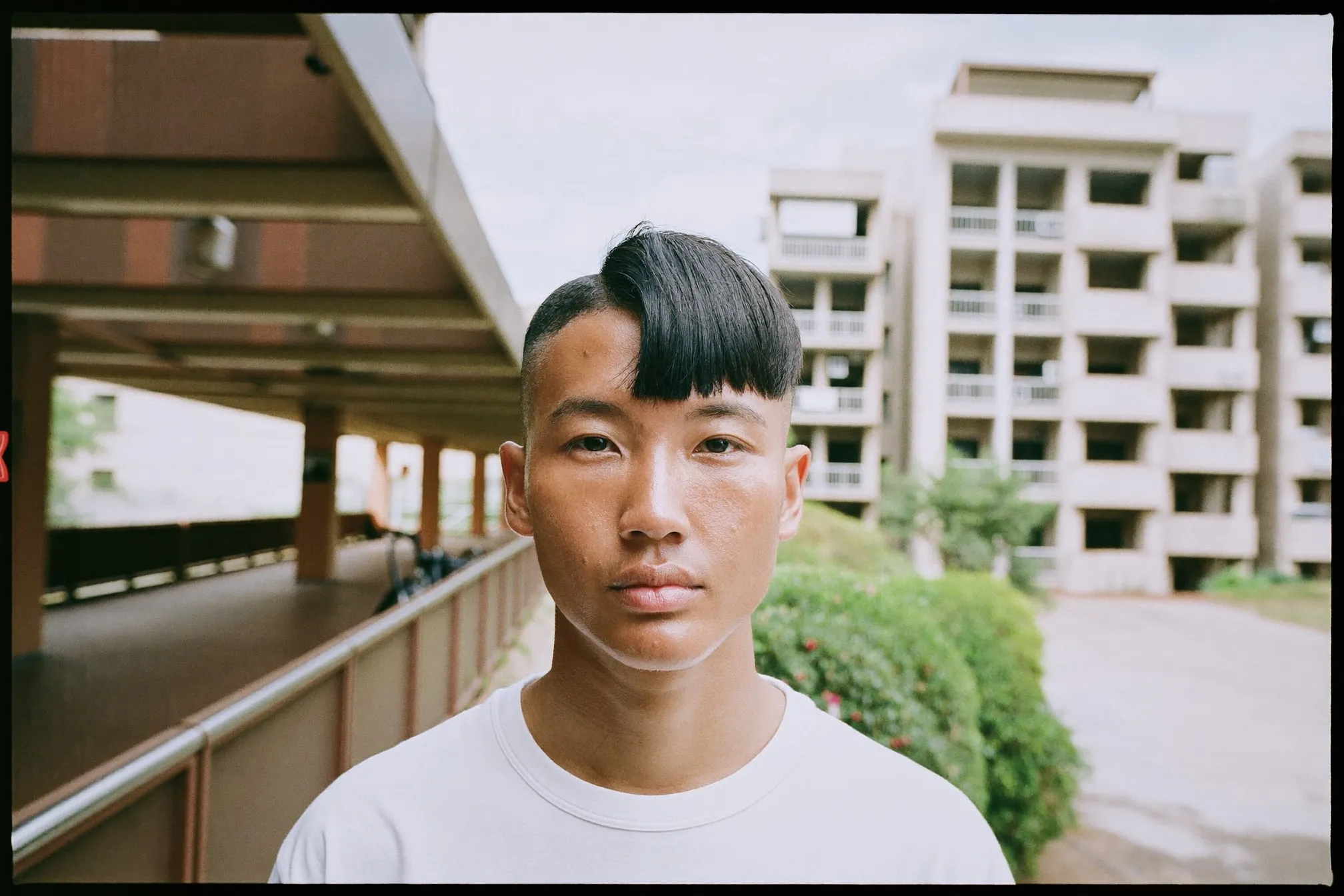
Clip the back and sides every three to four weeks and cut the top every second or third visit. The mushroom silhouette appears when the disconnection grows out and the top thickens at the same time, usually around week six of neglect. A sides-only tidy costs around RM15 to RM25 in MY and takes ten minutes.
Ask for the top to be thinned or point-cut on alternate visits if your hair is dense. Untouched, the top gains weight until the fringe hangs like a curtain rod. Wash properly as well. A long top traps sweat and product against your scalp all day, so a real rinse after exercise and a proper shampoo at night keep the fringe from separating into greasy strands by 3pm.
One warning from experience. Do not trim your own disconnect line with a beard trimmer at home. The line sits behind your ears where you cannot see it, and every barber can tell. The RM20 you saved will be visible from across the kopitiam for a month.
Tonight, save two photos, one front view and one side view, of a two block at the length you want. Book a chair for this week, ask for a two block with a number four side, and hand over your phone. The photo does the negotiating for you.
Quick answers
Does a two block haircut suit round faces?
Yes, with adjustments. Keep more height on top and place the disconnection slightly higher to stretch the face vertically. A heavy fringe pressed flat against the forehead widens a round face. Ask your barber to angle the fringe or style it up and off to one side.
Do I need a perm to pull off a two block?
No. The cut works on straight hair with three minutes of blow-drying. A down perm helps only if your clipped sides still stick out sideways, and a soft texture perm adds movement to a longer top. Wear the cut plain for a month before paying for either.
What is the difference between a two block and an undercut?
Both cuts disconnect the top from the sides. An undercut usually clips shorter, down to skin or a number two, with the top slicked back. A two block leaves the sides a touch longer and the top falls forward. Barbers here treat the photo you show as the real instruction.
How long does my hair need to be on top?
You want at least five centimetres on top so the long section covers the disconnection when your hair is down. If your top is shorter, ask for the sides to be cut now and grow the top for four to eight weeks. The cut fills in as you go.