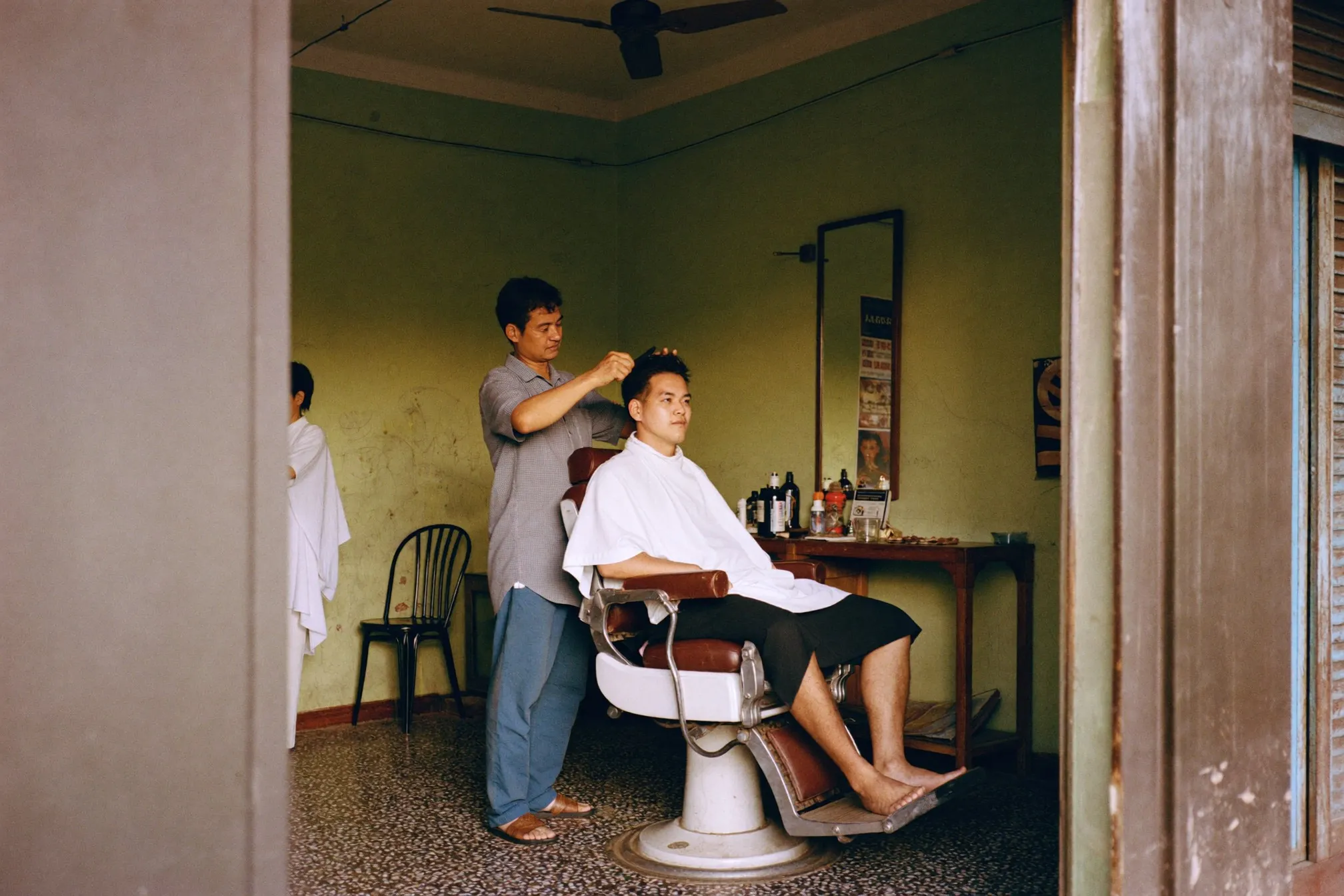
Nobody tips at most barbershops in Malaysia or Singapore. Show a photo, give your order before the cape goes on, speak up while the clippers are still moving, and pay the price on the board. That covers almost every question you have about barbershop etiquette here.
The confusion comes from having two barbershop cultures running side by side. A RM15 chair on a mamak row and a RM90 chair in a restored Bangsar shophouse both cut hair. They run on completely different expectations about time, talking and money, and walking into one with the other’s rules is how people end up uncomfortable.
Which kind of barbershop are you walking into?
Four types cover nearly everything in KL, PJ, Penang and Singapore: the old shoplot barber, the neighbourhood uncle shop, the express mall chain, and the appointment-based barbershop with a website. Price tracks time in the chair more than skill, and none of them expect a tip.
| Shop type | Typical price | How you get in | Time in chair | Tip expected |
|---|---|---|---|---|
| Indian-Muslim shoplot barber | RM12 to RM20 | Walk in, wait your turn | 15 to 20 min | No |
| Neighbourhood or void-deck shop | RM12 to RM18 / S$10 to S$16 | Walk in | 15 to 25 min | No |
| Express mall or MRT chain | RM25 to RM35 / S$14 to S$20 | Ticket queue, pay a machine | 10 to 15 min | No |
| Appointment barbershop | RM60 to RM120 / S$40 to S$70 | WhatsApp or booking app | 45 to 60 min | Optional |
The shoplot barber is the most misunderstood of the four. Those shops have been cutting hair on the same corner for thirty years, often with a straight razor, a hot towel and a neck massage nobody asked for and everybody enjoys. Ask for a standard short back and sides and you will get a good one. Ask for a skin fade with a burst around the ear and you may not. Match the request to the shop.
The appointment barbershop sells consultation and consistency. You get a barber who asks about your job, your helmet and your cowlick, then remembers all three next month. That is worth the extra RM60 to some men and nothing at all to others.
Do you tip your barber in Malaysia or Singapore?
No, and this is the one thing visitors get wrong most often. Neither country runs on tipping. The price on the board is the price, the barber is paid properly, and handing over an extra RM10 at a RM15 shop reads as slightly odd rather than generous.
Two soft exceptions exist. At appointment shops, regulars sometimes round up or leave RM10 to RM20 in cash when the barber stayed past closing, squeezed them in before a wedding, or threw in a beard tidy without charging. Second, the bill at those shops usually carries service charge and tax already, which is another reason nobody adds more on top.
What barbers here want instead costs you nothing:
- Rebook before you leave. A named regular is worth more to a barber than any tip.
- Turn up on time, or message early. No-shows cost an appointment shop a full hour of revenue, and some shops quietly stop taking your bookings.
- Bring exact change at cash-only shops. Plenty of shoplot barbers still are.
- Send friends. Word of mouth fills chairs in a way that Google Ads does not.
- Leave a review with the barber’s name in it. Shops with five barbers care which one you meant.
During the two weeks before Hari Raya and Chinese New Year, expect a festive surcharge of RM5 to RM20 and queues that run past midnight. That surcharge is not a tip, it is the price, and arguing about it in the middle of the busiest fortnight of the barber’s year will not go well.
How do you talk to your barber?
Give your instructions before the cape goes on, standing up, with dry hair he can see. Cover three things: how short the sides go, where the short part stops climbing, and what happens on top. Then stop talking and let him work. The technical vocabulary lives in our fade haircut guide, but the etiquette is simpler than the vocabulary.
Never say “up to you”. It sounds easygoing and it is the single most annoying sentence a barber hears. He does not know that your office bans anything razored, that you wear a helmet two hours a day, or that your sister gets married in nine days. You are not giving him freedom, you are giving him a guess to make on your behalf.
Two phrases carry most conversations. “Take a bit off, I would rather come back next week than lose too much today” protects you from over-eager clippers. “Same as last time, maybe a touch shorter on the sides” is the reward for finding a barber who works and staying with him.
Small talk is optional in both countries. Nobody is offended if you answer in short sentences and let the room go quiet, and no barber here needs to hear about your holiday plans. Say hello properly, answer the questions about your hair, then choose your own volume for the rest. Do keep your phone down and your head still. Scrolling while someone lines up your neckline is how you get a crooked neckline.
Should you show a photo?
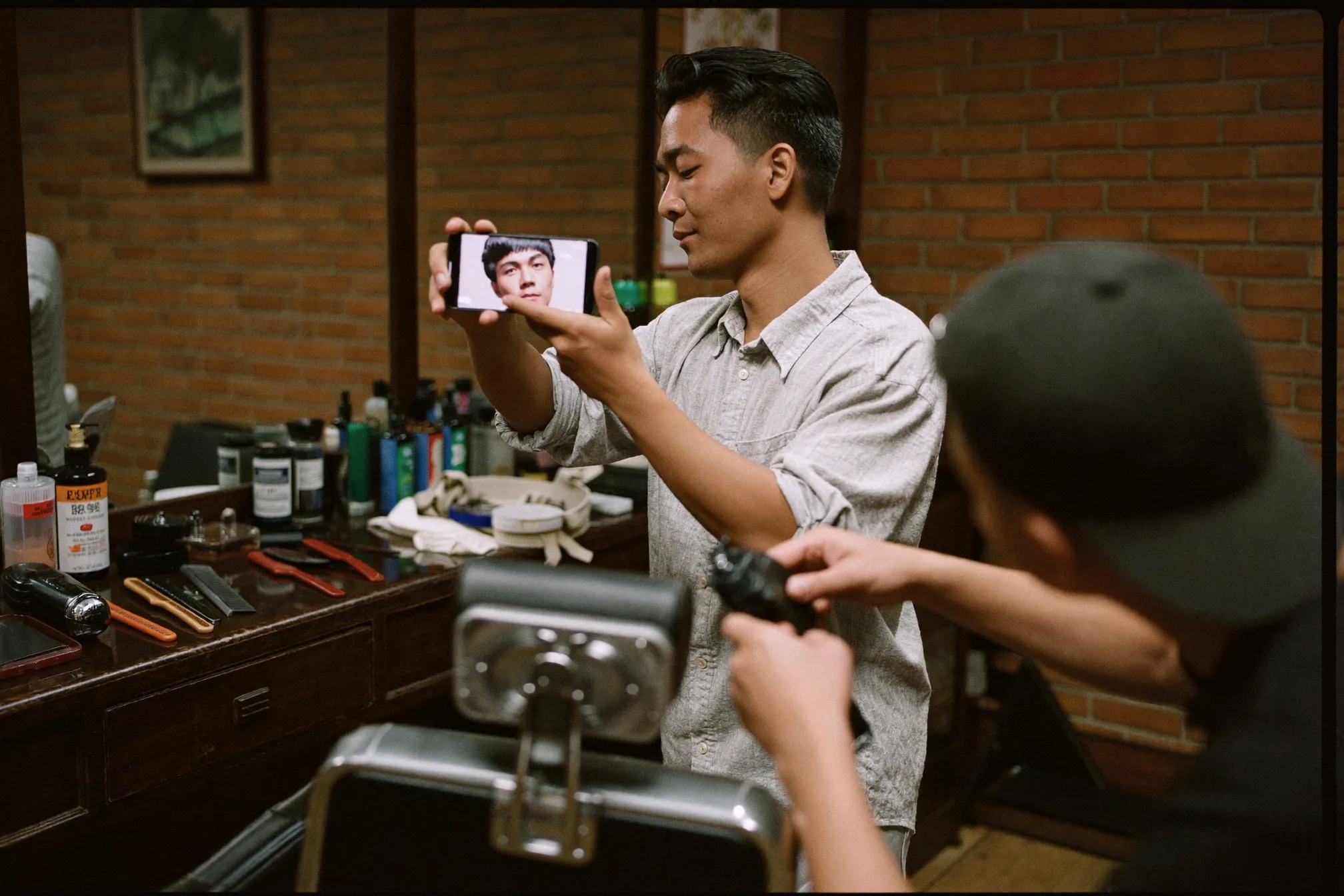
Yes, always, and bring two of them. Barbers prefer photos because “short but not too short” means five different lengths to five different men. A side view and a back view of hair that resembles yours tells your barber more in three seconds than two minutes of hand gestures.
The etiquette is in how you use it. Show the photo before the cut starts, not halfway through. Pick a reference with your hair type: a straight thick head of hair will not do what a soft permed Korean cut does, and asking for one on the other is how disappointment gets manufactured. Then ask the question that separates good clients from difficult ones: “can my hair do this?” If the barber says your crown will fight it, believe him. He has cut a thousand heads and he is looking at yours right now.
Photos of your own hair from a good week are the best reference of all. Take one the day after every cut you liked. If the shape you want relies on hidden short sides, say so, because a two-block looks like a normal haircut in most photos and a barber may not spot the intent.
What do you do if you hate the haircut?
Speak up before you stand up. Once the cape comes off and you have paid, your leverage and the barber’s opportunity both disappear. Be specific about what is wrong (too short on top, sides too high, neckline crooked) rather than pulling a face at the mirror and saying it is fine.
Timing matters more than tone. The best moment to say something is at the halfway point, when the barber pauses and holds up the mirror. That pause is a genuine question, not a formality, so answer it honestly. “Can you go a bit tighter above the ear” costs nothing then and is impossible to fix later.
Accept the physics. Hair only goes shorter, so if too much came off, no conversation brings it back and the honest answer is two weeks of waiting. What a good shop will do is even out a bad blend, fix a crooked line or tidy a neckline for free within a week. Ask calmly and most will book you in.
What not to do: argue about the price at the counter, film the barber, or post a one-star review over three millimetres. The barber community in both cities is small, and the shop you burn today is the shop your friend recommends next year.
The unwritten rules nobody tells you
- Come with clean, dry, product-free hair. Not freshly gelled, not soaked in sweat from a Grab ride with the window down. A barber can wet your hair himself; he cannot un-clay it.
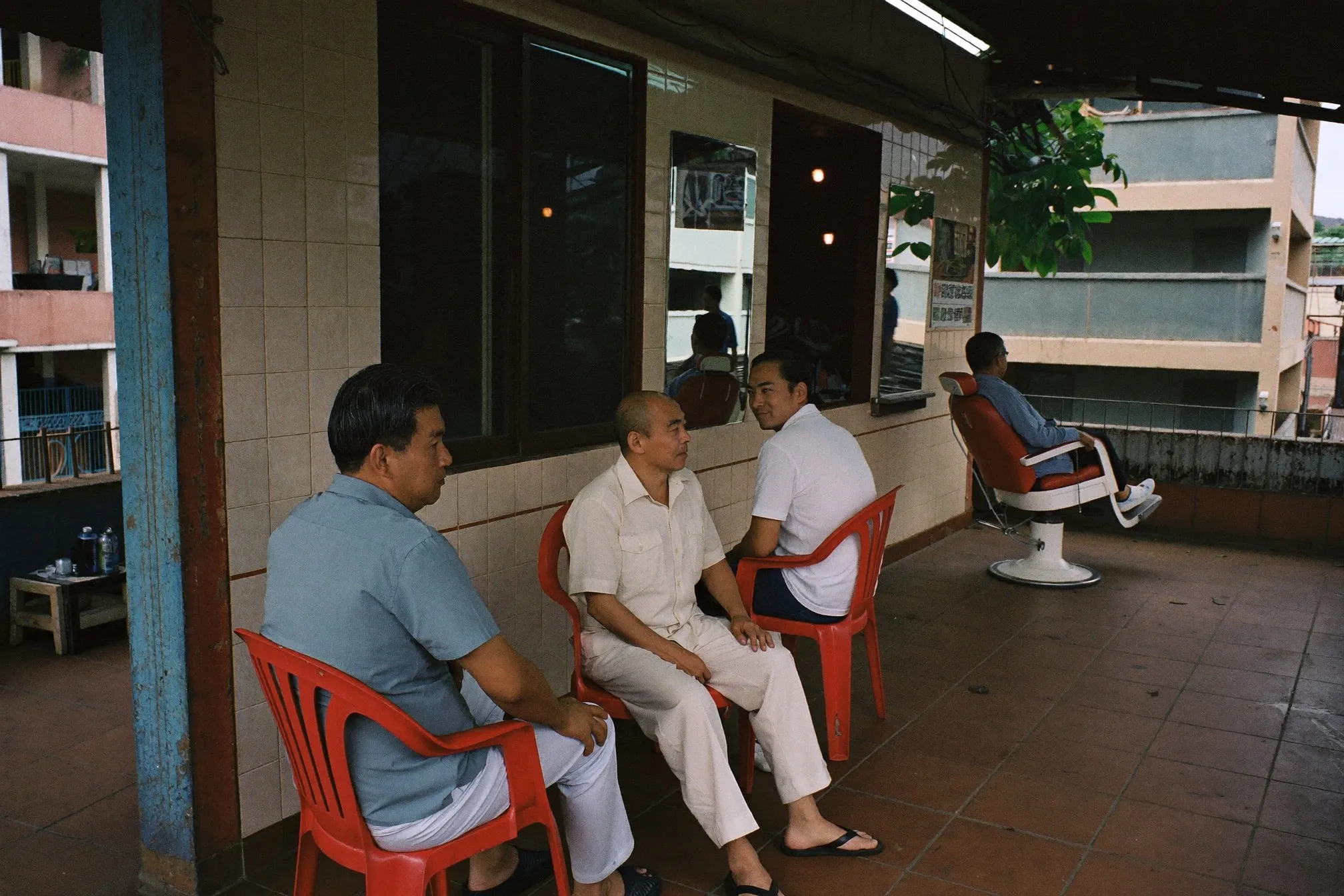
- Do not bring three friends unannounced to a two-chair shop. Message ahead or split across two visits.
- Take the headphones out. You will be asked questions and you will mishear them.
- Ask about add-ons before they happen. Beard trims, a shave and a wash are usually charged separately, from RM10 to RM30. Prices are posted at most shops, and asking is normal.
- Kids go in the morning. Weekday mornings are dead, evenings and Saturdays are packed, and nobody wants a crying four-year-old at the 7pm rush.
- Rinse your head at home. Loose clipped hair plus sweat is how hairline pimples start, especially after a razored edge.
- Do not haggle. Not at a RM15 shop, not anywhere. Prices here are already thin.
Styling the result is your job, not the barber’s, and the products that survive this humidity are covered in our hair styling products guide. More cut guides sit in the hair hub.
Here is your next move. Book a weekday morning slot at whichever shop you already half-trust, save two photos to your phone tonight (one side, one back), and turn up with a three-part order ready. Ask the barber’s name before you sit down and use it when you rebook on the way out. That one habit turns a random chair into a barber who knows your head, which is the whole point of the exercise.
Quick answers
Do you tip barbers in Malaysia and Singapore?
No. Tipping is not expected at barbershops in either country, and nobody thinks less of you for paying the exact price. At pricier appointment shops some regulars round up or leave RM10 in cash for extra work. Rebooking the same barber matters more than the money.
Is it rude to show your barber a photo?
The opposite. Barbers prefer photos because words like short and tidy mean different things to everyone. Bring two angles, side and back, of hair that resembles yours. Then ask whether your hair can do it and believe the answer you get.
What do you say if you do not like the haircut?
Say it before you stand up, while you are still in the cape. Be specific about the problem: too much off the top, uneven neckline, sides too high. Most barbers fix it on the spot. Remember hair only goes shorter, so some fixes wait two weeks.
Should you wash your hair before going to the barber?
Come with clean, dry, product-free hair. Barbers cut dry hair to judge length and cut wet hair for precision, and they can wet it themselves. What ruins a cut is yesterday's clay or a helmet-flattened scalp after a sweaty commute.