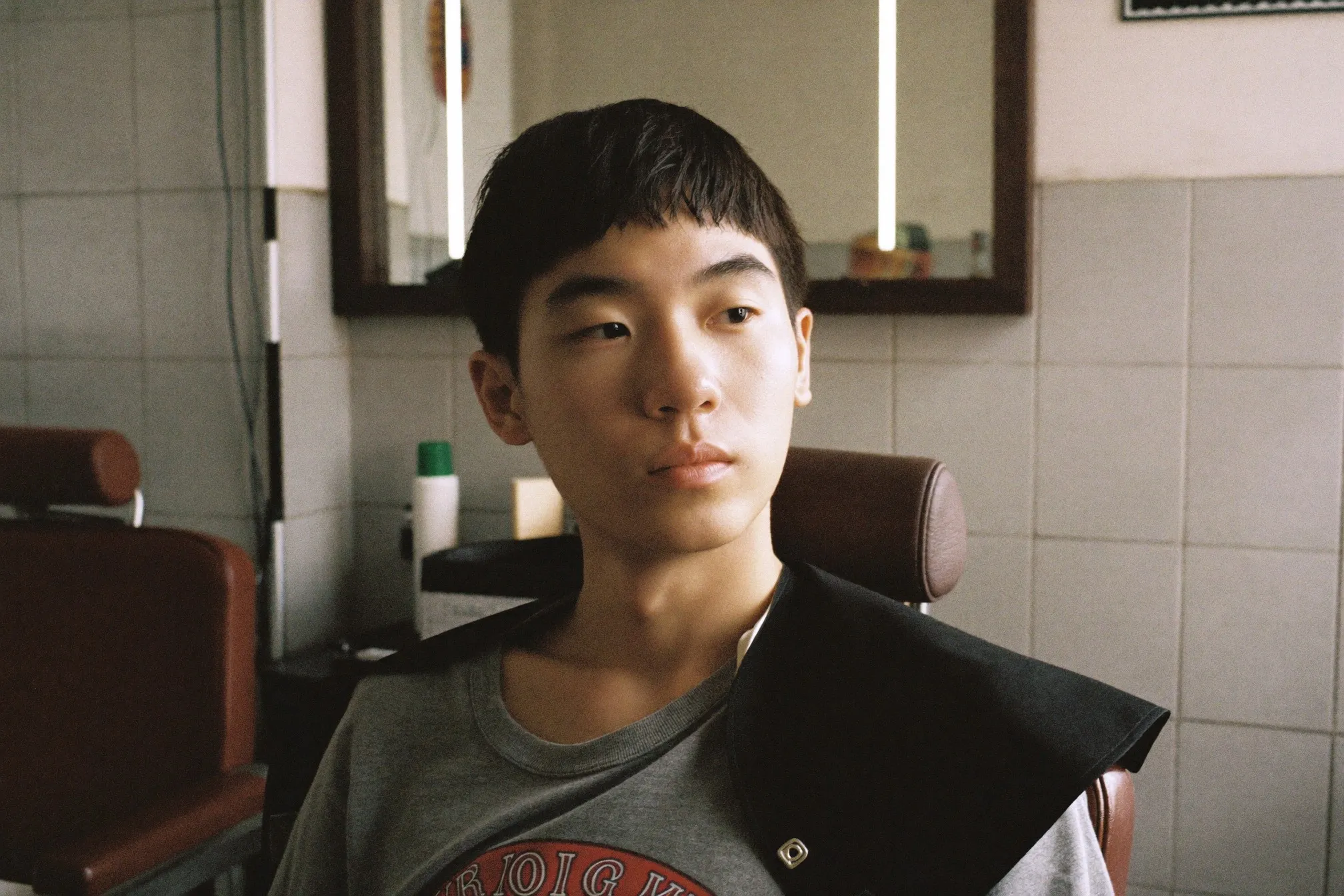
A boyish haircut is short and rounded with soft edges: a light textured fringe worn forward, sides tapered instead of shaved, and just enough length on top to move when you turn your head. No hard lines anywhere. Korean stylists call the effect sonyeon-mi, boyish charm, and it has been quietly replacing the two block as the default request in Bangsar and Tanjong Pagar salons.
The catch is that “soft” and “sloppy” sit about two centimetres apart. Ask the wrong barber for a boyish cut and you get a bowl. This guide covers what the cut is, whose head it suits, the exact words that get you the right result, and how to keep it alive in weather that flattens hair by 11am.
What is a boyish haircut?
A boyish haircut keeps the top between 4cm and 7cm, tapers the back and sides gradually so no line shows, and finishes with a soft fringe that sits on or just above the eyebrows. The silhouette is round rather than square. It is a haircut with no visible engineering.
Three things separate it from every other Korean cut in circulation. The sides taper rather than disconnect, so there is no shelf where the clipper stopped. The ends get point-cut, which means the barber holds his scissors vertically and cuts into the hair instead of straight across, leaving a broken edge that moves. And the whole thing is designed to be worn down, matte and slightly imperfect, rather than lifted and set.
That last point matters more than the numbers. If you style a boyish cut the way you styled your undercut, with pomade and a comb, you have undone the cut. It wants sea salt spray and about forty seconds of hand work. Our guide to hair styling products breaks down what does what.
Does a boyish cut suit your face and hair?
It suits oval, long and mildly angular faces best, because the rounded shape and forward fringe shorten the face and soften a heavy jaw. Round faces need adjustments: more height at the crown, a fringe split or angled off to one side. Thick straight hair works well once weight comes out. Very fine hair struggles.
Here is the honest breakdown by hair type.
Thick, straight, coarse. The most common hair in this region and a good match, with one condition. Your barber has to remove internal weight through the crown and the corners above your ears, or the cut inflates into a mushroom by the third week. Weight removal is a skill. A barber who only owns thinning shears and runs them along the outside will wreck the outline.
Fine or thinning. Harder. The soft outline needs some density to hold a shape, and fine hair collapses flat against the scalp in humidity. You can still get a version of it by keeping the top shorter, around 4cm, and asking for blunt ends rather than heavy point-cutting. Blunt ends look thicker.
Wavy or curly. Better than you would expect. The texture does the work the point-cutting would otherwise have to do, and a slightly grown-out boyish cut on wavy hair looks intentional in a way it does not on straight hair. Read our curly hair guide for Asian men for the drying method, because towel-scrubbing undoes all of it.
Cowlick at the front. Very common, and the one real dealbreaker. If your hairline has a strong swirl above one eyebrow, a forward fringe will lift and separate there every single day. Ask your barber to check before he starts. The workaround is a side-angled fringe that runs with the swirl.
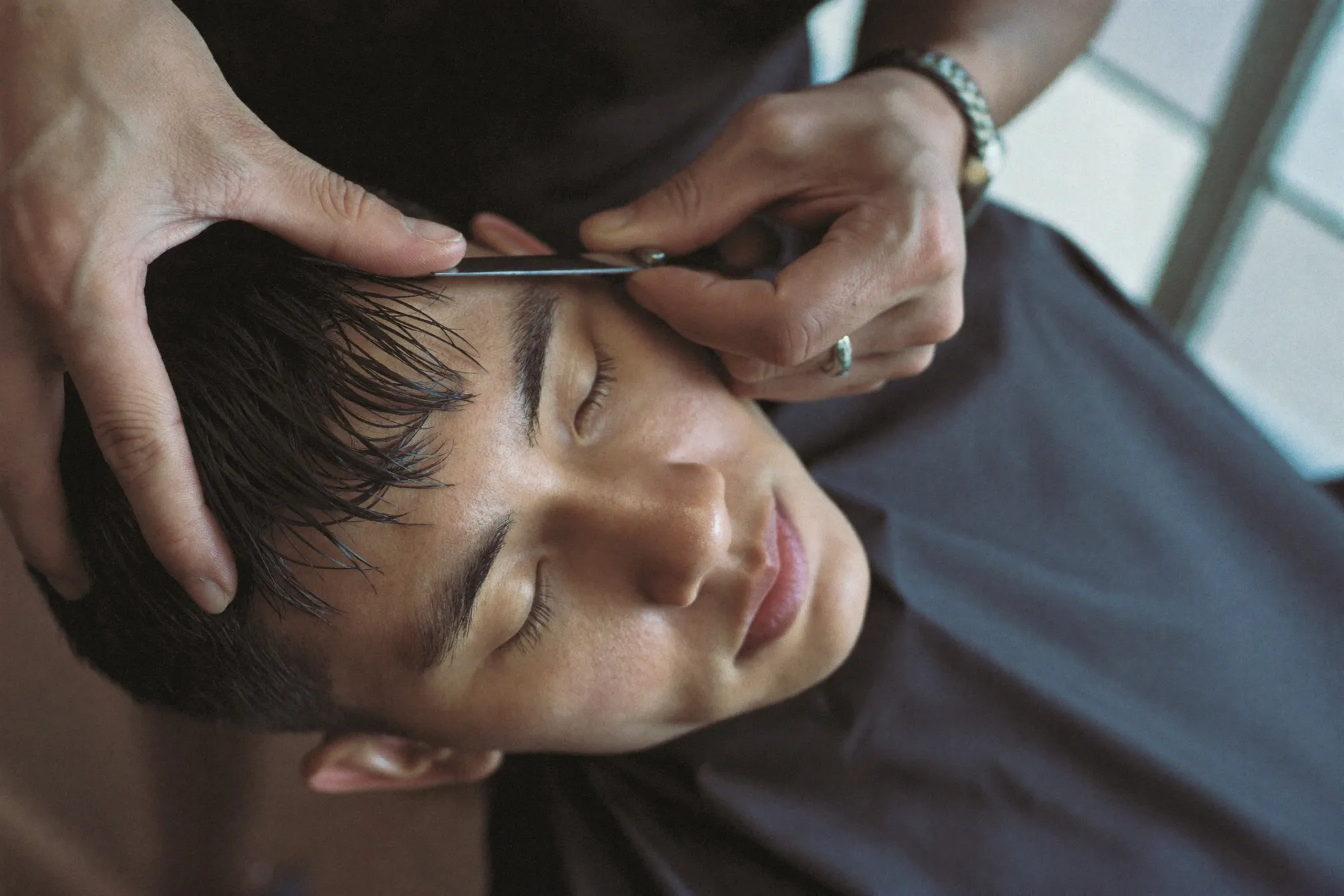
Boyish cut, two block or fade: which one are you asking for?
All three are short on the sides and longer on top. What separates them is how the two lengths meet and how much product the result demands.
| Boyish cut | Two block | Fade | |
|---|---|---|---|
| Sides | Tapered, no visible line | Clipped, visible step | Graduated to skin or near it |
| Top length | 4 to 7cm | 5 to 10cm+ | Any |
| Fringe | Forward, soft, brow length | Forward or curtain | Usually styled up |
| Product needed | Light spray or cream | Light clay | Pomade or clay, plus a dryer |
| Grow-out | Softens for weeks | Blurs at the step | Sides go fuzzy fast |
| Trim cycle | 4 to 6 weeks | 5 to 7 weeks | 2 to 3 weeks |
The practical difference is maintenance. A fade looks best for about ten days and then starts announcing that you are overdue. A two block holds longer. A boyish cut is the most forgiving of the three, because a soft outline growing out still looks like a soft outline. If you cannot get to a barber every fortnight, this is your cut.
What do you tell the barber, and what does it cost?
Bring a photo. Every barber in Malaysia and Singapore treats the photo as the real instruction, and the phrase “boyish cut” will get you three different haircuts at three different shops. Then say these five things in order.
- “Taper the sides with a scissor over comb, no clipper line, no fade.”
- “Leave about 5cm on top.” Say the number, not “medium”.
- “Fringe to the eyebrows, point-cut, not blunt across.”
- “Take weight out from inside, keep the outline soft.”
- “I want to wear it forward and down, no product.”
That fifth line does more than the other four. It tells the barber what the finished head is for, and a good one will cut differently once he knows you are not going to blow-dry it back every morning.
| Where | Malaysia | Singapore |
|---|---|---|
| Neighbourhood barber | around RM20 to RM35 | around S$15 to S$25 |
| Modern barbershop (PJ, Bangsar, Damansara) | around RM45 to RM70 | around S$35 to S$55 |
| Korean-style salon | around RM90 to RM150 | around S$60 to S$120 |
| Down perm add-on | around RM90 to RM160 | around S$70 to S$130 |
A neighbourhood uncle can cut this, and for RM25 he is worth trying twice before you spend RM120 in Mont Kiara. What you are paying for at the higher end is weight removal and a barber who has cut fifty of these. If your first attempt comes out heavy and round, that is the thing to buy next time.
Skip the down perm on the first visit. It presses stubborn side hair flat against your head, which some men here need and most do not. Wear the plain cut for a month, see whether your sides stick out, then decide. Our Korean hairstyles guide covers the perm menu if you get there.
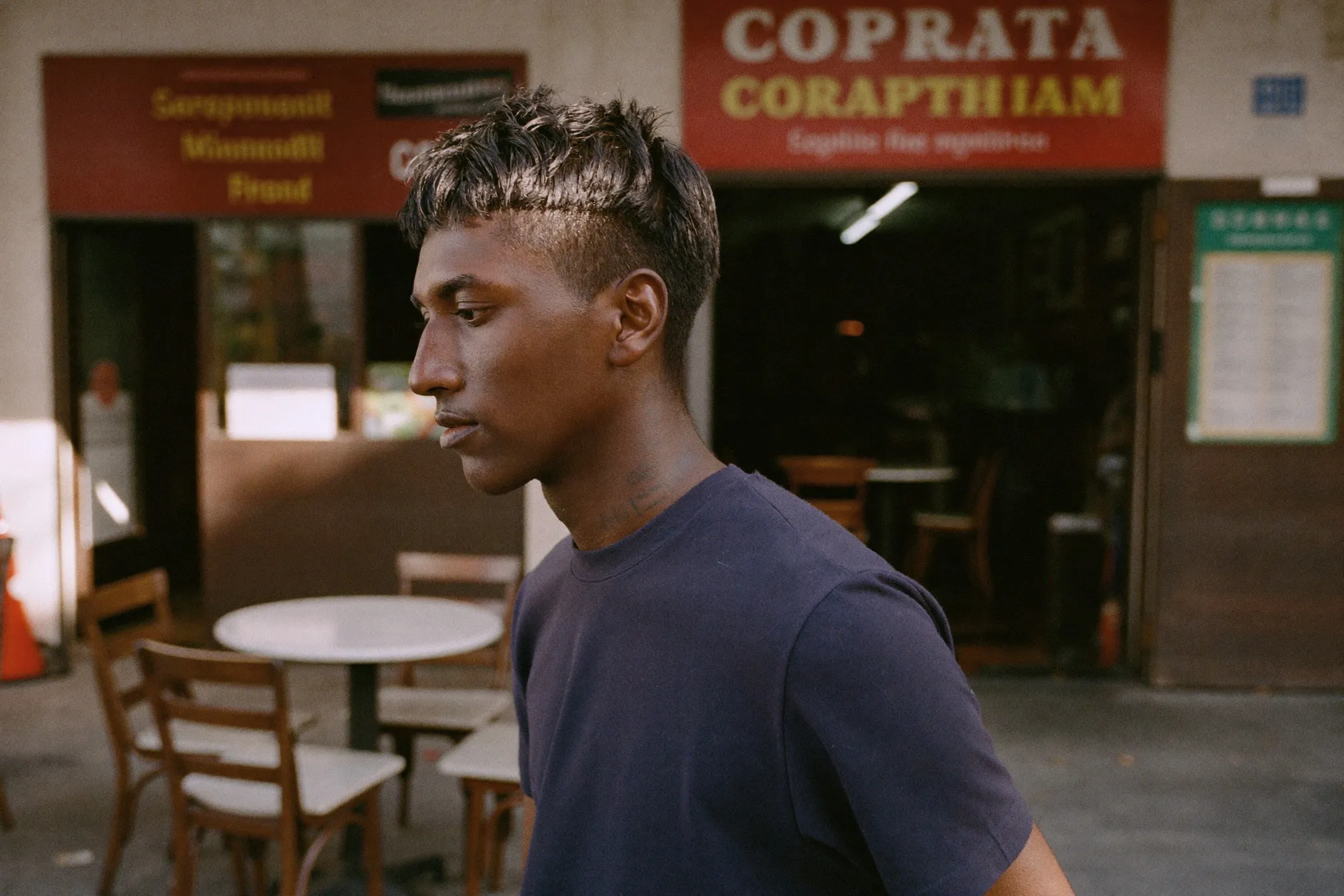
How do you style it when it is 33°C and 85% humidity?
Damp hair, sea salt spray or a light texture cream, thirty seconds of scrunching with your fingers, and a cool blast from the dryer if you own one. No comb. The goal is separated pieces that fall forward, not a set shape, so anything with shine or hold works against you.
The tropical failure mode is scalp oil. By 2pm your fringe has clumped into three greasy strands and the soft outline is gone, and no product fixes that from the outside. Wash daily with something mild, and keep conditioner on the mid-lengths and off your roots.
Two things that work in this climate:
- Sea salt spray on damp hair, then air dry on the walk to the LRT. Humidity is not your enemy here. Salt spray plus ambient moisture gives the exact undone texture the cut is designed around.
- A matte powder in your bag for the afternoon. A pinch at the roots after lunch resurrects a flat fringe in ten seconds, and it costs around RM35 at most barbershops.
What to avoid: pomade, wax, hairspray, and any comb with fine teeth. Combing a point-cut fringe merges the pieces back into a curtain and turns the whole thing into the mushroom your mother gave you in 2003.
Can you wear it at 35, or in a conservative office?
Yes to the office, with a caveat about the fringe length. A boyish cut at brow length reads neat in a Malaysian or Singaporean workplace, including banking and government, because the sides are tapered and nothing is shaved. Below the brow it starts to read student.
Age is the question people are quieter about. The cut is named for boyishness, which sounds like a problem after 30, but it functions differently on an older face. Softened edges take a few years off a set jaw, and the same fringe that looks like a school photo on a 22-year-old reads relaxed on a 38-year-old with a decent shirt on. The adjustment is length: shorter top, shorter fringe, less texture. Keep the taper and lose the wispiness, and it stops looking borrowed.
Where it fails is on a head that has committed to nothing else. A soft haircut with a three-day beard patch and a stretched office tee looks unfinished rather than casual. Shave properly or grow it properly, and the cut has something to sit on. The rest of our hair coverage works through the beard and scalp side of that.
Book a 45-minute slot rather than a walk-in for the first one, bring two photos (one front, one side profile), and tell the barber the 5cm number before he touches your head. If you like the result, ask him what he did to the crown and write it down. That is the sentence you will repeat every six weeks for the next two years.
Quick answers
What is the difference between a boyish cut and a two block?
A two block disconnects long hair on top from clipped sides with a visible step. A boyish cut tapers the sides so there is no step at all, keeps the top shorter, and lets the fringe fall forward. The boyish cut reads softer and needs less product.
Does a boyish haircut work on thick Asian hair?
Yes, but your barber has to remove weight. Thick straight hair grows outward and turns a rounded cut into a helmet by week three. Ask for internal thinning through the crown and point-cut ends, not thinning shears run along the outline.
Can I get a boyish haircut if I have a receding hairline?
Often yes. A forward-falling fringe covers a mild recession better than a swept-back style does. If your temples have gone deep, ask for a shorter crop with texture instead, and see a GP or dermatologist if the loss is recent and fast.
How often do I need to trim it?
Every four to six weeks. The cut lives on its outline, so once the fringe passes your eyebrows and the sides creep over your ears, the shape collapses into something shaggy. Many barbers here do a free fringe trim between cuts if you ask.