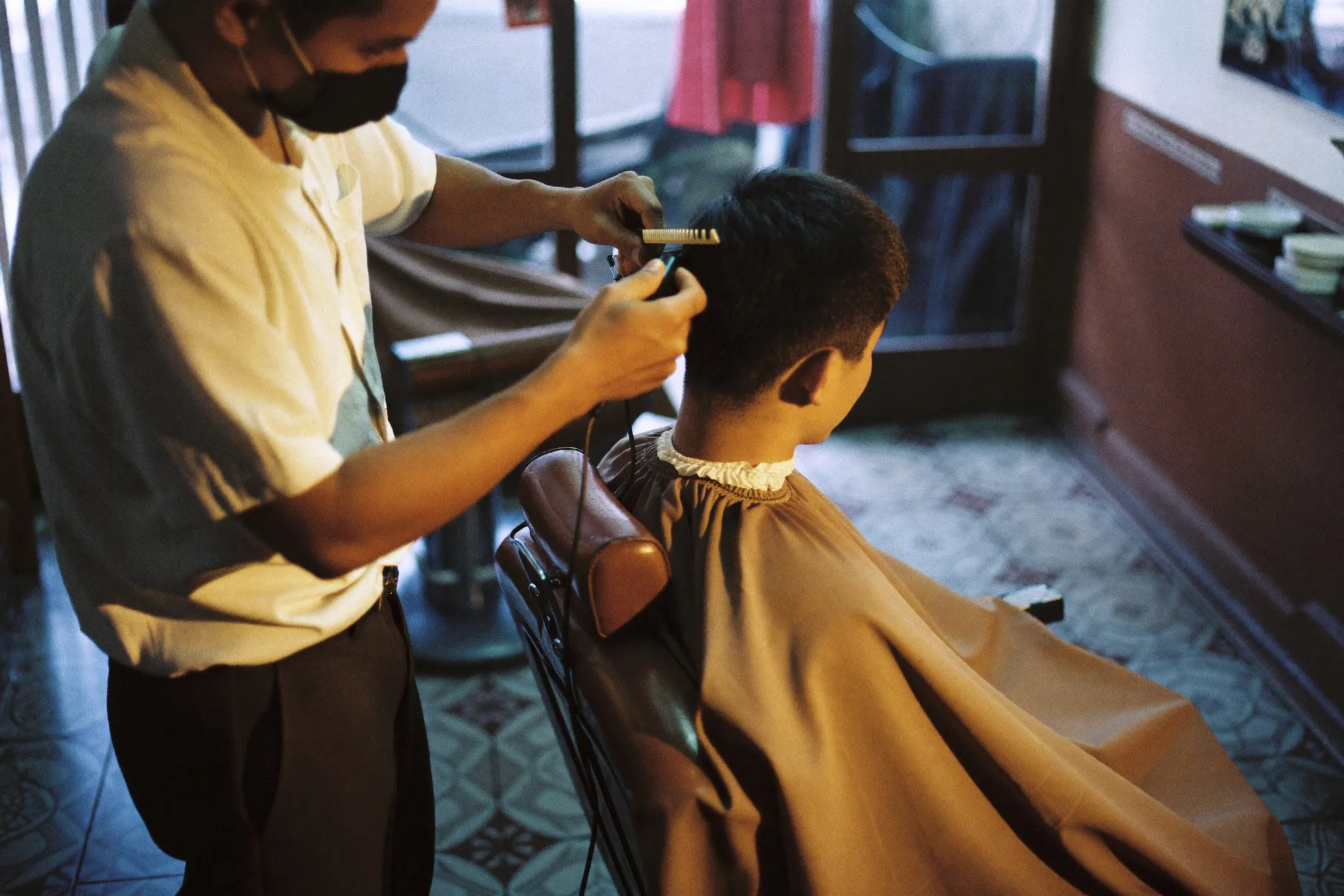
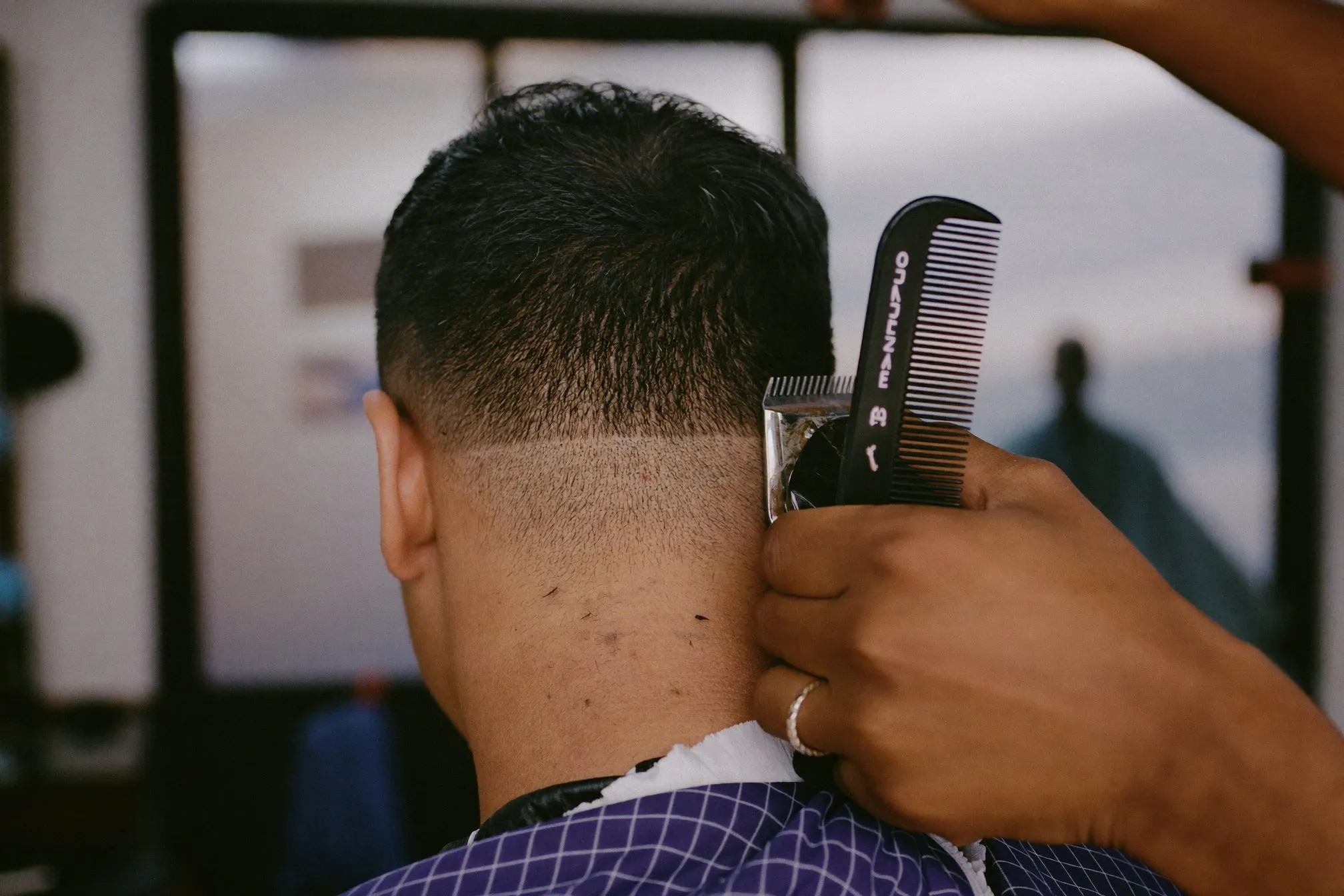
A low fade haircut cuts the back and sides short, then blends them into longer hair on top, with the fade sitting low, about a finger’s width above your ear. It is the most office-safe version of the fade, and the right one to ask for if you have never had one.
Any barber can cut one, from the Indian barbershop under the block to the appointment-only chair in Bangsar. The catch is that “fade” by itself is not an instruction. Height, length and finish change the cut completely, and a barber fills silence with his own defaults. This guide gives you the words to use before the clippers start.
What is a fade, and how is it different from a taper?
A fade blends the back and sides from near-bare skin at the bottom up to full length on top, with no visible line where the lengths change. A taper only shortens the edges, at the sideburns and the neckline, and leaves the sides one length. Fades look sharper. Tapers grow out slower and pass anywhere.
Barbers measure length in clipper guards. A number one leaves about 3mm, a two about 6mm, and so on up the scale. “Zero” means bare blade, roughly stubble. “Skin” or “bald” means a razor or foil shaver takes it down to nothing. When a Malaysian barber asks “nombor berapa?”, this is what he wants: the number for your shortest point.
Height is a separate decision from length. Height means where the shortest section stops climbing your head before it blends into the top. That one choice creates the three cuts everyone argues about.
Low, mid or high: which fade should you get?
Pick a low fade for office jobs, first fades and longer face shapes. Pick a mid fade if you want the fade visible but still polite as it grows; it is the regional default for good reason. Pick a high fade for round faces, short crops and maximum contrast, and accept the upkeep that comes with it.
| Fade | Where the shortest part ends | Suits | Looks fresh for |
|---|---|---|---|
| Low | Just above the ear, curving low round the back | First-timers, corporate offices, longer faces | 3 to 4 weeks |
| Mid | Level with the temples | Most faces, most hair types | 2 to 3 weeks |
| High | Up near the parting | Round faces, buzz-adjacent crops | 1 to 2 weeks |
| Taper | Sideburns and neckline only | Strict offices, slow grow-out | 4 to 6 weeks |
Hair type moves the answer more than face shape does. Thick, straight hair, which most of us in this region carry, pushes outward as it grows and turns into side-bulk within a month. A fade deletes that bulk, which is why the cut works so well here. Wavy or curly hair looks best with a mid fade and enough length on top for texture. Fine or thinning hair should stay low: a high skin fade removes cover you might want back.
If your office runs conservative, a low fade with a scissor-cut top reads as a normal corporate haircut that happens to be tidy. It sits comfortably under every dress code covered in our smart casual guide. If what you want is short sides hidden entirely under longer hair, you are describing a two-block, which is its own cut with its own rules.
What exactly do you say in the chair?
Give the barber three things: the height (low, mid or high), the shortest length (skin, zero or a guard number), and the plan for the top (how much stays, scissors or clippers). “Mid fade, zero at the bottom, tidy the top with scissors, keep the length” is a complete order that works in any shop.
A photo still beats vocabulary. Save two angles, side and back, of someone whose hair type matches yours. A screenshot of a Korean idol with soft permed hair tells the barber nothing useful about your thick straight hair, and you will both be disappointed.
A few add-ons worth knowing:
- Skin fade or bald fade. The bottom goes to nothing with a razor or foil shaver. Sharpest result, fastest to look scruffy.
- Drop fade. The fade line drops behind your ear instead of running straight back. Flatters a flat crown, which makes it a common request here.
- Burst fade. Curves around the ear and leaves the neckline longer. One step from a mullet, so be sure.
- Lineup. Sharp razored edges at the forehead and temples. Crisp for a week, then it needs redoing, so skip it unless you cut fortnightly.
Decide your neckline too: natural, which follows your growth and ages well, or blocked, a straight razor line that looks sharp today and fuzzy in ten days. And never answer “up to you”. The barber does not know about your office, your helmet or your wedding next month.
How much should a fade cost in Malaysia and Singapore?
Expect RM15 to RM30 at neighbourhood barbershops in Malaysia and RM60 to RM120 at appointment-based shops in KL and PJ. In Singapore, express chains charge around S$12 to S$16, while proper barbershops run about S$30 to S$60. The price mostly buys time, and a careful fade takes 30 to 45 minutes.
The cheap chair is fine when you know your order, want a simple low fade with a guard number, or need a maintenance cut between better ones. The expensive chair earns its money on the first visit: a proper consultation, freehand blending instead of guard-and-go, a razor finish, and a barber who remembers your head next month. Consistency is the real product. Once someone cuts your fade right, book the same person and say “same as last time”. That sentence is worth more than any technical term you could learn.
How do you keep it sharp past week one?
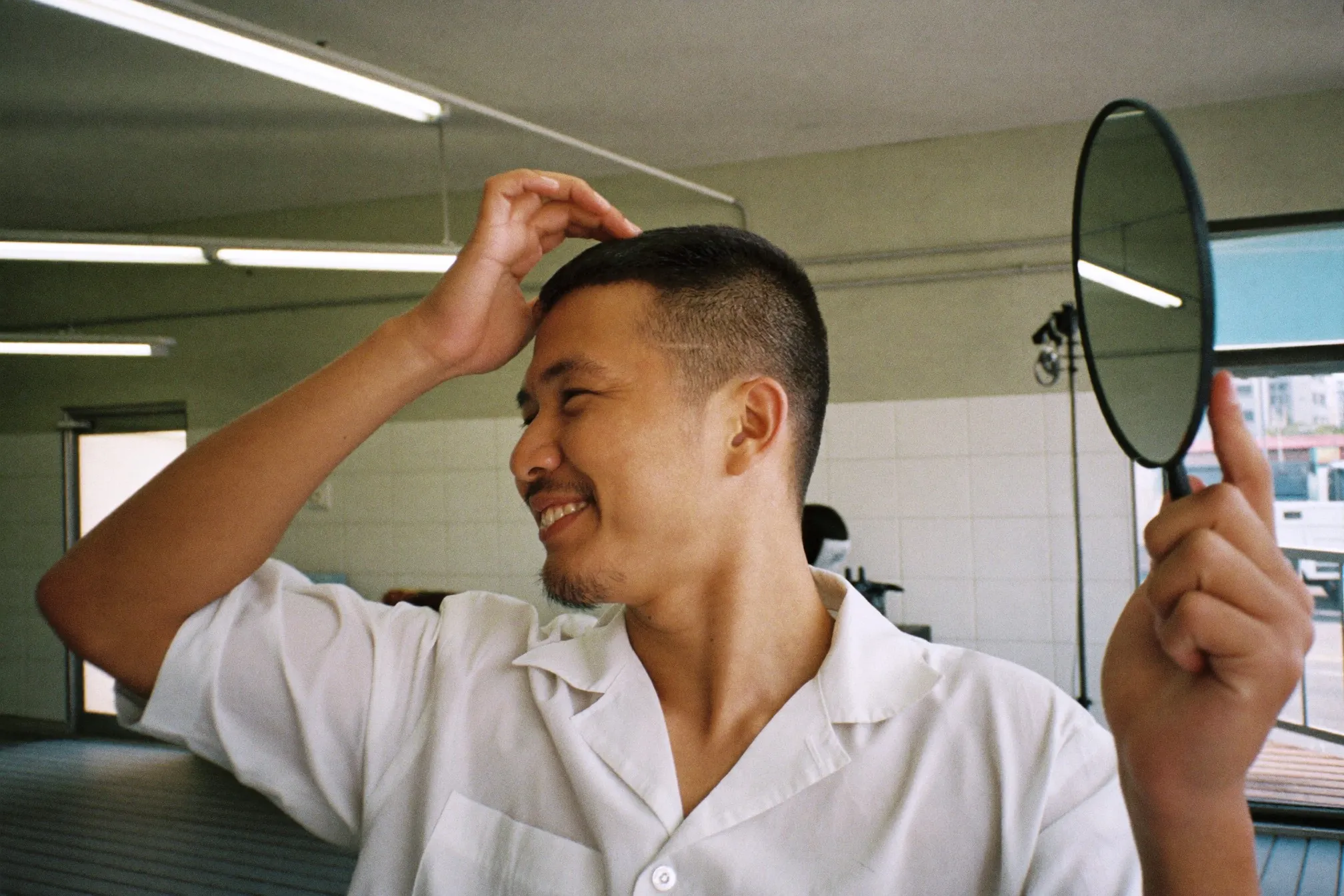
A fade peaks for two weeks and stays presentable until week four. Book a full cut every three to four weeks, and slot in a cheap neckline-and-edges tidy between visits if your growth shadows fast. In this humidity, matte clay or sea salt spray holds the top; heavy water-based pomade starts melting on the walk from the carpark.
Technique matters more than brand: a fingertip of clay, rubbed between your palms until it disappears, worked through mostly dry hair. House-brand clays at Watsons or Guardian for around RM20 to RM30 do the job while you figure out what you like. If you ride, style after you arrive, not before. No product survives forty minutes inside a helmet.
Two small habits protect the skin under the cut. Rinse your head when you get home from the barber, because loose clipped hair plus sweat is how hairline pimples start. And if the razored edge stings or bumps up afterwards, a basic moisturiser calms it; the rest of that upkeep lives in our five-minute skincare routine. More cut and styling guides sit in the hair hub.
Grow-out is the fade’s only real tax. Week-five hair is not long, just shapeless. Either accept the cycle and budget for ten to twelve cuts a year, or tell your barber you are growing it out and want the fade tapered off over two visits.
Your next step takes five minutes. Find one photo of a low or mid fade on someone with your hair type, save it to your phone, and walk in on a weekday morning when the chairs are empty and the barber has time to care. Show the photo, give the three-part order, and notice how different the conversation is.
Quick answers
What is the difference between a fade and a taper?
A taper shortens only the sideburns and neckline and keeps the sides one length. A fade blends the whole side and back from skin or near-skin up to the top. Tapers suit strict offices and grow out over six weeks; fades look sharper but need cutting monthly.
How often should I get a fade haircut?
Every three to four weeks for a low or mid fade, closer to two for a high or skin fade. A cheap neckline and edge tidy between full cuts stretches the fresh look. Budget for ten to twelve cuts a year if you keep the style permanently.
Which fade suits thick straight Asian hair?
A mid fade with a scissor-cut top works on most thick, straight hair because it removes the side bulk that pushes outward as the hair grows. Keep enough length on top for movement. If your hair grows fast, a low fade grows out more gracefully between cuts.
Is a fade haircut acceptable for the office?
A low fade with a longer, scissor-cut top reads as a standard corporate haircut in KL and Singapore offices. If your workplace runs formal, skip the lineup and keep the bottom at a zero or number one rather than razored skin. Mid fades pass in most industries too.