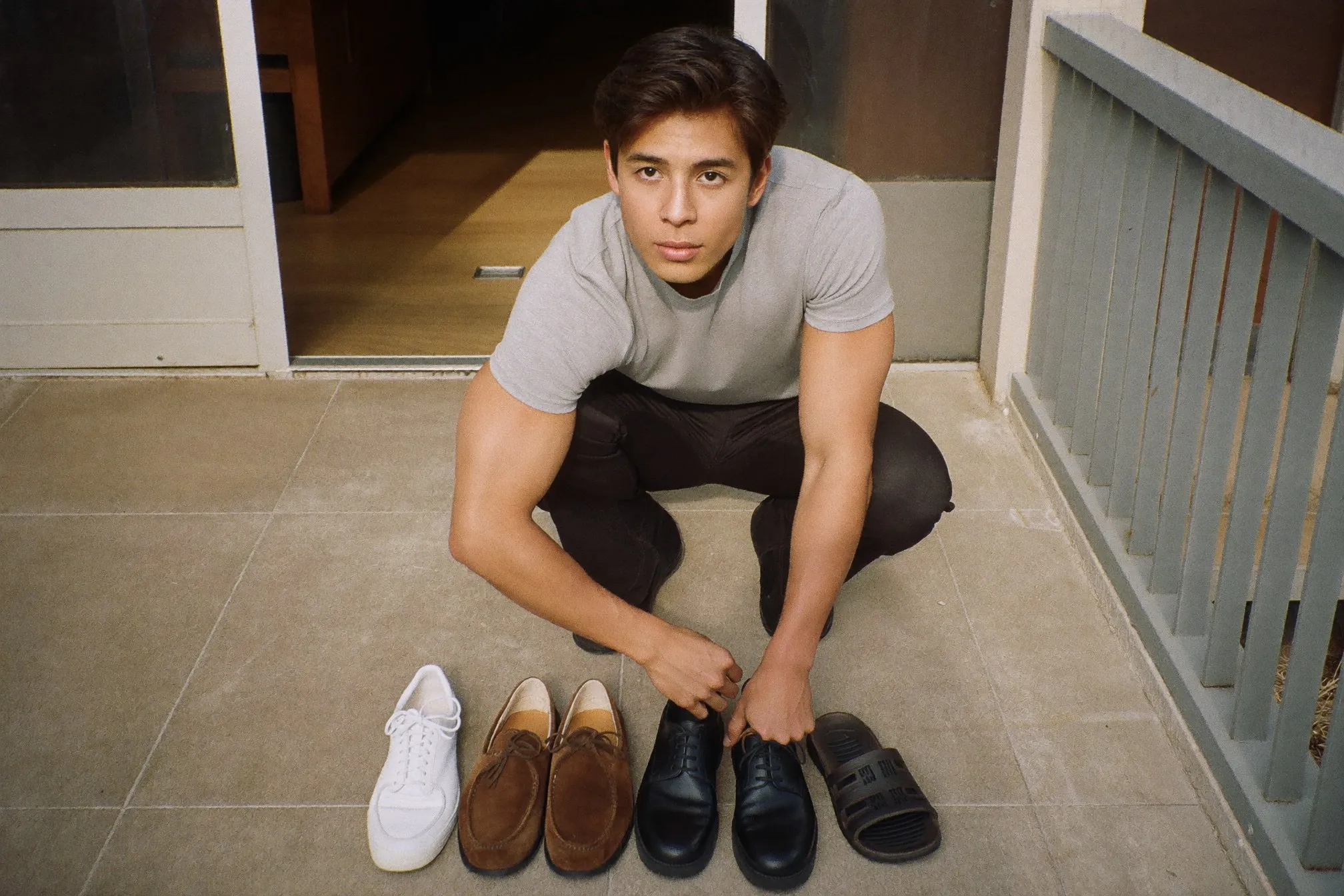
Four pairs cover every situation a man in Malaysia or Singapore walks into: minimal leather sneakers, loafers, black leather derbies, and a decent pair of slides. Buy them in that order. Once those four sit on your rack, you can stop thinking about shoes for roughly three years.
Most men here own the opposite of that. Five pairs of sneakers in various stages of grey, one pair of dress shoes bought for a cousin’s wedding in 2019, and hotel slippers doing duty as house shoes. The four-pair rotation costs less than that pile did and covers far more ground.
What are the four pairs?
Each pair owns a job no other pair can do. Sneakers take daylight and weekends. Loafers take anything with a dress code softer than a suit. Derbies take the six formal days a year, and slides take the rain and the mamak run. Nothing overlaps, which is the whole point of the list.
| Pair | What it covers | Rough spend |
|---|---|---|
| Minimal leather sneakers, white or off-white | Office days, weekends, dates, travel | RM250–450 / S$80–150 |
| Loafers, mid-brown leather or suede | Smart casual, client lunches, weddings, dinners | RM250–400 / S$90–140 |
| Black leather derbies | Interviews, funerals, formal dress codes | RM150–600 / S$60–250 |
| Slides with a real footbed | Rain, void deck, kopitiam, the 11pm supper run | RM60–150 / S$25–60 |
If your budget only stretches to two pairs this year, take the sneakers and the loafers. Those two carry about 90 percent of a normal calendar between them.
Why do leather sneakers do most of the work?
Leather wipes clean and canvas does not. In a country where a five-minute downpour arrives with no warning, that one difference decides how long a pair looks new. A low-profile leather sneaker in white or off-white goes with chinos, jeans, shorts and most smart casual dress codes in both cities.
Shape matters more than brand. You want a thin sole, a rounded toe and almost no visible branding. Chunky running shoes with a technical mesh upper drag down everything worn above them, which is how a man in a RM400 shirt still reads scruffy from the ankle down. Keep the running shoes for running.
Pedro sits around RM250 to RM350 in Malaysia and S$80 to S$120 in Singapore, and the leather holds up through a wet season. Zalora house brands go lower, on the understanding that the sole may separate inside two years. At the top end, Common Projects and the dozen brands imitating them start near RM1,500 and buy you a cleaner outline, not a longer life.
White gets dirty. That is the deal you sign. Wipe the uppers with a damp microfibre cloth once a week, then scrub the midsole rubber with a magic eraser sponge, about RM3 at any hardware shop. Ten minutes on a Sunday keeps a pair looking two months old for two years. Our guide to casual outfits covers what to build on top of them.
Are loafers worth it in this heat?
More than in temperate countries. No laces means no crouching at a mosque or temple entrance, and the open construction moves air across your foot in a way a lace-up cannot. One pair of mid-brown loafers handles office days, client lunches, weddings and dinners without a single adjustment.
Three shapes deserve your attention. The penny loafer is the safest buy and reads mildly preppy. The horsebit is dressier and looks sharper with trousers than with jeans. The suede driving moc, with rubber nubs across the sole, is the most casual of the three and the fastest to die in monsoon season.
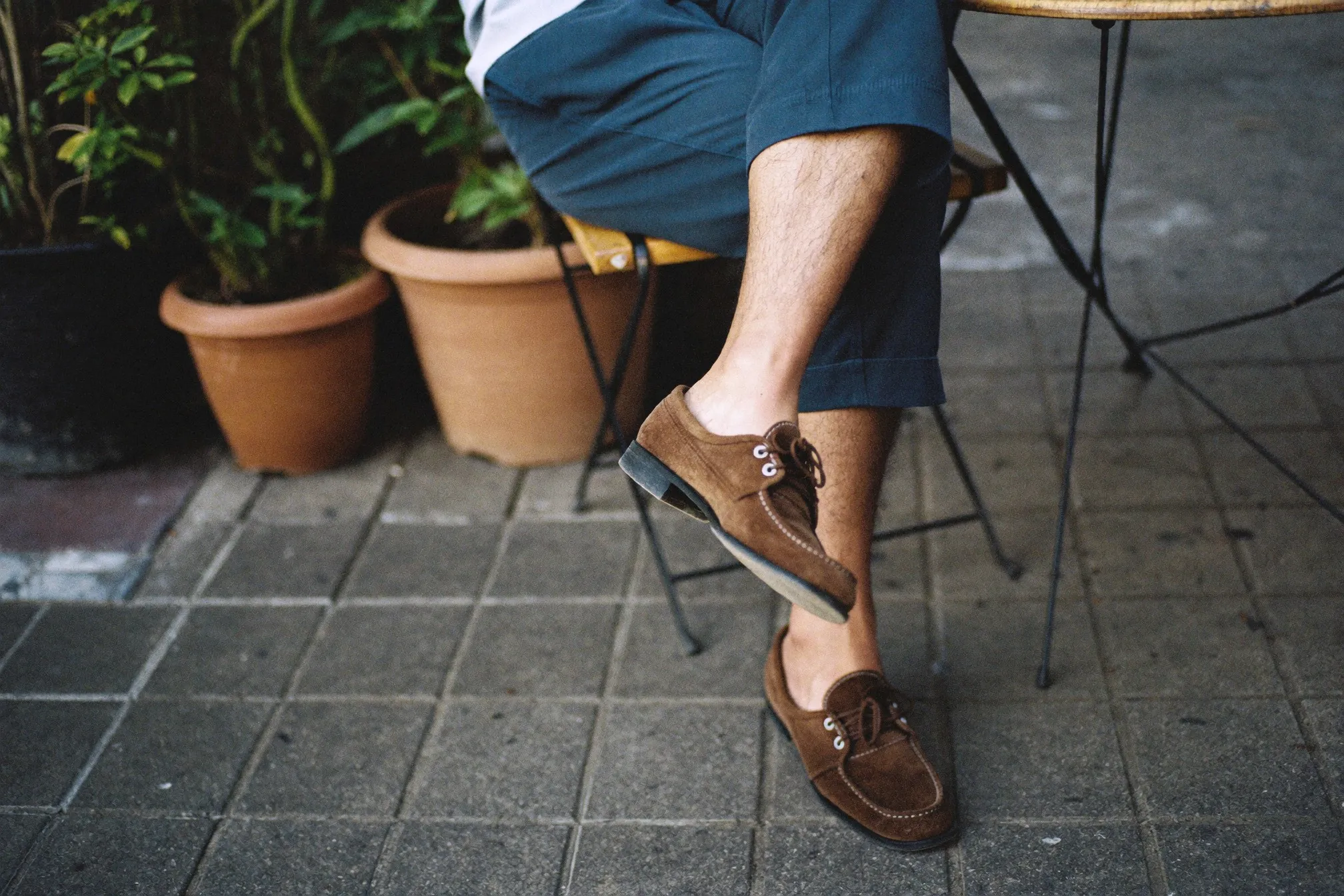
Buy mid-brown before anything else. It sits well against navy, grey, olive and tan trousers, which is most of what you own. Black loafers are a narrower purchase and become redundant the moment you own black derbies.
Socks are not optional. Get no-show socks with a silicone grip at the heel so they stay put. Bare skin inside leather in this humidity produces an odour that outlives several washes, and the shoe is finished within a season. Suede also wants a protector spray, around RM40 at most shoe shops, reapplied every couple of months. If that sounds like effort, buy smooth leather and skip the routine entirely. The smart casual guide sorts out what goes above them.
When do you actually need black derbies?
Interviews, funerals, court, formal weddings and anything with a written dress code above smart casual. For most men that adds up to six days a year. Nothing else in the rotation substitutes on those days, and every room notices the one guy who turned up in white sneakers.
Choose a derby over an oxford for your first formal shoe. Open lacing means it accommodates a wide foot and a high instep, and it reads a half-step less formal, so it also works with dark chinos on an ordinary Monday. An oxford is sharper under a suit and close to useless with anything else.
Go plain toe, black, with minimal broguing or none. A cap toe is fine. Skip square toes, and skip heavy rubber lug soles unless you commute through standing water, in which case a slim rubber sole grips wet MRT tiles better than leather ever will. Bata and Zalora carry serviceable black derbies from around RM150. Spend RM400 to RM700 and you get better leather plus a construction a cobbler can resole. A shoe you wear six times a year does not need to cost RM1,200. See formal attire for what belongs above it.
Why do slides count as a real pair?
Between April downpours, void-deck errands and late-night supper runs, you will wear slides more days than the other three pairs combined. Treating them as a purchase rather than an afterthought is the most local upgrade on this list, and the cheapest.
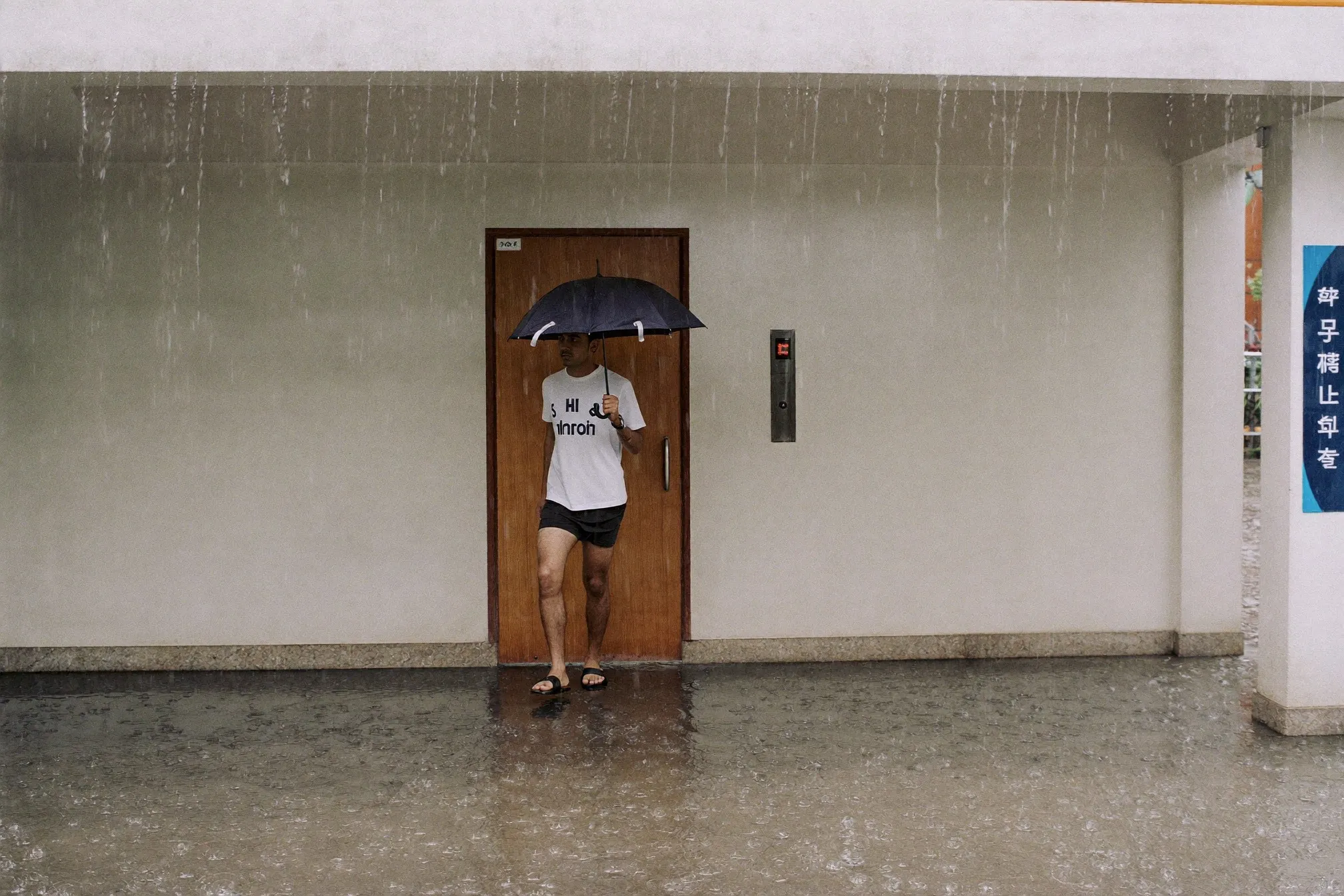
Get a contoured footbed rather than the flat RM10 rubber sheet from the pasar malam. Your knees register the difference after a year of daily wear. Decathlon and Shopee both stock moulded EVA slides between RM40 and RM90 that shrug off rain, sand and pool chlorine.
A leather slide in brown or black runs RM150 to RM250 and looks respectable with shorts at a beach club or Sunday brunch. Rubber slides do not, and neither pair belongs in an office, whatever your colleague in the corner has decided. If your workplace is that relaxed, our office wear guide for the tropics offers a middle ground that still reads as employed.
What does the whole rotation cost?
| Pair | Budget pick | Step up | Where to look |
|---|---|---|---|
| Leather sneakers | Zalora house brands, ~RM180 | Pedro, ~RM320 / S$110 | Pedro stores, Zalora, Shopee official stores |
| Loafers | Bata, ~RM160 | Pedro or Benjamin Barker, ~RM380 | Mid-tier mall floors, Zalora |
| Black derbies | Bata, ~RM150 | Resoleable Goodyear welt, RM500+ | Bata, Clarks, local shoemakers in KL |
| Slides | Decathlon, ~RM45 | Leather slide, ~RM180 | Decathlon, Shopee, Sports Direct |
The budget column totals roughly RM540 for all four. The step-up column lands near RM1,400. Spread across three years, either number sits below what most men here spend on sneakers alone.
One rule on where to put the money: pay up on the loafers and the derbies, because leather quality shows most on the shoes people look at while you are standing still. Sneakers wear out in two years regardless of price.
How do you stop shoes dying in this humidity?
Mould kills more leather shoes in Malaysia and Singapore than wear ever does, and it takes hold inside a closed cabinet during one wet week. Airflow, rotation and dry storage prevent nearly all of it. No fix here costs more than RM30.
- Never wear the same leather pair two days running. Sweat needs a full 24 hours to leave the lining. This single habit roughly doubles the life of a pair.
- Stuff soaked shoes with newspaper. Swap the paper after an hour, then dry them in the shade with a fan. Direct sun and hairdryers crack leather.
- Keep silica gel packets in every box. Save the ones from parcels and electronics, and replace them every few months.
- Let air into the cabinet. Leave the door open a few hours a week or drill vents in the back. A sealed shoe cabinet in a KL condo is a mould farm with a nice veneer.
- Treat early mould with diluted white vinegar. One part vinegar to three parts water on a cloth, wipe, dry in the shade. Caught in the first week, the shoe survives.
Cedar shoe trees help if you want to spend more, though rolled newspaper and an open door do most of the same work. For anything with a stitched welt, find a cobbler before the sole goes rather than after. Resoling a good derby costs RM120 to RM200 in KL and buys another five years.
Go count your rack tonight against the four. The usual result is three pairs of sneakers at different stages of decay and no loafers at all. Fill the empty slot on your next payday, one pair at a time, starting with whichever gap your next three months of calendar will expose. More wardrobe fundamentals sit on the style hub.
Quick answers
Can I wear sneakers to the office in Malaysia or Singapore?
Clean, low-profile leather sneakers in white or black pass at most KL and Singapore offices, including client-free meeting days. Canvas and running shoes do not. If the day includes a client dinner or a presentation that decides money, wear loafers instead and keep the sneakers in your bag.
Do you wear socks with loafers?
Yes, no-show socks with a silicone heel grip. Bare feet inside leather in 90 percent humidity builds an odour that no wash removes, and the shoe is finished inside a season. A pack of five from Uniqlo or Decathlon costs under RM50 and protects a RM300 purchase.
Are leather or canvas sneakers better in this climate?
Leather, by a wide margin. It wipes clean after a downpour, holds its shape through humid months and hides scuffs. Canvas soaks up rain, stains permanently and sags at the sides within a year. Keep canvas for weekends when the sky looks trustworthy, which is rarely.
How do I stop mould growing on my leather shoes?
Rotate pairs so each gets a full day to dry, keep silica gel packets in the boxes, and let air into the shoe cabinet a few hours a week. If white fuzz appears, wipe it with a cloth dipped in one part white vinegar to three parts water, then dry in the shade.