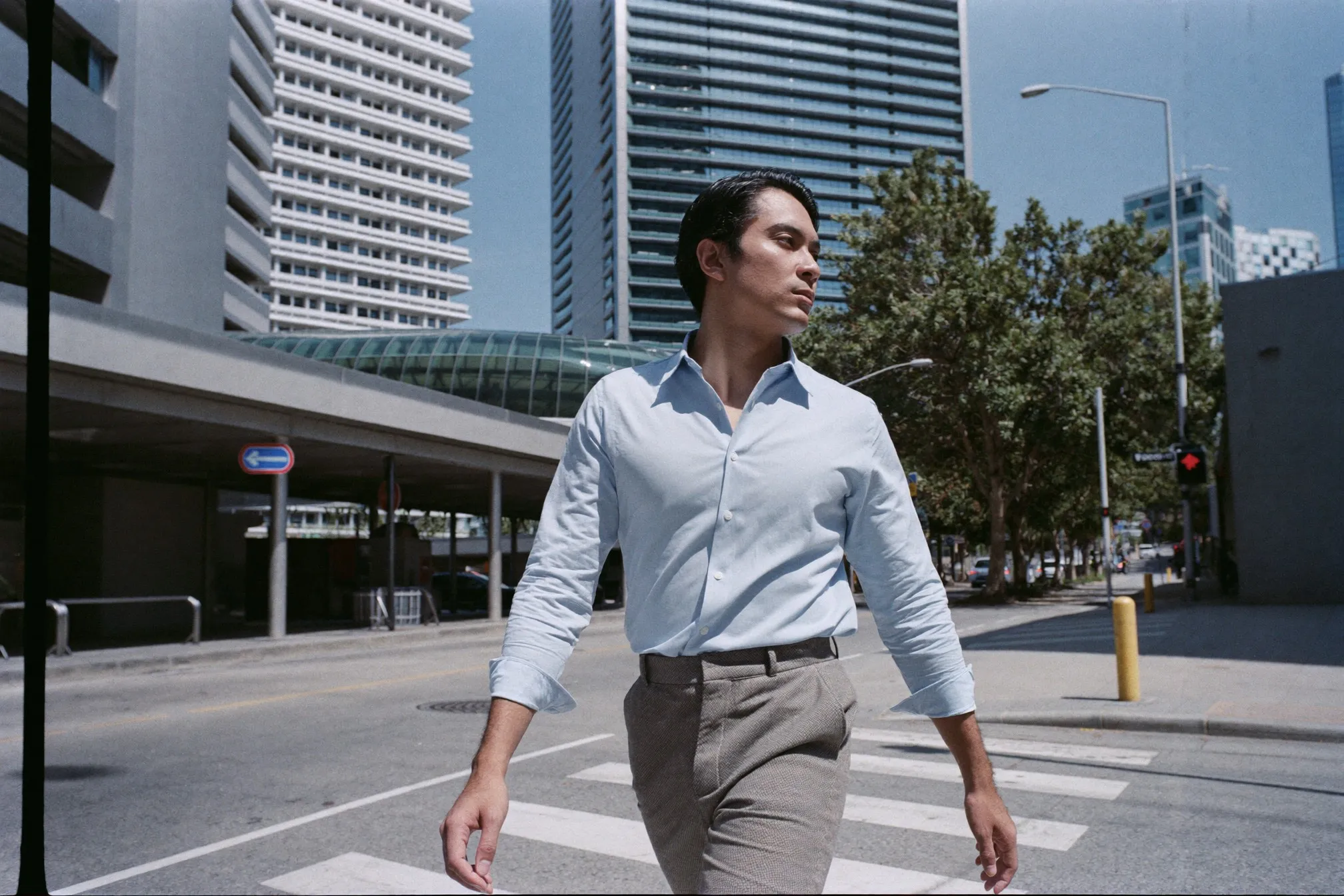
Office wear for men in Malaysia and Singapore comes down to a breathable long-sleeve shirt, tapered trousers in a cotton or wool blend, and clean leather shoes with rubber soles. The tie is optional almost everywhere now. The real fight is the climate, so fabric and fit decide whether you look composed at 9am or wilted by lunch.
Most office wear advice online assumes London or New York, where a wool suit is a comfort item. Here the walk from the LRT to the lobby undoes a bad outfit in four minutes. This guide keeps the formula, then rebuilds every layer of it for 33°C and 80 per cent humidity.
What is the standard office outfit for men here?
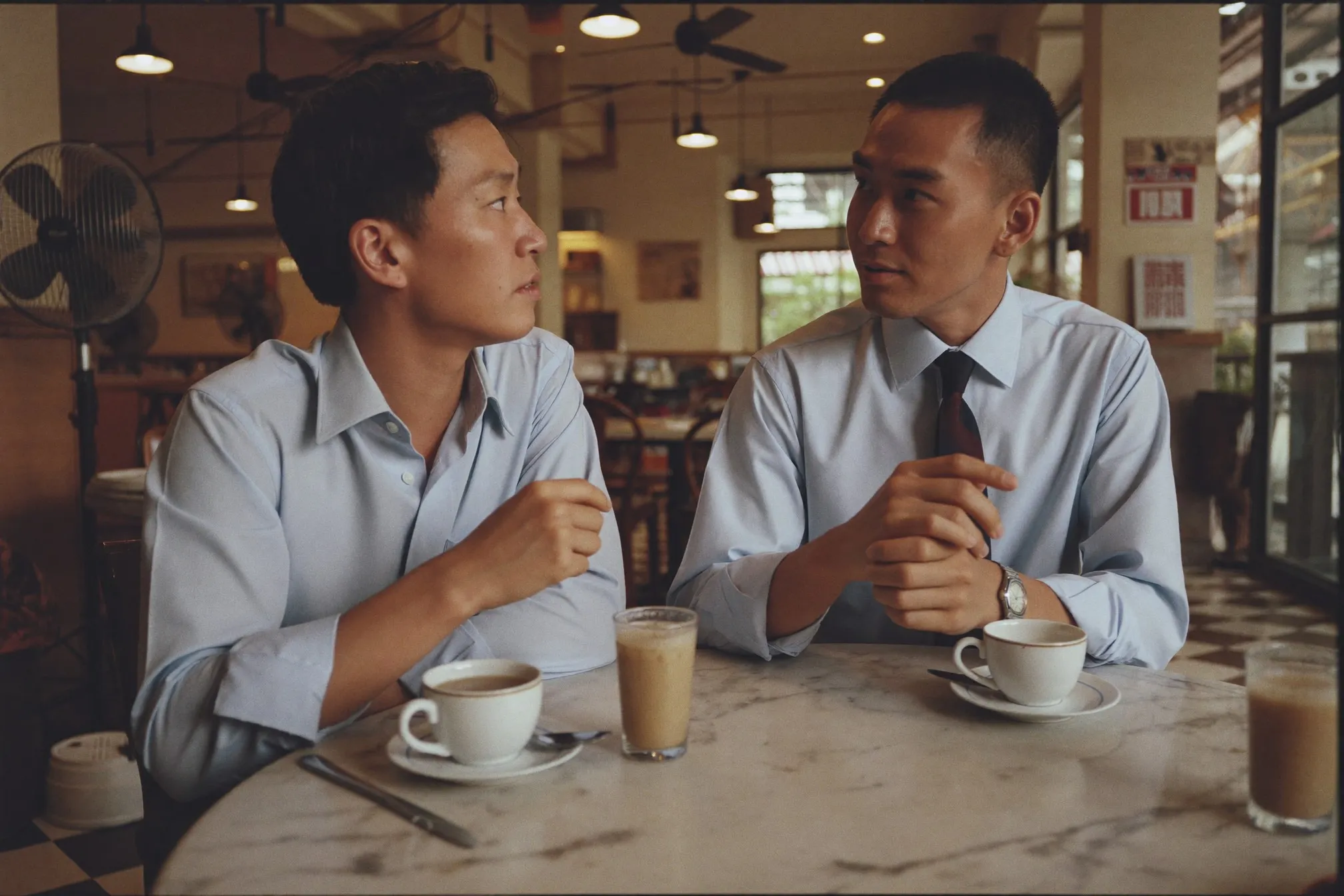
A long-sleeve woven shirt, chinos or suit trousers, a leather belt, and derbies or loafers cover the default dress code at most KL and Singapore offices. Short sleeves pass in many workplaces but read junior in client-facing roles. Keep a blazer hanging at the office for meetings rather than wearing it in.
The exact bar shifts by industry. Calibrate against this before your first week anywhere new:
| Workplace | Daily default | Meeting upgrade |
|---|---|---|
| Banking, law, government front office | Tucked shirt, dark trousers, derbies | Blazer, sometimes a tie |
| Corporate (most of us) | Shirt, chinos, loafers or leather sneakers | Blazer, no tie |
| Tech, creative, startups | Polo or oxford, chinos, clean sneakers | Woven shirt, actual shoes |
| Friday | One notch down from your daily | Whatever Monday needed |
Two local notes. In Malaysia, a proper batik shirt is formal wear, and at official functions it outranks a shirt and tie, so treat batik Friday as a real option rather than a costume. In Singapore, the CBD default has settled on shirt and trousers with no jacket in sight, a look the rest of the world took decades to reach and this island arrived at through sheer heat.
If your office sits at the casual end, the smart casual guide covers that register in full, and the business casual guide handles the step up.
Which fabrics survive the heat?
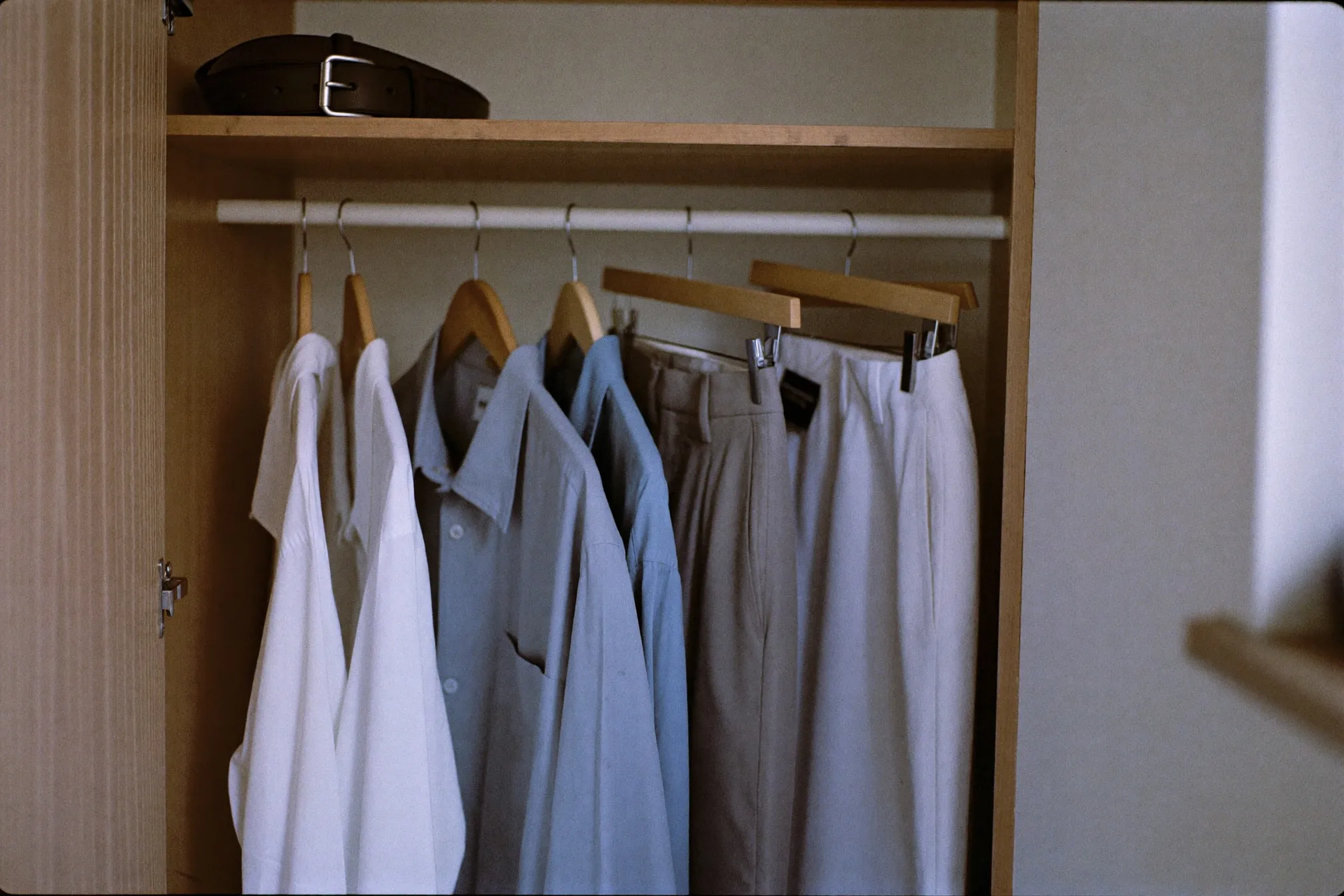
Cotton poplin, linen-cotton blends and lightweight twill breathe well enough for daily wear here. High-twist wool trousers beat cotton chinos for airflow, which surprises people. Avoid anything with a high polyester count against your skin, since it traps heat and holds odour after one wear.
Fabric is where a RM99 shirt beats a RM399 one bought in the wrong weave. What to look for:
- Shirts. Poplin or end-on-end cotton for formal days, linen-cotton for everything else. Pure linen wrinkles into a paper bag by 10am, so blends earn their keep.
- Trousers. Lightweight wool or wool-blend trousers hang away from the leg and dry fast. Cotton chinos work but cling once humidity gets involved. Skip anything lined.
- Undershirt. A thin grey or skin-tone undershirt catches sweat before your shirt shows it. White undershirts flash through light shirts, so leave them for home.
Colour matters as much as weave. Mid-grey broadcasts sweat patches like a weather map. White, light blue and navy hide moisture best, which is why they dominate every CBD lift lobby. Build your shirt rotation from those three and add pattern later.
How do you arrive at work not drenched?
Leave ten minutes earlier and walk slower, carry the blazer instead of wearing it, and keep one spare shirt in your office drawer. Those three habits fix ninety per cent of the arrival problem. Deodorant on dry skin before you dress handles the rest of it.
The commute is the boss level of tropical office wear. A few tactics from people who have lost this fight before:
The slow walk is real. A brisk pace in full sun raises your core temperature past the point aircon can rescue before your first meeting. Ambling in shade beats marching in sun, every time, even when it looks lazy.
Route through the cold. KL has connected malls and covered walkways between Pavilion and KLCC. Singapore has entire underground districts. A route that is five minutes longer but fully air-conditioned is the better route.
The spare shirt is insurance, not defeat. GrabBike days, surprise downpours and broken train aircon happen. One pressed shirt in a drawer costs you nothing and has saved more presentations than any slide template.
Your grooming routine is part of the outfit here. A working antiperspirant matters more than your watch, and the deodorant guide sorts that out. And since the walk itself is a daily sun dose, the case for morning SPF is made in our sunscreen guide.
What shoes work when it pours at 6pm?
Rubber-soled derbies, loafers or minimal leather sneakers handle office days here. Leather soles die fast in tropical rain and turn walkways into ice rinks, so check the sole before you pay. Rotate two pairs so each dries out fully between wears, which doubles the life of both.
Pedro loafers and derbies run around RM300 to RM400, or S$90 to S$120, and survive the climate well for the money. Zalora house brands get you started near RM150. Whatever you buy, the rotation rule is the one that matters. A pair worn daily in this humidity breaks down from the inside, lining first, and no polish fixes swamp.
Socks are quietly load-bearing. Thin cotton-blend dress socks in navy or charcoal with trousers, proper no-show socks with loafers if your office skews casual. Sports socks with visible branding undo an otherwise decent outfit at the exact moment you sit down.
How much does a full work wardrobe cost?
Around RM700 to RM900, or roughly S$280 to S$350, buys a complete five-day rotation: five shirts, three trousers, two pairs of shoes and a belt. Uniqlo and G2000 cover the base layer well. Spend any extra budget on tailoring and shoes rather than more shirts.
| Item | Quantity | Budget pick | Rough cost |
|---|---|---|---|
| Shirts (white x2, blue x2, pattern x1) | 5 | Uniqlo, G2000 | RM90 to RM130 each |
| Trousers (navy, grey, khaki) | 3 | Uniqlo Smart Pants, G2000 | RM130 to RM180 each |
| Shoes (derby or loafer, leather sneaker) | 2 | Zalora house brand, Pedro | RM150 to RM400 each |
| Belt (dark brown or black leather) | 1 | Pedro, department store | RM80 to RM150 |
Then the cheat code: alterations. A neighbourhood tailor tapers trousers and shortens sleeves for RM15 to RM25 a piece in Malaysia, or S$10 to S$15 in Singapore, usually within two days. Altered RM130 trousers look more expensive than unaltered RM400 ones. Nobody in your office can name the difference, but everyone can see it.
What makes an office outfit look off?
Wrinkles, pooling hems and a ballooning shirt waist sink more office outfits than any wrong purchase. Fit and upkeep errors read as carelessness, which is the one signal you cannot afford at work. Each fix costs less than lunch in the CBD.
The usual offenders, in order of frequency:
- Trousers pooling at the ankle. One break or none. This is the tailoring fix that changes how every outfit reads.
- The un-ironed shirt. Humidity relaxes some creases and invents others. A RM60 garment steamer from Shopee does five shirts in fifteen minutes on a Sunday night.
- Shirt billowing over the belt. Buy slimmer fits or have shirts darted. A military tuck before big meetings works in a pinch.
- Backpack straps crushing your collar. Fine for the commute, but check your collar and shoulders in the lift mirror before you walk onto the floor.
- Belt and shoes from different planets. Dark brown with brown, black with black. Match the leathers and the whole outfit snaps together.
The wardrobe is a system, and systems reward boring consistency over occasional effort. More formulas for the adjacent dress codes live in the style hub.
Your move this week: pull out your most-worn work trousers, take them to the nearest tailor, and ask for a taper with one break. It costs about RM20, takes two days, and upgrades every outfit those trousers touch.
Quick answers
Can I wear short sleeves to the office?
In most MY and SG offices, yes, and nobody will say anything. But short sleeves read junior in banking, law and client-facing roles. A long-sleeve shirt in a light fabric feels nearly as cool and photographs better in every meeting. Roll the sleeves at your desk if you must.
Do I need a blazer for work in this climate?
Not daily. Keep one unstructured navy or grey blazer hanging at the office and put it on for presentations, client meetings and anything with a director in the room. Wearing it on the commute defeats the purpose, since you arrive with a sweat-lined collar.
Are jeans acceptable office wear?
Dark, unripped jeans pass in tech, creative and many startup offices, especially on Fridays. Corporate environments still expect chinos or trousers. If you are new, watch what the person one level above you wears for two weeks and match that.
How many work shirts do I need?
Five shirts and three pairs of trousers cover a full week with laundry once weekly. Buy two white, two light blue and one stripe or check, all in breathable cotton. That rotation lets each shirt rest, which keeps collars and underarms alive for years instead of months.