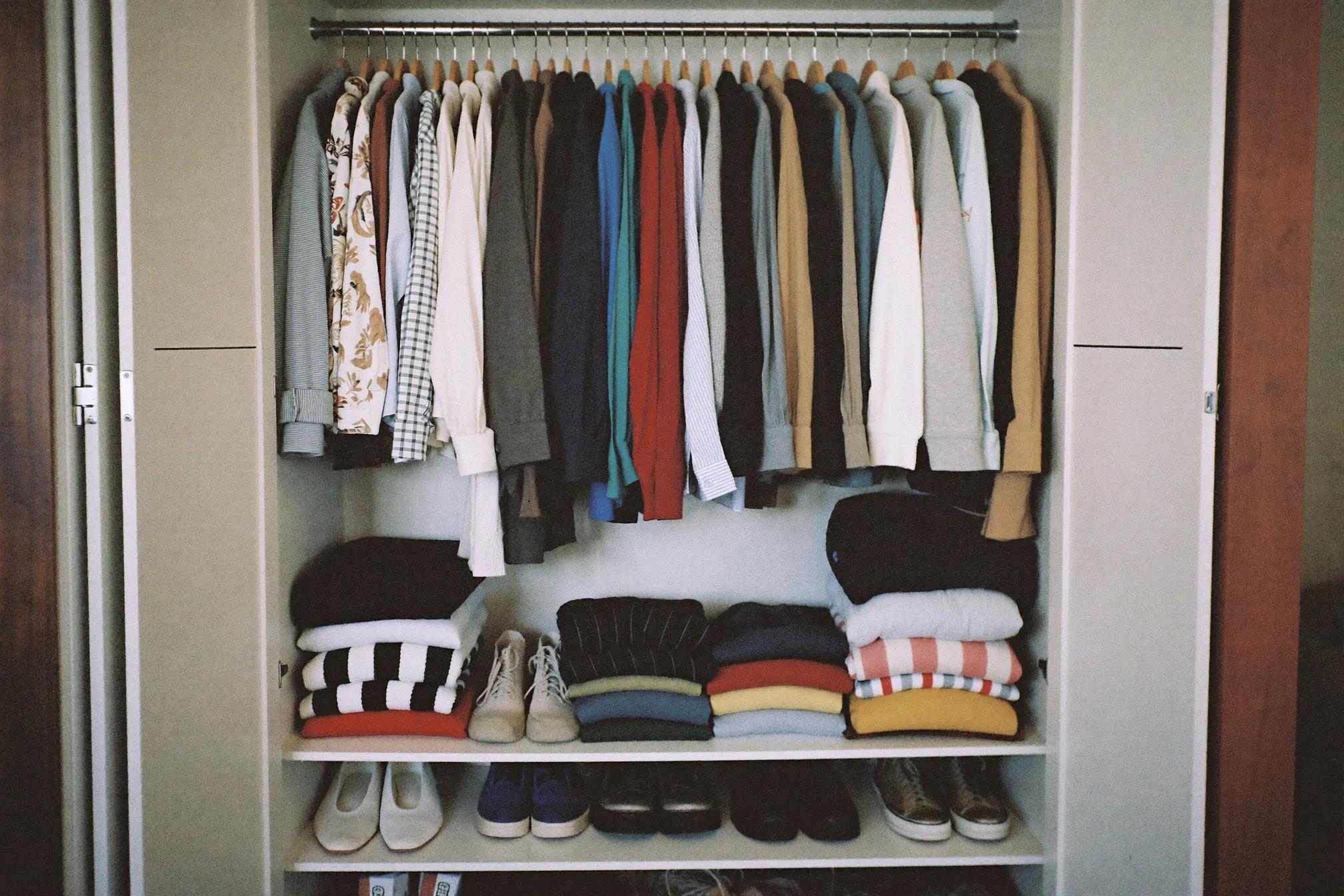
A capsule wardrobe is about twenty pieces that all match each other, chosen for your actual life, which here means 33°C, office aircon, mamak Fridays and a wedding every other month. Build it once and getting dressed becomes a solved problem: every clean item goes with every other clean item, and you look deliberate every single day.
This is the tropical version nobody writes, with exact pieces, colours, budgets in RM and S$, and the order to buy in. It assumes nothing but a working washing machine.
What goes in the 20-piece capsule?
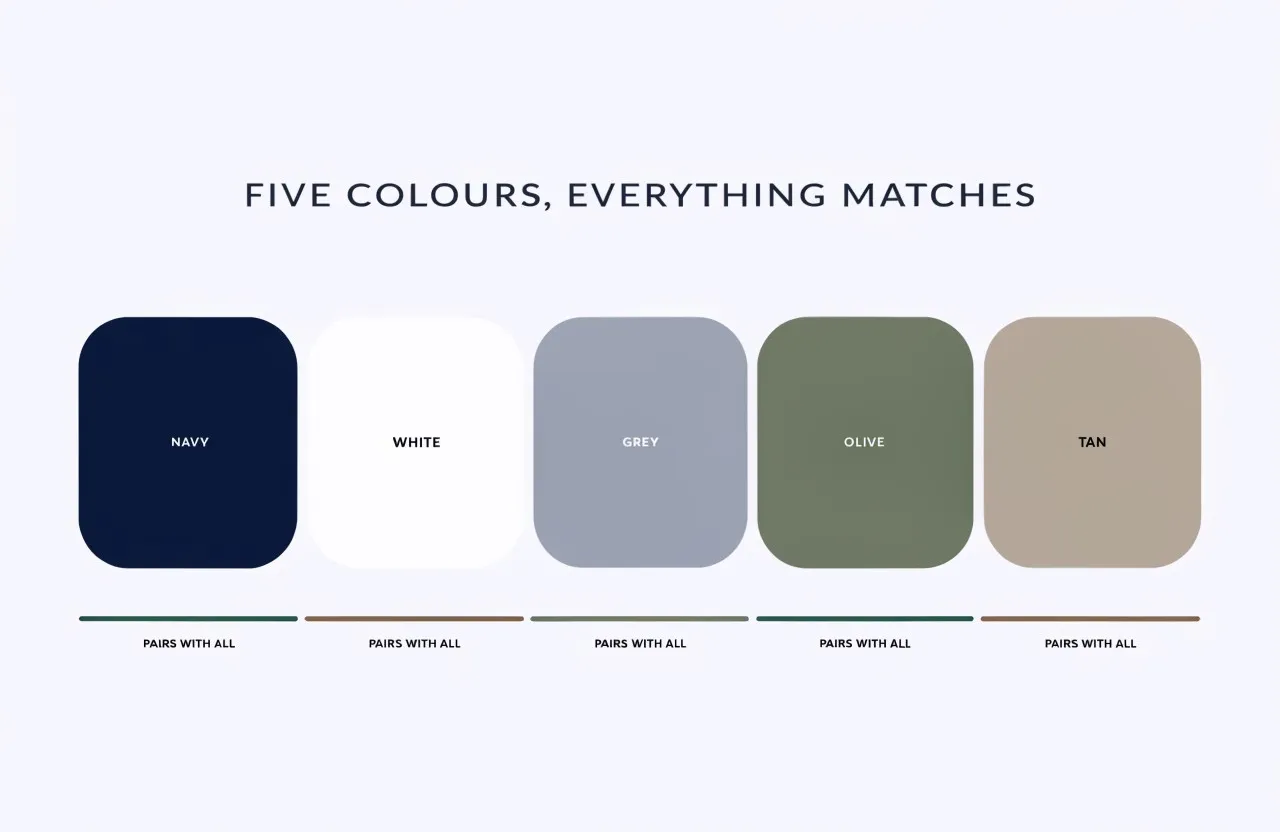
Five colours, four categories, everything interchangeable. The palette does the heavy lifting: navy, white, grey, olive, tan. Stay inside it and you cannot assemble a bad outfit at 7am.
| Category | Pieces | The picks |
|---|---|---|
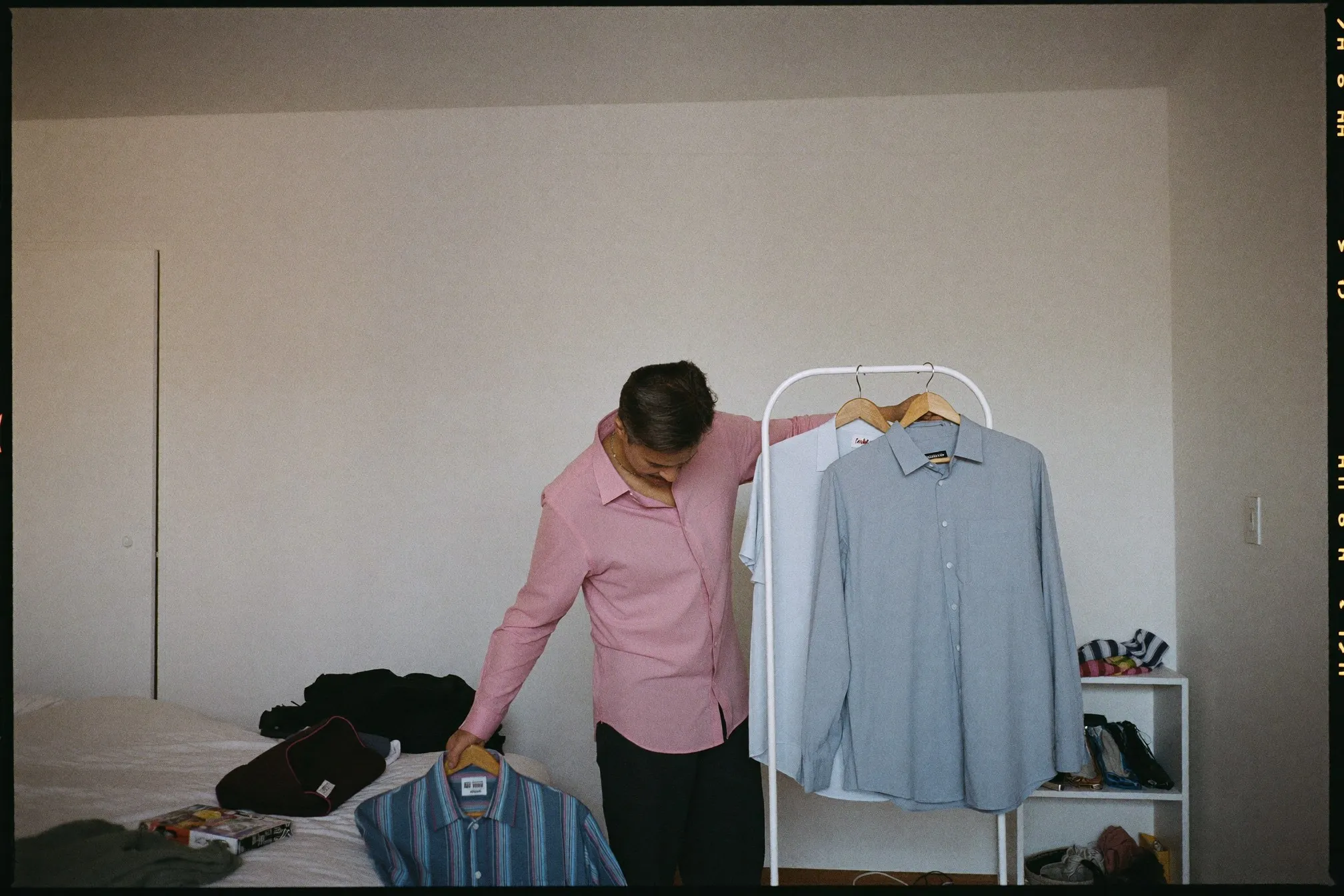
| Tops (6) | 2 white shirts, 1 blue oxford, 1 linen-blend shirt, 2 quality tees (white, grey) | Breathable weaves only |
| Bottoms (4) | 2 chinos (navy, tan), 1 dark jeans, 1 tailored shorts | All hemmed properly |
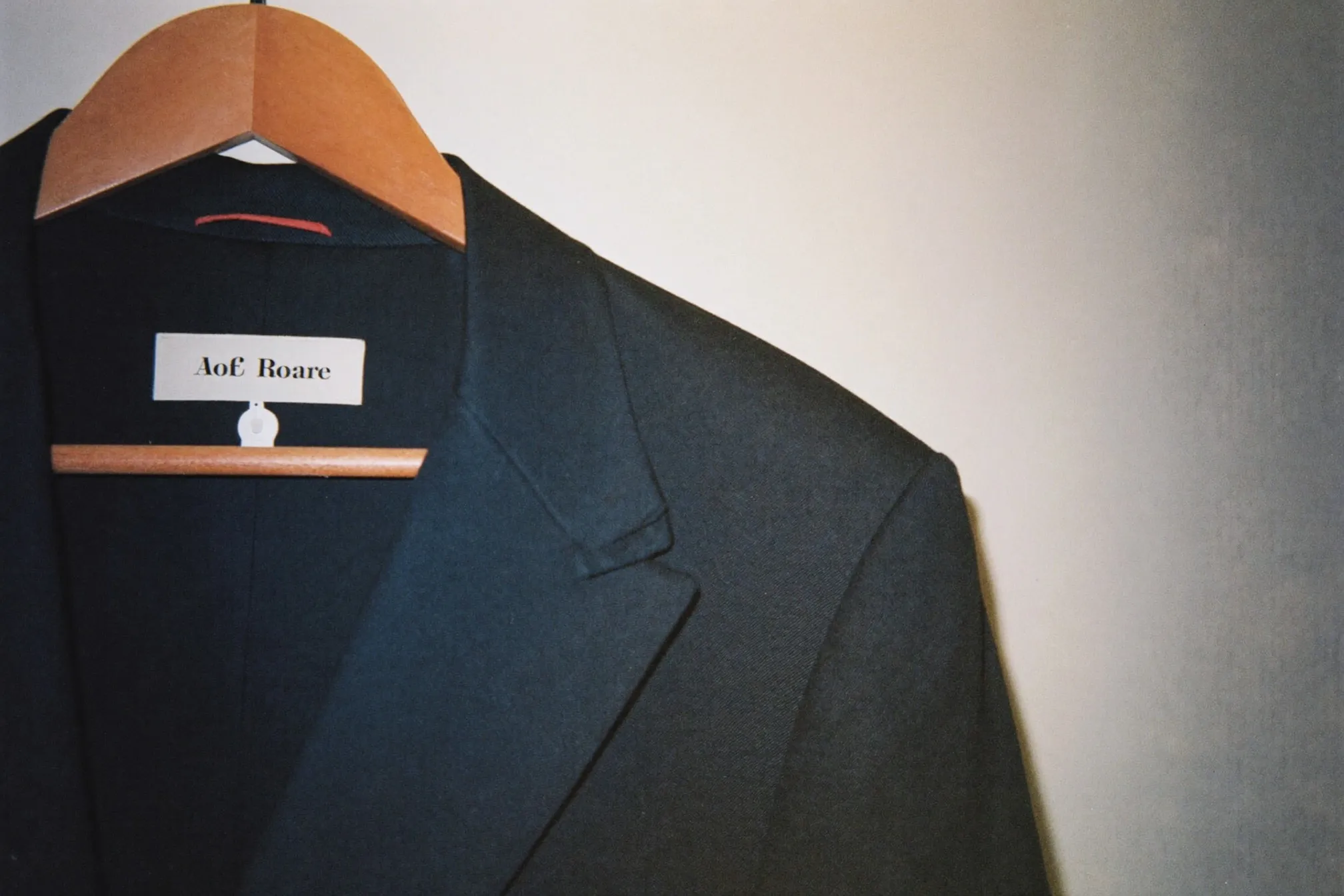
| Layers (3) | 1 unstructured navy blazer, 1 knit polo, 1 light overshirt | For aircon and occasions |
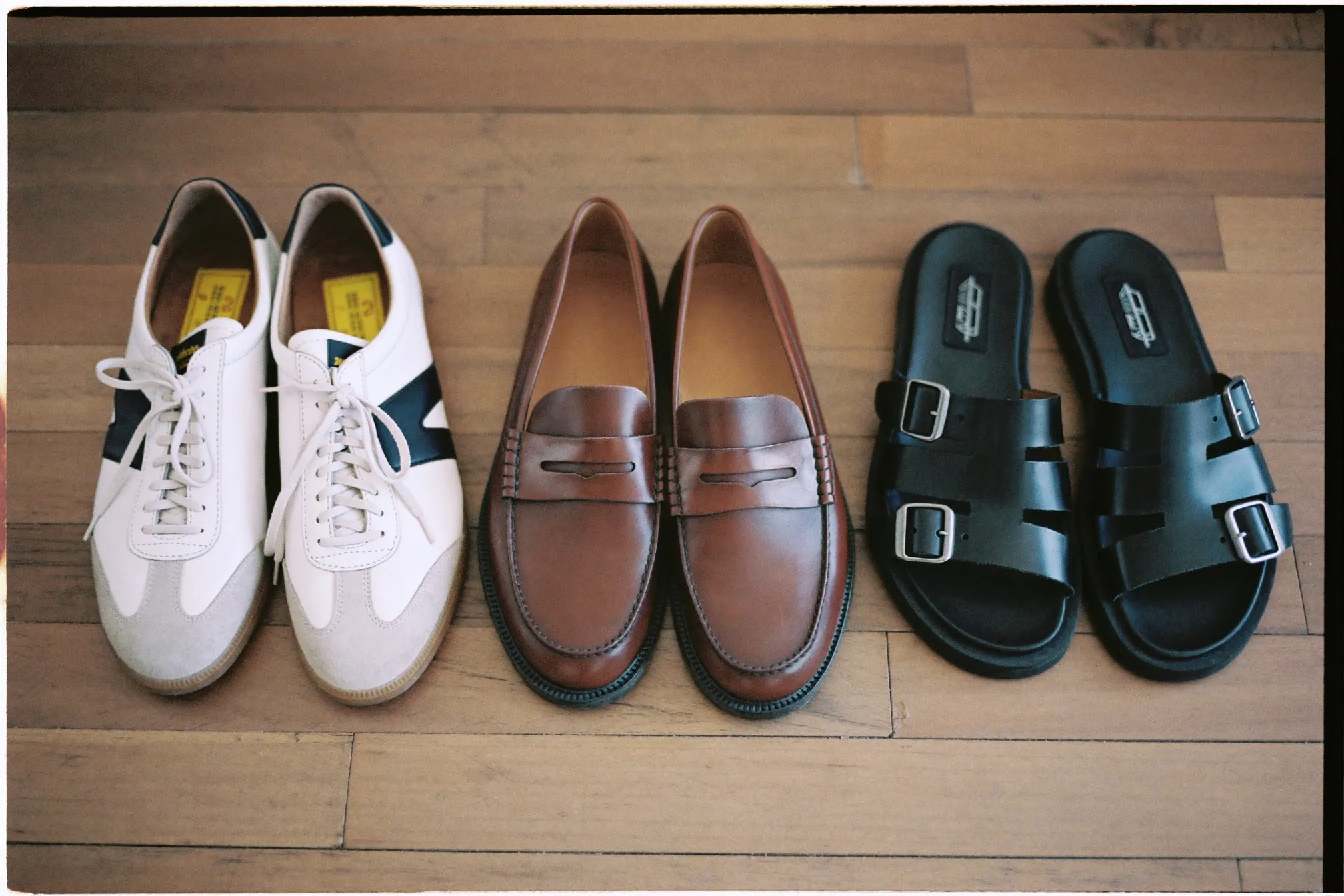
| Shoes (4) | White leather sneakers, brown loafers, black derbies, sandals for the mamak run | The four-shoe system |
| Occasion (3) | 1 batik or baju melayu, 1 white dress shirt, 1 pair grey trousers | Weddings and formal invites, handled |
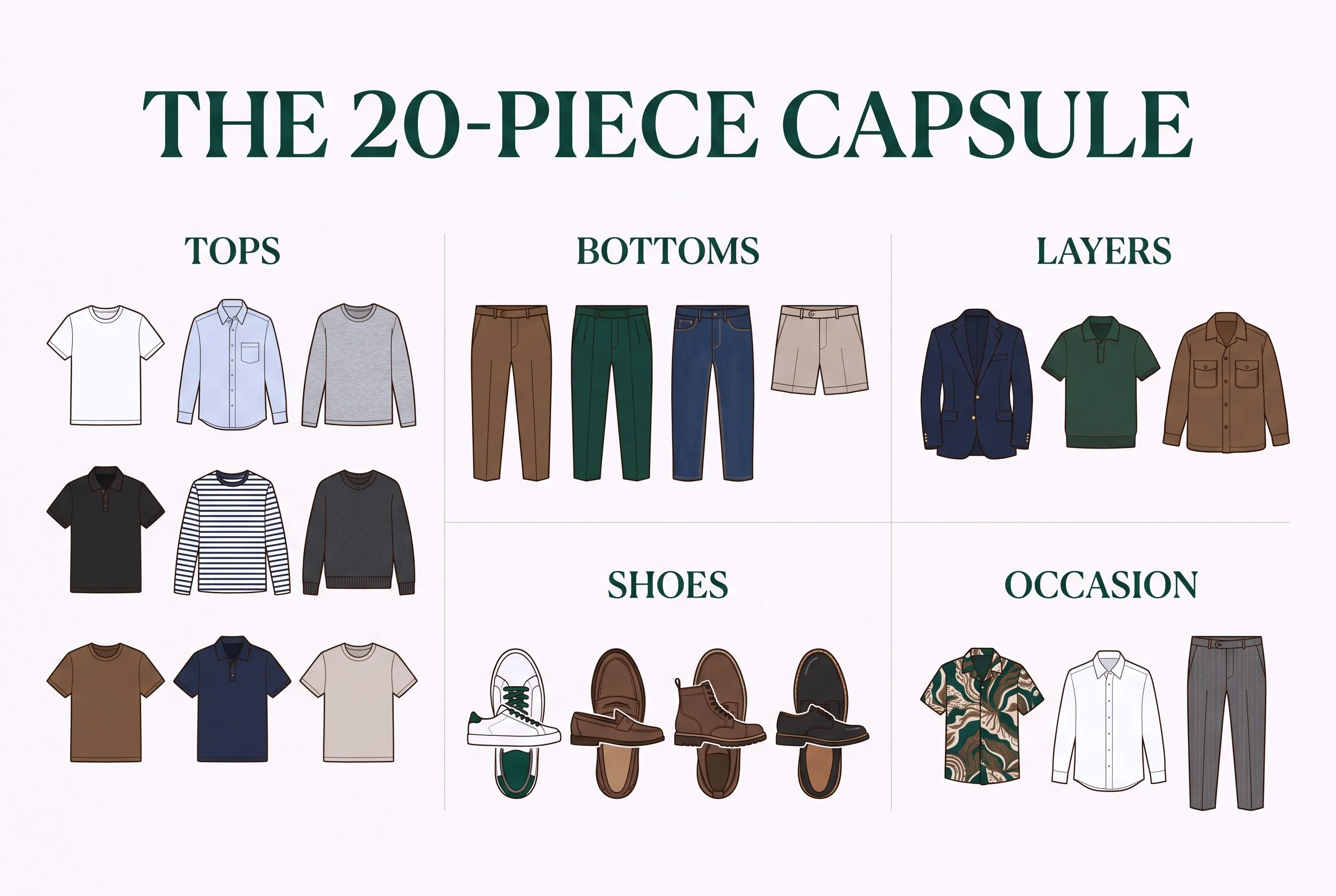
That’s the machine. Watches, belts and glasses layer on top via the accessories guide: one brown belt, one black, one watch you like.
Why do capsules beat big wardrobes?
Because outfits are combinations, and clutter creates dead combinations. Twenty compatible pieces generate hundreds of working outfits. Sixty random pieces generate the same five outfits you always wear plus a cupboard of guilt. The capsule also fixes the real morning problem, decision fatigue: when everything matches, “what to wear” takes eight seconds and zero thought.
There’s a money angle too. A capsule concentrates your budget: fewer, better pieces, each earning its cost through constant wear. The RM99 shirt worn weekly costs less per wear by month three than the RM39 shirt worn twice. And because the palette never changes, nothing you buy next year orphans what you bought this year.
What fabrics survive this climate?
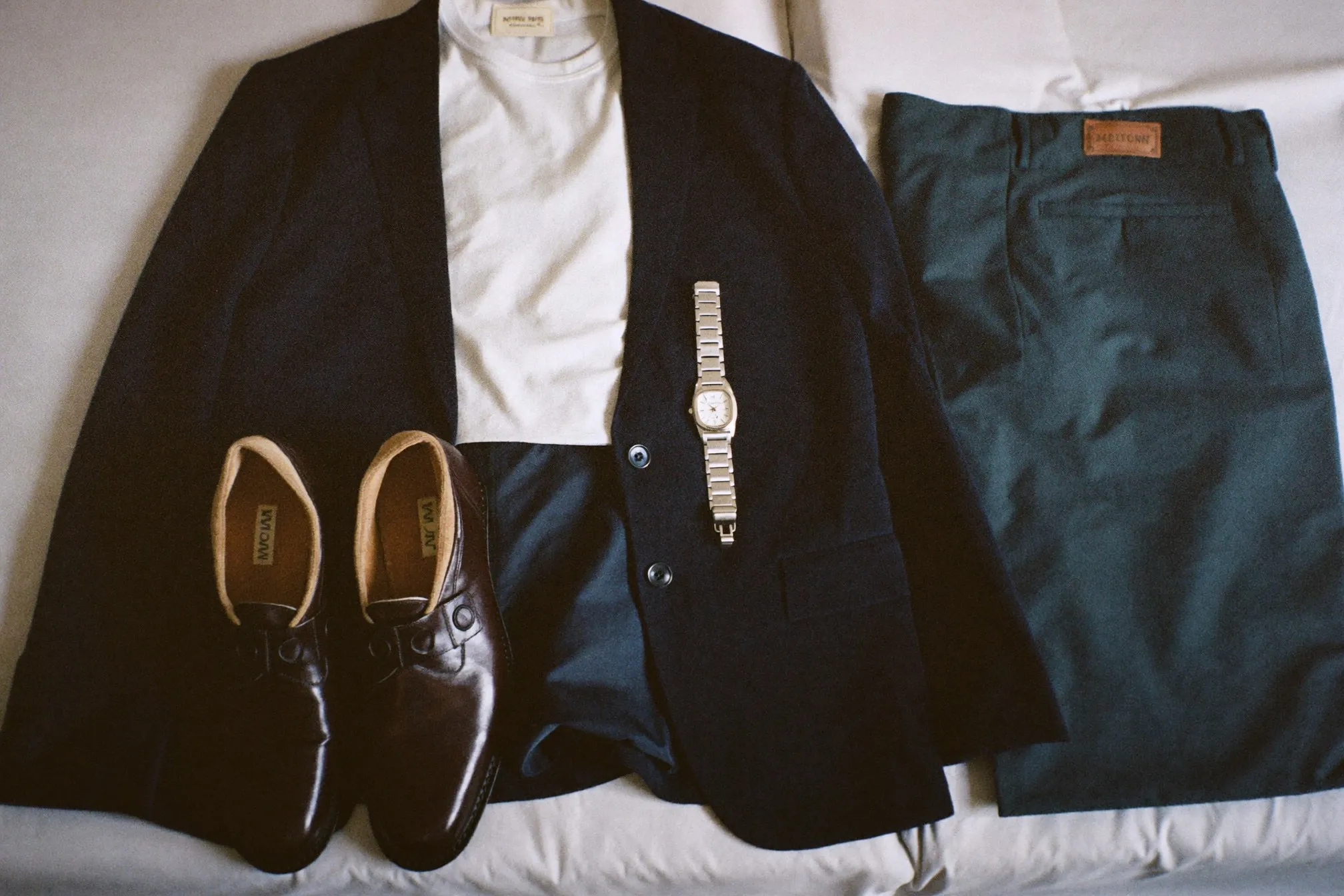
Cotton poplin, linen blends, seersucker and open knits; nothing fully synthetic against your skin. The capsule dies here if you copy the Scandinavian version with its wool trousers and heavy denim. Tropical rules from our office wear guide apply to every slot: unlined blazers, linen-cotton over pure linen for fewer wrinkles, and an undershirt strategy for the shirts that show sweat.
Jeans get one slot, not three, and the right pair is lightweight, dark and straight-cut. Shorts get one deliberate tailored pair, because FC barcelona basketball shorts at brunch is how capsules leak credibility.
In what order should you build it?
Fix what you own, then buy in priority order over two or three months. Nobody needs to drop RM1,500 in a weekend.
- Week 1, the cull. Everything stained, dead-elastic, logo-heavy or unworn for a year leaves. What survives in the five colours is your starting stock.
- Week 1, tailoring. Hem and taper the survivors. Our tailoring guide covers costs; expect RM40 to RM80 total and a wardrobe that instantly fits better.
- Month 1, the gaps that hurt daily. Usually the two white shirts, the navy chinos and the white sneakers. Uniqlo, G2000 and Pedro tiers cover all of it.
- Month 2, the layer pieces. Unstructured blazer and knit polo, the two items that turn base outfits into smart casual and business casual without thought.
- Month 3, occasion slots. The batik or baju melayu and the wedding-grade shirt and trousers, so the next invitation triggers zero panic and our wedding outfit guide becomes a checklist instead of a scramble.
Budget across the whole build: RM800 to RM1,500 from standard-tier brands, S$350 to S$600 in Singapore, less whatever your cull survivors cover.
What outfits does the capsule actually produce?
The proof of the system is that dressing becomes assembly. A week of real situations, solved from the same twenty pieces:
- Monday, office: blue oxford, navy chinos, brown loafers, brown belt. Blazer over the chair for the client call.
- Tuesday, office but lazy: white tee under the overshirt, tan chinos, white sneakers. Still deliberate, zero thought.
- Wednesday, dinner after work: swap the overshirt for the knit polo at 6pm. Same trousers, same shoes, different man.
- Friday, smart casual everything: linen-blend shirt, sleeves rolled once, dark jeans, loafers.
- Saturday, errands and mamak: grey tee, tailored shorts, sandals or sneakers depending on ambition.
- Saturday night, date: white shirt, navy chinos, loafers, the one fragrance. The combination that never loses.
- Sunday, wedding kenduri: the batik with grey trousers, or the full occasion stack for a ballroom.
Seven days, zero repeats, nothing new purchased. Run the combinations math and twenty compatible pieces produce well over a hundred distinct outfits before you touch the occasion slots. That’s the quiet luxury of the system: variety without volume.
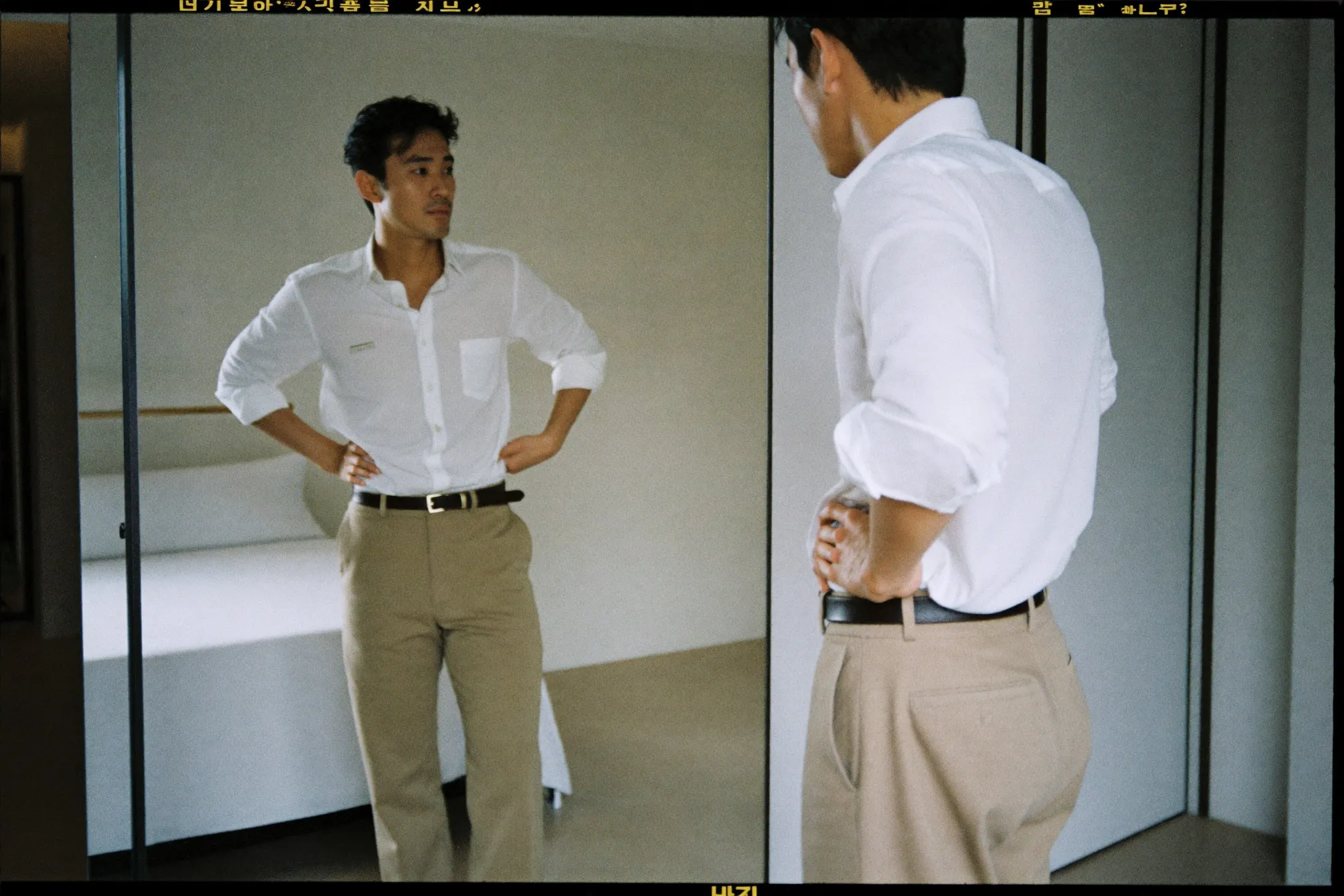
Two composition rules keep every combination sharp. Contrast top and bottom (light shirt, dark trousers, or the reverse) so the outfit has structure. And one statement maximum per outfit: the batik, the retro piece or the bold watch, never all three, which is the difference between having taste and wearing all of it at once.
How do you maintain a capsule?
One-in-one-out, seasonal care, and an annual audit. The capsule stays twenty pieces because every purchase now has an exit requirement: new shirt in, weakest shirt out. Care is where cheap capsules become expensive-looking ones, and it’s mostly shirt care: wash cool, hang immediately, iron collars even when lazy, and retire whites the month they go grey.
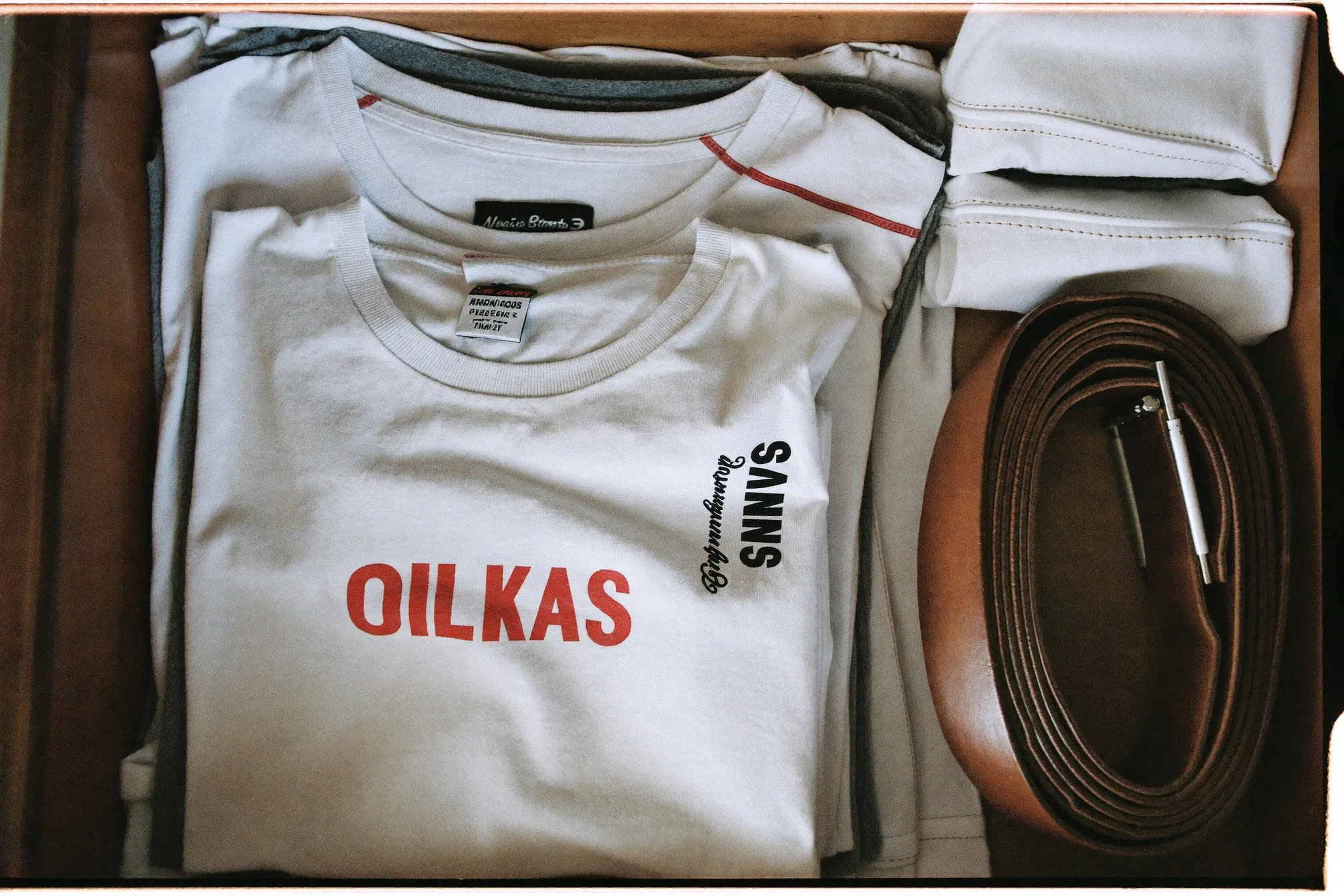
The annual audit takes twenty minutes: what earned its slot, what didn’t, what life change (new job, new gym body, new city) demands a swap. A capsule isn’t a vow of poverty; it’s a system that makes every future purchase obvious. When you do upgrade a slot, upgrade deliberately, the retro piece or the better blazer, and let the system absorb it.
Start with the cull this weekend. Two bin bags and a tailoring run will do more for how you look than anything you could buy today.
Quick answers
How many clothes should a man own?
A working capsule runs about 20 core pieces plus basics like underwear and socks: roughly six tops, four bottoms, three outer or layer pieces, four pairs of shoes and a few occasion items. That covers office, weekends, dates and weddings here with room to rotate through laundry week.
What colours should a capsule wardrobe use?
Navy, white, grey, olive and tan as the base, with one darker accent like burgundy if you want it. Every piece in those five colours matches every other piece, which is the entire point: no dead combinations hanging in the cupboard.
How much does a capsule wardrobe cost in Malaysia or Singapore?
A complete capsule built from Uniqlo-tier basics with two or three step-up pieces runs about RM800 to RM1,500 or S$350 to S$600, spread over a few months. Add RM60 to RM100 for tailoring, which upgrades the whole system more than any single garment.
Does a capsule wardrobe work in hot humid weather?
It works better here than anywhere, because heat punishes wardrobe clutter. Breathable fabrics in matching colours mean every clean combination is climate-safe by design. The capsule just needs tropical fabrics: cotton, linen blends and open weaves instead of heavy wool and thick synthetics.