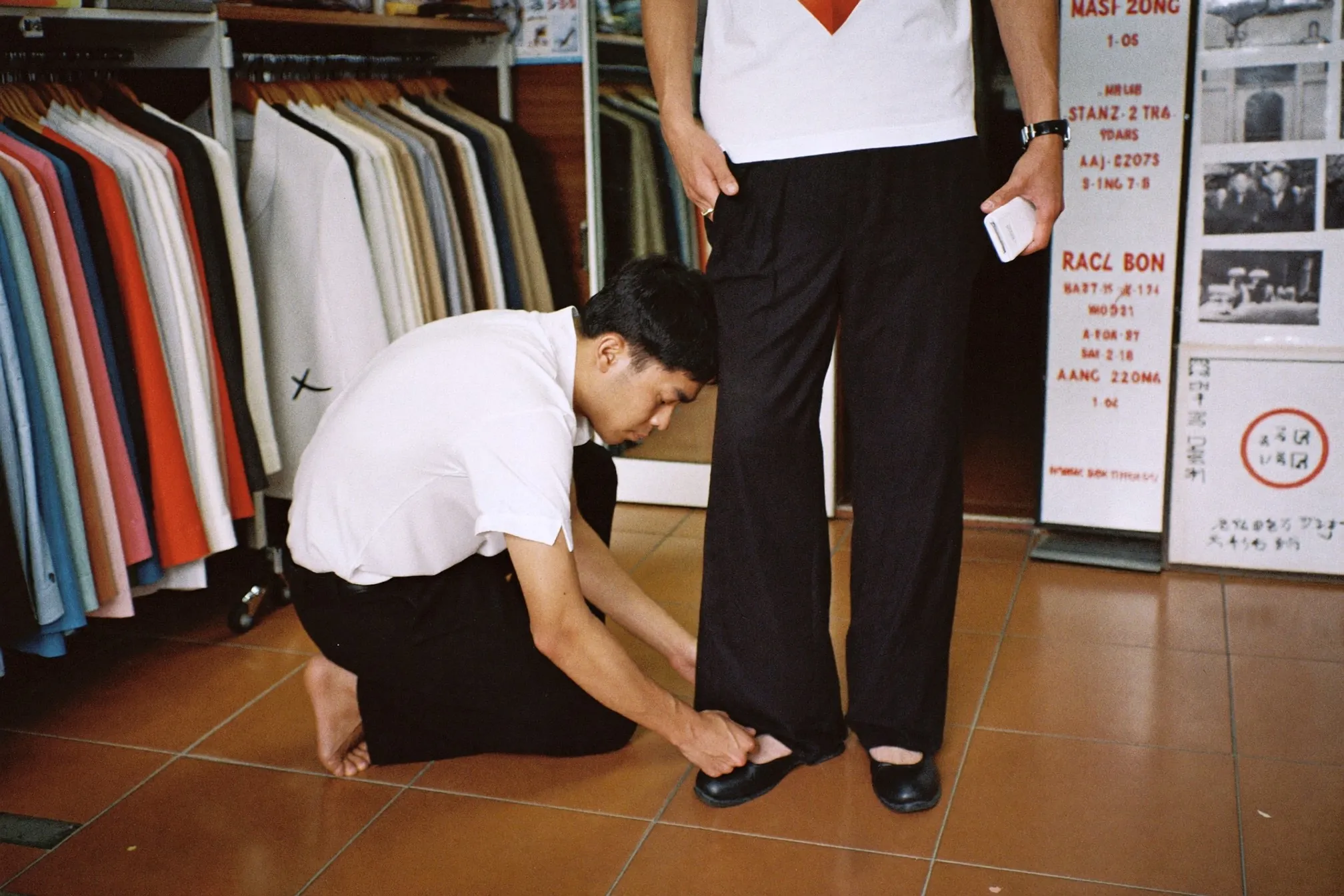
A tailor in KL charges roughly RM15 to RM60 for most alterations, and a tailor in Singapore charges roughly S$10 to S$35 for the same work. Those are the numbers worth knowing, because almost nothing men need from a tailor is a bespoke suit. It is hemming trousers that arrived three inches too long, taking in a shirt that billows at the waist, and shortening jacket sleeves that swallow your hands.
Every price here is approximate. Rates move with the shop, the street, the fabric and whether you walk in during wedding season. Treat the ranges as a sanity check, not a quote.
What does a tailor in KL or Singapore charge?
Alterations dominate the market and stay cheap. A trouser hem sits around RM15 to RM25 in KL and S$10 to S$18 in Singapore. Taking in a shirt costs roughly RM25 to RM45 or S$18 to S$30. Jacket work is where the bill climbs, starting around RM60 for sleeve length and running past RM200 for structural changes.
| Job | KL (approx) | Singapore (approx) | Worth paying for? |
|---|---|---|---|
| Hem trousers | RM15–25 | S$10–18 | Always |
| Taper trouser legs | RM30–50 | S$20–35 | Yes |
| Take in trouser waist | RM25–45 | S$18–30 | Yes |
| Take in shirt sides or add darts | RM25–45 | S$18–30 | Yes |
| Shorten shirt sleeves | RM30–50 | S$20–35 | Yes |
| Shorten jacket sleeves | RM60–120 | S$35–70 | Yes |
| Suppress jacket waist | RM80–150 | S$45–90 | Sometimes |
| Recut jacket shoulders | RM200+ | S$150+ | Almost never |
| Replace zip or lining | RM25–60 | S$18–40 | Yes |
| Made-to-measure shirt | RM180–450 | S$90–250 | Depends on your shape |
| Made-to-measure suit | RM1,200–4,000 | S$600–2,500 | Depends on how often you wear one |
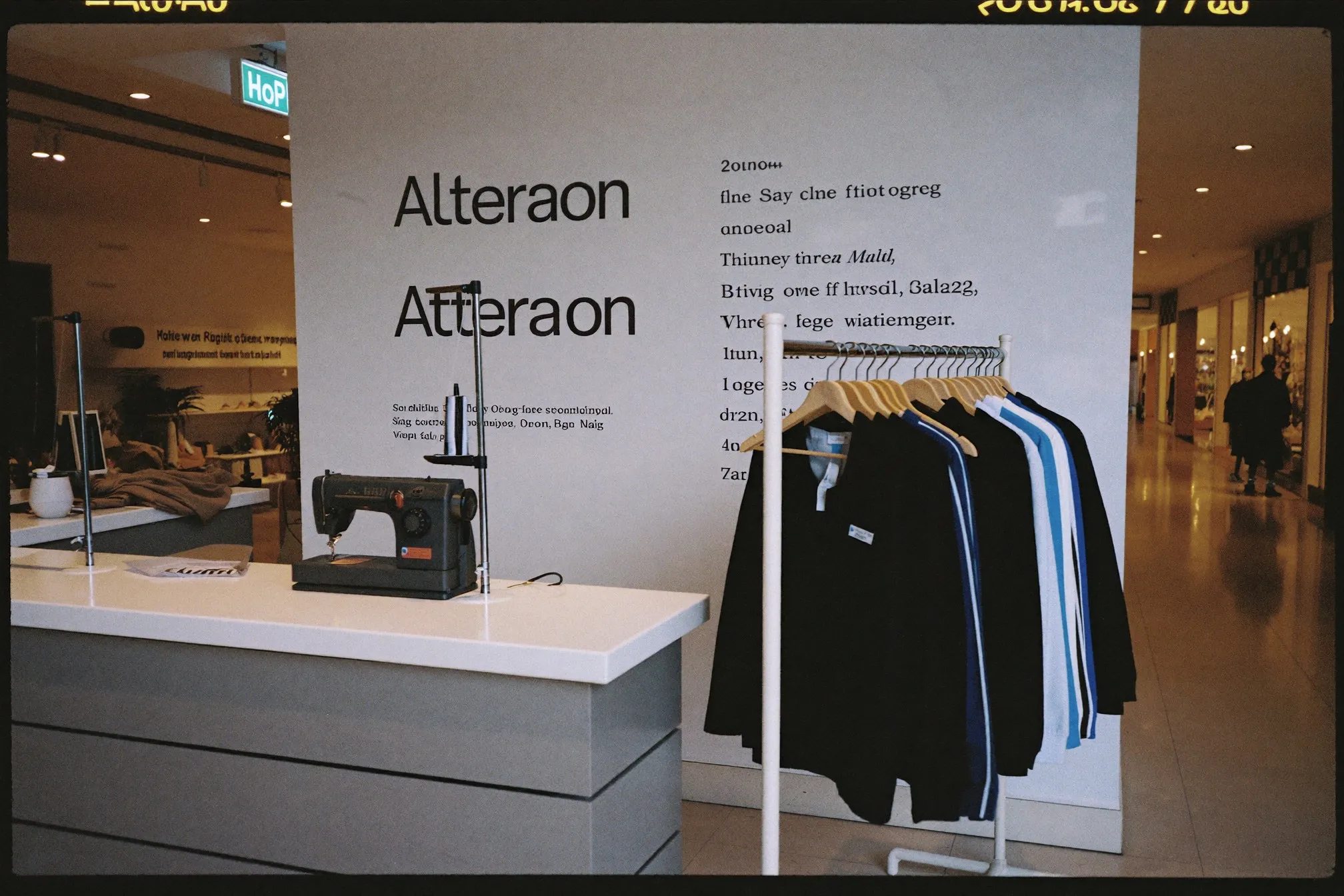
Three tiers exist in both cities. Mall alteration counters sit at the bottom of those ranges and work fast on simple jobs. Neighbourhood shoplot tailors, the kind with a Singer machine facing the street and a rail of finished school uniforms, cover most of the middle. Tailors in hotel arcades and the business districts charge a premium that buys you air conditioning and, sometimes, a better cutter.
Which alterations give you the most back?
Hem and taper your trousers, then take in your shirts. Those three jobs cost under RM100 together in KL and change how every off-the-rack outfit reads on you. Jacket sleeve length is fourth. Anything past that is fine-tuning, and fine-tuning only pays off on clothes worth the trouble.
Ranked by return on the ringgit:
- Trouser hem. Fabric pooling on your shoes is the most common fit error in both cities and the cheapest to fix. Ask for one slight break, or none if the trousers are slim.
- Trouser taper below the knee. A straight leg from a mass-market brand usually has a wide opening. Bringing it in by two or three centimetres makes cheap trousers look intentional.
- Shirt sides. Most men buy shirts for their shoulders and then live with a tent around the middle. Taking in the side seams fixes it for the price of two teh tarik and a plate of roti.
- Jacket sleeves. You want about a centimetre of shirt cuff showing. Nobody can explain why it matters, but everyone notices when it is wrong.
- Trouser waist. Useful after you lose or gain a few kilos, which the gym tends to arrange for you.
Skip the rest. Jacket shoulders are the structural core of the garment and recutting them costs more than most jackets are worth. Resizing anything by more than two inches usually distorts the pockets and seams. And do the arithmetic before you hand over RM40 of alteration on a RM59 pair of trousers, because at that point you are renovating a rental.
Fit is doing most of the work in the outfits covered in our smart casual guide and the office wear guide for the tropics. The clothes there are affordable on purpose. The tailoring is what makes them read as deliberate.
Is a custom shirt worth it in this heat?
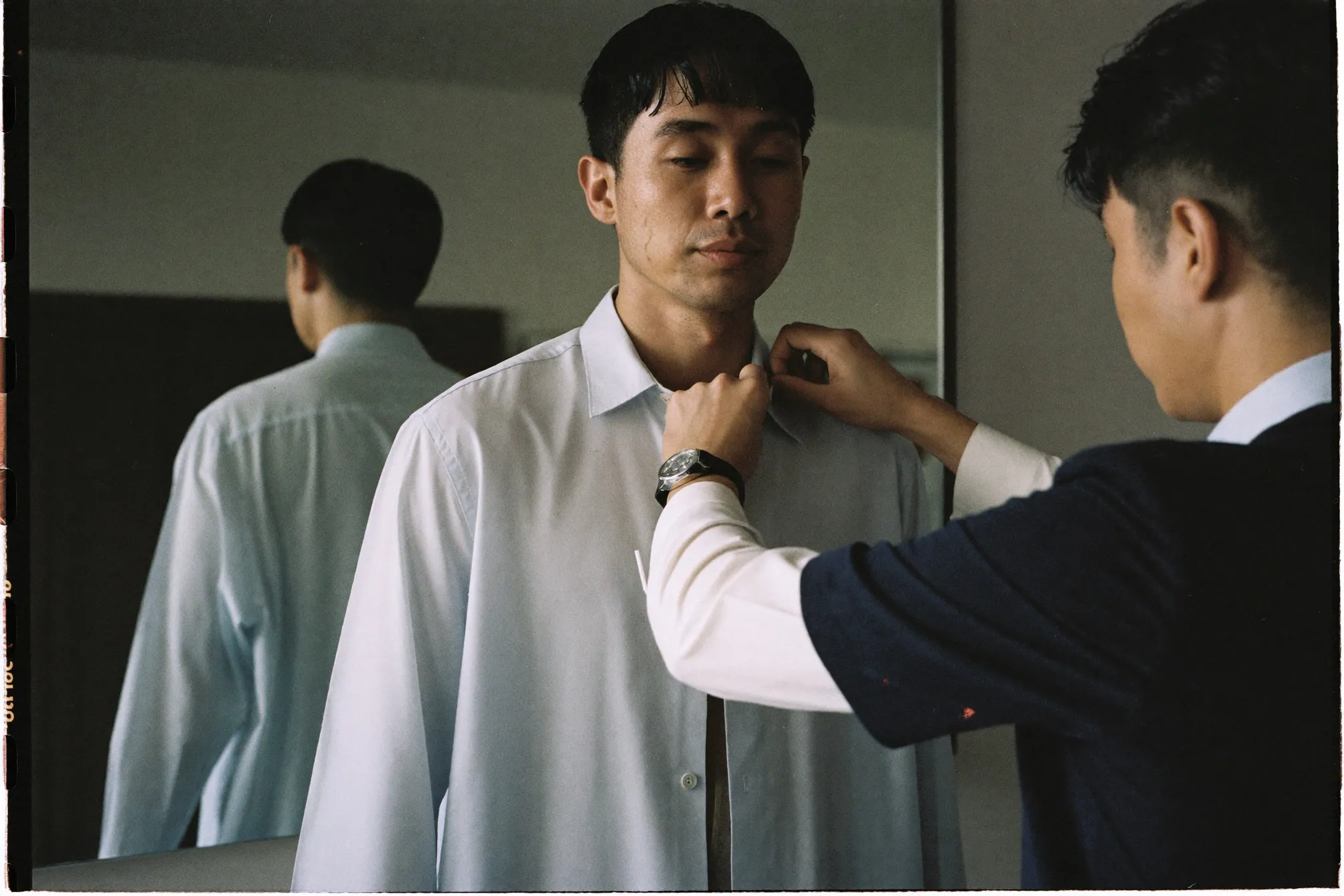
A custom shirt earns its price if your proportions defeat the rack: long arms, broad chest with a narrow waist, or a 42 chest on a 168cm frame. Made-to-measure runs about RM180 to RM450 in KL and S$90 to S$250 in Singapore. If a standard slim-fit already sits right on your shoulders, put the money into fabric and leave the pattern alone.
Know what you are buying. Most shops advertising “custom” or “tailor-made” in KL and Singapore do made-to-measure: they take your measurements and adjust an existing block pattern. Bespoke means a pattern drafted from scratch for your body, usually with two or three fittings, and it costs several times more. Both are legitimate. Only one of them is what you get for RM250.
In this climate the cloth decides more than the cutting. Ask for the composition and the weight before you pick a colour. Cotton poplin around 100 to 120gsm breathes and presses flat. Oxford cloth is heavier and more forgiving of a long day. Linen-cotton blends move air and forgive wrinkles better than pure linen. Polyester blends photograph beautifully and turn your back into a swamp by 11am, which is the trade most shops will not mention unless you ask.
One more piece of practical advice: order a single shirt first, even if the shop pushes a bundle of four. Wear it, wash it three times the way you actually wash clothes, then go back and say what moved. Shrinkage in the sleeve length is the usual culprit. A good tailor logs the correction and every shirt after that arrives right.
What should you ask for at the fitting?
Give instructions, not adjectives. “Make it slimmer” is how you end up with a shirt you cannot sit down in. Name the measurement, the place and the amount, and let the tailor pin it while you watch in the mirror. Bring the shoes and belt you will wear with the garment.
| Instead of saying | Say this |
|---|---|
| “Can you make it slimmer?” | “Take in 2cm each side at the waist, leave the chest alone” |
| “A bit shorter” | “Hem to one slight break with these shoes on” |
| “The sleeves are long” | “Shorten so the cuff ends at my wrist bone” |
| “Make the jacket fit better” | “Suppress the waist, do not touch the shoulders” |
| “Something formal” | “Mid-grey, cotton, business use, no sheen” |
A few habits that prevent arguments at collection. Stand the way you stand, not with your chest inflated. Say upfront whether the garment goes in a hot wash, because the tailor may leave extra seam allowance. Ask them to pin the change and show you before anything is cut. Ask what happens if it comes back wrong, since most established shops in both cities will adjust once for free and will say so plainly if that is their policy.
For formal attire and wedding guest outfits, give the tailor the date and the venue. A hotel ballroom in air conditioning and an outdoor garden reception in Seremban call for different fabric weights, and a tailor who knows the occasion will steer you.
How do you pick a tailor with no recommendation?
Look at the finished work on the rail before you look at the price list. Check the hem stitching on a pair of trousers and the buttonholes on a shirt. Neat, even, no puckering. Then watch how the shop treats you: a tailor who measures before quoting and asks what shoes you wear is paying attention.
Signals worth trusting:
- They pin the garment on you and let you see it in the mirror.
- They quote a day, not “soon”. Two to four days for trousers and shirts is normal, a week for jackets.
- They ask about the occasion or the shoes rather than just writing numbers down.
- The shop does its own work on site instead of sending everything out.
Signals worth walking away from: a price quoted before anyone touches a measuring tape, heavy pressure to buy a fabric bundle you did not ask about, and the “three suits for RM999” packages that appear near tourist strips. Those suits exist. They fit like a costume and the lining gives up in a year.
What can a tailor not fix?
Shoulders, mainly. If a jacket or shirt is too narrow across the shoulders, or the shoulder seam hangs down your arm, no amount of money fixes it well. The same goes for a chest that is genuinely too small and a trouser rise that sits wrong on your hips. Buy for the largest part of your body and pay a tailor to take everything else down. That order works. The reverse never does.
A tailor also cannot rescue bad shoes, which is worth remembering before you spend RM300 on alterations while wearing something falling apart. Our guide to essential shoes covers that half of the problem, and the rest of the style pillar covers what goes between.
Tonight, pull out the three pairs of trousers you wear most and look at where the fabric lands on your shoe. If any of them bunch at the ankle, put the shoes on, put the trousers in a bag and walk them to the nearest tailor this weekend. Under RM100 and three days later, people will assume you bought better clothes.
Quick answers
How much does a tailor in KL charge for alterations?
Roughly RM15 to RM25 to hem trousers, RM30 to RM50 to taper the legs, and RM25 to RM45 to take in a shirt. Jacket work runs higher, from about RM60 for sleeves. These are approximate ranges and shift with the neighbourhood and the shop.
What does alteration cost in Singapore?
Expect around S$10 to S$18 for a trouser hem, S$20 to S$35 for a leg taper, and S$18 to S$30 to take in a shirt. Mall alteration counters sit at the lower end. Tailors in the CBD and hotel arcades charge more, sometimes double.
Is a custom shirt worth it?
It earns its price if off-the-rack shirts never fit your proportions, like long arms with a narrow waist. A made-to-measure custom shirt starts around RM180 in KL or S$90 in Singapore. If Uniqlo already fits your shoulders, put the money into better fabric instead.
How long do alterations take?
Two to four working days is normal for trousers and shirts at a neighbourhood tailor in KL or Singapore. Jacket work takes a week. Same-day and next-day service exists at mall counters and in the CBD, usually with a rush charge on top.