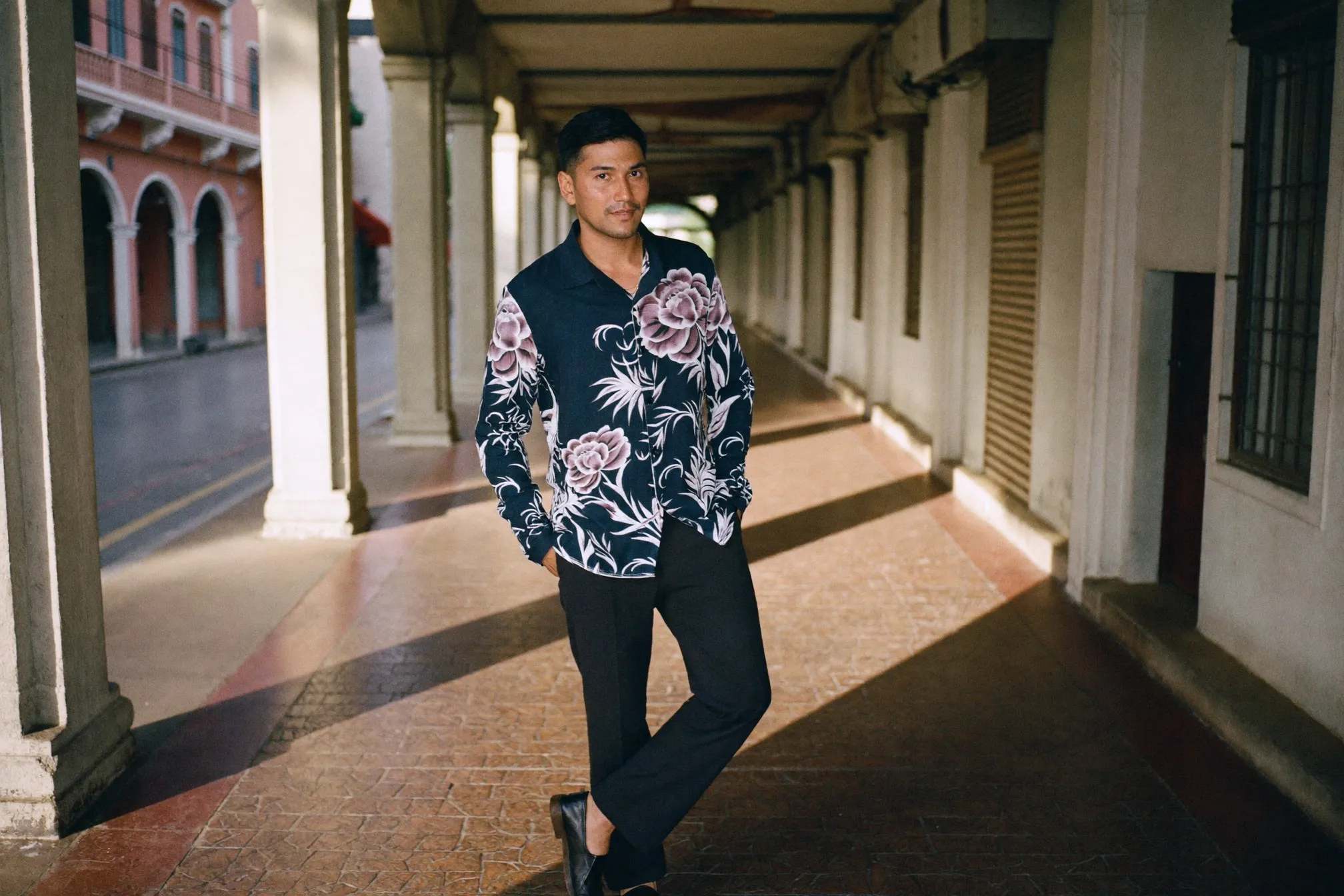
A batik shirt is a shirt cut from wax-resist dyed cloth, worn long-sleeved and untucked, and in Malaysia it counts as formal dress. An invitation that says “Batik” is asking for roughly the same level as a lounge suit, minus the tie and the jacket. Baju melayu sits a step further into tradition: baju, seluar, sampin and songkok, worn for Hari Raya, weddings and official occasions.
Two things go wrong. Most men buy a screen-printed polyester shirt with a batik-looking motif and assume they own batik. Then they treat baju melayu as a once-a-year costume, put the sampin on backwards, and hope nobody in the family photo notices. Both are fixable in an afternoon.
What makes Malaysian batik different from Indonesian batik?
Both are wax-resist dyeing, one technique shared across the Nusantara region and older than either modern country. Malaysian batik favours larger floral and geometric motifs in brighter colours, much of it drawn in wax then brush-painted. Javanese batik works at a finer scale: dense repeating patterns in browns, indigos and creams.
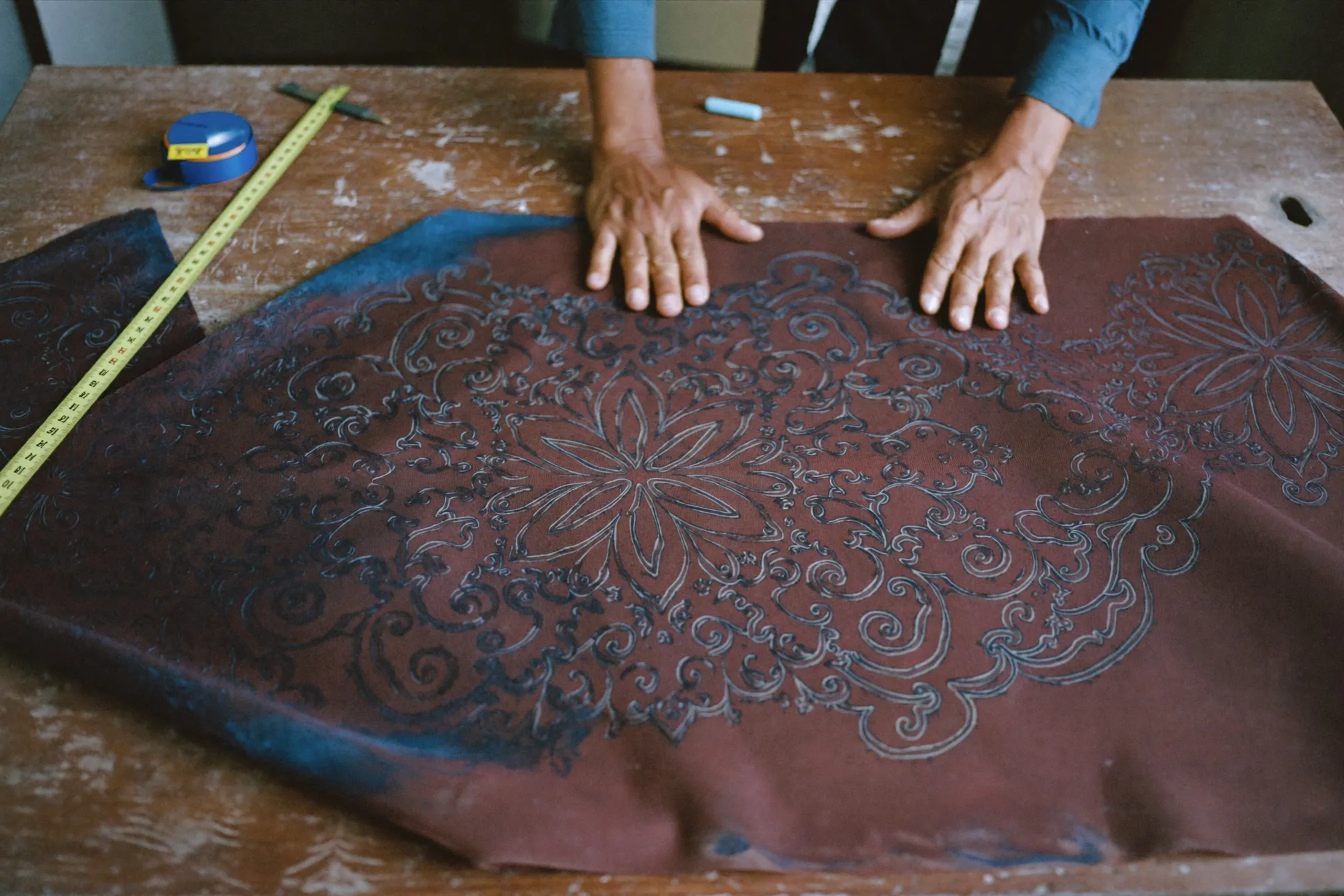
The Malaysian industry sits on the east coast, in Kelantan and Terengganu, where batik lukis (the hand-painted method) developed into the house style. Wax lines go down first, then colour goes on with a brush inside those outlines, which is why Malaysian pieces often look painterly and use bold contrast. Malay design convention leans toward flora, leaves and geometry rather than human or animal figures, so you rarely see figurative motifs on a Malaysian piece.
Indonesian batik carries UNESCO intangible cultural heritage status and a deep regional vocabulary: parang, kawung, the cloud forms of Cirebon. It is a different accent of the same craft, not a rival. Bring up who “invented” batik at a dinner table and you will spend the evening on it, so admire both and move on.
Here is what you are paying for:
| Type | How it’s made | Rough price (MY) | Wear it for |
|---|---|---|---|
| Batik tulis | Wax drawn by hand with a canting, line by line | RM400 upward | Weddings, state and official functions |
| Batik lukis | Wax outlines, colour brushed in by hand | RM250 to RM600 | Formal dinners, Raya, weddings |
| Batik cap | Copper block stamps the wax, then dyed | RM120 to RM300 | Office, open houses, most invitations |
| “Batik print” | Screen-printed motif, no wax involved | RM40 to RM90 | Casual only, and it is not batik |
Hold a piece up to the light. Real batik shows the dye on both sides because the wax resisted it through the cloth. A print has a bright face and a pale reverse.
When is batik the actual dress code?
In Malaysia, “Batik” on an invitation means a long-sleeved batik shirt, dark trousers and leather shoes. No tie, no blazer over the top. It outranks smart casual and sits level with a lounge suit, which is why government functions, corporate dinners and weddings all use it. Singapore reads batik as smart rather than formal.
Batik has been the workhorse of Malaysian officialdom for decades. Government departments have run batik-day campaigns for years, plenty of offices treat Thursday as batik day, and Merdeka season pushes it further. At a Malay wedding, batik is the safe guest answer if you do not own baju melayu. Across the Causeway the codes are looser, though batik still lands correctly at Geylang Serai during Ramadan, at Malay weddings and at any event where the invite mentions traditional wear.
| Invitation says | Wear | Common mistake |
|---|---|---|
| “Batik” | Long-sleeve batik, dark trousers, leather shoes | Tucking the shirt in |
| “Batik or lounge suit” | Either. Batik wins at 33°C | Short sleeves |
| “Baju Melayu” or “pakaian tradisional” | Full baju melayu with sampin and songkok | Leaving off the sampin |
| Raya open house | Short-sleeve batik, or baju melayu without sampin | Novelty or cartoon prints |
| Mosque or surau event | Long sleeves, long trousers, shoes off at the door | Shorts, sleeveless tops |
One rule that catches people at royal or state events: yellow belongs to Malay royalty. If a ruler will be present, wear anything but head-to-toe yellow. For everything else the dress code decoder covers the ranking.
What are the parts of a baju melayu?
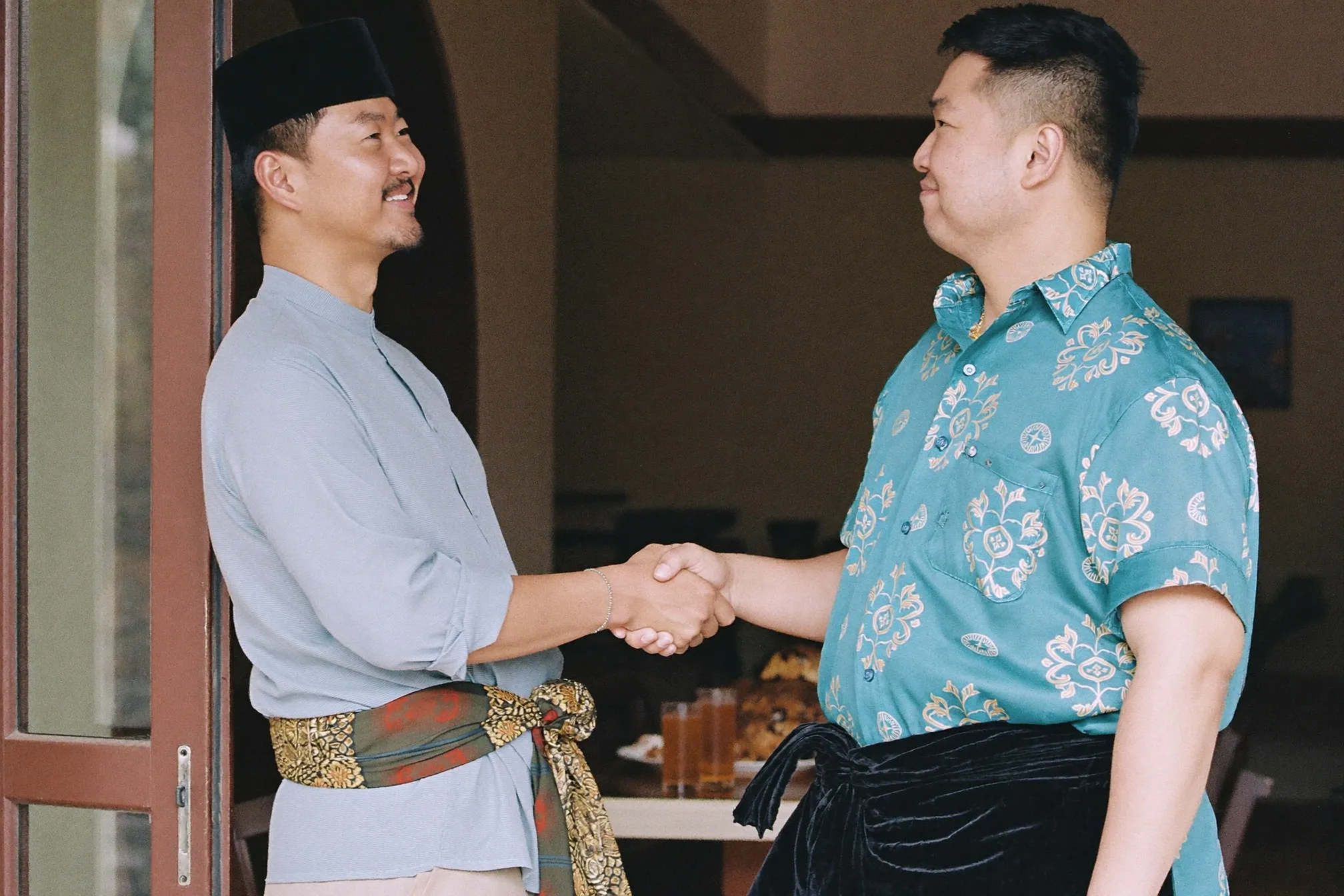
Four pieces. The baju is the top, the seluar are the matching trousers, the sampin is the cloth wrapped around the waist, and the songkok is the black velvet cap. Two collar cuts exist: cekak musang, a stand-up collar with five studs, and teluk belanga, a round neckline finished with fine tulang belut stitching.
The baju. Cekak musang reads marginally more formal and shows up across the peninsula. Teluk belanga is the Johor and Singapore cut, cleaner at the neck, good if stand collars make you feel throttled. Both usually carry three pockets. Cotton and linen blends survive an open house; heavy satin does not, and cheap satin catches every light in the room.
The sampin. A length of cloth wrapped over the trousers, folded and tied at the front. Songket, woven with metallic thread, is the formal choice and the one you want for weddings. Plain cloth or a pelikat check does for casual visiting. Worn over the baju, called dagang luar, is standard today; folded under a longer baju, dagang dalam, turns up in traditional and palace settings. Centre the fold, keep the hem near the knee, and check it in a mirror before the car.
The songkok. Black velvet, sitting level on the head, not pushed back like a cap. Wear it for weddings, formal functions and the mosque. Skip it at a relaxed open house if nobody else has one on.
The tengkolok. The folded headcloth is not an accessory. It belongs to grooms on their wedding day, to royalty and to state ceremony. Buying one for a Raya photoshoot is the fastest way to look like you are wearing a costume.
While you are learning terms: baju kurung is the women’s outfit. Calling your baju melayu a baju kurung is the traditional-wear equivalent of calling a blazer a suit.
How do you wear it without looking borrowed?
Fit does the work here. Batik shirts and baju melayu both cut generously, and generous slides into shapeless fast. Get the shoulder seam sitting on your shoulder bone. Sleeves should end at the wrist bone, hem around mid-fly, and the body should skim rather than tent.
The rest:
- Trousers plain and dark. Batik is the pattern in the outfit, so nothing else competes.
- Shoes in dark leather, loafers or derbies. Sneakers undercut the whole thing, and the shoe guide covers what to own.
- Dark grounds (navy, charcoal, maroon, deep green) carry formal occasions. Pastels are correct at Raya, where families coordinate colours on purpose.
- At a wedding, ask the couple about their colour theme before you buy. The same logic applies as in any wedding guest outfit: do not match the bridal party, and do not out-dress the groom.
- Attar or an oud-leaning scent suits the occasion better than a fresh aquatic. Our fragrance guide has options under RM200.
Where do you buy it, and what should it cost?
In KL, Jalan Tuanku Abdul Rahman is the whole ecosystem in one street: Jakel, Nagoya and Gulatis stock fabric by the metre and ready-made pieces, and the crowds triple during Ramadan. Kraftangan Malaysia outlets carry craft batik at fixed prices. Labels like Kapten Batik and Batik Boutique cut batik into shirts that fit a modern frame, roughly RM250 to RM450. Central Market sells to tourists, so negotiate. If you get to Kota Bharu or Kuala Terengganu, buy at source.
Tailoring a baju melayu from your own cloth runs about RM120 to RM250 in labour on top of fabric, and takes two to four weeks. Start in the first week of Ramadan or you join a queue that stops accepting orders.
In Singapore, Tanjong Katong Complex and the Geylang Serai shops are the reliable stops, with Arab Street and Kampong Glam for fabric. Printed batik shirts land around S$40 to S$90, hand-drawn pieces from S$150. A tailored baju melayu sits near S$180 upward depending on cloth.
How do you wash batik without wrecking it?
Hand-dyed batik bleeds for the first few washes. Wash it cold, by hand, on its own, with a mild detergent or a capful of baby shampoo. Many people soak a new piece with a spoon of salt or white vinegar to help settle the dye, which costs nothing to try. Dry it in shade, because direct sun flattens the colour within a season.
Iron on the reverse at medium heat, or steam it on the hanger. Silk batik goes to the dry cleaner or gets the gentlest hand wash you can manage. Songket sampin never goes in a machine; the metallic thread snags and pulls. For the songkok, brush it, air it, and store it upright so it keeps its shape.
Batik that has been washed properly for ten years looks better than batik bought last week. That is most of the argument for buying one good piece instead of four printed ones.
Pull out whatever batik you own this week and hold it to the light. If the reverse is pale, you have a print, and it stays in the casual pile. Then take your best long-sleeve piece to a tailor, spend RM30 on shoulders and sleeves, and have one shirt ready for the next invitation that says batik. Everything else in the style section can wait.
Quick answers
Do you tuck in a batik shirt?
No. A batik shirt has a straight hem and belongs outside the trousers. Tucking it in bunches the fabric at the waist and reads as a mistake at any Malaysian function. Leave it out, keep the hem around mid-fly, and skip the belt if it disappears anyway.
Can non-Malays wear baju melayu or batik?
Yes, and hosts appreciate the effort. Malaysians of every background wear batik to official functions, and guests wear baju melayu to Raya open houses and Malay weddings all the time. Wear it properly rather than as a novelty, and skip the tengkolok, which belongs to grooms and royalty.
What is the difference between cekak musang and teluk belanga?
Both are baju melayu collar cuts. Cekak musang has a stand-up collar closed with five studs and reads slightly more formal. Teluk belanga has a round neckline finished with tulang belut stitching and no collar band, and is the common cut in Johor and Singapore.
Is a short-sleeve batik shirt formal enough?
Not for an invitation that says batik. Short sleeves put you at open-house and office-Thursday level, which covers most of the year. For weddings, government functions and corporate dinners, wear long sleeves in a dark ground with leather shoes. Roll the cuffs back once if the room gets warm, and nobody will mind.