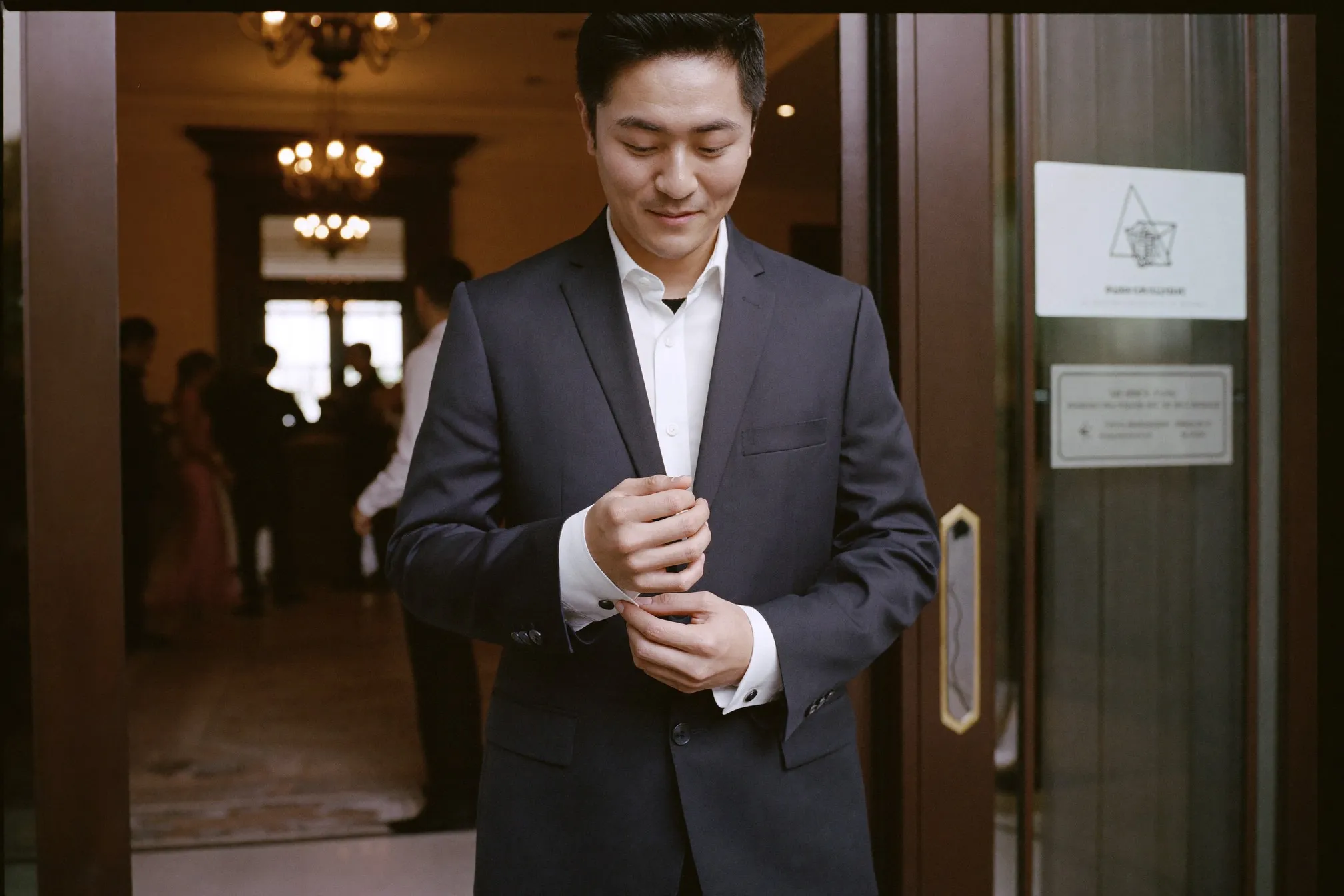
A pressed long-sleeve shirt, dark tailored trousers and leather shoes get you into almost every wedding in Malaysia and Singapore, with a blazer added for hotel ballrooms. The complication is that “a wedding” here means at least four different events, and the outfit that nails a Shangri-La dinner looks like overkill at a void deck kenduri.
This guide covers the base outfit, then adjusts it for each wedding type, decodes the dress codes invites throw at you, and explains the colour rules nobody tells you about until you get them wrong.
What should you wear to each type of wedding?
Start from the same base every time: long-sleeve shirt, dark trousers, leather shoes. Ballroom dinners add a blazer. Traditional ceremonies ask for coverage rather than formality, so keep sleeves and trousers long and wear shoes that slip off without a wrestling match. Everything else is adjustment by venue.
| Wedding | Safe outfit | Watch out for |
|---|---|---|
| Chinese ballroom dinner | Suit or blazer, shirt, dark trousers, derbies | Five-star hotel means suit; tie optional |
| Malay kenduri or walimah | Long-sleeve shirt and slacks, or plain baju melayu | Often outdoors; shoes come off at some homes |
| Indian ceremony and reception | Long-sleeve shirt or kurta, dark trousers | Shoes off at the temple, so check your socks |
| Church ceremony and lunch | Shirt, chinos or trousers, optional blazer | Morning event, lighter colours sit fine |
| Garden, rooftop or restaurant | Linen-blend shirt, trousers, loafers | Heat rules; skip the jacket, keep the press |
The Chinese dinner is the one that punishes underdressing. You will sit through eight courses over three hours in a cold ballroom with the couple’s parents circulating table to table. A jacket earns its place there. The kenduri sits at the other end: a midday buffet under canopies or at a void deck, where a pressed shirt with the sleeves kept down reads respectful and a full suit reads lost.
Indian weddings often split into a morning temple ceremony and an evening reception, sometimes on different days. Treat them as two events. Coverage and clean socks for the temple, then reception rules follow the venue, which increasingly means a hotel ballroom.
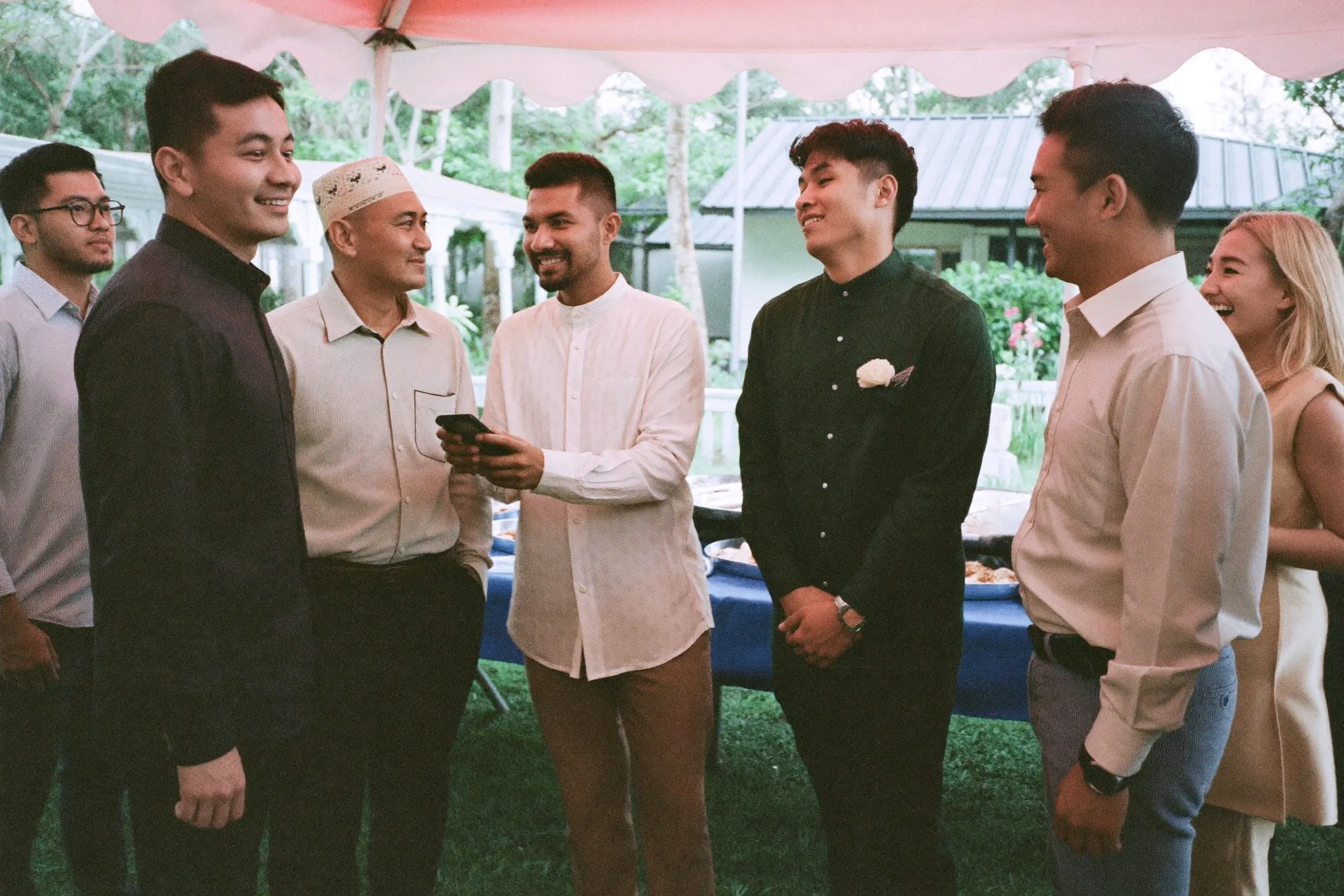
On traditional wear as a guest: a plain baju melayu at a kenduri or a kurta at an Indian wedding is always welcome if you own one and know how to carry it. If you would spend the whole event tugging at it, the shirt and trousers serve you better.
What do the invite dress codes mean?
Lounge suit means a full suit, usually dark, with the tie optional in practice. Formal at a hotel venue means the same thing. Smart casual drops the jacket but keeps the collared shirt and proper shoes. Batik means a long-sleeve batik shirt worn untucked, and it outranks a suit wherever the invite names it.
The dress code line is a request, not a suggestion, and the couple argued about it for twenty minutes, so honour it. Two codes trip people up. The first is “smart casual”, which at a wedding sits at the formal end of that scale: woven shirt, trousers, loafers, no polo. Our smart casual guide breaks down the full range if the phrase still feels vague. More outfit frameworks live in the style hub.
The second is the theme colour. When the invite says “touch of sage green” or “shades of blue”, one garment or accessory in that colour is enough. A shirt, a pocket square, even socks. Nobody expects a head-to-toe costume, and the groom’s side usually claims the full theme outfits anyway.
For batik, a decent long-sleeve shirt starts around RM80 to RM150 at Malaysian department stores, and hand-drawn pieces climb from RM250 upward. Buy one size true to fit, wear it untucked, and it will cover every “batik attire” invite for the next decade.
Which colours should you avoid?
Skip head-to-toe white and head-to-toe black at Chinese weddings, where both carry funeral associations for older relatives. Leave the full red outfit alone too, since red belongs to the couple. At Indian weddings colour is the point, so all-black stays home. Malay weddings carry no strict colour taboo beyond dressing modestly.
Navy, grey, olive, tan and light blue clear every wedding in the region, which is why the base wardrobe leans on them. A white shirt is fine under a jacket or with obvious colour elsewhere. A white shirt alone at a Chinese restaurant dinner puts you one lanyard away from being handed a tray, so add a blazer or pick a colour.
Small red accents cause no trouble. A tie, a pocket square or a batik motif with red in it reads festive, not competitive. The rule you are respecting is simple: the couple owns the spotlight colours, the grief colours stay home, and everything in between is yours.
How do you handle the heat and the ballroom air-con?
Dress for the ballroom, travel for the heat. Wear a thin undershirt in grey or skin tone, choose an unlined or half-lined blazer, and carry the jacket until you are indoors. For outdoor ceremonies, linen-cotton shirts breathe and hold a press better than pure linen. Book the Grab with buffer time so you arrive dry.
The physics are against you. Outside sits at 33°C with 80 per cent humidity, the ballroom sits at 21°C, and you will cross that line four times in one evening. The undershirt is the highest-value item in this whole article because it catches the sweat before your shirt shows it in the couple’s photos.
If you are attending a morning ceremony and an evening dinner on the same day, that is two outfits’ worth of sweat. Nobody will fault you for changing shirts in between, and your tablemates at dinner will quietly thank you.
What does the outfit cost?
A complete wedding-ready outfit runs around RM450 to RM700 new, or roughly S$150 to S$250, if you shop the local mid-range. The blazer is the biggest line item and the one you can defer until a ballroom invite forces the issue. Tailoring costs RM20 to RM40 per piece and matters more than any brand.
| Item | Budget (MY/SG) | Step up |
|---|---|---|
| White or light blue shirt | Uniqlo, RM99/S$29.90 | G2000, Benjamin Barker |
| Dark trousers | Uniqlo Smart Pants, RM149 | Dockers, made-to-measure |
| Unstructured blazer | G2000 or Zara sale, around RM300 | Benjamin Barker, tailor-made |
| Loafers or derbies | Zalora house brands, around RM150 | Pedro, around RM300/S$90 |
| Long-sleeve batik shirt | Around RM80 to RM150 | Hand-drawn batik, RM250 up |
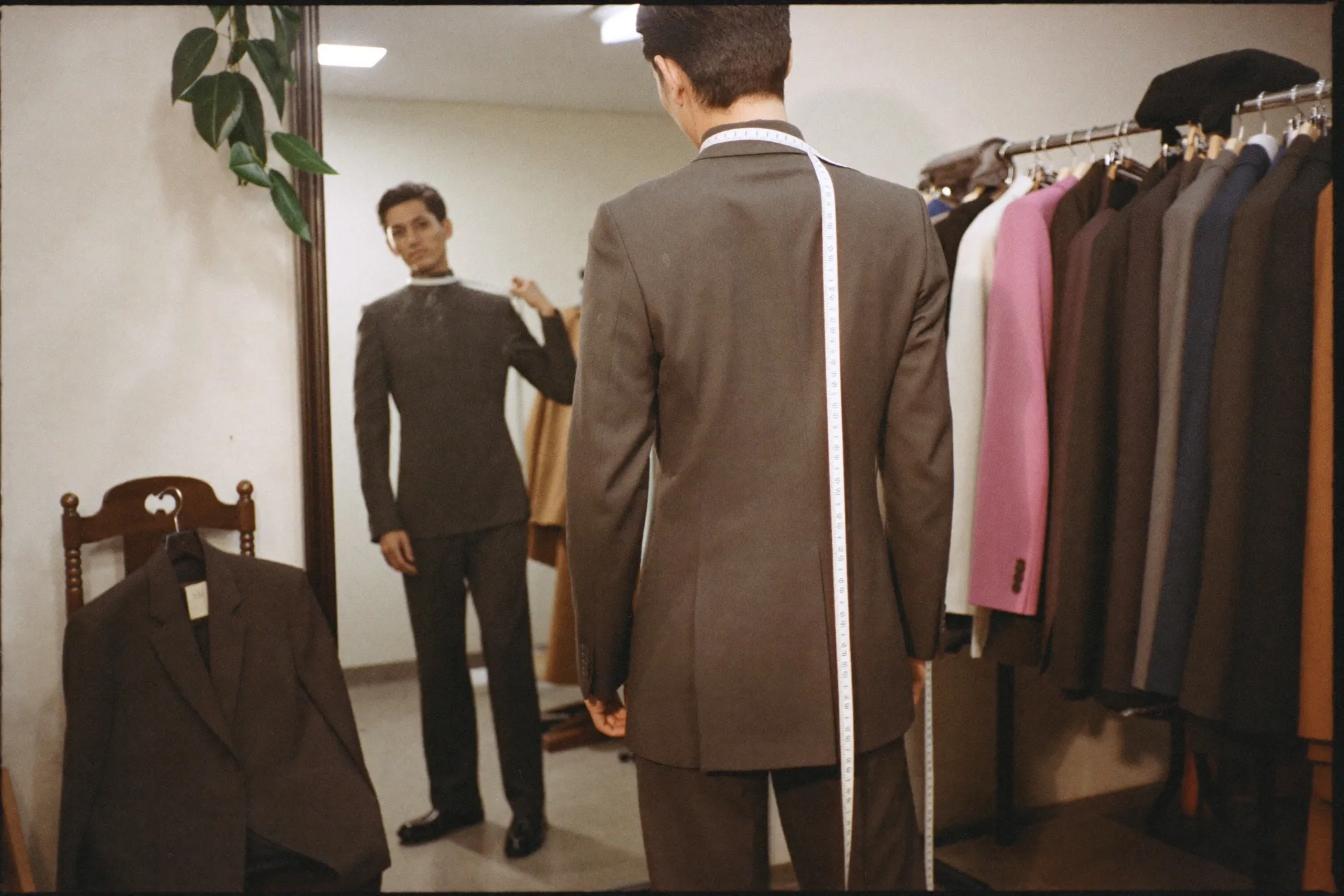
Spend the savings on alterations. A shirt taken in at the sides and trousers tapered with one break costs less than a nice dinner and photographs better than anything off the rack at any price. Most neighbourhood tailors in MY turn pieces around in two or three days. In SG, budget S$10 to S$15 per alteration and a little more lead time.
Skip the rental route for a single blazer. Rentals make sense for full traditional outfits you will wear once, not for a navy jacket you will use at every dinner, interview and reunion for the next five years.
The mistakes guests keep making
The outfit fails on details more often than on the big calls. The recurring ones:
- Upstaging the groom. A three-piece suit with a tie bar at a restaurant banquet makes the photos awkward. Aim one notch below the groom, not one above.
- Full black because “formal”. Works in London. Reads as mourning to someone’s grandmother here. Break it with a lighter shirt at minimum.
- Shorts at a garden wedding. Garden describes the venue, not the dress code. Trousers, always.
- Sad socks at a temple ceremony. Your shoes come off at the door. Buy one pair of plain dark socks with no holes and keep them for these days.
- Cologne applied like mosquito repellent. Two sprays before you dress. You will share a round table for three hours, so pick something office-safe from our perfume guide.
- Sorting the money at the door. Deciding the amount while queueing at the reception table is a bad look. Settle it the night before with the ang pow guide.
Now make it real. Open the next wedding invite sitting in your WhatsApp, check the venue and the dress code line, and match them against the table above. Then take your shirt and trousers to a tailor this week. The RM20 taper does more for you in the wedding photos than anything else money can buy.
Quick answers
Can I wear jeans to a wedding in Malaysia or Singapore?
Not to a ballroom dinner. Dark, unripped jeans pass at a casual garden reception or a void deck kenduri if the rest of the outfit is sharp: pressed shirt, leather shoes, matched belt. If you own proper trousers, wear those instead and remove all doubt.
Do I need a suit for a Chinese wedding dinner?
A full suit is standard at five-star hotel banquets in Singapore and KL. At restaurant banquets, an unstructured blazer over a shirt with dark trousers is enough. The tie is optional at both. If half your table arrives in suits and you brought a blazer, you are still fine.
What should a man wear to a Malay wedding kenduri?
A plain long-sleeve shirt with slacks and clean shoes covers it. A simple baju melayu works if you own one and wear it comfortably. Dress modestly, expect heat, and pick shoes that slip off without a struggle, since some venues seat guests on carpets or low platforms.
Is batik formal enough for a wedding?
Yes. A long-sleeve batik shirt counts as formal wear in Malaysia and much of Singapore, and it outranks a lounge suit when the invite specifies batik. Wear it untucked with dark trousers and leather shoes. Short-sleeve batik reads more casual, so save it for daytime events.