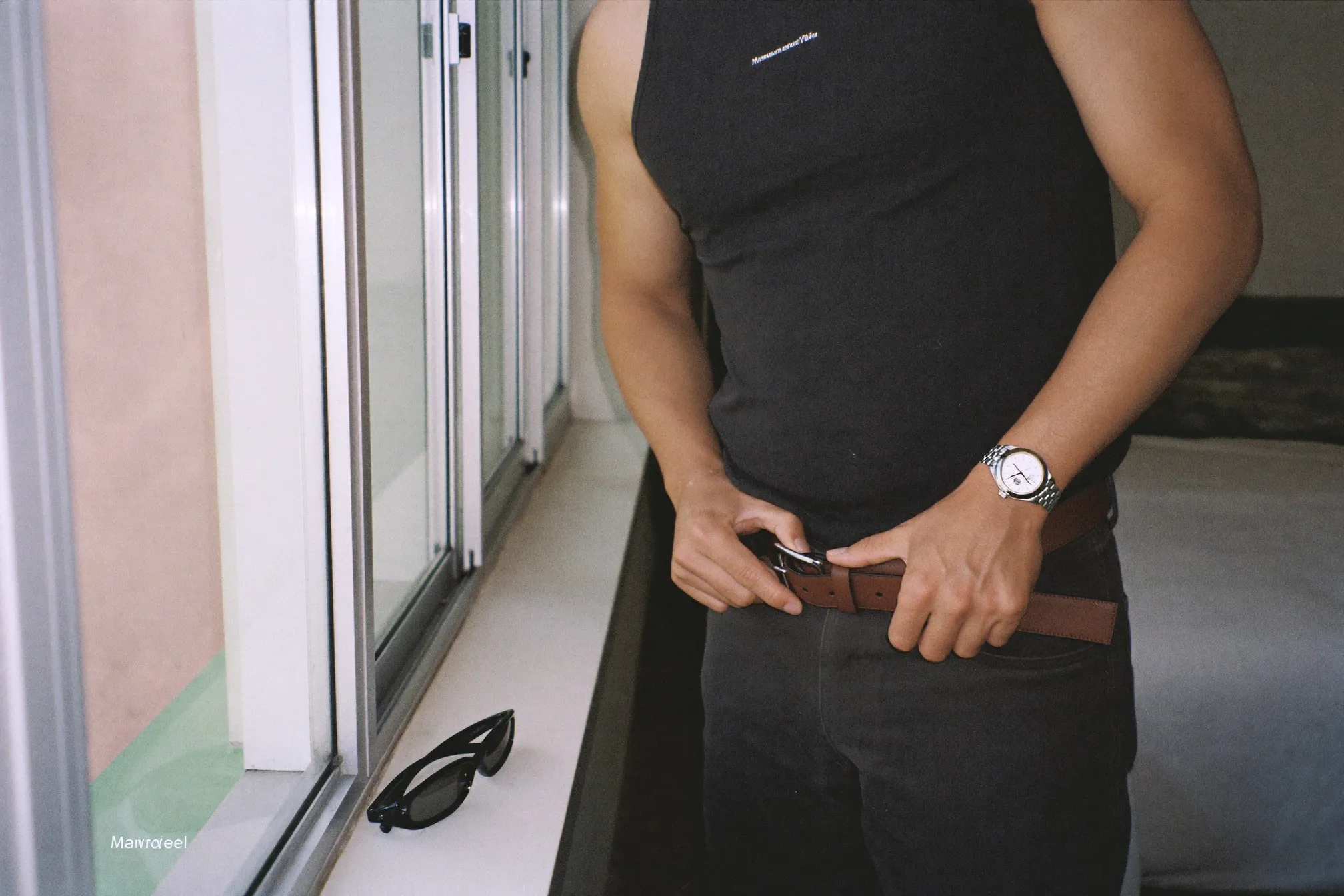
Three accessories carry almost every man’s wardrobe in Malaysia and Singapore: a watch, a belt that matches your shoes, and a decent pair of sunglasses. Buy those three properly and you are done. Everything after that is optional, and most of it makes you look like you are trying.
That sounds restrictive until you notice how the best-dressed man in any Bangsar cafe is dressed. Plain shirt, good trousers, one watch, no chains. The accessories are doing quiet work rather than announcing themselves. This guide covers how to pick each of the three, then where the line sits.
What accessories do men actually need?
A watch, a belt and sunglasses. Those three cover function and appearance at the same time: you check the time without pulling out your phone, your trousers stay put, and your eyes survive the walk from the car park. Anything else is preference, not equipment.
The reason the list is short here is climate. Scarves, tie bars, layered chains and pocket squares belong to wardrobes with jackets in them, and you wear a jacket maybe twelve days a year in this region. Strip out the cold-weather accessories and the list collapses to three fast.
There is a second reason: contrast. When a man wears one considered piece, that piece gets noticed. When he wears six, they cancel each other out and the outfit reads as noise. If you are still building the clothes underneath, start with smart casual and the four pairs of shoes worth owning before you spend a cent on accessories. The rest of the style section covers the clothes these three pieces sit on top of.
How do you pick a watch that survives the heat?
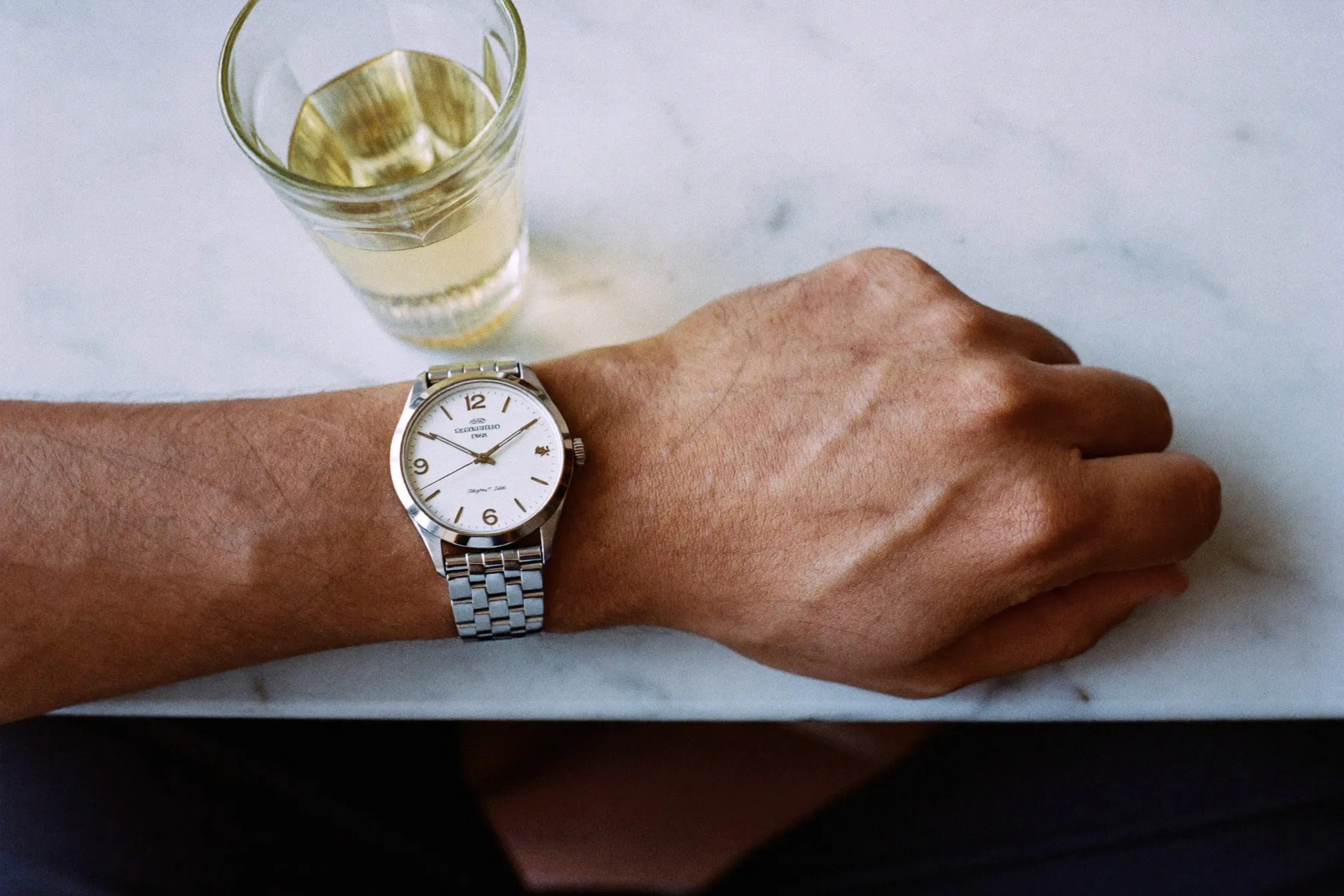
Get a 36mm to 40mm case, a steel bracelet or rubber strap, and at least 50m water resistance. That combination fits most wrists here, handles sweat, and survives a downpour between the car and the office. Spend between RM300 and RM1,200 and you have a watch for a decade.
Case size is where most men go wrong. The 44mm watches that dominated the 2010s overhang a 16cm wrist and slide around when you type. Measure your wrist with a tailor’s tape. Under 16cm, look at 36mm to 38mm. From 16cm to 18cm, 38mm to 40mm sits right. The case should end before your wrist bone does.
Strap material matters more here than anywhere with a winter. Leather straps absorb sweat, stiffen, then start to smell around month eight of daily wear. A steel bracelet cleans under a tap. A rubber or fabric NATO strap costs RM40 to replace and you can wash it. Keep one leather strap for dinners and aircon days if you like the look.
For what to buy at each price point, we have gone deep on watches at every budget and specifically on Casio, which remains the honest answer for a first watch. A RM120 Casio worn well beats a RM4,000 watch worn to impress a room that is not looking.
What makes a belt look right?
Match the leather to your shoes, keep dress belts at 3cm to 3.5cm wide, and buy one that fits with the buckle pin in the middle hole. A belt sized correctly has three holes free on either side. If you are on the last hole in either direction, you bought the wrong length.
Belt width is the detail nobody teaches. A wide 4cm belt with slim dress trousers looks like borrowed workwear. A narrow 2.5cm belt through chunky jean loops looks like string. The rough rule: 3cm to 3.5cm for trousers and chinos, 3.5cm to 4cm for jeans.
Buckle finish should follow your watch. Silver-tone buckle with a steel watch, gold or brass with a gold-tone watch. Nobody audits this, but the eye registers when two metals disagree at the centre of your body.
| Shoes | Belt | Buckle | Verdict |
|---|---|---|---|
| Black leather derbies | Black smooth leather | Silver, slim frame | Safe for formal and office |
| Mid-brown loafers | Mid or dark brown leather | Silver or brass | Works across smart casual |
| Tan suede | Brown suede or textured leather | Brass | Deliberate, needs confidence |
| White leather sneakers | Dark brown or navy woven | Silver | Best casual pairing |
| Black leather derbies | Brown belt | Any | Reads as an accident |
Two belts cover a full wardrobe: one black smooth leather, one mid-brown. Expect RM80 to RM180 at Padini or Pedro in Malaysia, S$40 to S$90 in Singapore. Full-grain leather at RM250 lasts a decade and develops a patina. Bonded leather at RM39 from a Shopee seller cracks along the fold line inside a year, every time.
Reversible black-and-brown belts exist and they solve a real problem for travel. The trade-off is a chunky rotating buckle that looks fussy up close. Buy one for the suitcase, not for daily wear.
Do sunglasses matter this close to the equator?
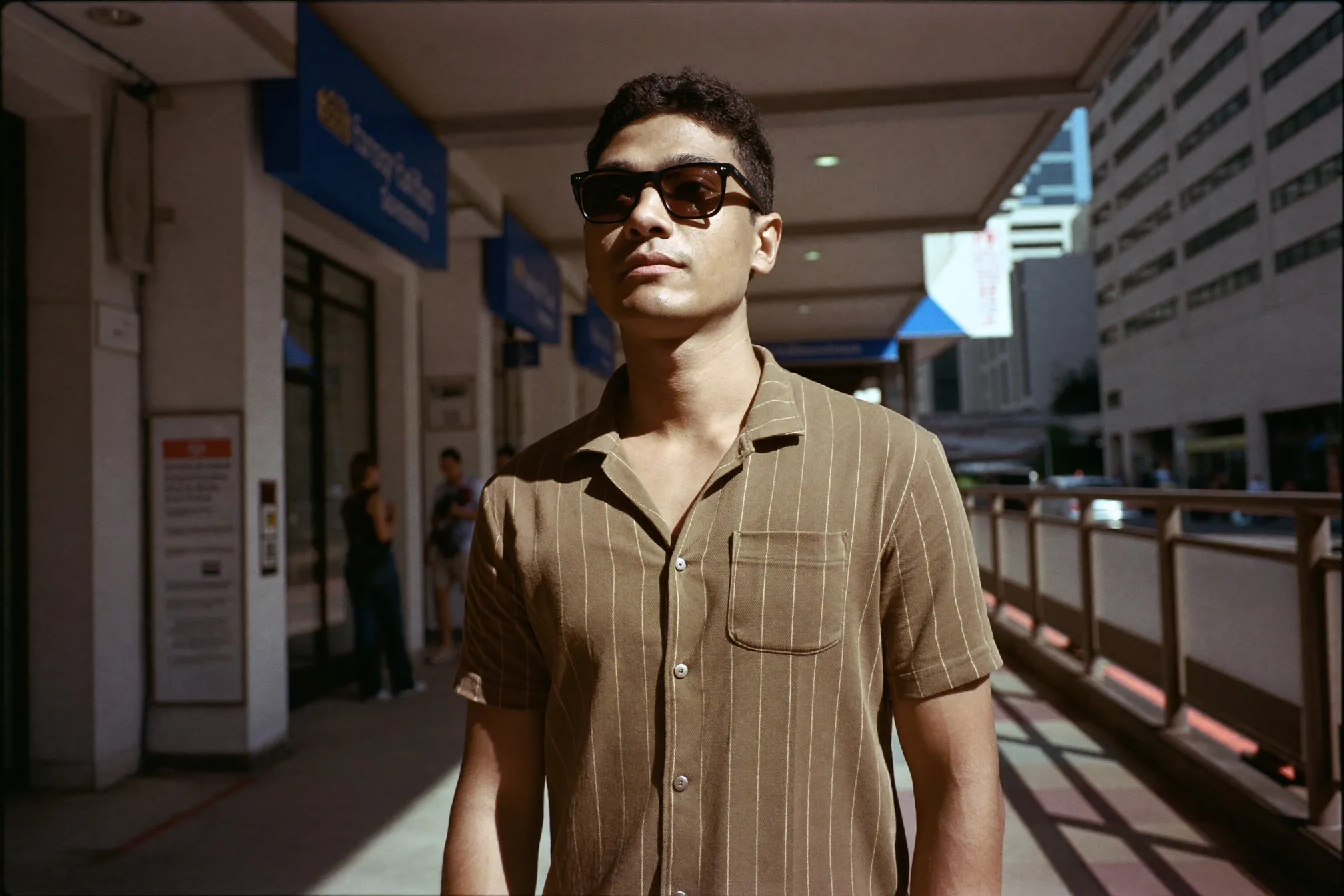
Yes, and more than in temperate countries. Malaysia and Singapore sit within a few degrees of the equator, so the sun runs close to overhead and glare arrives from every direction, including up off wet tarmac after a downpour. Look for full UV400 protection on the label, not just a dark tint.
Dark lenses without UV filtering are worse than no sunglasses at all: your pupils dilate behind the tint and let more ultraviolet in. UV400 costs almost nothing to manufacture, so any legitimate seller states it. Petrol-station sunglasses at RM20 usually do not.
Fit is the second problem, and it is specific to us. Most Western frames are built for a higher nose bridge, so they slide down and rest on the cheeks, leaving smudges and a gap at the top. Look for “Asian fit” or “low bridge fit” versions, which raise the nose pads and adjust the frame angle. Japanese and Korean brands build this in by default.
Frame shape, simplified: rounder faces suit angular frames like wayfarers and rectangles, angular faces suit rounder frames and aviators. Everyone can wear a mid-size wayfarer. If you are choosing one pair to own, that is the pair.
Prices run RM150 to RM400 for solid acetate frames with real UV protection, and S$60 to S$180 in Singapore. Polarised lenses add RM100 or so and are worth it if you drive the North-South Expressway or spend weekends on the water. They cut reflected glare off the road surface, which is the glare that gives you a headache by Seremban.
What about rings, chains and bracelets?
One optional piece, chosen on purpose, and only after the core three are handled. A signet ring, a single leather or beaded bracelet, or a thin chain under a shirt. Two or more and the outfit starts arguing with itself. A wedding band sits outside this count.
The pieces that work here tend to have a reason behind them. A ring you inherited. A bracelet from a trip. Prayer beads on the wrist, which read as personal rather than decorative in both Malaysia and Singapore. The pieces that fail are the ones bought as a set from an online store because a model wore them.
Some honest specifics on the rest:
- Chains. A thin chain sitting under a collar can work. A thick chain over a T-shirt in 33 degrees is a sweat trap that turns your neck green if the plating is cheap. Sterling silver or steel, nothing plated.
- Bracelets. Pick one, on the opposite wrist to your watch. A stack of five reads as a festival wristband collection.
- Earrings. Fine, and increasingly normal in KL and SG offices. Studs over hoops if the room is conservative.
- Tie bars and pocket squares. Real accessories, but only for the handful of days you wear a jacket. See formal attire for those.
- Lanyards. Not an accessory. Take it off before dinner.
What should you budget for the set?
| Piece | Entry | Sensible | Lasts forever |
|---|---|---|---|
| Watch | Casio, RM120 | Seiko or Orient, RM600–1,200 | Mechanical, RM2,500+ |
| Black belt | Padini, RM80 | Pedro full-grain, RM200 | Local leathercraft, RM400 |
| Brown belt | Uniqlo, RM99 | Pedro or Braun Buffel, RM250 | Local leathercraft, RM400 |
| Sunglasses | UV400 acetate, RM150 | Japanese low-bridge fit, RM400 | Titanium frames, RM900 |
The full entry-level set lands around RM450, or roughly S$150 if you shop the equivalent tiers in Singapore. That covers you completely. Upgrading is a slow project, one piece a year, and the belt is usually the piece that rewards it first because it wears out fastest and shows the most.
One warning on sales. Shopee and Lazada flash sales are genuinely good for straps, cases and replacement lenses. They are unreliable for leather goods, where “genuine leather” is a legal term that includes shredded scraps glued into a sheet. Buy leather where you can bend it in your hands first.
Go and check your current belt right now. If the pin sits in the first or last hole, if the leather has cracked along the fold, or if it is brown while your work shoes are black, that single RM120 replacement will do more for how you look this month than anything else on this list.
Quick answers
How many accessories should a man wear at once?
Three visible pieces is a comfortable ceiling: watch, belt and glasses, or a swap of one for a ring. Past that, people start counting your accessories instead of reading your outfit. A wedding band sits outside the count because nobody reads it as decoration.
Does my belt have to match my shoes exactly?
Not exactly, but the same family. Brown leather belt with brown leather shoes, black with black. A mid-brown belt and dark-brown shoes look intentional. A brown belt with black shoes reads as an accident, because it usually is one.
What watch size suits an average Asian wrist?
A 36mm to 40mm case fits most wrists in the 15cm to 18cm range without overhanging. Anything past 42mm tends to hang over the wrist bone and slide when you type. Measure your wrist with a tailor's tape before you buy online.
Are leather watch straps a bad idea in this climate?
Leather straps absorb sweat and stiffen or smell within a year of daily wear in KL or Singapore humidity. A steel bracelet, a rubber strap or a washable fabric NATO strap survives far longer. Keep leather for aircon days and dinners.