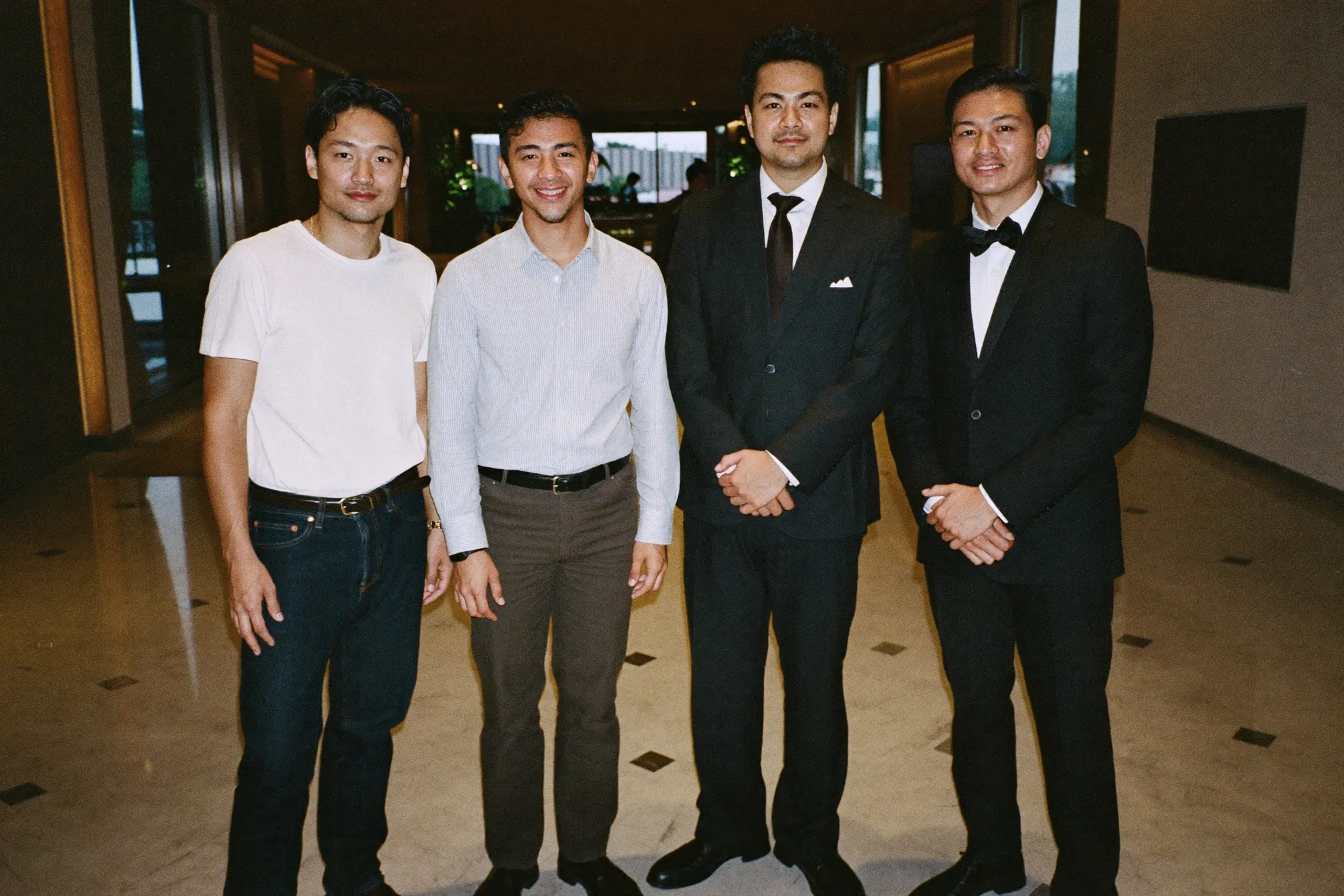
Dress codes sit on one ladder: casual, smart casual, business casual, business formal, cocktail, black tie. Each rung adds structure (a collar, then a jacket, then a tie, then a bow tie) and subtracts colour. Learn the order once and every invite you receive for the rest of your life sorts itself onto a rung.
Two codes in Malaysia and Singapore sit off that ladder. Batik and baju melayu outrank a jacket at the functions that name them, and no amount of Western dress code guidance prepares you for the first Raya open house invite. This guide ranks all of it, decodes the invites that tell you nothing useful, and lists what you need to own to cover the lot.
What are the main dress codes, ranked?
Six codes handle almost every invite: casual, smart casual, business casual, business formal, cocktail and black tie. They climb in that order. Batik and baju melayu run parallel to the top half, ranking level with a suit at Malaysian functions and at any event where the host names them on the card.
| Code | The one-line version | Shoes | Where you’ll meet it |
|---|---|---|---|
| Casual | T-shirt or polo, jeans or chinos | Sneakers | Mamak, kopitiam, weekends |
| Smart casual | Collared shirt, chinos, no tie | Loafers, clean leather sneakers | Offices, dates, garden weddings |
| Business casual | Long-sleeve shirt, trousers, jacket optional | Derbies, loafers | Client meetings, most KL and SG offices |
| Business formal | Dark suit, plain shirt, tie | Black or dark brown leather | Interviews, corporate dinners, weddings |
| Cocktail | Dark suit, tie optional, sharper shirt | Loafers or Oxfords | Hotel receptions, launches, evening parties |
| Black tie | Dinner suit, white shirt, black bow tie | Black leather, patent optional | Galas, award nights, the strict D&D |
| Batik (long sleeve) | Batik shirt untucked, dark trousers | Leather shoes | Malaysian official dinners, Raya |
| Baju Melayu | Baju Melayu with samping, songkok optional | Leather shoes | Raya, Malay weddings, national events |
One rule survives every ambiguity on that table: dress one rung up, never one rung down. Overdressed reads as respect for the host. Underdressed reads as a man who did not open the invite. If you turn up as the only person in a jacket, take it off and hang it on your chair, and nobody remembers by dessert. Nothing works in the other direction.
Cocktail confuses more men than the rest combined, mostly because the name suggests something looser than it is. Treat it as business formal with the tie made optional and the shirt allowed some personality. Same suit, later hour, darker colours.
How do you read an invite that says nothing useful?
Read the venue, the start time and the host, in that order. A hotel ballroom at 7.30pm means a suit whatever the card says. A restaurant garden at 4pm means smart casual whatever the card says. The words are the host’s guess at a code. The venue is a fact.
The checks that take two minutes:
- Pull the venue up on Google Maps and look at the photos people posted. Marble and chandeliers mean a jacket. Fairy lights over a lawn do not.
- Note the hour. After 7pm, everything darkens. Navy and charcoal beat tan and light grey once the sun is down.
- Ask one person who is going what they’re wearing. Zero risk, thirty seconds, and it beats any guide including this one.
- Treat a company D&D theme as decoration layered on a real code. “Roaring 20s” printed on a ballroom invite means a suit with a nod, not a costume rental.
- If a wedding invite names a colour palette, that’s a request for your shirt or tie, not for you to arrive head to toe in dusty rose. Weddings carry enough rules of their own to need their own guide.
Where the words do appear, they map cleanly enough. “Lounge suit” means business formal. “Semi-formal” means cocktail. “Smart casual” means what our smart casual guide covers in detail, and “formal” in this region carries four different meanings depending on the host, which is a whole separate problem handled in the formal attire guide.
Where do batik and baju melayu fit?
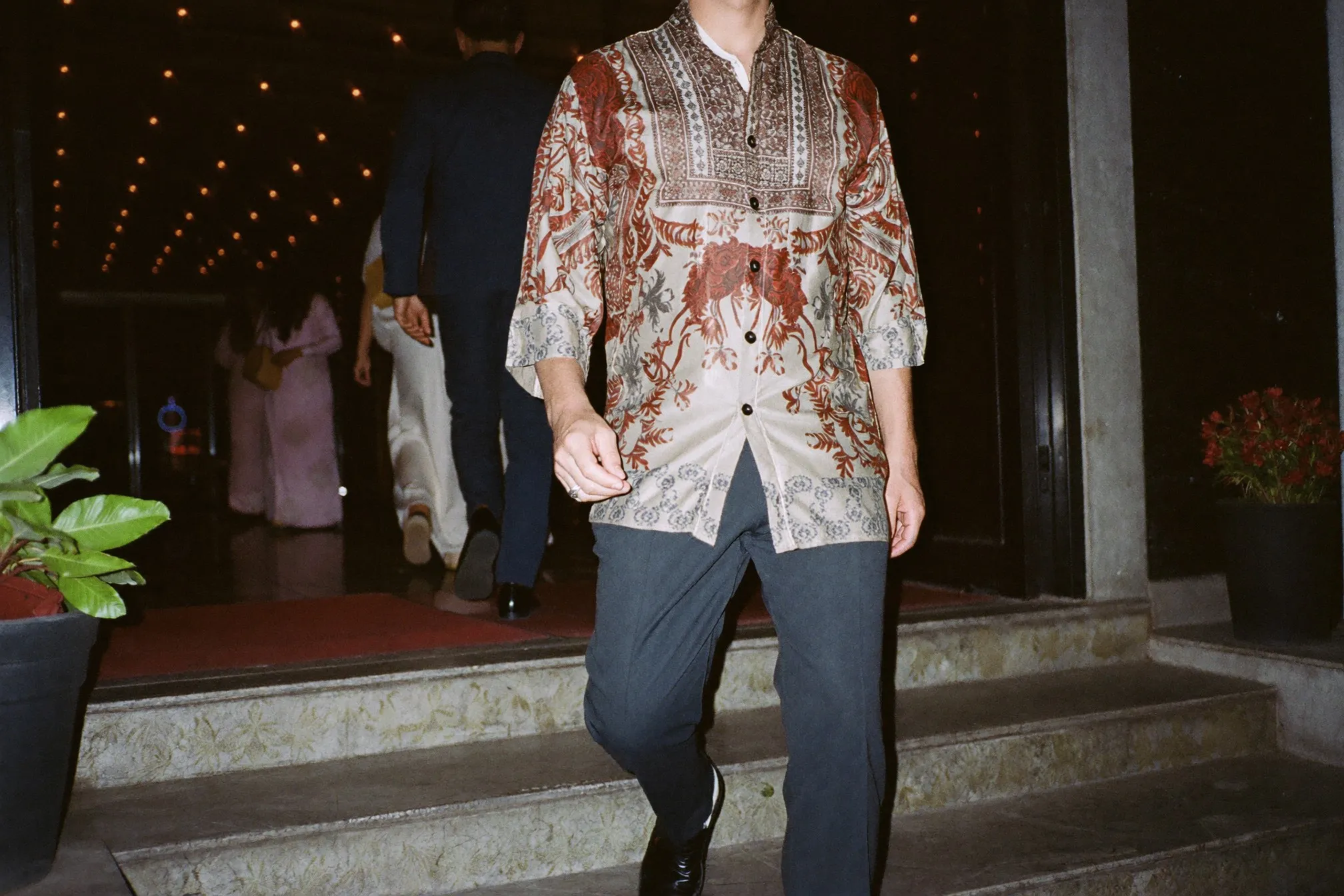
Long-sleeved batik with dark trousers ranks alongside a lounge suit at Malaysian official dinners, corporate functions and Raya open houses, and invites frequently list both as options. Baju Melayu with a samping sits at the same level or higher for Raya, Malay weddings and national occasions. Short-sleeved batik does not carry that rank.
A few local rules that no Western dress code chart will tell you:
Chinese weddings. Skip head-to-toe white and head-to-toe black. Both carry funeral associations for older guests, and the couple’s grandmother will clock it. Navy, grey and any colour with life in it are fine.
Indian functions. Bright colours are welcome and often expected. Some families avoid black at auspicious events, so if you own one dark suit and one navy, wear the navy.
Mosque and temple events. Long sleeves, long trousers, no exceptions for heat. Shoes come off at the door, which means the state of your socks becomes public information.
Raya and Deepavali open houses. These run casual on the surface and formal underneath. A collared shirt and trousers is the floor. Sandals and a football jersey have shown up at plenty of open houses, and their owners have all felt it.
Buying batik takes some care. A decent long-sleeved piece runs around RM150 to RM400 at Jakel or the craft complexes, and hand-drawn batik tulis climbs well past that. The print matters less than the fit through the shoulders and the sleeve length, which should end at your wrist bone.
What survives 33°C and full aircon?
Fabric decides whether a dress code is wearable here, not the code itself. Cotton, linen blends and tropical-weight wool work. Polyester suiting turns a two-hour dinner into a personal crisis. The higher the rung, the more you pay attention to weight.
The adjustments that matter:
- Buy unlined or half-lined jackets. A fully lined suit jacket in KL in August is a wearable oven, and the half-lined version costs the same.
- Wear a grey or skin-tone undershirt under formal shirts. White undershirts show through and white outer shirts show everything else.
- Carry the jacket, don’t wear it. Put it on in the lift lobby, not in the Grab.
- Keep tropical-weight wool for suits (anything in the 200g to 250g range) and save the heavier cloth for the one work trip a year to somewhere cold.
- Remember the ballroom paradox. Outside it’s 33°C, inside the aircon runs at 19°C, and you will be glad of the jacket for three hours.
Anyone dressing for a KL or SG office five days a week should read the office wear breakdown alongside this, because daily heat management is a different discipline from surviving one evening.
What do you need to own to cover every code?
Seven items clear every rung on the ladder, and most of them are things the rest of our style coverage already pushes you toward. Buy them in this order, because each one unlocks more codes than the last.
| Item | Rough cost | Codes it unlocks |
|---|---|---|
| Light blue or white Oxford shirt | RM99 / S$29.90 (Uniqlo) | Smart casual through business formal |
| Navy or stone chinos | RM149 / S$49.90 | Casual through business casual |
| Black leather derbies | Around RM300 / S$120 (Pedro, Clarks) | Business casual and everything above |
| Minimal white leather sneakers | Around RM250 / S$90 | Casual and smart casual |
| Charcoal or navy suit | RM600 to RM1,200 / S$250 to S$500 | Business formal, cocktail, most weddings |
| Long-sleeved batik shirt | RM150 to RM400 | Malaysian formal, Raya, official dinners |
| Rented dinner suit | RM200 to RM400 / S$150 to S$300 per event | Black tie |
Rent the dinner suit until you’re attending three black tie events a year. Below that, ownership makes no financial sense and the suit ages in your wardrobe while your size changes. Above it, buy.
Put the money you save into alterations. A RM20 sleeve shorten and a RM30 trouser taper do more for how a suit reads than another RM500 on the label. Most neighbourhood tailors in Malaysia turn work around in two days, and Singapore runs S$10 to S$15 per piece with a similar wait.
What gets you side-eyed?
The failures are consistent enough to list:
- Shorts at anything with a printed invite. The invite is the tell. Printed card, long trousers.
- Short-sleeved batik at a formal function. It looks like batik and ranks like a polo.
- Sport socks with dress shoes. White cotton flashing above a black Oxford undoes the whole outfit, and at a temple or a Malay home you’re taking the shoes off anyway.
- Sneakers under a suit at a wedding. It photographs badly and the photos outlive the wedding.
- The office lanyard at dinner. Take it off in the car park.
- Ironing nothing. A creased shirt drops you a full rung regardless of what it cost.
Open the next invite sitting in your WhatsApp. Find the venue, the start time and whatever words the host used, then place it on the ladder at the top of this page. If it lands on a rung you cannot dress for tonight, you’ve just identified the one item worth buying this month. Buy that, and skip the fourth t-shirt.
Quick answers
What are the main types of dress code?
Six cover almost everything: casual, smart casual, business casual, business formal (also called lounge suit), cocktail and black tie. They climb in that order, each rung adding structure and losing colour. In Malaysia, batik and baju melayu run alongside the top half and rank level with a suit.
What does smart casual dress code mean exactly?
A collared shirt, chinos or dark trousers, and closed leather shoes. No tie, and the blazer stays optional. It sits one rung above casual and one below business casual, which makes it the safest answer to any invite that gives you no other information.
Is it worse to be overdressed or underdressed?
Underdressed, every time. A jacket you did not need comes off and hangs on the back of your chair in three seconds. A polo at a black tie dinner has no fix. When an invite is ambiguous, dress one rung above your guess and carry the flexibility with you.
Does batik count as formal dress in Singapore?
Less than in Malaysia. At a Malaysian official dinner, a long-sleeved batik shirt ranks equal to a lounge suit and invites often list both. In Singapore, batik reads as a stylish personal choice rather than a formal default, so check what the host expects before you commit.