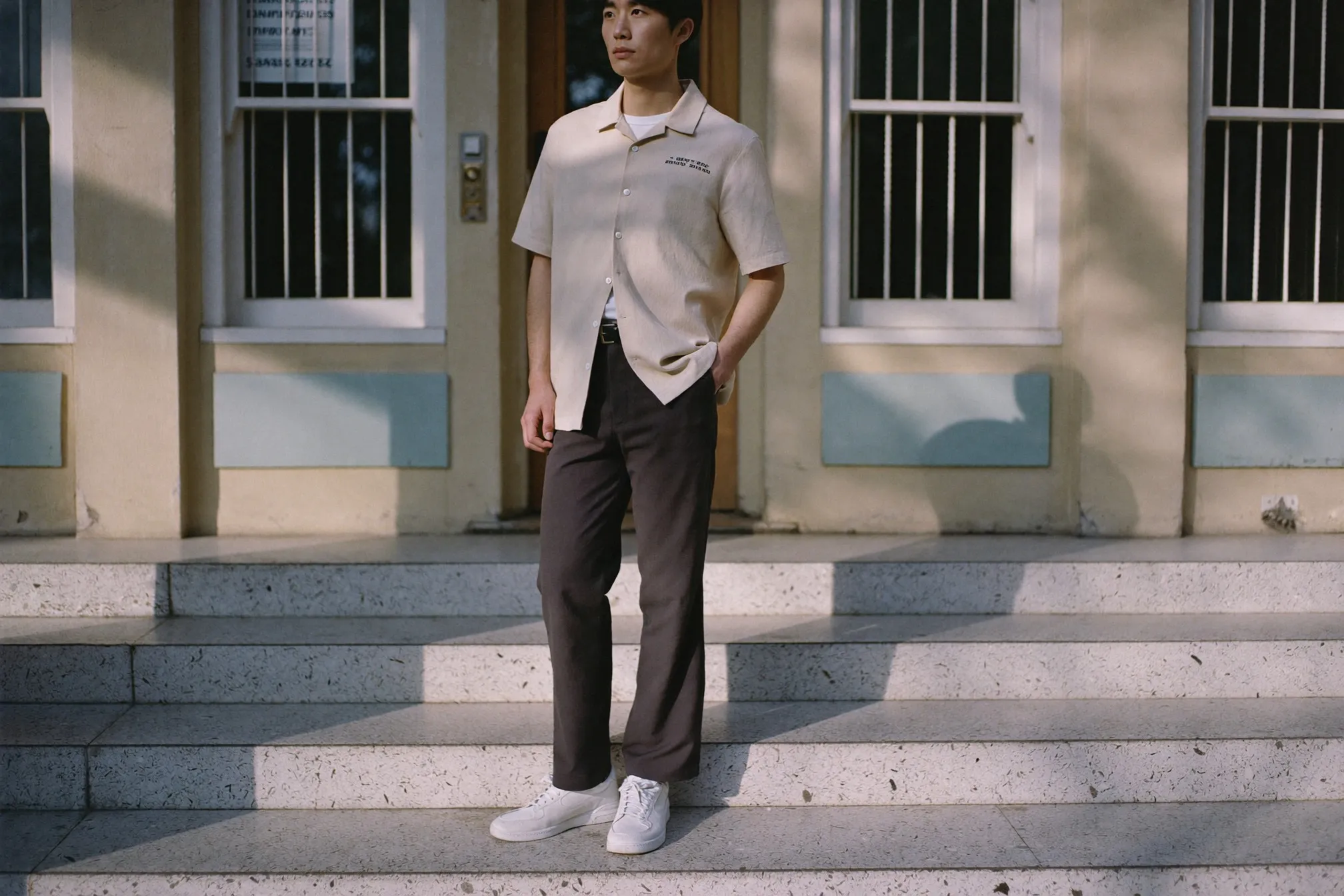
A retro outfit works when one piece comes from another decade and everything else stays present day. One camp-collar shirt from the 1950s, modern trousers, modern shoes. Add a second and third period piece from the same era and you stop dressing and start doing a re-enactment.
That ratio is the whole discipline. It also happens to be cheap, because one good vintage shirt from a bundle shop in Chow Kit costs less than lunch in Bangsar. This guide covers which decades hold up in 33°C, where to buy without wasting a Saturday, and how to fit clothes cut for bodies that stopped existing in 1978. For the baseline your retro pieces sit on top of, our style section starts with casual outfits.
What separates retro style from a costume?
Ratio and condition. One period piece against modern basics reads as taste. Three items matched to the same decade reads as a themed party, and everyone at the table clocks it in under two seconds. Condition does the other half of the work: cared-for vintage looks deliberate, while a limp, yellowing thrift find looks like an accident.
The men who get this right are running a quiet formula. They pick one loud element and then flatten everything around it. A 1970s safari shirt with plain black trousers and clean sneakers. A boxy 1990s button-up over a fitted tee and straight-leg jeans. The eye lands on the interesting thing, finds nothing competing with it, and moves on satisfied.
The failure mode is enthusiasm. You find a great 60s knit polo, then a pair of pleated high-waisted trousers, then round sunglasses, and by Friday you have assembled a Wong Kar-wai extra. Each piece was a good decision. Together they made a decision for you.
One more rule that saves people: keep your haircut current. A period fit with a period haircut removes the last bit of doubt about whether you meant it. Modern hair over a vintage shirt tells everyone the shirt was a choice. Our guide to hair styling products covers the hold you need for a side part that stays put in this humidity.
Which decades survive the tropical heat?
Not all of them. Retro style was mostly invented in temperate countries, and half its greatest hits are wool. The decades that translate here are the ones built around loose cotton and open collars, which rules out most tailoring from the 1960s and nearly all corduroy.
| Decade | The piece worth stealing | Heat verdict | What to anchor it with |
|---|---|---|---|
| 1950s | Camp-collar shirt, high-rise pleated trousers | Excellent, open collar and loose cotton | Plain tee underneath, minimal leather sneakers |
| 1960s | Slim knit polo, mod-cut jacket | Poor for tailoring, fine for the polo | Modern flat-front chinos |
| 1970s | Safari shirt, wide-collar plain shirt | Good if cotton, terrible if polyester | Dark straight trousers, no flares |
| 1980s | Colour-blocked windbreaker, pleated chinos | Mixed, most nylon is a plastic bag | Plain white tee, simple sneakers |
| 1990s | Boxy short-sleeve button-up, straight-leg denim | Good, the cuts are roomy | Fitted tee, clean low-profile sneakers |
The 1990s deserve a note, because that decade is doing most of the heavy lifting in Malaysian and Singaporean street style right now. Boxy fits, straight legs and plain colours suit the weather and suit most builds. They also cost nothing, since nobody has decided 90s Giordano is collectable yet.
Rayon is the surprise winner from the 1940s and 50s. Vintage rayon shirts drape better than cotton, dry fast and feel cool against skin, which is why they were popular in the tropics the first time round. Hand wash them cold and never put one in a dryer.
Where do you buy retro clothes in KL and Singapore?
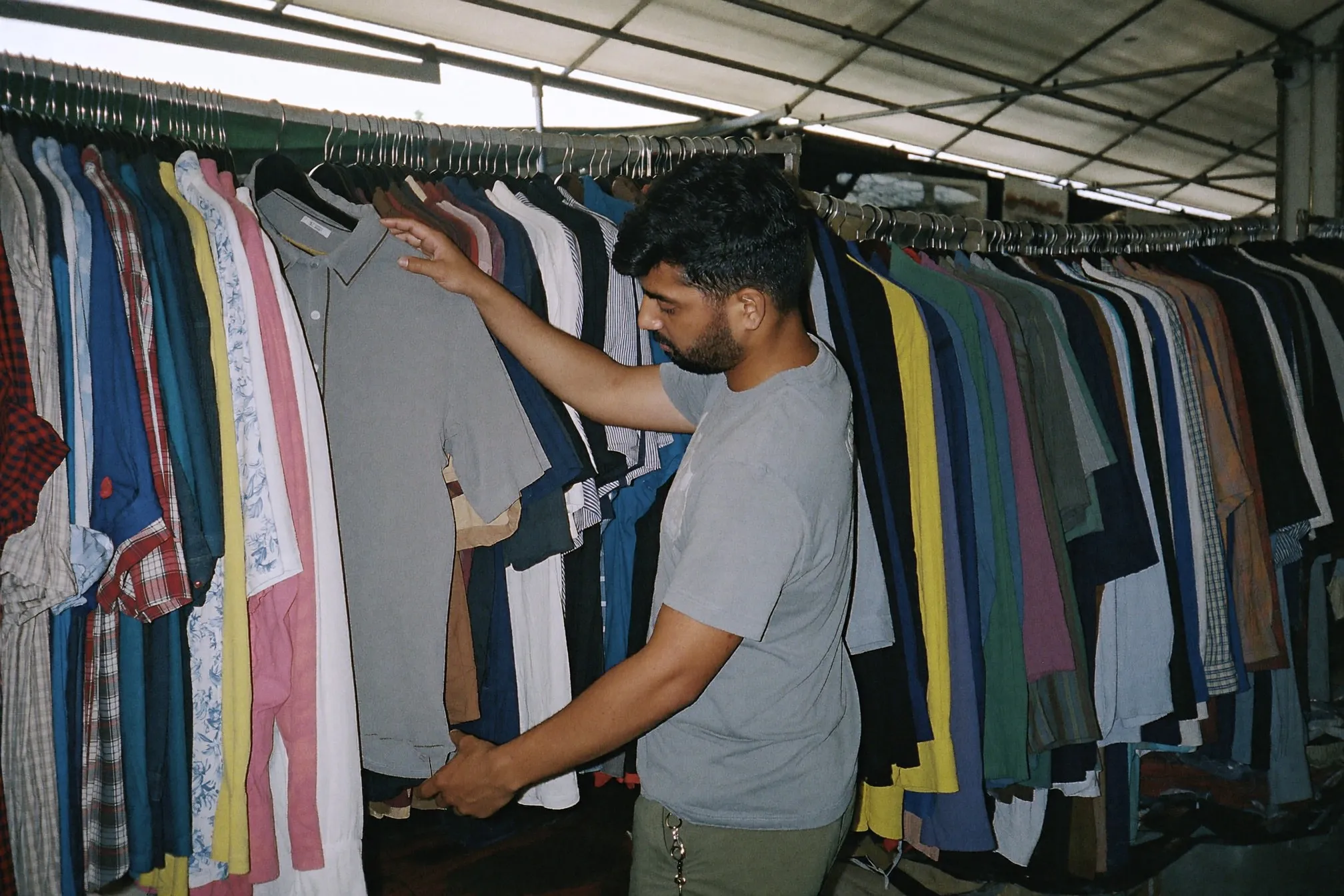
Four channels, in rough order of price. Bundle shops give you the lowest prices and the worst signal-to-noise. Curated vintage stores charge four times as much and have done the digging for you. Online resale sits between the two. High street reissues let you skip the whole thing.
Bundle shops (kedai bundle). Jalan Tuanku Abdul Rahman, Chow Kit and the older shoplots around Ampang have racks of imported second-hand clothing at roughly RM15 to RM50 a piece. Go on a weekday morning after a restock and bring hand sanitiser. Expect to spend an hour and find one thing.
Flea markets. The Amcorp Mall flea market in PJ runs on weekends and mixes clothing with a lot of other people’s grandfathers’ possessions. In Singapore, the shops around Haji Lane and Dunlop Street stock curated vintage at S$30 to S$80, already sorted and mostly already washed.
Carousell and Shopee. Search by measurement, not by size label. Sellers who post a flat-lay with pit-to-pit and shoulder-to-shoulder numbers are the ones who know what they are doing. Sellers who post a mirror selfie and the word “vintage” are guessing.
High street reissues. Uniqlo runs camp-collar shirts and relaxed-fit chinos most seasons, and Zara cycles through 70s collars every year or so. You lose the fabric quality and the story. You gain a shirt that fits, costs under RM130, and does not smell of somebody’s loft.
Start with reissues if you are new to this. Get comfortable with the silhouette on your own body before you spend Saturdays hunting for the real thing.
How do you make vintage clothes fit?
Sizing from before roughly 1995 does not map onto anything you own. Vanity sizing has moved labels steadily upward for thirty years, so a 1970s large often fits like a modern medium through the chest while running longer in the body. Measure a garment you already like, save the numbers, and buy to those.
The four measurements that matter for a shirt: pit-to-pit, shoulder-to-shoulder, sleeve length, and total length from the collar seam down. Lay one of your good shirts flat on a bed, run a tape measure across it, and put the results in your phone notes. That single ten-minute job kills most of your bad purchases before you make them.
A tailor fixes almost everything except shoulders. Taking in a side seam, shortening sleeves or hemming a body costs around RM25 to RM50 at a neighbourhood tailor in KL, or S$15 to S$30 in Singapore. Reworking a shoulder seam costs more than the shirt is worth and rarely comes out clean. If the shoulder seam sits halfway down your bicep, put it back on the rack.
Trousers have their own trap. Older cuts sit at the natural waist, which is a few centimetres above where modern trousers sit, and that changes your proportions more than the fabric does. High-rise trousers work with a shirt tucked in. Worn untucked with a long tee, they look like they belong to someone taller.
Which accessories carry a retro outfit?
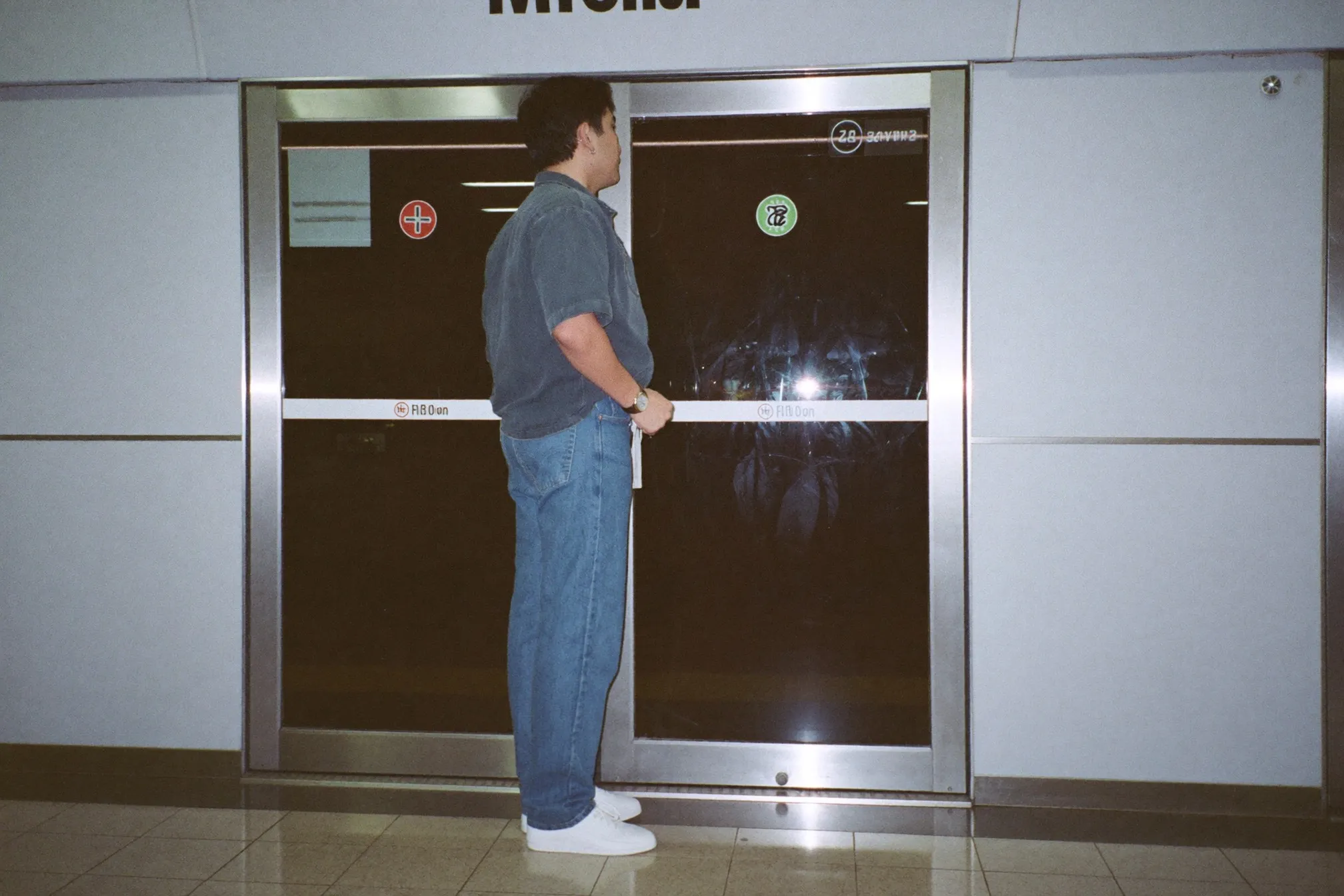
A watch and a pair of sunglasses. Both sit close to the face, both read instantly, and neither requires you to commit an entire outfit to a decade. This is the cheapest way to get a period reference into a fit you already own.
Digital and small steel-cased watches from the 1980s have never gone away here, partly because they were always affordable and partly because they suit small wrists better than the 44mm slabs that dominated the 2010s. Our Casio guide covers which models hold up and what to pay. A steel bracelet on a plain dial does more retro work than any printed shirt.
Sunglasses split into two safe shapes: a slim rectangular frame for the 90s reference, and a rounded metal frame for the 70s. Both are widely available and neither costs more than RM150 unless you decide it should. Avoid tinted lenses in yellow or orange unless you have thought hard about it.
Skip the hat. Fedoras and flat caps carry more costume risk than any other item, and in this humidity they also carry sweat.
What should you avoid?
The recurring mistakes, in the order people make them:
- Head-to-toe one decade. Covered above, and still the number one cause of costume effect.
- Vintage polyester. A 1970s disco shirt in 100 percent polyester is a personal sauna. Check the label before you fall in love.
- Distressed fakes. Pre-faded reproduction band tees fool nobody and cost more than a real second-hand shirt.
- Ignoring the smell test. Mildew and old cigarette smoke survive a normal wash. Sniff the armpits in the shop.
- Buying for a version of yourself. The 1950s bowling shirt you will wear once is money that a shirt you wear weekly deserved.
Retro dressing rewards restraint in the same way smart casual does. The reference should be quiet enough that people register you look good before they work out why.
This weekend, measure one shirt you already own and write the four numbers into your phone. Then spend RM50 at a bundle shop on a single camp-collar or boxy short-sleeve shirt that matches them. Wear it with the plainest trousers and cleanest shoes you have, and see whether anyone asks where it came from.
Quick answers
What is the easiest retro outfit for a beginner?
A camp-collar short-sleeve shirt in a plain colour, worn untucked with modern slim-straight trousers and clean leather sneakers. The collar carries all the 1950s reference you need, the rest of the outfit stays present day, and nothing in it looks like fancy dress at a Bangsar lunch.
Is buying from bundle shops hygienic?
Wash everything before wearing it, the same way you would with any second-hand clothing. A hot wash for cotton, a cold hand wash for wool or rayon, and a day on the line. Skip pieces with underarm staining or a mildew smell, because neither washes out reliably.
How do I stop retro clothes looking like a costume?
Limit yourself to one period piece per outfit and keep your shoes, watch and haircut current. The costume effect comes from matching several items to the same decade at once. One vintage shirt with modern everything reads as personal taste rather than a theme party.
Do vintage sizes match modern sizes?
No. A 1970s medium often fits like a modern small in the chest but runs longer in the body, and older trousers sit much higher on the waist. Measure a garment you already own flat, carry those numbers on your phone, and ignore the label entirely.