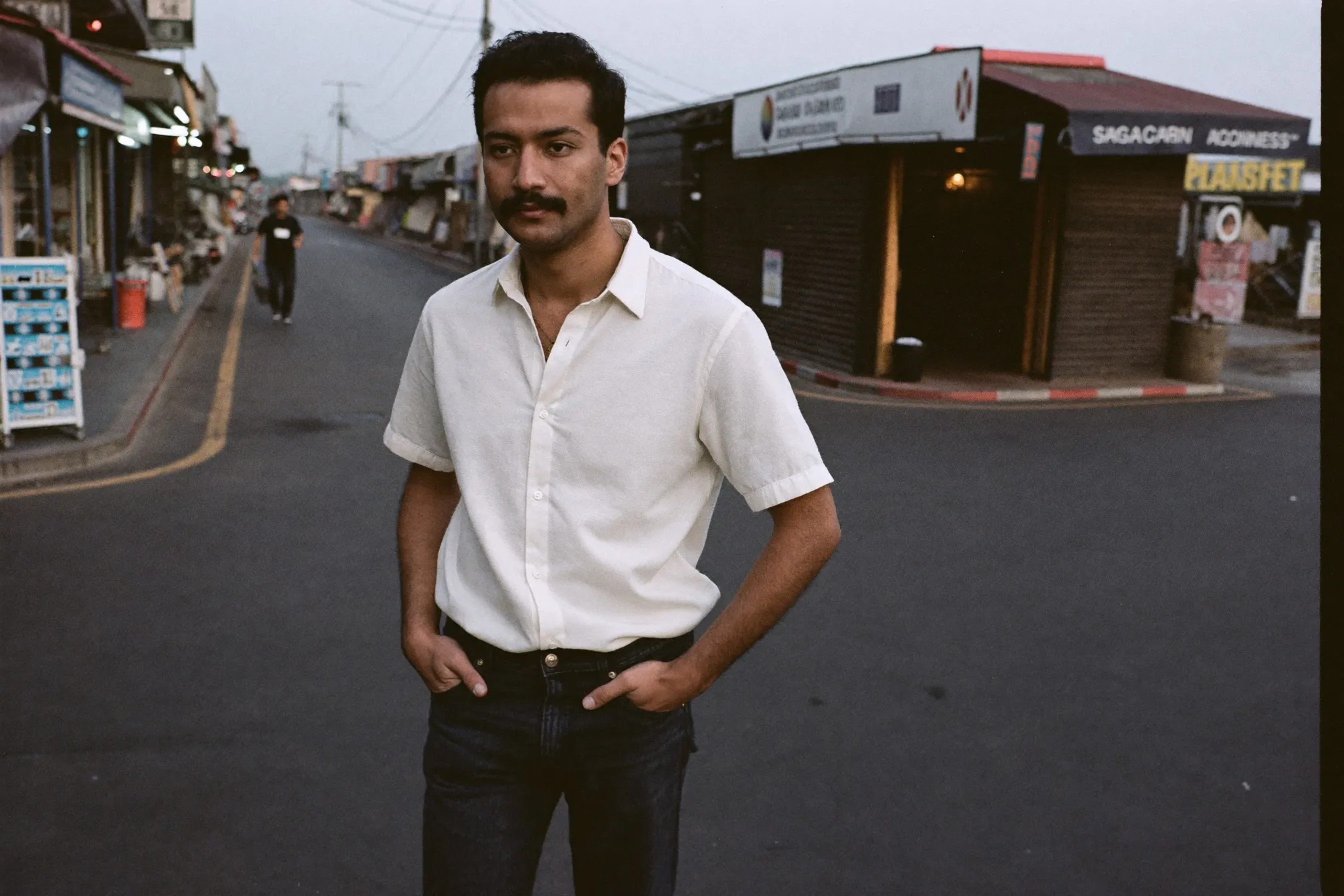
Jeans for men in Malaysia and Singapore work if you buy light. Aim for 9oz to 12oz denim in a straight or slim-straight cut, with enough room through the thigh for air to move. Anything heavier than 13oz belongs in an aircon office or on a plane, and skinny fits punish you the second you sit on a hot vinyl seat.
Denim came out of American workwear, built for men who needed trousers that survived rocks and machinery. Nobody in that story was thinking about 80 per cent humidity. The industry has since caught up, and lightweight denim now outsells the heavy stuff in every market near the equator. You just have to know what you’re looking at on the rack.
Can you actually wear jeans in this heat?
Yes, with conditions. Jeans hold more heat than chinos or linen trousers, so they earn their place in the evening, in cold offices and on weekends that involve a car. For a midday walk from the LRT to a client’s lobby, chinos win. Weight and cut close most of the gap.
The reason denim feels hot has little to do with cotton, which breathes perfectly well. It’s the weave. Denim is a dense twill, packed tight so it resists abrasion, and that same density traps a layer of warm air against your leg. Sweat then has nowhere to evaporate to. Fight the density with a lower weight, and fight the contact with a looser leg.
Think of jeans as an evening garment here. Mamak at 9pm, drinks in Bangsar, a Sunday at Mid Valley, an office that runs at 22°C: all jeans territory. A 1pm site visit in Shah Alam is not. If your whole week happens in that midday window, read our guide to office wear in the tropics first and treat jeans as a weekend item.
What denim weight should you buy?
Denim weight is measured in ounces per square yard, and it tells you almost everything about how a pair will feel by hour four. The tropical range is 9oz to 12oz. Most high-street jeans already sit there, but the heritage and repro brands that look best in photos are often twice as heavy.
| Weight | What it’s called | Verdict for MY/SG |
|---|---|---|
| 8–10oz | Lightweight | Daily wear, travel, long days out |
| 11–12oz | Mid-weight | The sweet spot, holds shape and still breathes |
| 13–14oz | Heavyweight | Aircon and evenings only |
| 15oz and up | Heavy raw | Buy it for the hobby, not for the weather |
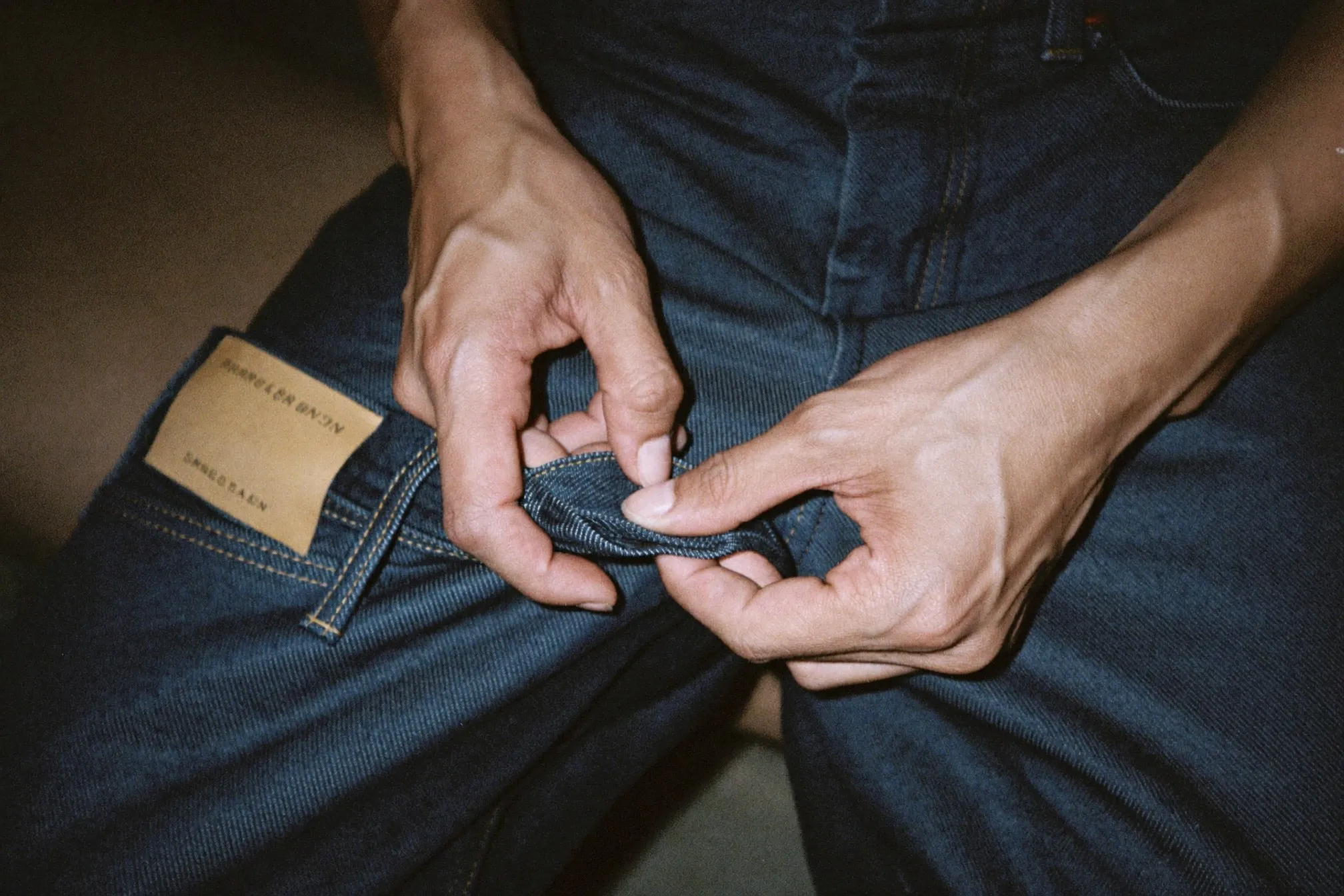
Shops rarely print the weight on the tag, and staff usually won’t know it. Two tests that work in a fitting room: hold the fabric up to the ceiling light, since lighter denim lets a visible glow through, and bunch a leg in your fist. Mid-weight denim compresses easily and springs back soft. Heavy denim feels like folding cardboard, which is exactly what it feels like on your thigh at 2pm.
Which fit should you buy?
Slim-straight suits the most bodies and the most occasions. It follows your leg to the knee, then drops without tapering hard, so the fabric stops touching your calf. Straight and relaxed-tapered both work if you carry more through the thigh. Skinny fits and this climate have nothing to say to each other.
| Fit | Thigh | Leg opening | Best for |
|---|---|---|---|
| Slim-straight | Close, not tight | 17–19cm | Most men, most occasions |
| Straight | Roomy | 19–21cm | Bigger thighs, hotter days |
| Relaxed-tapered | Roomy | 17–19cm | Wider frames who want a clean ankle |
| Skinny | Tight | Under 16cm | Nowhere near the equator |
| Bootcut | Close | 22cm+ | Boots only, and it’s a commitment |
Two numbers decide whether jeans look considered or borrowed. The first is the leg opening, measured flat across the hem and doubled. Under 16cm and the fabric grips your ankle; over 21cm and it puddles on your shoe. The second is the rise. A mid rise (around 25cm to 28cm front rise) sits at your natural waist bone and stops the waistband sliding under your belly when you sit down at a low kopitiam stool.
Length is where most men here lose. Off-the-rack jeans are cut for a taller average, and the average Malaysian or Singaporean man needs two to four inches taken off. A tailor near any wet market will hem a pair for around RM15 to RM25, or S$10 to S$15 in Singapore. Ask for the original hem to be retained if the jeans have any fading at the edge, which costs a few ringgit more and looks far better than a fresh stitch line.
Is stretch denim worth it?
A small amount, yes. Between one and two per cent elastane gives you movement on a motorbike or a low sofa without changing how the denim looks. Above five per cent, the fabric loses its structure, bags out at the knee by lunch and starts reading as leggings from three metres away.
Stretch also has a shelf life that nobody advertises. Elastane degrades with heat, sweat and hot washes, all three of which you have in abundance here. A pair of 2 per cent stretch jeans that fits beautifully in year one is usually a size loose in year three. Pure cotton denim does the opposite: it stretches out across a day of wear, then shrinks back in the wash and keeps doing that for a decade.
If you buy stretch, buy it in the mid-weight range and wash it cold. If you buy 100 per cent cotton, size for the waist you have, since it will give you about half an inch of comfort within an hour of putting it on.
Should you try raw denim here?
Raw denim is unwashed, undyed-beyond-indigo fabric that fades to your body over months of wear. The results look excellent. The process assumes you can go weeks between washes, which is a reasonable assumption in Tokyo and a fantasy in Johor Bahru.
Three problems show up locally. Indigo crocks, meaning it rubs off onto light-coloured car seats, white sneakers and the sofa at your girlfriend’s place. Sweat sits in unwashed denim and turns sour faster than the forums admit, which brings the same bacteria problem covered in our body odour guide. And a pair of damp heavy denim hung in a windowless HDB or apartment bathroom will grow mould, not fades.
The workable version: buy sanforised (pre-shrunk) raw denim at 12oz or 13oz, wear it, and wash it cold every three to four weeks instead of every six months. You still get fading, just slower and less dramatic. Anyone selling you a stricter rule has not spent a July in Kuala Lumpur.
Where do you buy jeans in Malaysia and Singapore?
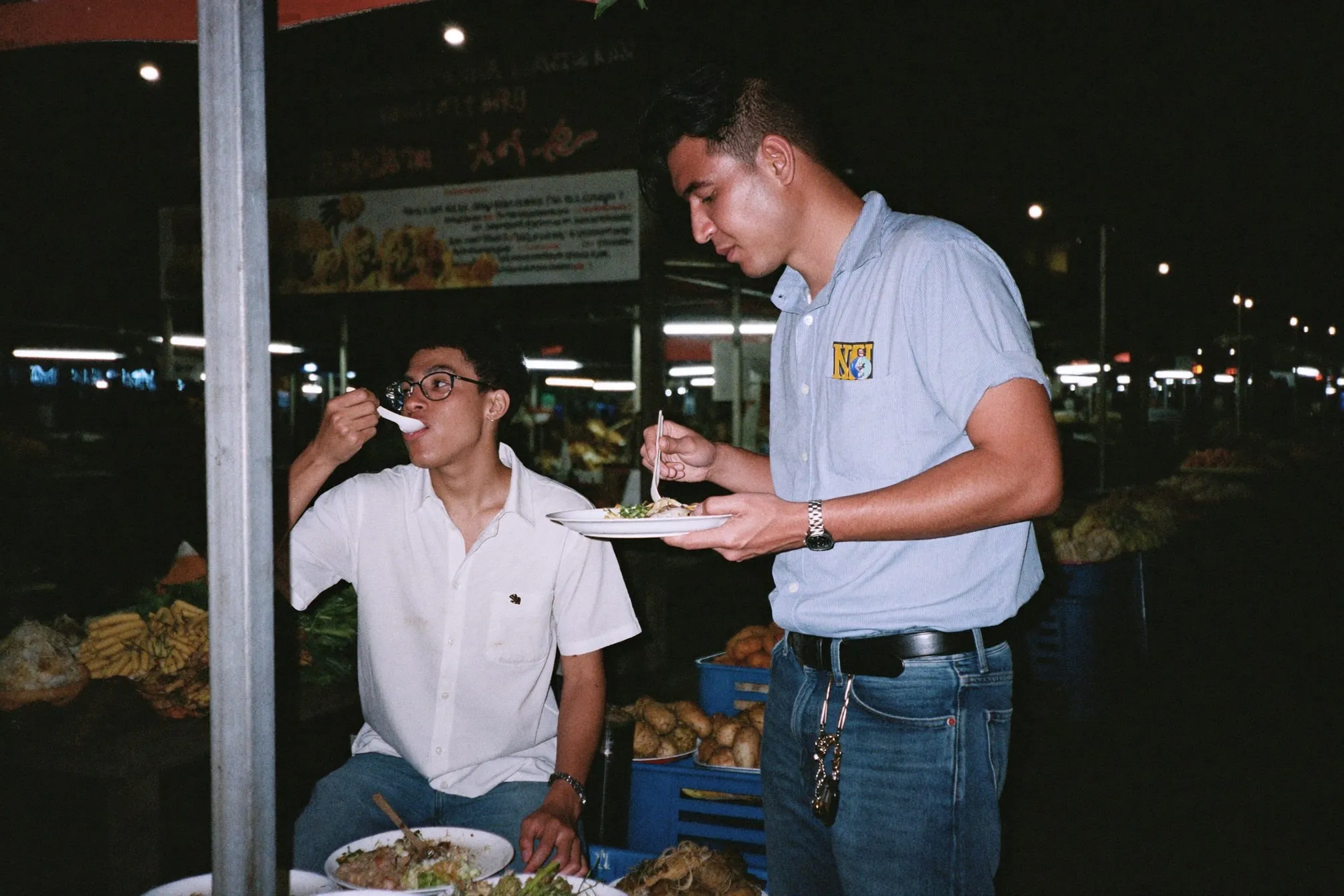
You can build a two-pair rotation for under RM400. Denim is one of the few categories where the mid-market genuinely competes with the expensive stuff, because the fabric mills supplying both are often the same.
| Tier | Where | Rough price | What you get |
|---|---|---|---|
| Entry | Uniqlo, Giordano, Cotton On | RM100–180 / S$40–60 | Reliable fits, lightweight fabric, thin hardware |
| Middle | Levi’s, Zara, Muji | RM250–400 / S$90–140 | Better denim, more cuts, frequent sales |
| Step up | Nudie, A.P.C., Japanese repro at specialist shops | RM600+ / S$200+ | Real selvedge, heavier than you want here |
Uniqlo’s slim-fit and regular-fit jeans sit around 10oz to 11.5oz and are the most sensible default in this region. Levi’s runs constant discounts at outlet stores in Johor Premium Outlets and Genting Highlands Premium Outlets, where a 511 or 512 often lands near RM200. Shopee and Zalora both carry the same mainstream brands, but check the measurement chart rather than the size label, since sizing drifts between production runs.
Buy dark indigo first and black second. Both pair with everything you own, hide a food stain until you get home, and dress up far enough to clear a smart casual door. Raw-looking mid blue is the third pair, not the first. If you’re unsure what clears which door, our breakdown of smart casual in MY and SG sets the line, and the casual outfits guide covers everything below it.
How do you keep jeans wearable in humidity?
Wash cold, inside out, on a gentle cycle, every five to ten wears. Hang them in shade with airflow rather than direct sun, which bleaches the indigo unevenly. Never leave damp denim folded in a laundry basket overnight in this climate, because that’s how you get the smell you cannot wash out.
A few habits that add years:
- Skip the dryer. Heat kills elastane and shrinks cotton unevenly. A ceiling fan and four hours does the job.
- Zip the fly and fasten the button before washing so the waistband keeps its shape.
- Hang jeans by the waistband loops on a fan-facing hook after a sweaty night out, rather than dumping them on a chair.
- Rotate two pairs. Denim recovers its shape when it rests, and a resting pair dries out completely between wears.
- Get a small dehumidifier if your wardrobe backs onto a bathroom wall. RM150 now beats replacing three pairs later.
Shoes finish the job. Dark jeans read sharp with white leather sneakers, brown loafers or clean derbies, all of which appear in our essential shoes rundown. Skip running shoes unless you’re running.
Go and measure the leg opening on the best-fitting trousers you already own. Take that number to Uniqlo or Levi’s this weekend, try three pairs against it, and buy the one that matches. Then walk it straight to a tailor for a hem. Browse the rest of the style guides once your jeans fit properly, because everything else gets easier from there.
Quick answers
Can you wear jeans in Malaysia and Singapore?
Yes, if you buy light denim in a cut that does not cling. Jeans suit evenings, aircon offices and weekend plans built around a car or a mall. For a midday walk in full sun, chinos or linen trousers stay far more comfortable.
What denim weight is best for hot weather?
Between 9oz and 12oz. That range covers most jeans sold at Uniqlo, Levi's and Zara, and it breathes well enough for daily wear here. Anything from 14oz upward holds heat, takes days to dry and belongs in cooler climates.
How often should I wash my jeans?
Every five to ten wears for normal use, or sooner if you sweat through them at a hawker centre. Wash cold, inside out, on a gentle cycle, then hang them in shade with airflow. Frequent hot washes wreck the fabric long before the dirt does.
Are black jeans hotter than blue jeans?
Slightly, in direct sun, because dark fabric absorbs more heat. The difference is small compared to weight and fit. A 10oz pair of black jeans with a straight leg beats a 14oz pair of light blue ones on any afternoon in KL or Singapore.