
Dandruff is rarely a dry scalp problem. In most cases your scalp is reacting to Malassezia, a yeast that lives on everyone’s head and feeds on the oil you produce, and the fix is a medicated shampoo containing zinc pyrithione, ketoconazole, selenium sulphide or salicylic acid, left on the scalp for three to five minutes before you rinse. The NHS and Mayo Clinic both describe medicated shampoo as the standard first move.
If you ride, this is your problem more than most. A helmet seals heat and sweat against your scalp for the length of a Federal Highway crawl, and that warm oily film is what the yeast wants. Add year-round humidity, a cap you pull on over damp hair, and a scalp you scrub twice a day out of frustration, and the flakes come back every week no matter what you buy.
What causes dandruff in the first place?
Your scalp sheds skin cells faster than normal, and the usual trigger is Malassezia yeast interacting with scalp oil. The NHS also lists oily skin and irritation from hair products as contributors. Hygiene has little to do with it. Washing less often tends to make it worse, not better.
Everyone carries this yeast. What varies is how your immune system answers it, which is mostly genetics and partly climate. When the reaction is persistent enough to bring redness and greasy yellow scale, dermatologists call it seborrhoeic dermatitis, and the American Academy of Dermatology describes dandruff as the mild end of that same condition. It shows up in the same places every time: scalp, eyebrows, the creases beside your nose, sometimes the beard line and upper chest.
Two things it is not. It is not contagious, so nobody caught it from your comb. It is not a cause of permanent hair loss either, though heavy scratching can break hairs and inflame the follicles. If you are shedding as well as flaking, read our hair loss treatment guide and treat the two separately.
Is it dandruff or a dry scalp?
They look similar from a distance and need opposite treatments. Dandruff flakes are larger, oilier and often yellowish, and they sit on a scalp that feels greasy by the second day. Dry scalp flakes are small, white and powdery, and the skin on your arms and legs is usually dry too.
| Sign | Dandruff | Dry scalp |
|---|---|---|
| Flake size | Larger, clumped | Small, fine, powdery |
| Flake colour | White to yellowish | Dull white |
| Scalp feel | Oily, sometimes red | Tight, dry all over |
| Rest of your skin | Normal or oily | Dry on arms and shins |
| What helps | Medicated shampoo | Gentler shampoo, less heat |
| What backfires | Oils, heavy conditioner | Harsh clarifying washes |
Living in this climate, oily is the likelier answer. Sitting in an air-conditioned office all day dries the air around you, but it does not stop your sebaceous glands. If your face is shiny by lunch, your scalp is running the same programme. The same logic applies here as in our guide to oily skin: stripping oil aggressively makes your skin produce more.
Why does a helmet make dandruff worse?
A helmet traps heat, sweat and sebum against your scalp with no airflow, which suits Malassezia. Add a lining that never fully dries between rides and you have a warm, damp surface pressed to your head twice a day. The helmet does not cause dandruff. It builds the conditions the yeast likes.
The same applies to gym caps, work hard hats, delivery riders doing eight-hour shifts, and anyone who puts a cap on straight out of the shower. Damp hair under fabric in 32°C is the worst version of this.
What to change, in order of how much it helps:
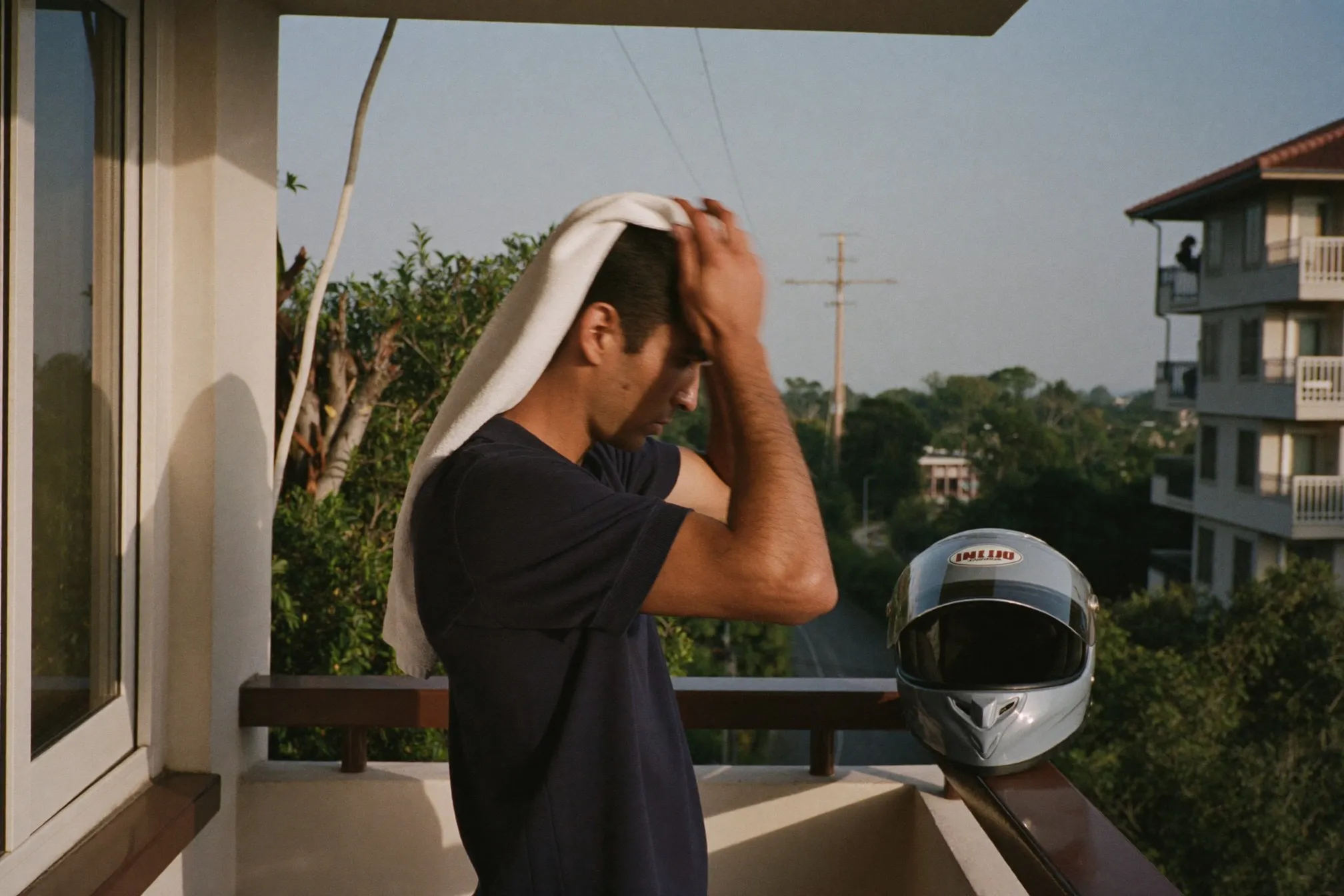
- Dry your hair before the helmet goes on. Two minutes with a towel and a fan beats any shampoo upgrade.
- Wash the removable lining weekly. Most modern helmets have cheek pads and a crown liner that come out. Cold wash, air dry in shade.
- Air the helmet upside down after every ride. Not in a sealed box, not in the boot of the car.
- Use a thin cotton skull cap or balaclava liner and wash it as often as you wash a t-shirt. Around RM15 to RM30 at any bike shop.
- Retire linings that stay smelly after washing. Foam holds oil. Replacement pads cost less than a new helmet.
Two other local aggravators. Hot showers feel great and irritate an inflamed scalp, so finish with water that runs lukewarm. Heavy styling products build up under a helmet more than they do in open air, so pick lighter formulas and wash them out the same day. Our guide to hair styling products covers which ones rinse out cleanly.
Which dandruff shampoo ingredient works?
Four active ingredients have consistent support from dermatology bodies, and they work differently enough that switching between them helps when one stops earning its keep. Read the back of the bottle rather than the front. The marketing on the front is identical across every brand on the Watsons shelf.
| Active ingredient | What it does | Where to find it | Rough price |
|---|---|---|---|
| Zinc pyrithione | Reduces yeast and flaking, gentle enough for frequent use | Most supermarket anti-dandruff shampoos | RM15-30 / S$8-15 |
| Ketoconazole 1% | Antifungal, the usual step up when the supermarket one stalls | Watsons, Guardian, pharmacy counter | RM30-55 / S$15-25 |
| Selenium sulphide | Slows cell turnover and cuts yeast, strong on greasy scale | Pharmacy shelves, fewer options here | RM25-45 / S$12-22 |
| Salicylic acid | Lifts and dissolves stuck scale, no antifungal action | Pharmacies, scalp-specific ranges | RM25-50 / S$12-25 |
Coal tar shampoos also appear in dermatology guidance and work well, but they smell like a resurfaced road and can stain light hair, so most people here skip them. Ketoconazole at 1% sells over the counter in Malaysia and Singapore. The 2% strength is a prescription matter, and that conversation belongs with a doctor, not a pharmacy aisle.
Salicylic acid is the odd one out. It clears the scale you can see without touching the cause, so it pairs well with an antifungal rather than replacing one. If your scalp has thick stuck-on patches, using it first and following with zinc pyrithione or ketoconazole later in the week is a sensible pattern.
How do you use dandruff shampoo properly?
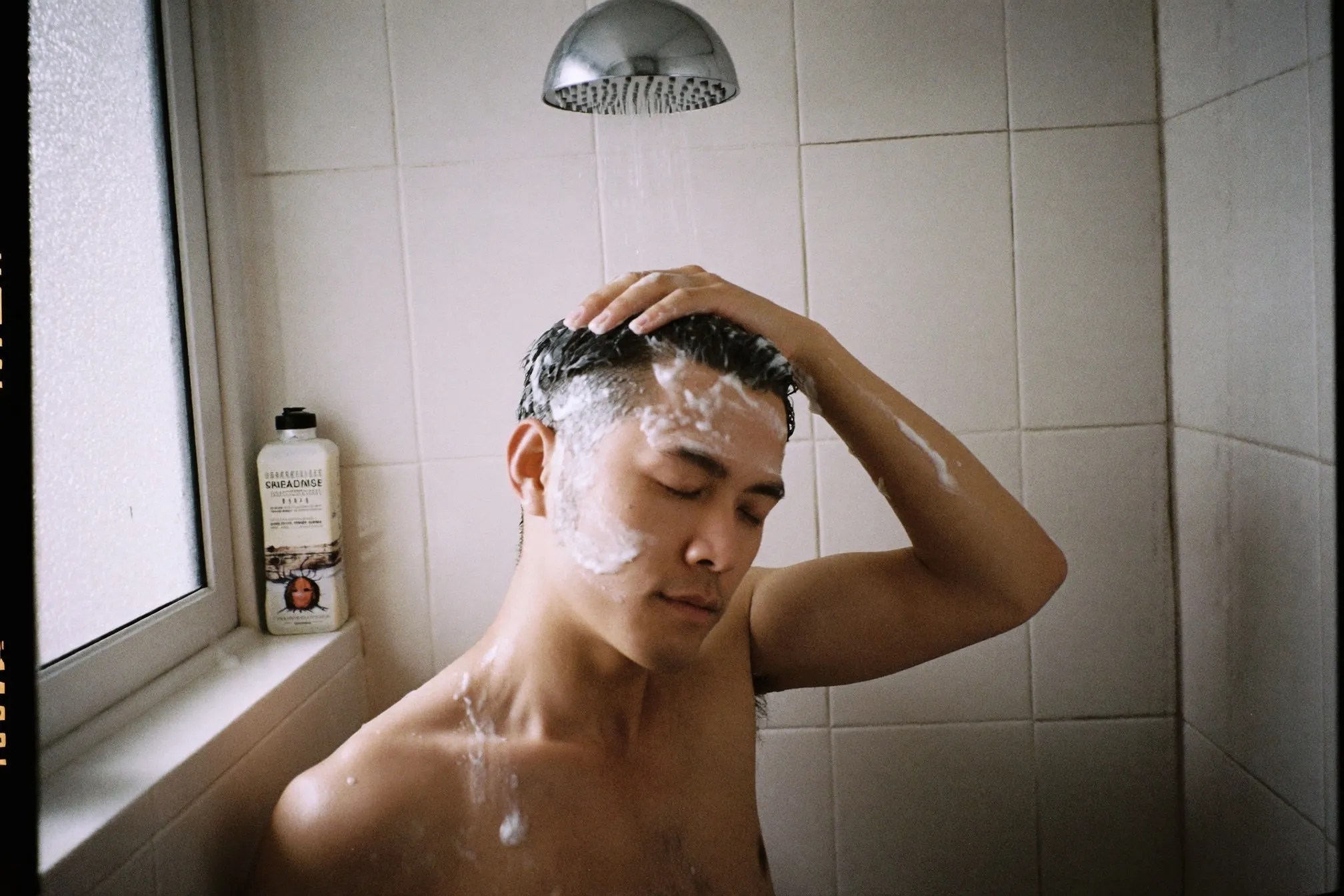
Contact time decides whether it works. Apply it to a wet scalp, spread it with your fingertips, and leave it there for three to five minutes before rinsing. Most men lather and rinse in twenty seconds, get nothing, and blame the shampoo. The active ingredient needs time on skin, not on hair.
The rest of the method:
- Target the scalp, not the lengths. Medicated shampoos dry hair out. Work them into the skin and let the runoff handle the rest.
- Fingertips only. Nails scratch, scratching inflames, inflammation flakes.
- Two or three washes a week to start. Daily is allowed by most labels but rarely necessary.
- Condition the lengths, never the scalp. Especially anything rich or oil-based.
- Give it two to four weeks before judging. Flaking drops before itch does.
- Rotate if it plateaus. Move from zinc pyrithione to ketoconazole, or alternate two bottles across the week.
- Do not stop when it clears. Drop to one maintenance wash a week. Dandruff is managed, not cured, and it returns within a month of quitting.
What doesn’t work?
Coconut oil, olive oil and the various minyak treatments your aunties recommend. Malassezia depends on lipids to grow, so feeding your scalp oil may make an active flare worse. Save the oil for the ends of your hair if you like it there.
Lemon juice and vinegar rinses do nothing for the yeast and irritate skin that is already inflamed. Scraping flakes loose with a comb before a wash creates fresh damage. Switching to a fancier non-medicated shampoo, however good it smells, has no active ingredient to work with. And washing less to “let the scalp balance itself” leaves oil and dead skin sitting exactly where the problem lives.
When should you see a doctor?
Book an appointment if six weeks of consistent medicated shampoo changes nothing, if the scalp bleeds, weeps or crusts, if thick silvery plaques appear, or if the redness spreads onto your face, ears or chest. Sudden severe flaking with hair loss also needs a look. A GP can prescribe stronger options or rule out psoriasis and eczema.
Psoriasis is the common mix-up. It produces thicker, more defined plaques with a silvery scale, usually turns up on elbows or knees too, and needs different treatment. Fungal infections of the scalp are another possibility, more often in kids than adults, and no shampoo off a shelf will clear one.
The visit is cheap relative to the months you would spend guessing. A GP consult runs around RM40 to RM80 in most Klang Valley clinics, and a subsidised polyclinic appointment in Singapore costs a similar order. A dermatologist referral costs more and is worth it if a GP’s first prescription does not hold.
Tonight, do two things. Buy one bottle with a named active ingredient on the back, and set a timer for three minutes in the shower so the stuff stays on long enough to work. Tomorrow morning, pull the lining out of your helmet and wash it. Those two habits fix more scalps than any product upgrade, and the total cost is under RM40. For more on keeping your hair and scalp in order in this climate, browse the rest of our hair guides.
Quick answers
What is the fastest way to get rid of dandruff?
Buy a medicated shampoo with zinc pyrithione, ketoconazole, selenium sulphide or salicylic acid, use it two or three times a week, and leave it on your scalp for three to five minutes before rinsing. Most people see a difference within two to four weeks.
Is dandruff caused by a dry scalp?
Usually not. Dandruff is more often linked to Malassezia, a yeast that lives on everyone's scalp and reacts with the oil there. That is why an oily scalp flakes just as readily as a dry one, and why plain moisturising shampoo rarely fixes it.
Does wearing a helmet cause dandruff?
A helmet does not create dandruff, but it holds heat, sweat and oil against your scalp for the whole ride, and that is the environment the yeast prefers. Riders who put a helmet on damp hair daily tend to flare more. Air and clean the lining weekly.
Can I use dandruff shampoo every day?
Most labels allow it, though two or three washes a week suits most people and dries the hair less. If your scalp stays clear for a month, drop to once a week to hold it. See a GP or dermatologist if six weeks of consistent use changes nothing.