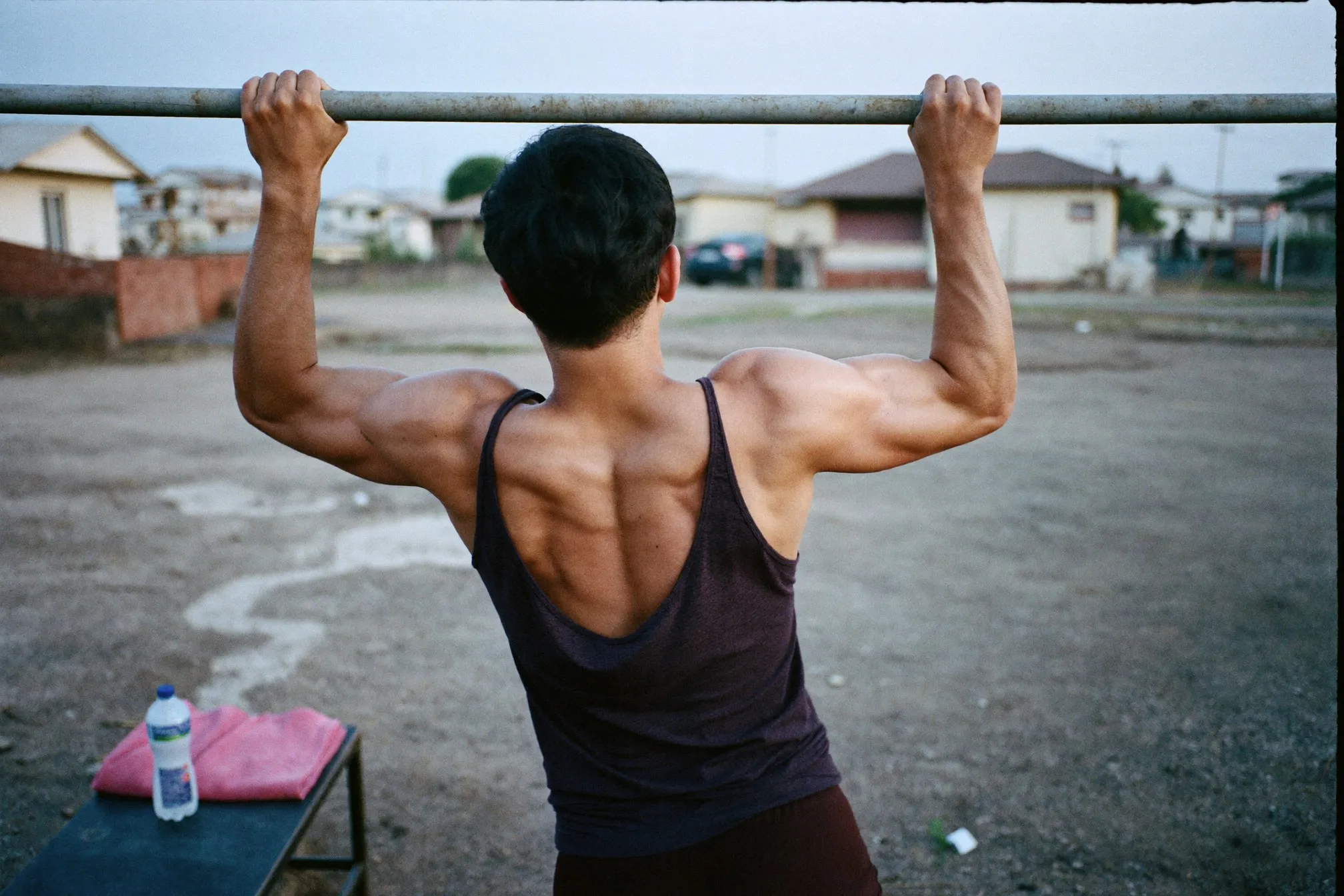
Lift hard three or four times a week, add reps or weight as you get stronger, eat enough protein, and sleep. Those four things build muscle. Everything else you have read is a rounding error stacked on top of them.
The detail still matters, because it decides whether your first year produces a real change or a gym membership you keep paying out of guilt. This guide runs through the levers in order of importance, with food advice that survives a hawker centre and a training week that fits around a job.
What makes a muscle grow?
A muscle grows when you repeatedly ask it to do more than it comfortably can, then feed and rest it. Take a set close to the point where your form starts to slip, come back within a few days, and do slightly more than last time. That is hypertrophy. Your body builds tissue reluctantly, only when the alternative is failing again.
Three things drive the process:
- Effort. A set counts when you finish it with roughly zero to three reps left in you. Sets that stop at “decent burn” buy almost nothing.
- Volume. Enough of those hard sets per muscle each week, spread over at least two sessions.
- Progression. Next week you add a rep, add 2.5kg, or control the same weight better.
Rep ranges matter less than the internet insists. Five reps and 25 reps both grow muscle when the set ends near failure. Pick the range where you can push hard without technique falling apart, which for most people sits between 6 and 15.
How many sets does each muscle need per week?
Ten to twenty hard sets per muscle group per week covers nearly everyone. Beginners grow on the low end and should stay there. Split those sets across two sessions instead of one massacre, since a muscle trained on Monday is ready again by Thursday and sitting idle by Sunday.
| Muscle group | Hard sets a week | Where they come from |
|---|---|---|
| Chest | 8-14 | Bench press, incline dumbbell press, dips |
| Back | 10-18 | Rows, pull-ups or lat pulldown |
| Quads | 8-14 | Squat, leg press, split squat |
| Hamstrings and glutes | 8-14 | Romanian deadlift, leg curl, hip thrust |
| Side delts | 8-16 | Lateral raise, overhead press |
| Arms | 6-12 each | Curls, triceps pushdown, close-grip press |
Warm-up sets do not count. Neither does the set you cut short because your phone buzzed. Count only the ones that were genuinely hard, and most people discover they are doing half the volume they thought.
Abs get worked by every heavy compound you do, plus a bit of direct training. We covered the direct part in the ab workout guide.
How fast can you build muscle?
Slower than any before-and-after photo suggests. A beginner training and eating well gains somewhere around 0.5 to 1kg of muscle a month in year one, and the rate roughly halves each year after that. Building muscle fast, in practice, means not wasting your first year, because year one is the cheapest muscle you will ever buy.
| Training year | Rough muscle gain | What it feels like |
|---|---|---|
| Year 1 | 5-9kg | Shirts fit differently by month four |
| Year 2 | 3-5kg | Friends start asking if you gym |
| Year 3 | 1-3kg | Progress lives in the logbook |
| Year 4 and beyond | Under 1kg | You are chasing decimals |
Bodyweight scales those numbers. A 60kg guy will not match a 90kg guy’s totals, and the year-one figure assumes you train nearly every week rather than nine months out of twelve.
Your weight on the scale moves faster than that, which fools people in both directions. The first fortnight adds water and glycogen. A bad month of missed sessions drops the same water back off. Judge the trend over eight weeks, never over a Tuesday.
How do you hit your protein on hawker food?
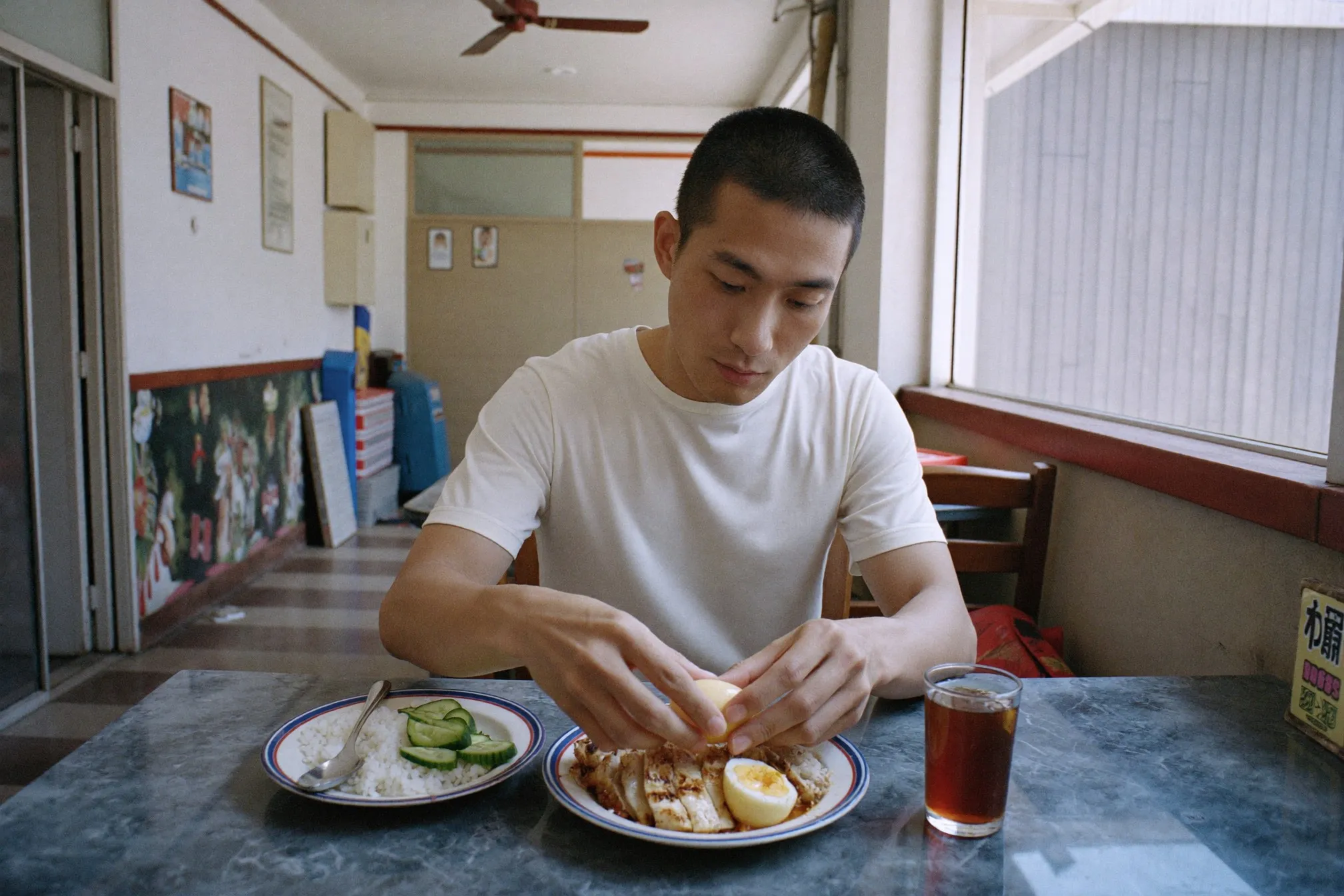
Aim for roughly 1.6 to 2 grams of protein per kilogram of bodyweight daily. A 70kg man wants about 110 to 140g. Local food gets you there, but only if you order deliberately, because the default plate in both countries is rice with meat as garnish.
| Typical meal | Rough protein | Upgrade |
|---|---|---|
| Hainanese chicken rice | Around 25g | Order the extra chicken portion |
| Nasi lemak with fried chicken | Around 25g | Add a boiled egg or two |
| Roti canai with dhal | Under 10g | Barely a meal for you. Add telur and ayam |
| Economy rice, two meat dishes | 30-40g | Take the steamed and grilled trays, skip one fried |
| Bak chor mee | Around 20g | Add fishballs or an egg |
| Thosai with egg and sambar | Around 15g | Add a side of chicken |
Those figures are rough and stall portions vary wildly, so treat them as ordering guidance rather than accounting. The pattern holds regardless: every meal here needs one deliberate protein addition to be useful to you.
Cheap protein that survives a MY or SG kitchen: eggs, tinned sardines, chicken thigh from the wet market or NTUC, tofu, tempeh, and Greek yoghurt when it goes on offer. Whey powder runs around RM120-180 per kilo in Malaysia and roughly S$60-90 in Singapore, which works out cheaper per gram than most restaurant chicken.
Calories decide whether the protein becomes muscle. Eat slightly more than you burn, enough that the scale creeps up maybe 1 to 2kg over a month. Faster than that is mostly fat, and you will spend the next three months removing it.
What does a training week look like?
Three full-body sessions if you are new, four upper/lower sessions once you can turn up consistently. Each session runs 45 to 70 minutes: one big compound per muscle group, then one or two accessories. If machines still confuse you, start with the plan in our gym for beginners guide and come back to this in a month.
The four-day version:
- Upper A. Bench press, chest-supported row, lateral raise, biceps curl, triceps pushdown.
- Lower A. Squat or leg press, Romanian deadlift, leg curl, calf raise.
- Upper B. Overhead press, lat pulldown or pull-up, incline dumbbell press, cable row, lateral raise.
- Lower B. Split squat, hip thrust, leg extension, calf raise.
Progress it with double progression. Pick a range, say 3 sets of 8 to 12. When all three sets hit 12 with clean form, add 2.5kg next session and drop back to 8. That one rule handles a year of programming and costs nothing.
Write the numbers down. Your phone’s notes app beats any app with a subscription, and a training log is the difference between progressing and repeating. Without it you will do the same weight for six months and blame your genetics.
Heat is the local tax. A 7pm session in an unairconditioned KL gym in August will feel harder than the same session in an office-tower gym, and your logbook will look worse for reasons that have nothing to do with your muscles. Train earlier when you can, drink more than you think you need, and stop reading a bad session as a bad month.
Which supplements are worth the money?
Two of them. Creatine monohydrate is the most studied sports supplement in existence, 5g a day, no loading phase required, around RM60-90 for a tub that lasts two months. Protein powder is food in a bag, useful on days you cannot cook. That is the whole list.
What you can skip: BCAAs (redundant if you eat protein), test boosters, fat burners, and mass gainers, which are sugar with a photo of a bodybuilder on the tub. Pre-workout is caffeine at four times the price of caffeine, though nobody is stopping you if you enjoy the ritual.
If you take regular medication or have a health condition, run any supplement past a doctor or pharmacist first. Creatine has a long safety record in healthy adults, but your specific situation is not something a guide can assess.
Why aren’t you growing?
The reasons repeat across almost every stalled lifter, and they are all fixable this week:
- Your sets are too easy. Film one set. If the last rep looks identical in speed to the first, you left three or four reps on the table.
- You switched programmes again. A mediocre plan run for six months beats a perfect plan run for three weeks. Boredom is not a training signal.
- You are eating to stay the same weight. If your bodyweight has not moved in eight weeks, neither has your muscle.
- Sleep. Five hours plus a commute is a recovery problem no supplement solves. Muscle is built on the nights you are asleep, not the hours you are in the gym.
- You track nothing. No log, no idea whether this week beat last week.
- Weekends undo the weekdays. Two nights out, no protein, four hours of sleep, and Monday starts from behind.
Fix the top item on that list before you touch anything else. In most cases it is number one, and it costs nothing.
Book your next three sessions into your calendar now, with times and a location. Then write out session one, exercise by exercise, with the weight you plan to start at. Chase that logbook for twelve weeks and check the photos, not the mirror. Somewhere around month four you will notice your shirts pulling across the shoulders, which is roughly when it becomes a style problem instead of a training one. The rest of our fitness coverage picks up from there.
Quick answers
How long does it take to build noticeable muscle?
Strength climbs in two to three weeks, but visible size takes longer. Most beginners see a clear change in the mirror somewhere between month three and month five of consistent training and decent eating. Photos taken monthly show it. Daily mirror checks never will.
Can you build muscle without protein powder?
Yes. Powder is convenience, not magic. Eggs, chicken, fish, tofu, tempeh, dhal and Greek yoghurt cover the same job at similar cost per gram. Powder earns its place on days you cannot cook or your lunch was rice with a garnish of meat.
Do I need to lift heavy to build muscle?
No. Sets of five and sets of 25 both grow muscle as long as you finish close to failure. Heavy loads build strength faster and beat you up more. For most people, 6 to 15 reps gives the best return without your lower back deciding the session.
Will cardio kill my muscle gains?
Not at normal amounts. Two or three easy sessions a week helps your recovery and your heart. Problems start when marathon-level running competes with lifting for the same energy and recovery. Keep hard cardio away from leg day and you will not notice a conflict.