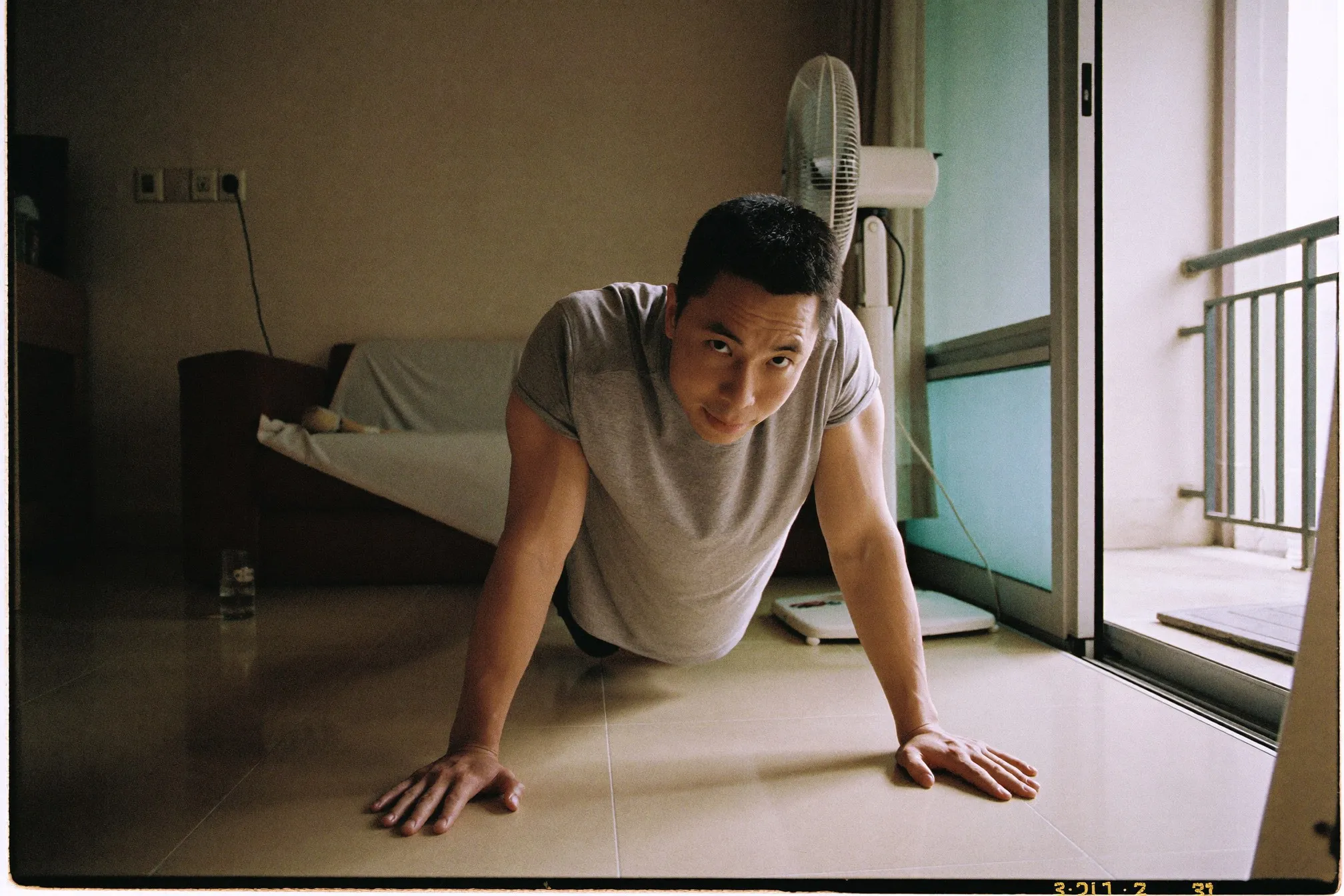
A home workout builds real strength when it covers a push, a pull, a leg movement and a core movement, gets slightly harder every week, and happens three times a week. Thirty minutes a session. You need no equipment for the first month. The gym does a few things better, but none of them are the things stopping you from starting.
What follows is a plan that fits a HDB bedroom or a PJ condo living room, plus the two purchases worth making once you outgrow it. It assumes you own no dumbbells, no bench, and a downstairs neighbour who sleeps light.
Can you build anything real without a gym?
Yes, for a good long while. Muscle responds to hard effort and rising difficulty, not to the branding on the equipment. A push-up taken to two reps short of failure and a bench press taken to two reps short of failure send your chest a similar message.
The catch arrives at your legs. Your own bodyweight is a fixed load, and after a few months of squats it stops being a challenge for anything except your patience. Single-leg work buys you another few months. After that you need something to hold, which is why the kit section below exists.
Everything else about training still applies at home. Sets need to be hard. Progress needs to be recorded. Sleep and protein do the building. If you want the full logic behind those, our muscle building guide covers it properly and this article will not repeat it.
What does a no equipment workout look like?
Two sessions, alternated across three days a week. Session A leads with pushing and squatting, Session B leads with pulling and hinging. Week one you run A, B, A. Week two you run B, A, B. Rest 60 to 90 seconds between sets and stop each set with two or three reps left in the tank.
| Session | Move | Sets | Reps |
|---|---|---|---|
| A | Push-up (hands on floor, or on a counter to regress) | 4 | 8-15 |
| A | Rear-foot-elevated split squat, back foot on a chair | 3 | 8-12 each leg |
| A | Pike push-up, hips high, head between hands | 3 | 6-12 |
| A | Hollow hold | 3 | 20-40 sec |
| B | Table row or door-frame row | 4 | 8-15 |
| B | Single-leg glute bridge | 3 | 10-15 each leg |
| B | Reverse lunge, slow on the way down | 3 | 10-15 each leg |
| B | Side plank | 3 | 20-40 sec each side |
The row is the exercise most home plans quietly drop, and it is the one your posture needs most after eight hours at a desk. Lie under a sturdy dining table, grip the edge, keep your body straight and pull your chest towards the underside. If your table wobbles, hook a towel around a door handle on both sides, lean back and row that instead.
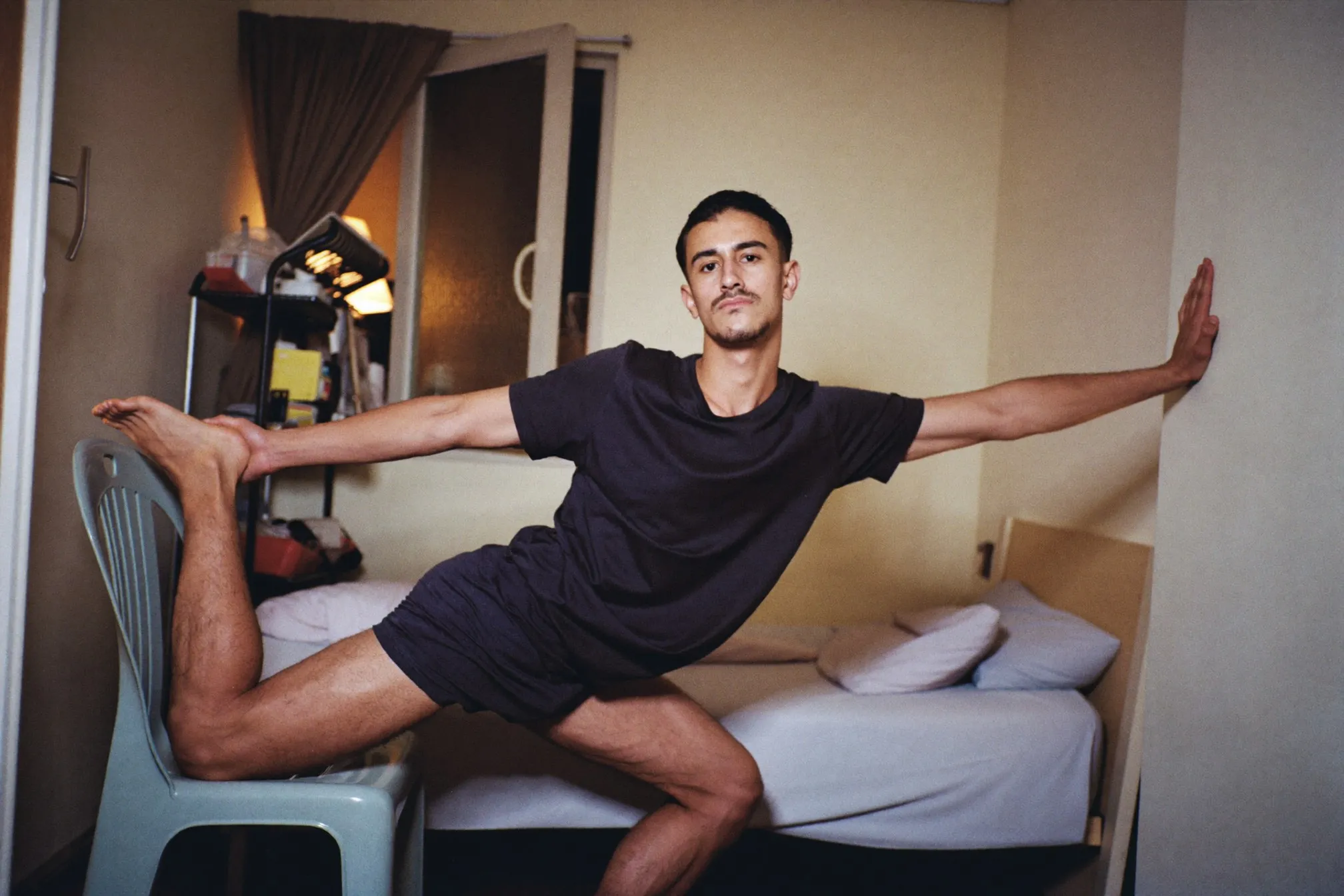
How do you make a bodyweight workout harder without weights?
Four levers: change the leverage, extend the range, slow the tempo, remove a limb. Any one of them turns an easy movement into a hard one without buying anything. Pick the version where you hit the bottom of the rep range with good form, then climb.
| Pattern | Easier | Standard | Harder |
|---|---|---|---|
| Push | Hands on the kitchen counter | Floor push-up | Feet on a chair, hands on two books for depth |
| Pull | Table row, feet tucked under you | Table row, legs straight | Feet up on a second chair |
| Squat | Bodyweight squat | Split squat | Rear foot elevated, two-second pause at the bottom |
| Hinge | Two-leg glute bridge | Single-leg glute bridge | Towel hamstring curl on tile floor |
| Core | Dead bug | Hollow hold | Long-lever plank, elbows forward of your head |
Tempo is the free upgrade nobody uses. Take three seconds to lower yourself and one second to push back up. Ten push-ups at that speed feel like twenty at normal speed, and they make almost no noise, which matters more than you think in a flat.
Keep a note on your phone with the date, the move and the reps. Two lines per session. Without it you will do the same workout for six months and wonder why nothing changed.
Will your neighbours hear you?
Probably, if you jump. Concrete floors in HDB blocks and Malaysian high-rises carry impact straight down, and burpees at 6.30am make enemies faster than any renovation. The whole plan above is jump-free by design, which is the simplest fix available.
If you want conditioning that raises your heart rate, use movements that keep one foot on the ground. Fast reverse lunges, mountain climbers with soft feet, shadow boxing, or a brisk 20-minute walk around the block after your session. Save skipping and box jumps for the void deck, the park connector or the condo gym.
A mat helps for floor work, more for your elbows than for sound. Most strata and management corporations set quiet hours between 10pm and 7am. Train inside those hours and nobody has grounds to knock.
What kit is worth buying?
Almost nothing, then two things. Spend the first month proving you show up. If you complete twelve sessions, the following purchases open up every progression you will need for the next year or two.
| Item | Rough price | What it unlocks |
|---|---|---|
| Long resistance band set | RM40-80 / S$20-35 (Shopee, Decathlon) | Rows, pull-aparts, assisted pull-ups, band squats |
| Doorway pull-up bar | RM60-120 / S$30-50 | Real pull-ups and hanging leg raises |
| Exercise mat | RM50-90 / S$20-40 (Decathlon) | Floor work, grip, quieter reps |
| Adjustable dumbbells | RM350-700 / S$180-350 | Proper leg and shoulder loading |
| Old towel on tile | Free | Hamstring curls, sliding lunges |
Two warnings on the pull-up bar. Check that your door frame is solid timber or concrete-anchored rather than hollow plaster, and check that the frame is wide enough for the bar to sit on both sides. Rented rooms in Singapore often have frames that will not take it, and a bar coming down takes the frame with it. If yours fails the test, the fitness corner downstairs has a bar that cost you nothing.
Bands beat dumbbells as a first purchase for one boring reason. They store in a drawer. A KL studio apartment or a rented HDB common room has no space for a dumbbell rack, and the equipment you shove in a cupboard is the equipment you stop using.
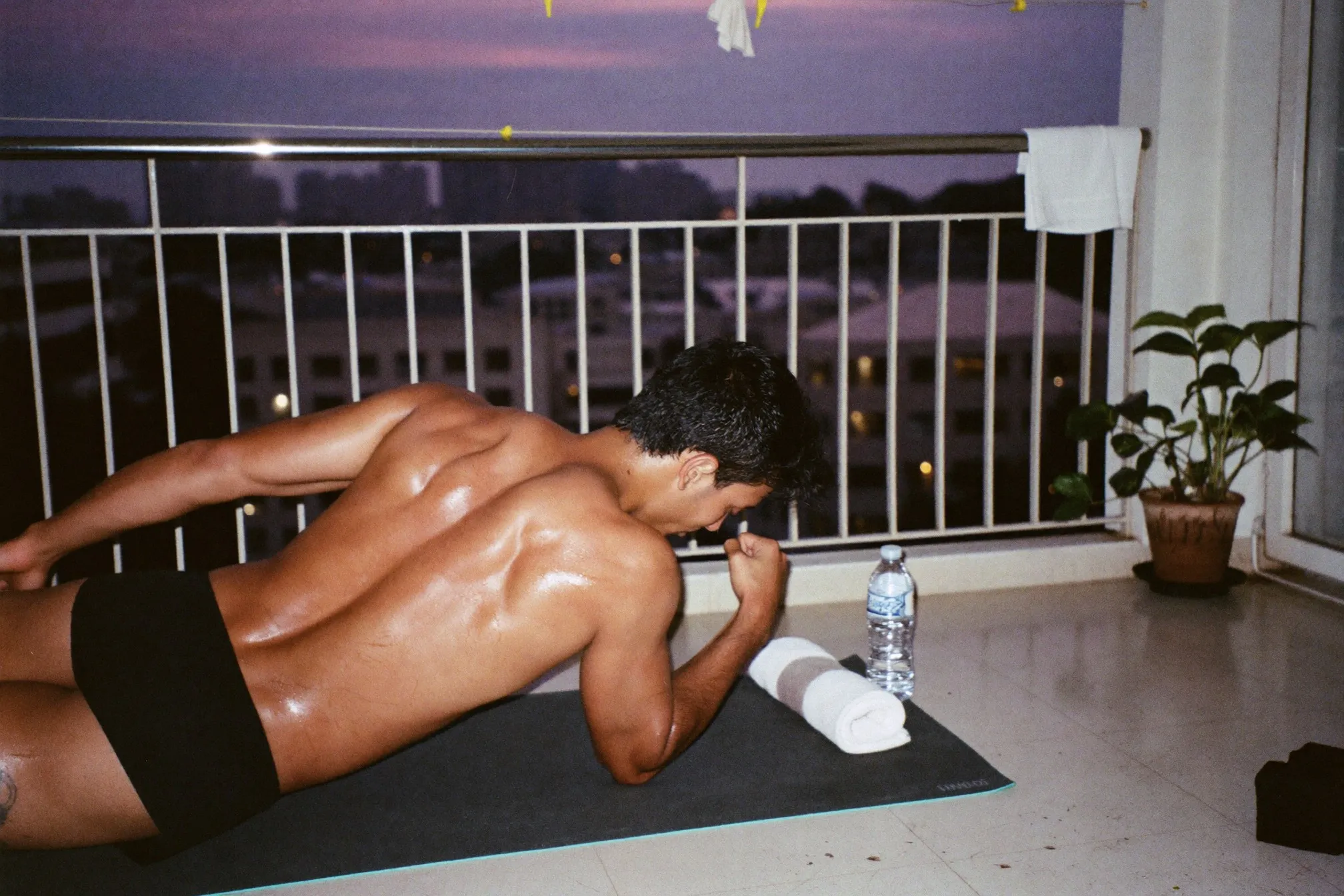
How do you train in a room at 32 degrees?
Move the session to the cool end of the day and put a fan on yourself. Before 8am or after 8.30pm, both cities drop a few degrees and the humidity stops feeling personal. A standing fan aimed at your torso does more for your work capacity than any pre-workout powder.
Sweat on tile is the other problem. Your hands slide out of push-up position and your form goes with them. Lay a towel under your hands, or train on a mat, or do your pushing with hands on the counter where grip is easier. Drink water before you start rather than sipping through the session.
You will finish these sessions wetter than a gym workout because there is no aircon subsidising you. Rinse off properly afterwards, especially before work. Our body odour guide covers what a tropical climate does to gym clothes left in a bag, and the answer is worse than you hope.
Which mistakes stall home training?
The plan fails for predictable reasons, and none of them are the workout itself:
- Sets that end when they get uncomfortable. Comfortable sets buy nothing. Finish two or three reps short of the point where your form breaks, not ten.
- A new workout every session. Following whatever appears on your feed means you never repeat a movement long enough to get better at it. Run the same two sessions for eight weeks.
- No record of anything. Progress you cannot see is progress you will not believe in by week five.
- Circuits mistaken for strength work. Twenty minutes of continuous movement trains your conditioning. It does not build much. Rest between sets like you mean it.
- Skipping the pull. No bar, no rows, and six months later your shoulders round forward. The table row exists precisely so you have no excuse.
- All-or-nothing weeks. Missing Wednesday does not cancel Friday. Two sessions in a bad week still beats zero.
If home training stops being enough, or you want the heavy leg work it cannot give you, our gym starter guide covers walking into a commercial gym without the awkwardness. The rest of the fitness section handles the specifics, including whether direct ab work deserves a slot in your week.
Tonight, clear two metres of floor and do one set of push-ups, stopping two reps before your form gives out. Write that number in your phone with today’s date. That is your baseline, and Session A starts tomorrow.
Quick answers
Is a home workout as good as the gym?
For your first year or two, close enough that the difference will not decide your results. Consistency does. The gym wins on heavy leg training and on loading your back, so most people eventually add bands, dumbbells or a weekly gym session rather than replacing home training entirely.
How long should a home workout be?
Twenty-five to thirty-five minutes, three times a week. Longer sessions look impressive on paper and get skipped in practice. If you have only fifteen minutes, do the first two exercises of the session properly instead of rushing all four.
Can you build muscle with only bodyweight exercises?
Yes, provided you finish sets close to failure and keep making the movements harder. Elevate your feet, slow the lowering phase, drop to one leg. Your chest, arms, shoulders and core respond well. Legs run out of challenge first, which is where a band or dumbbells help.
How many days a week should you work out at home?
Three is the sweet spot for beginners: enough stimulus per muscle, enough recovery, and few enough sessions that a busy week does not wipe out the plan. Four works once the habit sticks. Daily training usually means the sessions are too easy to count.