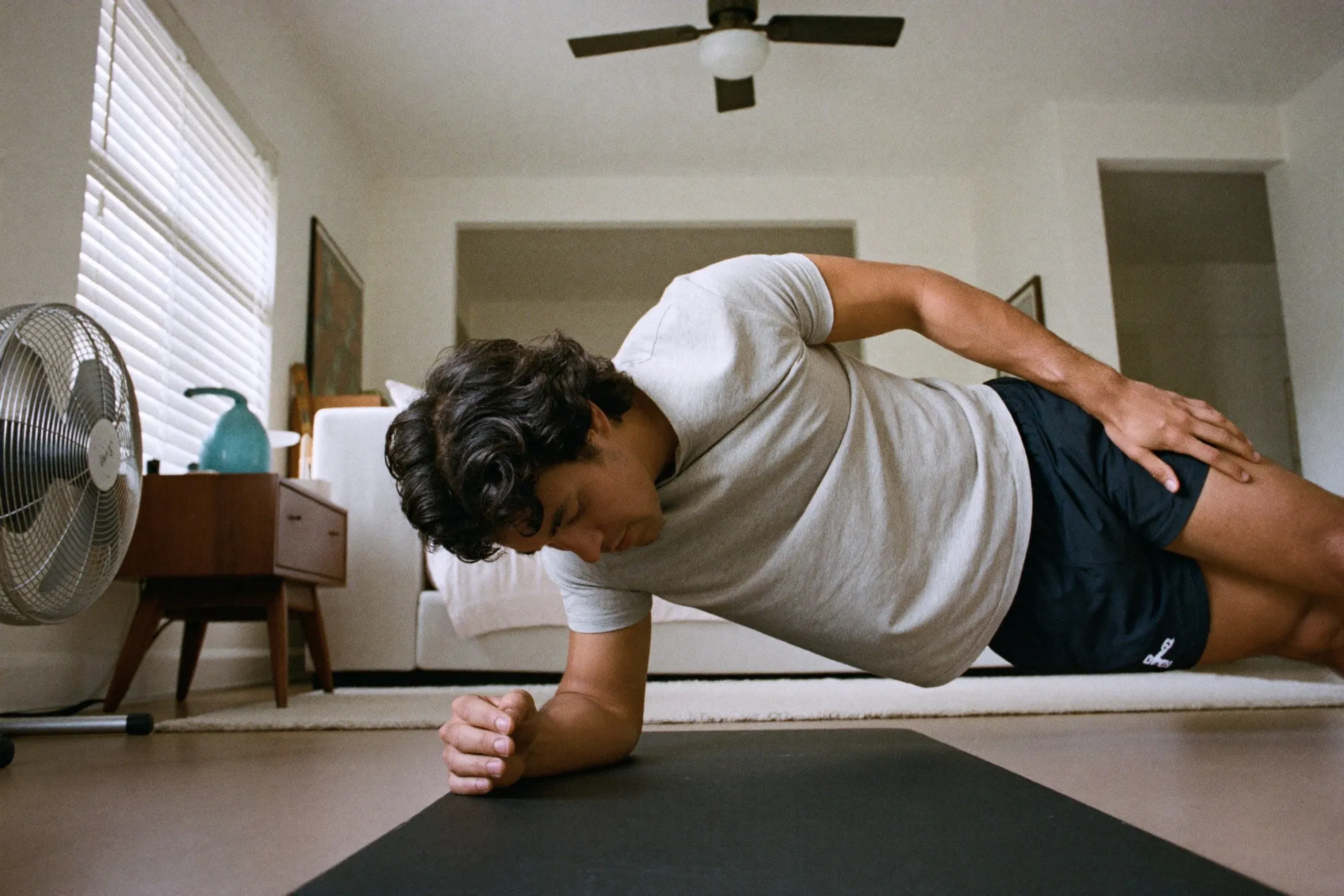
The best ab workout is a 15-minute bodyweight circuit built on planks, dead bugs, hollow holds and leg raises, done three times a week. You can run the whole thing on your bedroom floor in an HDB flat or a PJ condo, and it beats hundreds of crunches for both core strength and the six pack itself.
That second claim needs defending, because the crunch has survived every fitness trend since the 90s, and so has the belief that enough of them will melt a belly. Neither deserves the loyalty. This guide gives you the circuit, the form cues that keep your lower back out of trouble, and the honest part about food that most ab content skips.
Why haven’t crunches given you a six pack?
Two reasons. Crunches load your abs lightly through a short range of motion, so your body adapts within weeks and then stops changing. And no ab exercise burns the fat sitting on top of the muscle. Spot reduction has failed every time researchers have tested it, which is why the full answer involves your kitchen.
Everyone reading this already owns a six pack. The rectus abdominis, the muscle with the segments, comes standard issue. What varies between men is the fat layer above it, and that layer responds to your overall energy balance, not to whichever exercise happens underneath. The guy doing 200 crunches at the gym before a late mamak supper is running both halves of that experiment nightly and wondering about the result.
Ab training still matters, just not for the reason the crunch crowd thinks. A strong trunk holds your posture through a nine-hour desk day, takes load off your lower back when you haul groceries up the stairs, and transfers force when you sprint for the MRT or play futsal on Thursday. Train abs for strength. The visibility question gets its own section later.
What does the best ab workout look like?
Five moves, three rounds, minimal rest. The circuit trains your trunk the way it works in real life: resisting movement, bracing under load and controlling your legs from your centre. Total time lands around 15 minutes, and the only equipment worth buying is a mat from Decathlon for about RM40 or S$15.
| Exercise | Work | Rest after |
|---|---|---|
| Plank | 30 to 45 seconds | 15 seconds |
| Dead bug | 8 to 10 reps per side | 15 seconds |
| Hollow hold | 20 to 30 seconds | 15 seconds |
| Lying leg raise | 10 to 15 reps | 15 seconds |
| Side plank | 20 to 30 seconds per side | 60 seconds, then next round |
Run three rounds. If you finish all three with clean form, the session was honest. If your form broke down in round one, cut the times, not the standards. A 20-second plank with a rigid body does more than a minute of sagging.
Notice what the list leaves out: sit-ups, Russian twists, that ab roller from a Shopee flash sale. None of them earns a slot. The five moves above cover every job your core has, and they scale from complete beginner to genuinely hard without a single purchase.
How do you do each move without wrecking your lower back?
One cue covers all five exercises: keep your lower back flat. On the floor moves, press it towards the mat. In the planks, tuck your hips so your torso holds a straight line. The moment your back arches, the work leaves your abs and lands on your spine instead.
Plank. Forearms under shoulders, fists loose, squeeze your glutes and tuck your pelvis slightly. Your body forms one line from head to heels. Hips drifting up turns it into a rest. Hips sagging down turns it into a lower-back stretch with extra steps.
Dead bug. Lie on your back, arms pointing at the ceiling, knees bent at 90 degrees above your hips. Lower your right arm and left leg slowly towards the floor while exhaling, then switch sides. Your lower back stays glued down the entire rep. Slow is the whole point.
Hollow hold. Press your lower back into the mat, then float your shoulders and legs a hand-width off the floor. Too hard? Bend your knees or raise your legs higher. The flat back is non-negotiable; the leg height is the difficulty dial.
Lying leg raise. Legs straight, hands under your hips if you need them. Lower your legs slowly and stop the moment your back starts to peel off the floor. That stopping point rises over the weeks. Let it.
Side plank. Elbow under shoulder, feet stacked or staggered, hips lifted until your body forms a straight line. If your hip dips, the obliques have clocked out. End the set there.

How often should you train abs, and how do you progress?
Three sessions a week with a rest day between them gives your abs the same recovery you would give any muscle. Progress by adding time or reps first. Once you hit the top of every range for all three rounds in two straight sessions, move to a harder variation instead of adding a fourth round.
The upgrades cost nothing:
- Plank becomes a long-lever plank: walk your elbows a palm-length forward and feel the difficulty double.
- Dead bug slows down: three seconds out, three seconds back, with a pause at the bottom.
- Hollow hold becomes a hollow rock, the same shape set gently in motion.
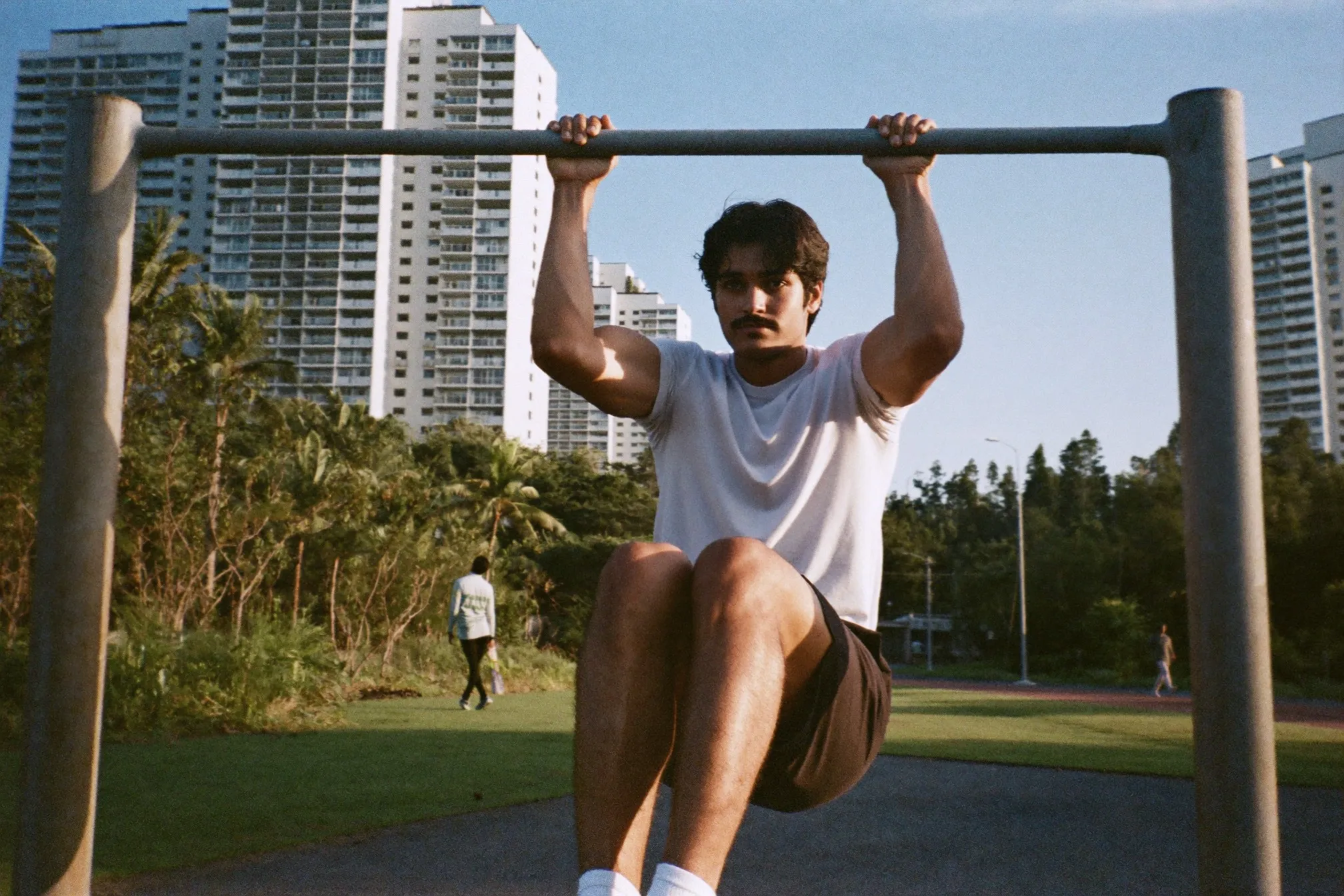
- Lying leg raise moves to a bar and becomes hanging knee raises, then hanging leg raises.
- Side plank progresses by stacking your feet, then raising the top leg.
For the bar, you already have one. Nearly every HDB estate in Singapore has a fitness corner, and most Malaysian parks keep a rusty but functional pull-up station near the jogging path. They sit empty at 7am. If your bar is outdoors, the morning sun here is stronger than it feels, and our sunscreen guide covers the two-finger fix.
If you are starting resistance training as well, bolt this circuit onto the end of your gym sessions two or three times a week rather than running it separately. Our beginner gym guide covers where core work fits in a full programme, and the rest of the fitness hub goes deeper on everything else.
Do you need to change your diet to see abs?
Yes. Ab visibility is a body fat question, and training alone rarely moves body fat far enough. You do not need a named diet. Eating slightly fewer calories than you burn, keeping protein high at each meal and making sugary drinks occasional will do more for definition than any exercise on this page.
This is the part that stings in our corner of the world, because the food is too good and available at 2am. Nobody is telling you to retire from mamak sessions. But a teh tarik carries dessert-level sugar, the Milo dinosaur is a milkshake wearing a sports drink’s reputation, and supper culture means many men eat four meals a day without noticing. Kurang manis exists for a reason. Order it, keep the roti canai to weekends, and the maths starts leaning your way without a single sad salad.
Set your expectations honestly too. A six pack sits at a leaner body fat level than most men carry year round, and holding peak leanness through wedding season and Raya open houses makes nobody pleasant company. A strong, stable core is available to everyone in weeks. The full segmented display takes months of boring consistency, and it fades politely when you ease off. Both outcomes are fine. Only one of them is under your control this month.
Which mistakes waste the most time?
- Speed-running reps. Ten slow leg raises beat thirty fast ones. Momentum does the work your abs were supposed to.
- Holding your breath. Exhale on the hard part of every rep. Breath-holding spikes tension in your neck and face, not your core.
- Training abs first. Do the circuit after your main training or on its own. A tired core mid-squat helps nobody.
- Chasing burn instead of form. The burn only tells you lactate showed up. A rigid 30-second plank does more than a shaky 90-second one.
- Restarting from zero after every break. Missed a week for travel or fasting month? Resume at 80 percent of your last numbers, not day one.
Tonight, before dinner, clear a body-length of floor and run one round: plank, dead bug, hollow hold, leg raises, side plank. Type your times and reps into your phone notes when you finish. That note becomes the baseline every later session gets measured against, and it costs you seven minutes and zero ringgit.
Quick answers
Do ab workouts burn belly fat?
No. Ab exercises strengthen the muscle underneath but burn too few calories to shrink the fat layer on top, and you cannot target fat loss to one spot. Visible abs come from lowering overall body fat through diet while training keeps the muscle worth revealing.
Can I train abs every day?
You can, but you gain nothing over three focused sessions a week. Abs recover like any other muscle and grow between workouts, not during them. Daily training usually means easy, low-effort sets. Three hard sessions with a rest day between them beat seven sloppy ones.
How long before I see a six pack?
It depends almost entirely on your starting body fat, not on the workout. The circuit builds core strength within weeks, but the segments only show once the fat layer above them thins. For most men that takes months of consistent eating, not a 30-day challenge.
Are sit-ups and crunches bad for your back?
Not automatically, but high-rep sit-ups load the spine through repeated bending, and many men pull on their neck to finish reps. Planks, dead bugs and hollow holds train the same muscles harder while your back stays neutral, so there is little reason to keep sit-ups around.