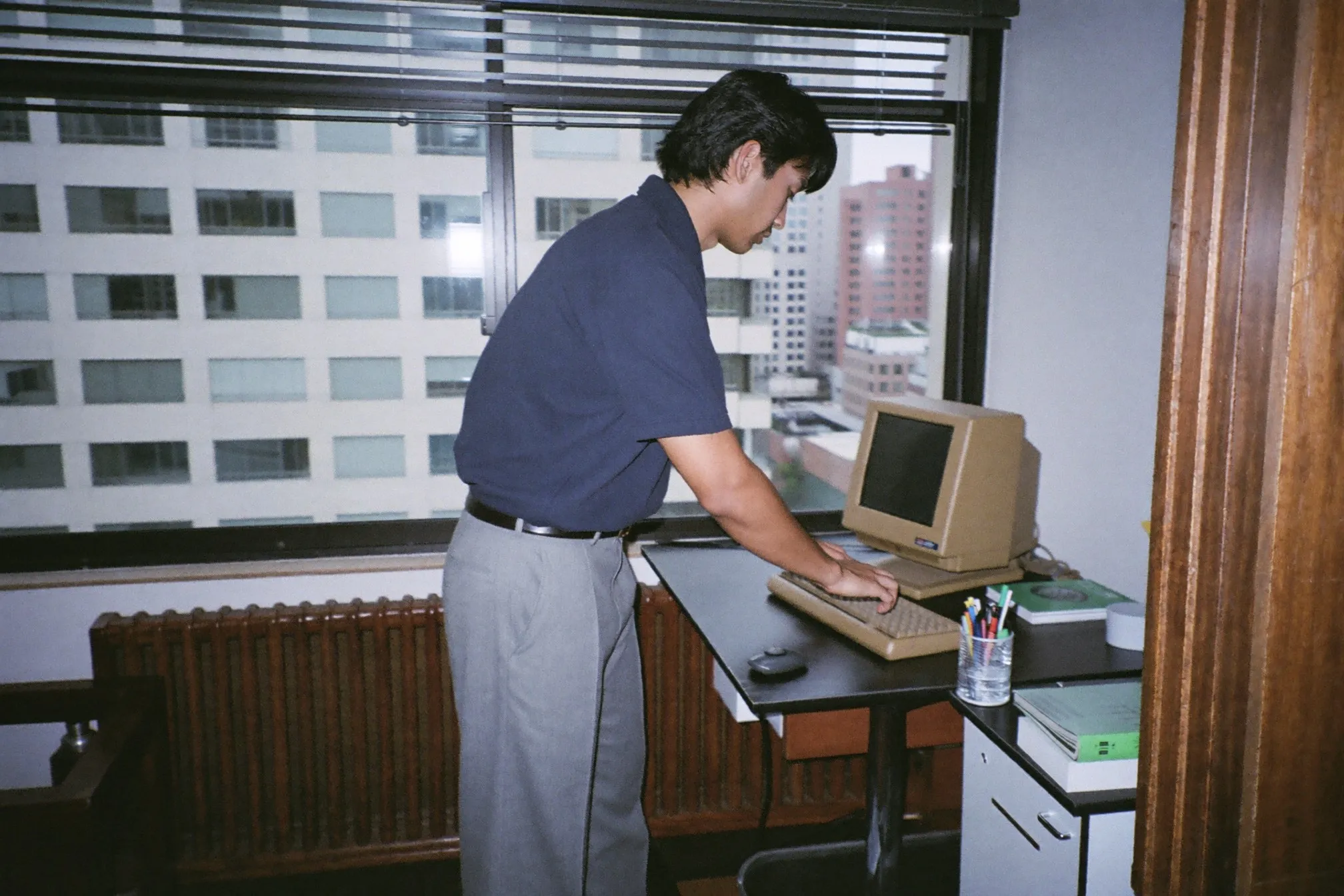
A work from home outfit that holds up has three parts: a plain tee or polo in a fabric that breathes, drawstring trousers cut like real trousers, and one collared shirt hanging within arm’s reach of your chair. Put it on in the morning. Take it off at six.
That’s the whole system. The rest of this guide covers picking pieces that survive a 33°C bedroom, read as competent on a laptop webcam, and let you walk down for lunch without changing first.
Why not just work in your pyjamas?
Pyjamas fail on three counts. They hold sweat in a climate that generates plenty of it, they photograph badly when a call lands with ten seconds’ notice, and they keep your brain in bedroom mode past noon. None of that is a moral argument. It’s a practical one.
The sweat problem is the one nobody talks about. Standard pyjama cotton is woven thin and loose, which sounds cool until you sit in it for six hours with a fan pointed at your back. It absorbs, holds, and stops absorbing. By 2pm you’re damp and irritable and blaming the deadline.
The brain part matters more than it sounds. Changing clothes is a cheap, reliable signal that the day has started, and reversing it at six tells you the day has stopped. Men who work from home without that boundary tend to finish at nine and wonder where the evening went.
What separates a work from home outfit from office wear?
Office clothes solve for other people. Home clothes solve for you, with one exception: the fifteen minutes a day you spend on camera. So the brief flips. Comfort leads, appearance handles the shoulders up, and the whole thing has to tolerate a room that sits at 30°C with the aircon off.
Three practical differences from your office wear rotation:
- Waistbands. Sitting for eight hours in a stiff trouser waistband is a slow punishment. Elastic or drawstring, always, but in a fabric that isn’t jersey.
- Structure above the waist only. A collar sits well on camera. Nothing below your ribcage appears on the call, so it can be as soft as you like.
- Wash cycles. You’ll wear these pieces five days a week, not once a fortnight. Buy two of everything or accept the laundry rhythm.
The cheapest upgrade is buying trousers rather than sweatpants. Uniqlo’s Ultra Stretch and Smart Ankle ranges, Decathlon’s plain training trousers and most of the Shopee lounge-trouser category now cut a straight leg with a soft waistband. They read as clothes from the front door and feel like nothing at the desk.

What should you wear on a video call?
Mid-tone solid colours in a collared top, one shade darker than the wall behind you. That single rule fixes most of what goes wrong on a laptop camera. Cheap webcams handle contrast badly, so anything at either extreme of the brightness range loses detail, and fine patterns break up into a shimmer.
| Choice | On camera | Verdict |
|---|---|---|
| Mid-blue, olive, grey, burgundy solid | Holds colour, separates from most walls | Best |
| Pure white shirt | Blows out under window light, camera darkens your face to compensate | Avoid before noon |
| Black tee or shirt | Flattens into shadow, reads as a floating head | Only with a bright background |
| Thin stripes, small checks | Shimmers and moves (moiré) | Avoid |
| Logo tee | Reads casual, and the logo lands centre-frame | Avoid for external calls |
Collars beat crew necks for anything client-facing. A soft-collar oxford or a knitted polo gives your neckline a defined line without asking you to iron. The camera crops at mid-chest, which is the loophole the whole internet discovered in 2020 and has quietly kept using.
Two things that matter more than the shirt. Point a lamp or a window at your face rather than behind you, because a backlit man in a good shirt still looks like a hostage video. And raise the laptop until the camera sits at eye level, on a stack of books if nothing else. Sorting your hair for five seconds before the call does more for you than any wardrobe decision here.
Which fabrics survive a room with no aircon?
The ones that move air and dry fast. Cotton jersey in a light weight, cotton-linen blends, AIRism-style synthetics and anything sold as a running or training fabric. Heavy cotton fleece, French terry and polyester blends with no moisture management turn a home office into a slow cooker.
Running the bedroom aircon from nine to six adds a real number to a TNB or SP Group bill, which is why most people at home work with a fan and a resigned expression. So the fabric does the work instead.
What behaves in practice:
- AIRism and equivalents. Slippery, thin, dries in an hour on a rack. Good as a base layer or a standalone tee. It picks up odour faster than cotton, so wash it every wear and read the body odour guide if that’s already a running battle.
- Light cotton jersey, 140 to 180gsm. The everyday default. Comfortable, forgiving, needs a fan to shine.
- Cotton-linen shirting. The one to keep on the chair for calls. Creases, but creases read as texture on a webcam rather than as mess.
- Bamboo and modal blends. Soft, cool, and they drape well. They also pill at the underarm within a year, so treat them as a two-year purchase.
- Anything with a fleece interior. No. Not here. Not even in a cold office at home.
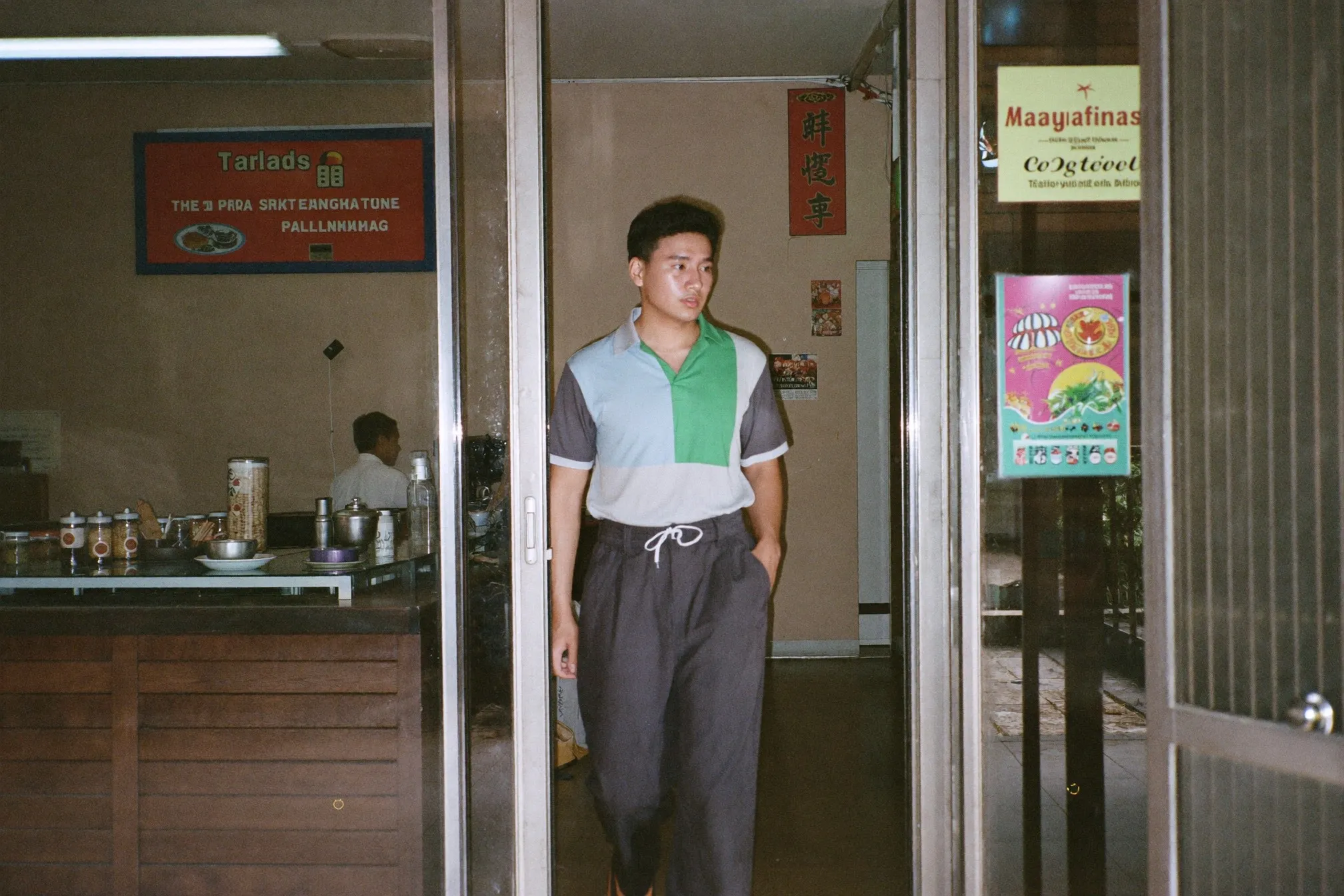
Is loungewear men actually buy worth the money?
Sometimes. Loungewear as a category covers two very different things: soft clothing engineered to look presentable outdoors, and pyjamas with a marketing budget. The first is worth paying for. The second costs RM200 for something you already own in worse condition.
The test that sorts them: could you take the rubbish down, sign for a parcel and buy kopi from the shop downstairs in this, without a beat of hesitation? If yes, it earns a place in the rotation. If you’d rather nobody saw you, it’s pyjamas, and pyjamas are fine at their actual job.
| Piece | Where to buy | Rough price |
|---|---|---|
| Plain cotton tee (buy 3) | Uniqlo, Cotton On, Shopee basics | RM30 to RM50 each |
| AIRism-style tee | Uniqlo, Decathlon | RM40 to RM60 |
| Soft-waist trousers | Uniqlo Ultra Stretch, Decathlon | RM80 to RM150 |
| Knitted polo | Uniqlo, Zara sale rail | RM90 to RM150 |
| Cotton-linen shirt (the call shirt) | Uniqlo, Muji, G2000 | RM99 to RM180 |
| House slides | Decathlon, any pharmacy | RM30 to RM60 |
A full rotation lands somewhere under RM500 and covers five days without a repeat. In Singapore, the same list runs roughly S$150 to S$220 depending on how much of it you catch on sale.
What about the bits below the frame?
Shoes, or something like them. Bare feet on tile all day encourages a slouch, and a pair of house slides or thin indoor sneakers gives your legs something to brace against. It also draws a line: shoes on means working, shoes off means done.
Shorts are the honest question here, and the honest answer is that shorts are fine. Nobody sees them. The only rule is that you can stand up mid-call to grab a charger without regret, which rules out anything with an elastic waistband stretched past its natural life. If you’re mixing home days with office days, keep the shoes that do real work by the door so the hybrid mornings don’t cost you fifteen minutes.
One more thing worth doing: keep the WFH pile physically separate from the sleeping pile. Different drawer, different shelf, whatever your flat allows. The separation is the point, and it fails the moment the two piles merge.
Pick one afternoon this week and do a two-part sort. Everything you currently wear at your desk goes into two piles: things you’d answer the door in, and everything else. Buy one collared shirt to hang on your chair, and the rotation more or less builds itself from there. If the office days are the harder problem, start with the smart casual formula instead and work backwards. More on dressing for the region in the style hub.
Quick answers
What should I wear for a work from home day with no meetings?
A plain cotton or AIRism tee and drawstring trousers cut like real trousers. No logos, no holes, nothing you slept in. Keep a collared shirt on the back of your chair for the call that appears at 3pm with no warning. Total effort: forty seconds.
What colour shirt looks best on a webcam?
Mid-tone solids beat everything. Blue, olive, grey and burgundy hold their colour under cheap laptop cameras. Pure white blows out under a bright window, black flattens into your chair, and tight stripes or small checks shimmer on screen. Pick one shade darker than your wall.
Is loungewear the same as pyjamas?
No. Loungewear uses structured fabric, a proper waistband and a cut that survives daylight. Pyjamas use thin woven cotton and a fit that says bedroom. The test is simple: if you can take the bins down or answer the door in it without hesitating, it counts as loungewear.
Do I need to wear shoes while working from home?
Not shoes, but not bare feet on cold tile either. A pair of house slides or thin indoor sneakers gives your posture something to push against and signals the start of the workday. Most men who work from home report they sit up straighter with something on their feet.