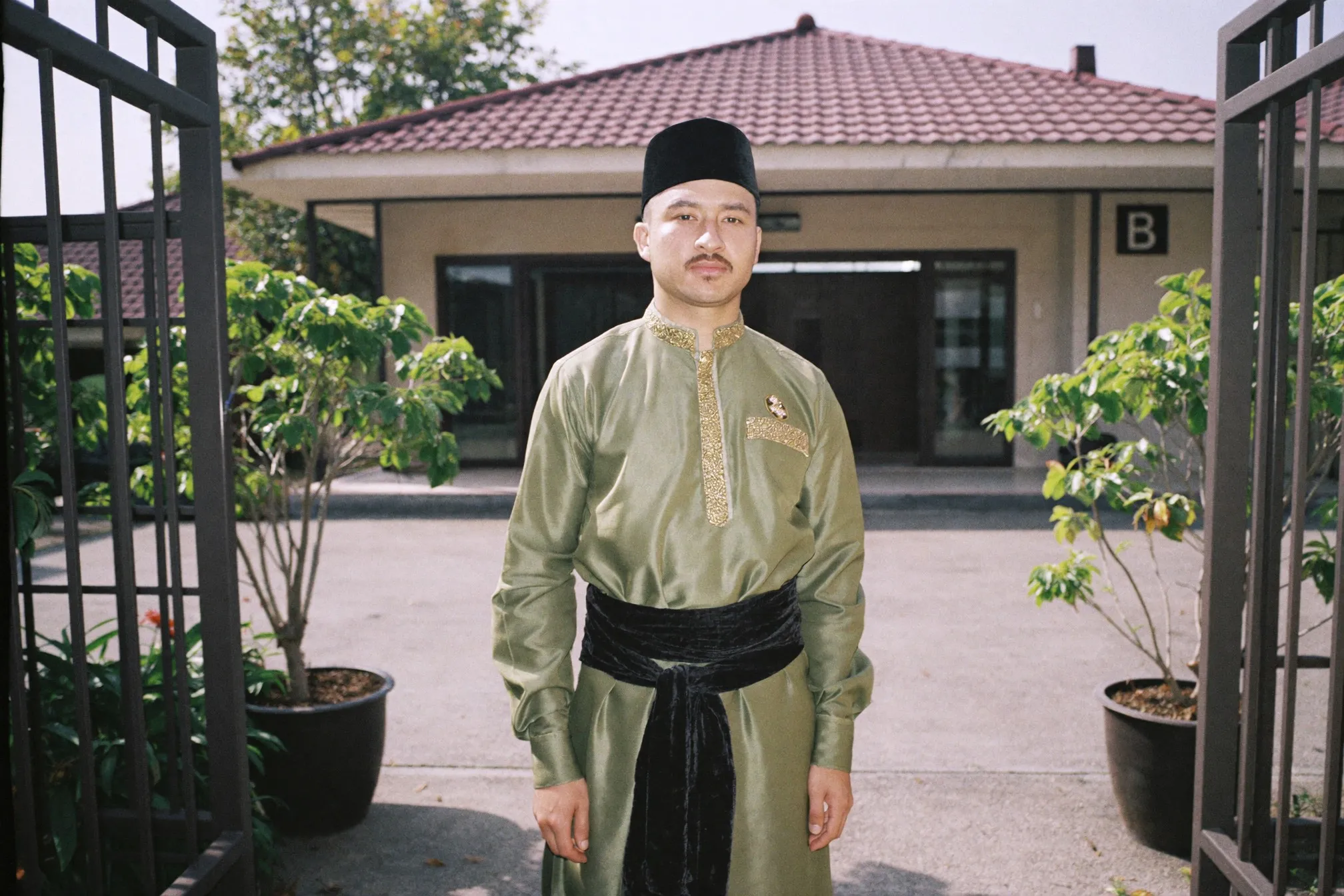
For Raya, wear a baju melayu in one solid colour with a matching sampin and a black songkok. For Chinese New Year, lead with red, burgundy, gold or navy, and keep head-to-toe black or white out of the visiting rotation. Those two rules cover most of what men get wrong.
Both festivals run on lunar calendars, so the dates shift every year and in some years they land within weeks of each other. The clothing conventions never shift. Learn them once and you stop panic-buying in the last week, which is when the good colours are gone and the tailors have closed their books.
What do you wear for Hari Raya?
A full baju melayu: the long-sleeved top, matching trousers, a sampin wrapped over the trousers, and a black songkok. Solid colours beat prints. Coordinate with the family if someone has picked a theme colour, because someone always has. Leather slip-ons on your feet, since you’ll take them off at every door.
The collar sets the formality. Cekak musang is the stand collar with five stud buttons down the front, and it’s what most men wear to the mosque on the first morning. Teluk belanga has a flat round neckline with the stitching worked by hand, the Johor style, and it sits a touch more relaxed. Both are correct anywhere in Malaysia and Singapore. Pick by preference, not by state.
The sampin is the part men get wrong. It’s a length of cloth wrapped over the seluar and folded at the waist, with the fold centred at the front. Two ways to wear it. Dagang luar sits over the baju with the baju tucked in, the dressier pairing and the usual match for cekak musang. Dagang dalam goes under the baju so only the lower portion shows. The hem should land near the knee. Anything past mid-calf looks like it’s on its way down, which, if you tied it badly, it is.
Songket, the handwoven cloth shot through with gold or silver thread, is the first-day and formal-function choice. Plain or lightly patterned sampin does the rest of the week.
The songkok sits level. Front edge about a finger above your eyebrows, straight on the head, not pushed back like a beanie. Black velvet is the default and nothing else is worth the risk. If you’re going for solat sunat Aidilfitri, it isn’t optional.
| Piece | What it does | Budget range (MY) |
|---|---|---|
| Baju melayu set | Top and trousers, one colour | RM150–350 ready-made, RM300+ tailored |
| Sampin | Waist cloth over the trousers | RM60 plain, RM300+ for songket |
| Songkok | Black velvet cap | RM30–80 |
| Slip-on shoes | Off and on at every house | RM120–300 |
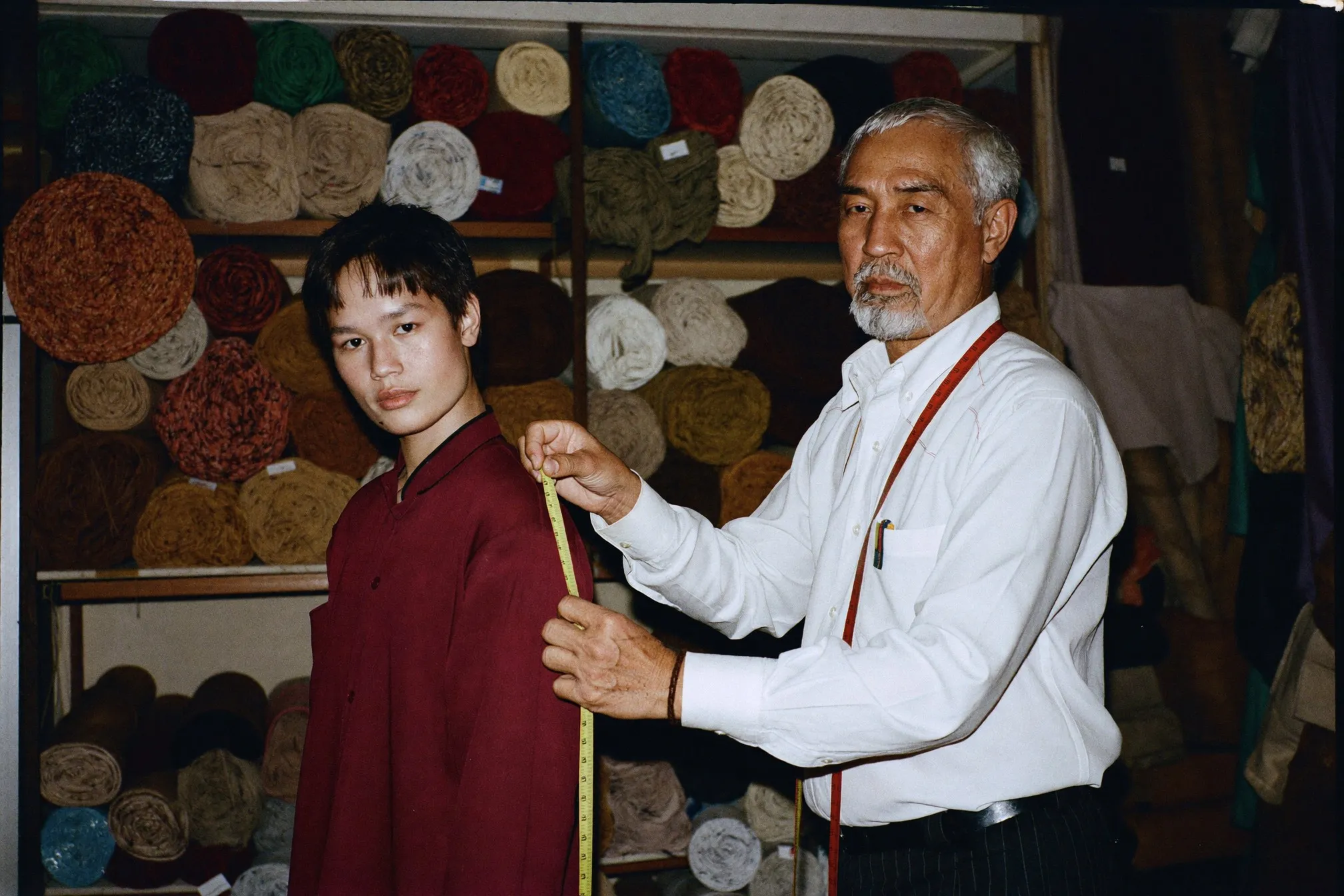
Fabric decides your afternoon. Cotton and cotton blends survive a day of aircon, kitchens and standing in a driveway. Satin-finish polyester photographs beautifully and cooks you by the second house. Pure linen wrinkles into a map by the third.
For buying, Jakel and Nagoya Fashion cover most of Malaysia for both fabric and ready-made sets, with Shopee and Zalora filling in the rest. In Singapore, Geylang Serai in the weeks before Raya, plus Joo Chiat and Arab Street year round. Tailors want three to four weeks minimum and stop taking Raya orders well before the last one, so the deadline is earlier than you think.
What should you wear for Chinese New Year?
Red is the safe centre, with burgundy, maroon, gold, orange and navy all clearing the bar. Skip all-black and all-white outfits for house visits, since both read as funeral colours to older relatives. Wear at least one new item on the first day. Dark trousers and a collared shirt handle most gatherings.
The colour rules are real. A white shirt under a red or navy layer passes without comment. White-on-white, or black head to toe, is what gets noticed at your grandmother’s place on the first morning, and the person who notices will mention it to your mother. If red feels like a costume on you, burgundy and deep maroon do the same job with less volume. Navy is the quiet option.
New clothes mean a fresh start. The custom doesn’t specify a price. A new shirt satisfies it.
Mandarin collars are the upgrade. A tangzhuang jacket with frog buttons is the traditional route and looks sharp on the first day, though it runs warm. The modern version is a plain mandarin-collar shirt in red or burgundy, worn with dark trousers, and it costs a fraction of the jacket. Look for them from around RM80 in the weeks before the festival, when every retailer stocks them.
Book the barber early. Prices climb in the ten days before CNY and the good chairs fill up. A fresh fade two or three days out beats one cut the morning of, when the shop is packed and your barber is rushing.
While you’re planning, sort the ang pow logistics too. Crisp notes, correct amounts, and never a four in the sum.
How do Raya and CNY conventions compare?
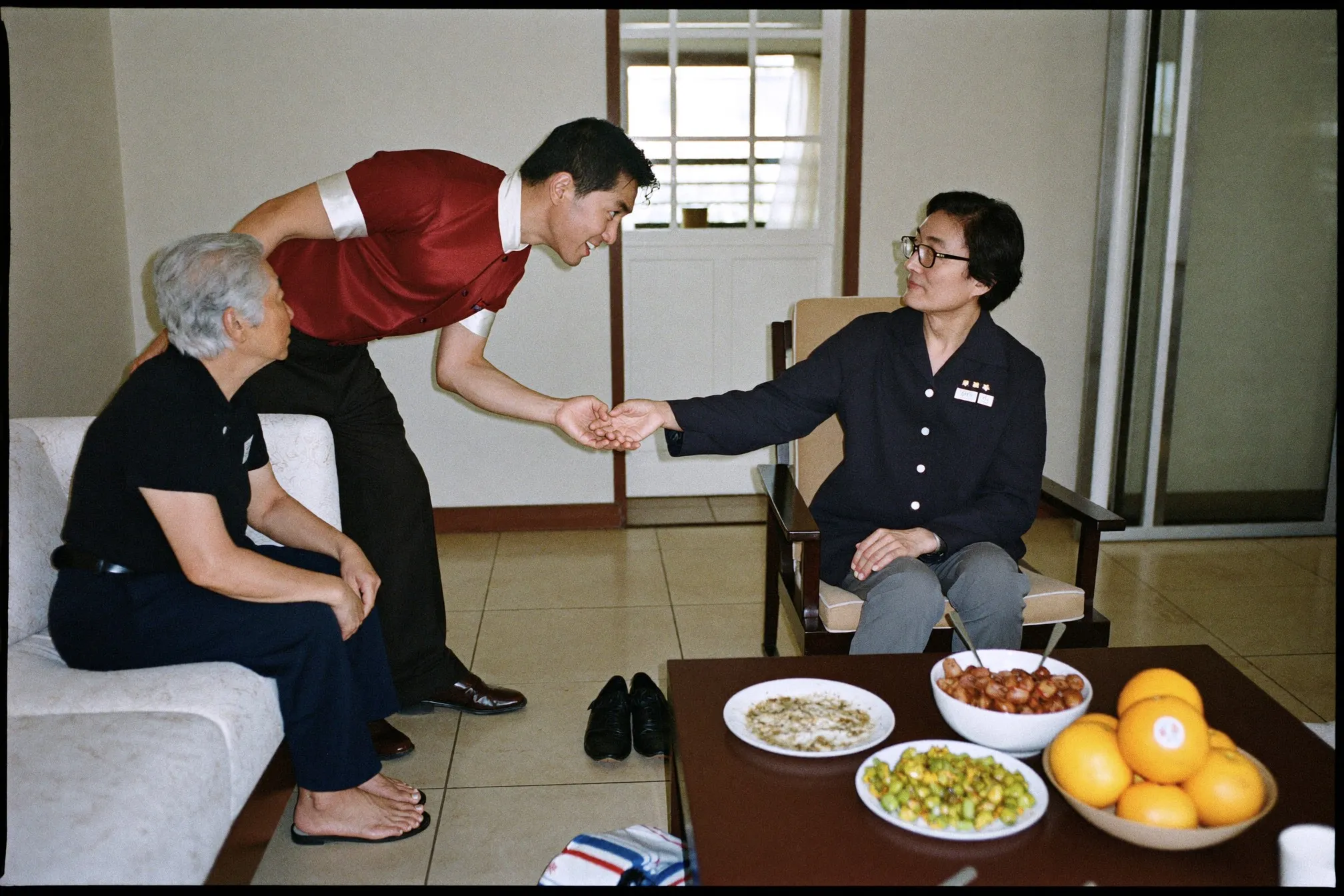
The two festivals share a shape, house visiting, elders first, food everywhere, shoes off at the door. The dress rules diverge in specific ways.
| Hari Raya | Chinese New Year | |
|---|---|---|
| Core outfit | Baju melayu, sampin, songkok | Collared or mandarin-collar shirt, dark trousers |
| Lead colour | Any solid, usually a family theme | Red, burgundy, gold |
| Colours to avoid | No taboo, but loud prints clash with the family photo | Head-to-toe black or white |
| Headwear | Songkok, black velvet | None |
| Footwear | Slip-ons you can remove fast | Slip-ons you can remove fast |
| New clothes | Customary | Customary on day one |
| Best fabric | Cotton or cotton blend | Cotton or cotton blend |
Can one wardrobe cover both?
Mostly. Plenty of men in KL, PJ and Singapore attend both, whether through family, in-laws or friends who feed them. The shared base is a pair of dark tailored trousers, a pair of slip-on leather shoes that come off cleanly, and two solid long-sleeve shirts that fit through the shoulder.
From there you add one item per festival. A baju melayu set for Raya. A red or burgundy mandarin-collar shirt for CNY. Both live in the wardrobe for years if you buy solid colours and resist novelty prints, which date within one season and reappear in every photo you’re tagged in.
Batik earns its own note. A long-sleeved batik shirt with dark trousers works for Raya open houses, Deepavali visits and most evening functions in Malaysia, and it outranks a plain shirt at formal Malaysian events. Our guide to formal attire covers where batik sits against a jacket. The rest of the style pillar handles the everyday version of the same problem.
What changes between the first day and the open houses?
Day one is the formal one. Prayers, elders, reunion meals, the photos that end up framed. Full baju melayu with sampin for Raya, mandarin collar or a proper shirt for CNY.
From day three onward the temperature drops. A baju melayu without the sampin reads fine at an open house. So does a pressed shirt with chinos. If you’re attending a colleague’s open house rather than a relative’s, treat it like a daytime function and dress the way you would for a casual wedding invitation, one notch above your normal weekend.
Office CNY lunches and lo hei sessions need less than people assume. Normal work clothes with a red shirt or a red tie is the whole assignment.
The mistakes that get noticed
- Baju melayu bought a size up for comfort. The shoulder seam belongs on your shoulder bone. A loose baju melayu doesn’t read as relaxed, it reads as borrowed.
- Sampin tied in the car. It slides. Practise the fold twice at home, tighten it more than feels necessary, and check it in a mirror before you walk in.
- Songkok tipped back. Level, front edge above the eyebrows.
- Socks with holes. You will remove your shoes at seven front doors. Buy new socks with the outfit.
- New shoes on the first day. Blisters arrive around house four, and you still have three to go.
- Black on black at CNY. Even if it’s your best outfit, save it for the office lunch.
- Heavy fragrance in a small living room. Two sprays. Aunties are seated at nose height.
Count back six weeks from whichever festival lands next and put a note in your calendar. That’s when tailors close their books, when the sampin colours you want are still on the shelf, and when a RM20 alteration is still possible. Order the set, book the barber for two days before, and check your socks tonight.
Quick answers
What is a sampin and do I have to wear one?
A sampin is the woven cloth wrapped over the trousers of a baju melayu, folded at the front. Wear one for the first morning of Raya, mosque visits and any formal function. For casual open houses later in the week, plenty of men skip it and nobody blinks.
Can I wear black to Chinese New Year?
A black item is fine. A head-to-toe black outfit is not, because black and white are mourning colours and older relatives read them that way. Break black up with red, burgundy or gold, or lead with navy if you want something quieter than red.
How much does a decent baju melayu cost?
Ready-made sets run roughly RM150 to RM350 in Malaysia and S$60 to S$150 in Singapore. Tailored costs RM300 upward once you add fabric. A plain sampin starts around RM60, and a songket one climbs past RM300 depending on the weave.
Do I need new clothes for Chinese New Year?
Custom says you wear something new on the first day to mark a fresh start. It does not have to be a full outfit or an expensive one. A new shirt counts, and so does a new pair of socks if the budget is tight this year.