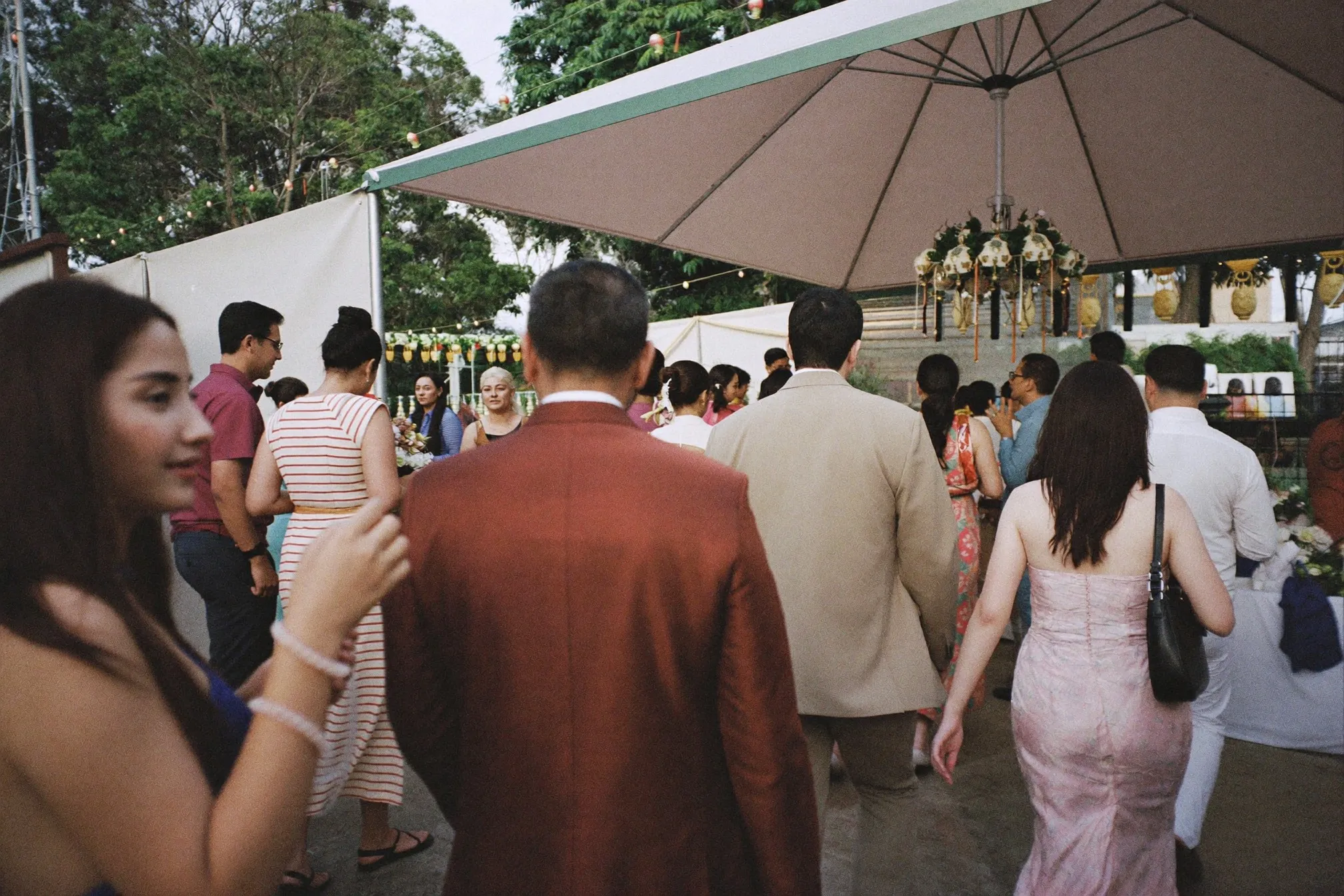
Malaysia runs on three wedding formats, and the rules change completely between them: the Malay kenduri where you drop in, eat and salam the couple; the Chinese dinner where your angpow covers your seat; and the Indian ceremony where the sacred part happens in the morning and the party follows. Master the differences and you become the guest every couple remembers fondly, which in this country is a genuine social skill.
Here is the complete playbook: attire, money, timing and behaviour for each, plus the groomsman and groom notes nobody writes down.
What do you wear to each wedding type?
Match the format, not a generic “wedding outfit”. The full outfit logic lives in our wedding attire guide and batik guide; this is the decision table:
| Wedding | Safe answer | Step up | Never |
|---|---|---|---|
| Malay kenduri | Batik shirt + dark trousers | Baju melayu with sampin | Shorts, sleeveless, black head-to-toe |
| Chinese dinner (restaurant) | Shirt + trousers + loafers | Add unstructured blazer | Full white or full black outfits |
| Chinese dinner (hotel ballroom) | Blazer, no tie needed | Suit if the couple is formal | Jeans, sneakers |
| Indian ceremony | Kurta if you have one, else shirt + trousers | Jewel-tone shirt colours welcome | Leather items at some temple venues, shoes past the door |
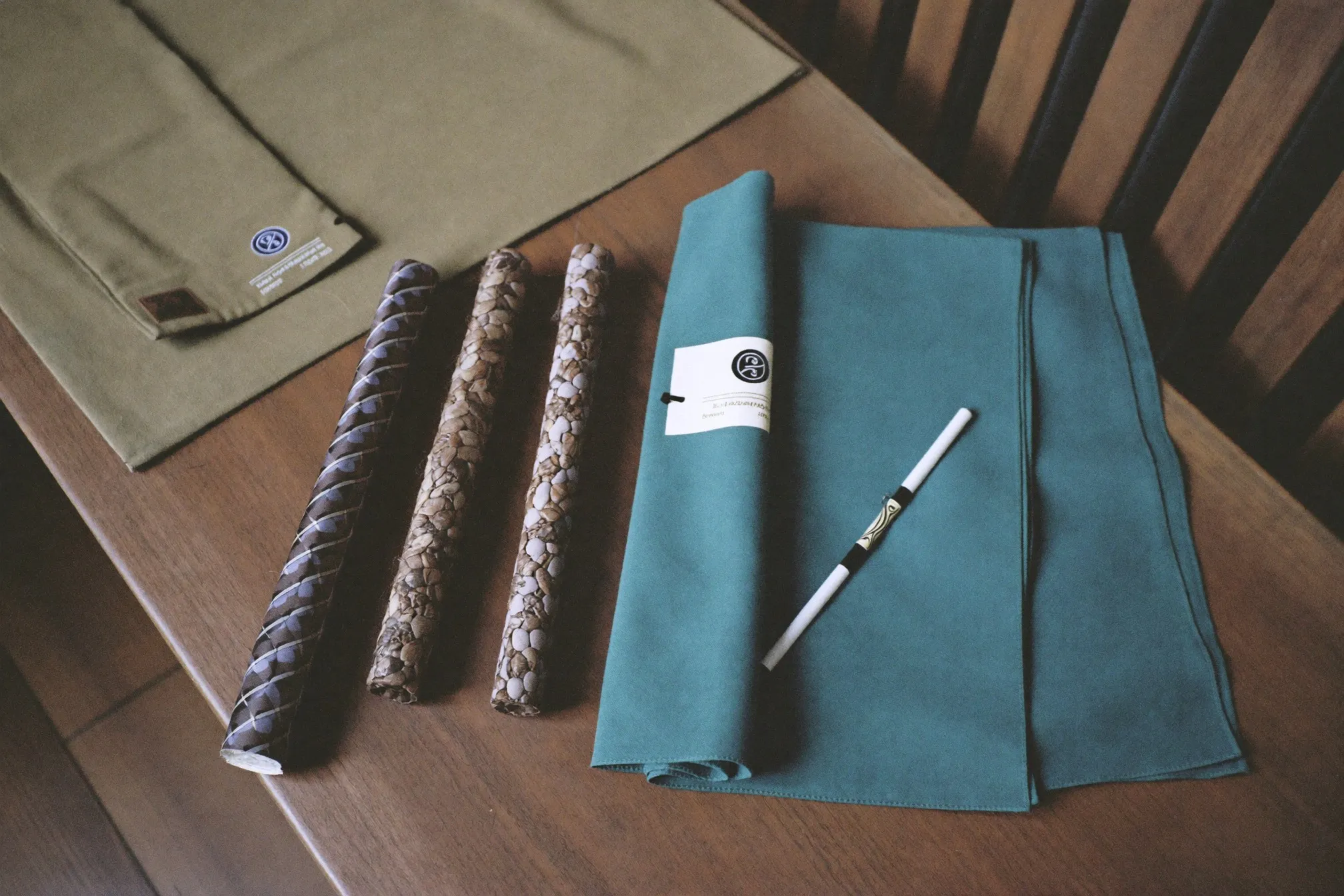
The climate rule holds everywhere: breathable fabrics, an undershirt, and arrive composed rather than drenched. If the invite says lounge suit or batik, believe it, and our dress code decoder translates the rest.
How much do you give, and how?
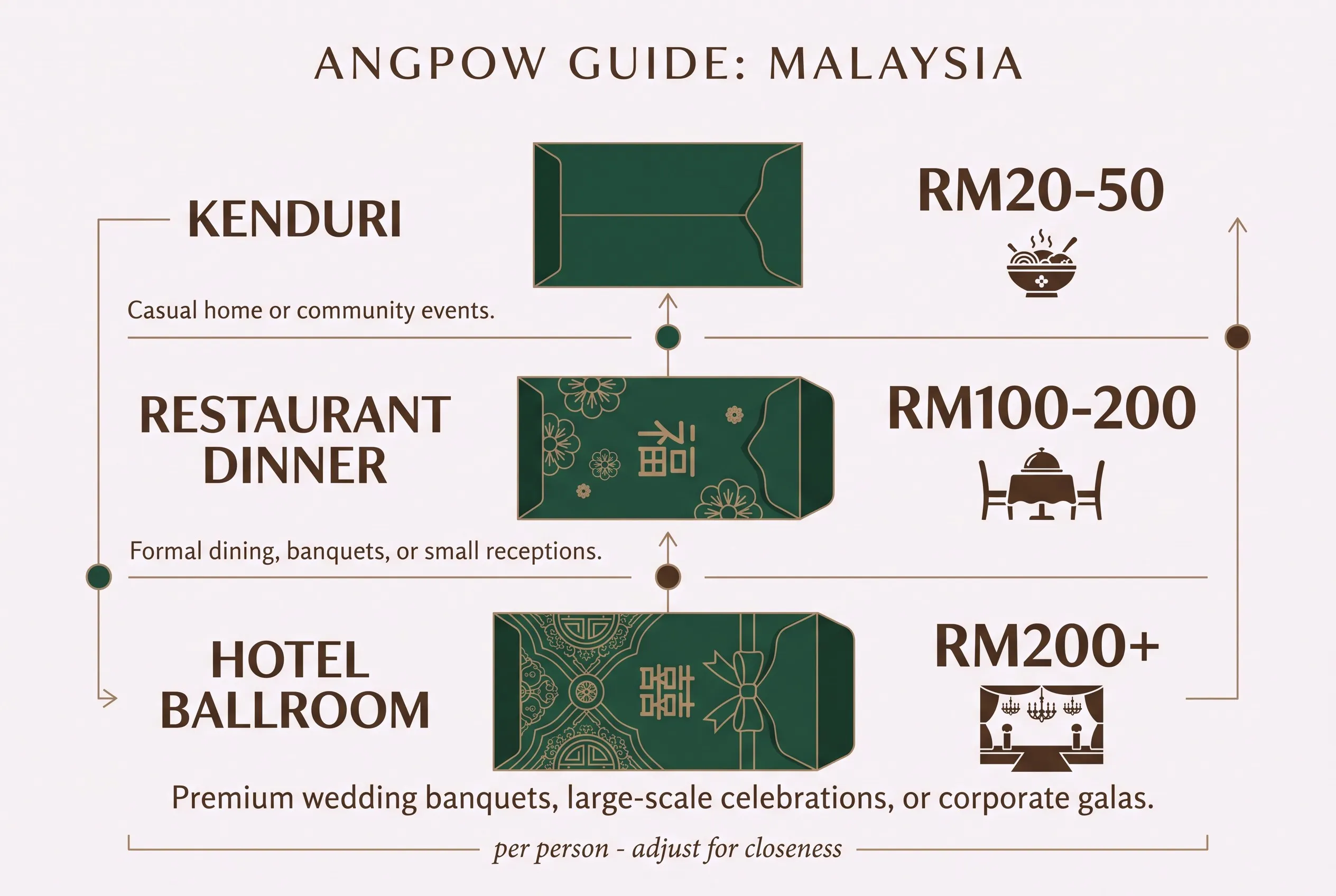
The kenduri and the dinner run on different economics. A kenduri is hospitality: the family feeds the kampung, and your salam envelope of RM20 to RM50 is a token of blessing, not a ticket price. It goes into the couple’s hands or the marked box, in a green packet if you have one, any clean envelope if you don’t.
A Chinese dinner is cost-recovery plus generosity: your angpow should at least cover your plate. Restaurant dinners run RM100 to RM200 a head, hotel ballrooms RM200 and beyond, and the exact math, including how to adjust for closeness and venue, is in our angpow guide. Red packet, both hands, at the reception table when you sign in. Numbers with 8 are welcome; anything with 4 is not.
Indian weddings take odd-ending amounts, RM101 rather than RM100, handed in an envelope to the couple or parents. When in doubt at any wedding: ask a mutual friend what the group is giving, and match it.
How does each ceremony actually flow?
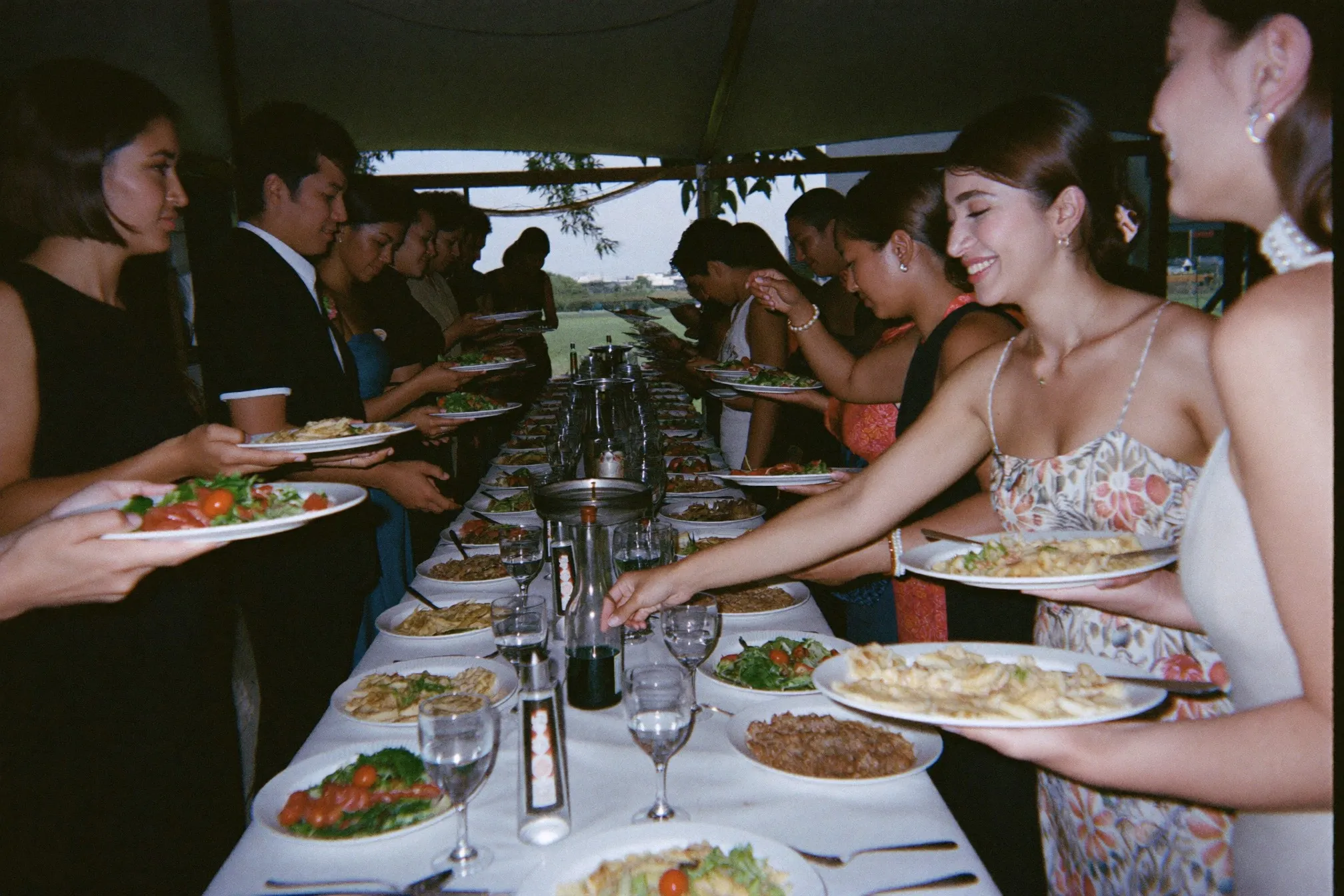
The kenduri is a drop-in feast, usually Saturday or Sunday lunch, under canopies at the family home or a hall. Arrive anytime in the stated window, eat the nasi minyak, queue to salam the couple on the pelamin, photo, envelope, leave. Total time: as short as 45 minutes without offence. The akad nikah itself, the solemnisation, happens earlier and is usually family-only; if you’re invited to that, it’s an honour, so show up early and sit quietly.
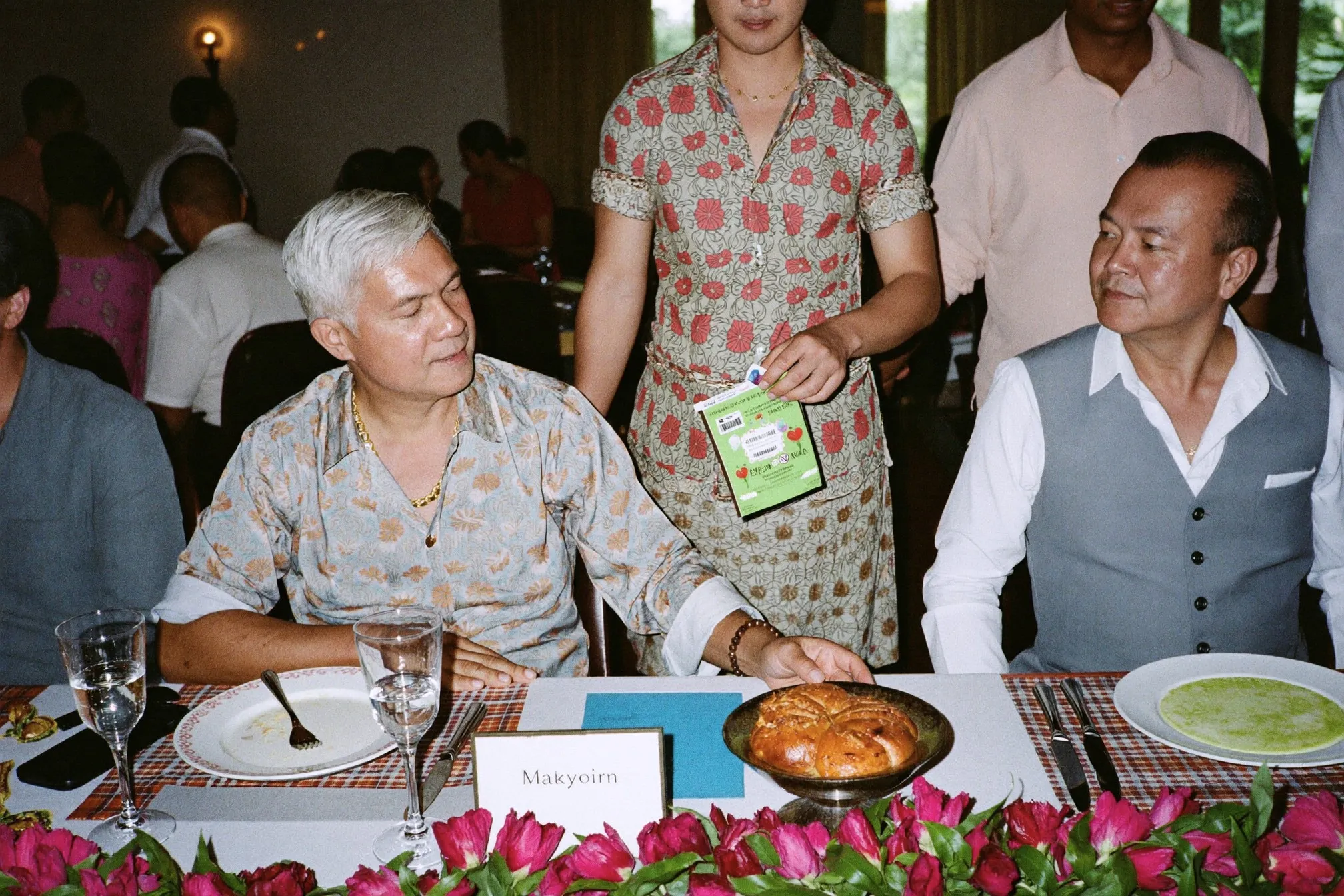
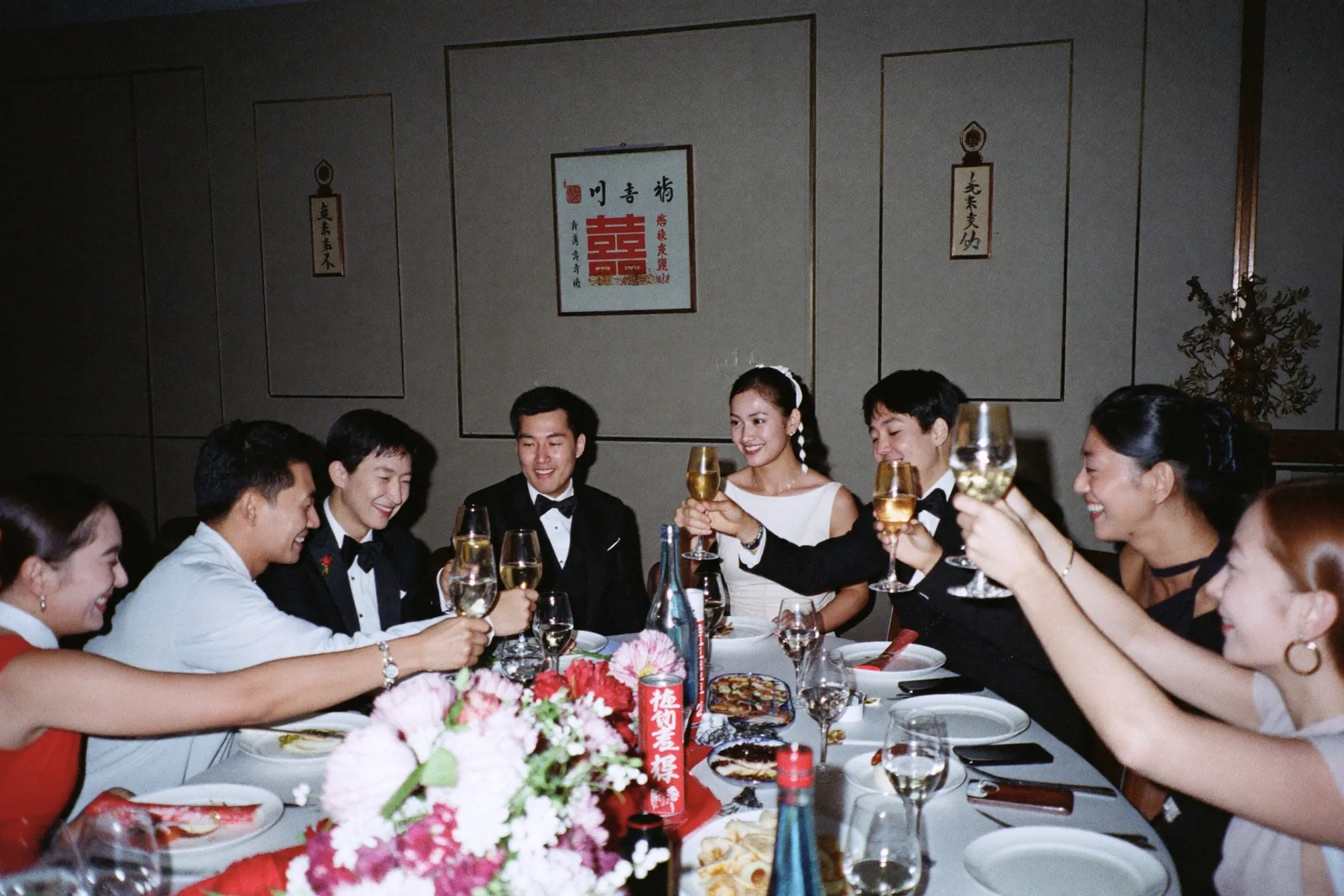
The Chinese dinner is a seated eight-to-ten course marathon. The 7pm on the card is aspirational; dinner starts when the couple’s grand entrance does. Expect the yam seng toasts, louder each round, and stand for them. Pace yourself before course four, because there are always more courses than you believe. Leaving before the dessert course is noticed; leaving before the couple’s table-to-table toast reaches you is remembered.
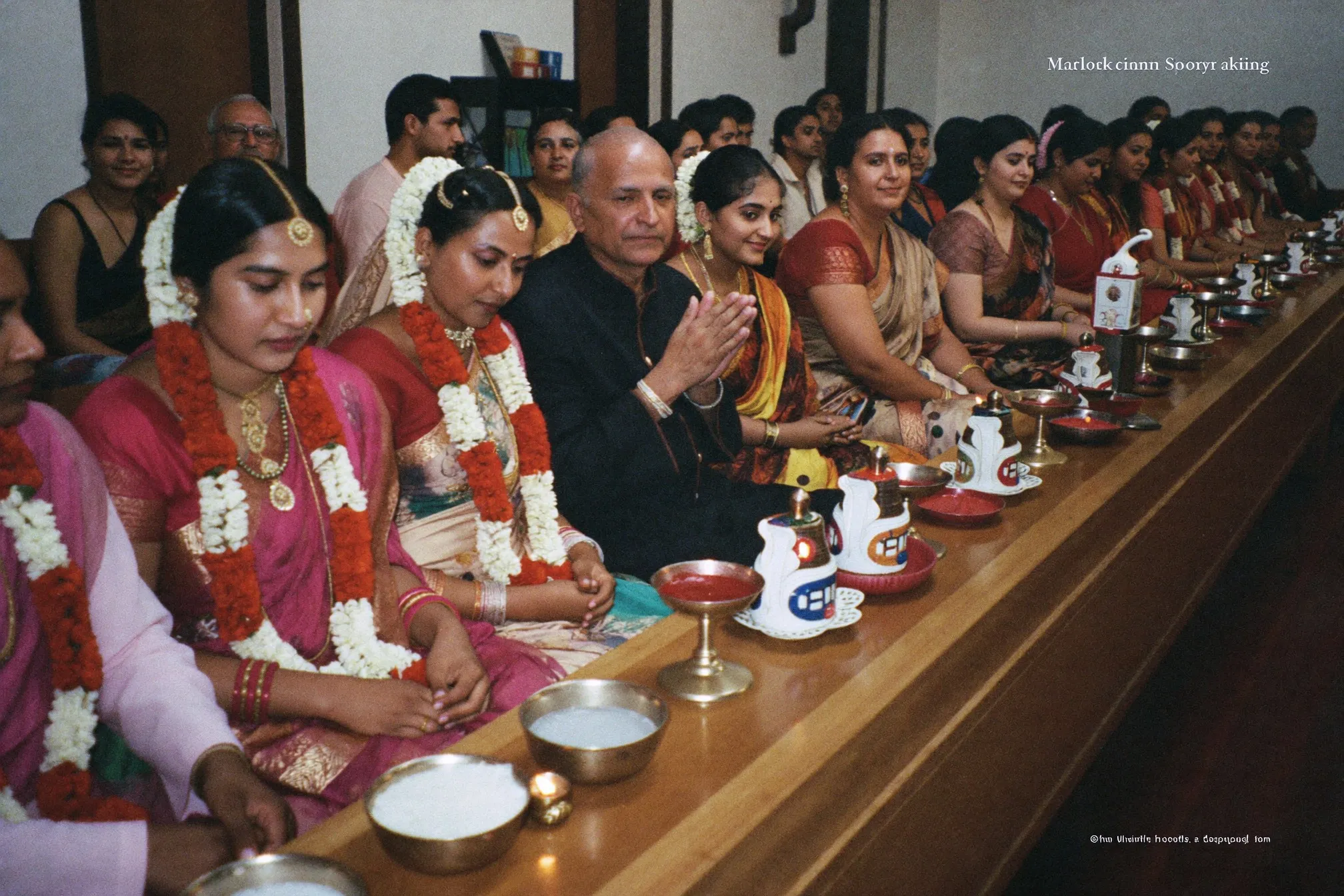
The Indian wedding splits into a morning ceremony, at a temple or hall, rich with ritual and worth watching respectfully, and an evening reception that behaves like the Chinese dinner with better dancing. Shoes off where indicated, sit where ushered, and never point your feet at the ceremonial area.
At all three: phones silent during rites, no flash during the solemn parts, and the couple’s photographer outranks your Instagram angle.
What if you’re the groomsman, or the groom?
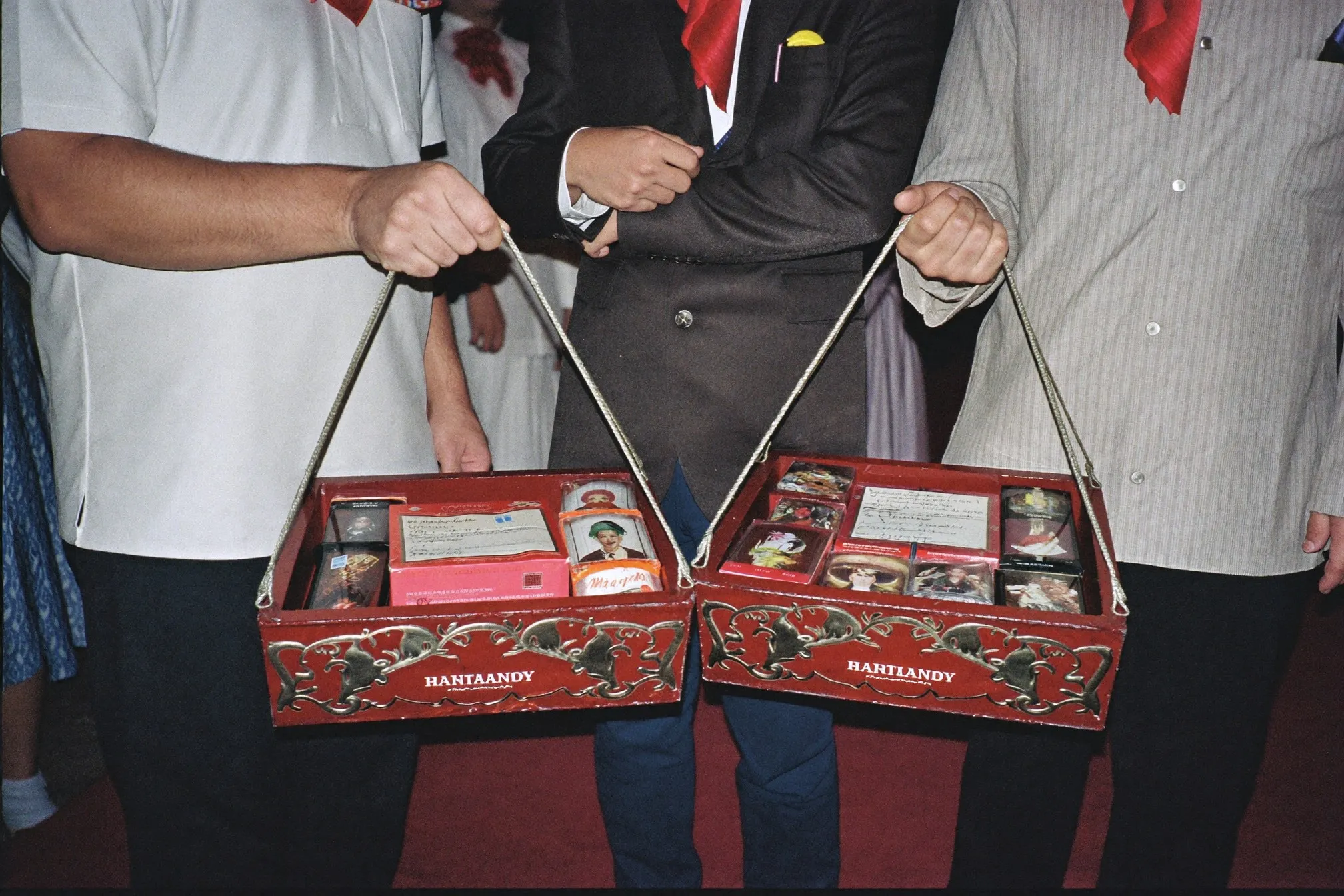
Groomsmen (or the hantaran crew) work the logistics: gate-crashing games at Chinese weddings, where your job is to be entertaining and pay the door “ransom” angpow with theatre; carrying hantaran trays at Malay weddings, where your job is to not drop anything and look composed in the matching outfit chosen for you. Budget for the shared costs early and confirm the outfit plan a month out, which usually means a tailoring run.
Grooms get one paragraph of hard-won advice: sort attire eight weeks early for all events (there are usually several), delegate the day-of logistics entirely, eat something before the dinner because you won’t during it, and write the thank-you speech sober, days before, not in the car. Your grooming countdown starts a month out: haircut ten days before, not the day before.
What about multi-event weddings and edge cases?
Malaysian weddings multiply. One couple can generate an akad nikah, a bride’s-side kenduri, a groom’s-side kenduri a week later, and a Chinese-style dinner for colleagues, and you may be invited to several. The rules: give once, sized to the biggest event you attend, and show face at whichever events you accepted. Attending the bride’s side does not excuse ghosting the groom’s side you also RSVP’d to.
Mixed marriages blend formats, a morning akad then an evening ballroom dinner, and the dress code follows each event, not the couple’s ethnicities. When the invitation card says two events with two venues, read it as two outfits and plan the transition.
The other edge cases worth knowing cold: outstation weddings (a kenduri in the kampung means travel, so the couple weights your presence over your envelope, and RM50 travels fine); office-mate weddings (the department usually pools one collective angpow, so ask before giving solo and double-paying); and the wedding during your own broke month (attend the kenduri, give what you can, RM20 with a warm salam beats an absence, because kenduri economics run on blessings, not cost recovery).
Ramadan and school-holiday seasons stack invitations three deep on good weekend dates. When two clash, attend the closer relationship and send an envelope with a genuine apology to the other. Nobody reasonable holds a calendar collision against you; everybody remembers silence.
The etiquette that separates good guests from great ones
RSVP honestly and early, because seats are money. Arrive within your format’s real window. Greet the parents, not just the couple; they’re the hosts and they notice. Eat what’s served or navigate quietly around it. Don’t outdrink the yam seng. And send one good photo to the couple afterwards instead of tagging fourteen mediocre ones publicly before their photographer delivers.
Wedding season here is roughly year-round with peaks around school holidays and auspicious dates, so build the occasion slots of your wardrobe once and every future invitation becomes logistics instead of panic. The invite sitting in your WhatsApp right now: reply to it today, then check the dress code against this page.
Quick answers
How much money do you give at a Malaysian wedding?
For a Malay kenduri, RM20 to RM50 per person is normal, more if you are close family. For a Chinese wedding dinner, cover your plate: RM100 to RM200 per person at a restaurant, RM200 and up at a hotel ballroom. Indian weddings run similar to Chinese, in odd amounts ending in one, like RM101.
What should a man wear to a Malay wedding?
A batik shirt with dark trousers is the safe, respectful answer for a kenduri, or a baju melayu if you own one. Long sleeves read more formal. Skip shorts, loud sneakers and anything sleeveless, and dress modestly if the event is at a mosque or surau.
Can you bring a plus-one to a Malaysian wedding?
For a kampung-style kenduri with open invitation, usually yes. For a Chinese dinner or hotel event with fixed seating, only if your invitation says so, because each seat is paid for. When unsure, ask the couple directly and early. Turning up with a surprise guest to a seated dinner is the real offence.
What time do Malaysian weddings actually start?
Kenduri invitations state a window, often 12pm to 4pm, and you can arrive any time inside it. Chinese wedding dinners print 7pm and reliably start closer to 8:30pm, but arrive by 7:30pm anyway: the couple greets early guests, and photo slots and seating settle before the first dish.