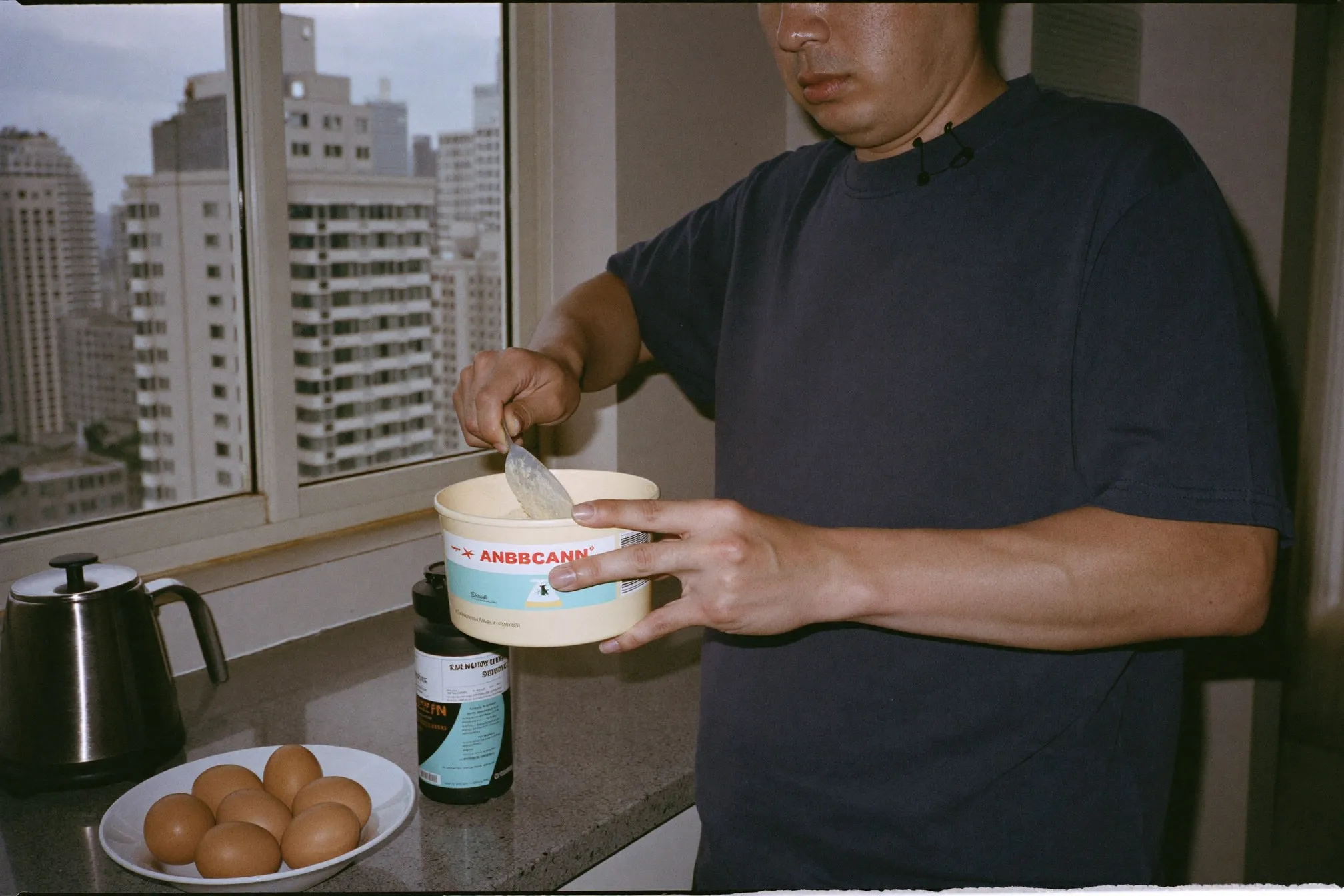
Whey protein is dried milk protein, and it is worth buying only if you struggle to hit your daily protein target from food. Eat chicken, eggs, fish, tofu or dhal at most meals and you can skip it entirely. If your lunch is rice with three slivers of meat and your dinner arrives at 10pm, a tub earns its space on the counter.
That is the honest version, which no supplement shop in Mid Valley will give you. What follows covers how much protein you need, which type of whey to buy, what a kilo costs in KL and Singapore, and the safety questions worth taking seriously.
Do you need whey protein at all?
Whey is a convenience food. You need it when your protein target is hard to reach from meals: long office hours, hawker food built around rice, or training at 9pm when the kitchen is closed. Everyone else can skip the tub and spend the money on eggs, chicken and tempeh instead.
Protein comes in two categories of usefulness here: the protein you eat, and the protein you meant to eat. Most men in MY and SG fall short on the second. The default plate in both countries treats meat as a garnish, so a full day of chap fan, roti canai and a bowl of noodles can land you around 60g when you needed 120g.
Powder solves a logistics problem rather than a biological one. A scoop takes 20 seconds, travels in a gym bag, and costs less per gram of protein than most restaurant chicken. That is the entire pitch. If you want the training side of this, our muscle building guide covers the part that decides whether the protein goes anywhere useful.

How much protein do you actually need a day?
General health guidance sits around 0.8g of protein per kilogram of bodyweight for adults who are not training hard. People lifting weights and trying to add muscle commonly aim higher, in the range of 1.6 to 2g per kilogram. For a 70kg man that means roughly 110 to 140g a day.
Count it for three days before you buy anything. Use any free tracking app, weigh nothing, estimate portions honestly, and total it up. Two outcomes: you are already close, in which case the tub is a waste of RM150, or you are 40g short every day, in which case one shake closes most of the gap.
The rough numbers worth memorising for local food:
| Food | Rough protein | Notes |
|---|---|---|
| One egg | 6g | Cheapest protein in the country |
| Chicken thigh, palm-sized | 20-25g | Ask for extra at the chap fan stall |
| Tin of sardines | 20g | Lives in a desk drawer |
| Block of tofu or tempeh | 15-20g | Tempeh runs higher |
| Greek yoghurt, small tub | 10-15g | Check the label, plain versions win |
| One scoop of whey | 20-25g | Depends on the powder |
Those figures are approximate and portions vary by stall, so treat them as ordering guidance rather than accounting. The pattern holds either way. Two deliberate protein additions a day usually beat one shake.
Whey isolate vs concentrate: which one should you buy?
Concentrate suits most people. It carries around 70 to 80 percent protein by weight, keeps a little milk sugar and fat, and costs the least. Isolate is filtered further to roughly 85 to 90 percent protein with minimal lactose, and you pay a premium for that filtering. Buy isolate if dairy upsets your stomach.
| Type | Protein by weight | Lactose | Relative price | Buy it if |
|---|---|---|---|---|
| Concentrate | ~70-80% | Some | Cheapest | You have no dairy issues |
| Isolate | ~85-90% | Very little | 30-50% more | Milk bloats you, or you are cutting |
| Hydrolysate | ~85-90% | Very little | Most expensive | You have money you dislike |
| Blend (whey + casein) | Varies | Some | Mid | You want one tub for shakes and before bed |
| Plant (soy, pea, rice) | ~70-80% | None | Mid to high | You avoid dairy entirely |
Hydrolysate is whey broken into smaller fragments so it absorbs faster. For a normal lifter eating normal meals, that speed changes nothing you can measure. Skip it.
Plant powders have closed most of the gap on quality. Soy holds up well on its own, and pea protein works better blended with rice protein. The taste is earthier than whey, and price in this region often lands higher because the good ones are imported.
What does whey protein cost in Malaysia and Singapore?
Budget around RM120 to RM180 per kilogram in Malaysia and roughly S$60 to S$90 in Singapore for a mainstream concentrate. Isolate sits above that. At those prices a 25g serving costs somewhere near RM4 in MY and under S$3 in SG, which undercuts almost any protein you buy cooked.
Where you buy changes the number more than which brand you buy:
- Shopee and Lazada during 9.9, 11.11 and payday sales. The cheapest route in MY by a distance. Buy from official brand stores rather than random sellers, because fake supplement listings exist and a sealed tub is not proof of anything.
- Gym supplement shops. Higher shelf price, but you can inspect the tub and ask about expiry. Useful for your first purchase.
- Watsons, Guardian and pharmacy chains. Small tubs at a premium. Fine for trying a flavour, painful per gram.
- Decathlon. Own-label protein at reasonable prices in both countries, plain flavours, no marketing theatre.
- NTUC FairPrice and larger supermarkets in SG. Convenient, occasionally competitive during promotions.
Two local checks before you pay. If halal certification matters to you, look for the JAKIM logo or a recognised equivalent, since whey production can involve animal-derived enzymes. And check the expiry date on a discounted tub, because heavy discounts on imported supplements sometimes mean the stock is close to its date.
Ignore the front of the tub. A 5kg bag with a photo of someone’s back muscles tells you nothing. Turn it over, find grams of protein per serving, divide the price by the number of servings, and compare that number across brands.

Is whey protein safe?
For healthy adults, whey is a dairy food in powder form and it is treated as such by mainstream health bodies. The two real caveats: supplements are not regulated as strictly as medicines, and existing kidney disease changes the protein conversation entirely. Talk to a doctor before raising protein if you have kidney problems, diabetes or high blood pressure.
The kidney question. The claim that high protein wrecks healthy kidneys has followed whey around for decades without good evidence behind it. The genuine caution belongs to people who already have reduced kidney function, where clinicians often manage protein intake as part of treatment. That is a conversation with your doctor, not with a forum.
Bloating and gas. Lactose intolerance is common across Asian populations, and concentrate keeps enough milk sugar to cause trouble if you are sensitive. Switching to isolate solves it for most people. If dairy in any form gives you cramps or diarrhoea, that is worth raising with a GP rather than working around with powder.
Skin. Some men report breakouts after starting whey, and the evidence linking dairy to acne remains mixed rather than settled. If your skin changes after you start, stop for a month and see what happens. Our acne guide covers the treatments that work regardless of what you drink.
Product quality. Supplements sit in a lighter regulatory category than medicine in most markets, so the label carries more weight than usual. Third-party testing programmes exist for exactly this reason, and their marks on a tub mean an independent lab checked the contents. Nobody needs that level of caution for a home gym habit, but it costs nothing to prefer a brand that bothers.
Whey is not appropriate for everyone. Milk allergy is a different thing from lactose intolerance and rules out whey completely. If you take regular medication or manage a chronic condition, run the plan past your GP or a dietitian first.
When should you take it, and how much?
Take it whenever it closes your protein gap. One scoop with water or milk, once or twice a day, is the whole protocol for almost everyone. The 30-minute post-workout window is oversold, and your daily total decides the outcome far more than the timing of any single shake.
The times it genuinely helps:
- Breakfast, if breakfast is currently kaya toast. A shake turns a 5g meal into a 30g one.
- Straight after the gym, because you will remember. Habit beats optimisation.
- Late nights when the kitchen is closed. Better than nothing, and considerably better than supper at the mamak.
Do not build your day around it. Three scoops a day means you are eating a supplement instead of food, and food brings fibre, micronutrients and the small pleasure of chewing. Two scoops is a reasonable ceiling for most people.
Mix it with water if you are watching calories, milk if you are trying to gain. Shake it in a bottle rather than a glass unless you enjoy lumps. If you are new to lifting and reading this before your first session, start with our gym beginners guide and worry about powder later. Fat loss follows the same logic in our belly fat guide: protein supports the plan, it does not replace it.
The short version
Whey powder is groceries, priced like a supplement and marketed like a pharmaceutical. It has one job, which is getting protein into you on days when food fails. Judged on that job, a plain concentrate at RM150 a kilo is one of the better purchases in the fitness aisle.
Do this before you buy: track your protein for three days, honestly, including the weekend. If you are landing above 1.6g per kilogram of bodyweight without powder, keep your money. If you are 30 to 50g short most days, order a 1kg tub of concentrate on the next sale, drink one scoop a day, and check your numbers again in a month.
Quick answers
Is whey protein necessary to build muscle?
No. Whey is food in powder form, and muscle responds to your total daily protein rather than the source. Eggs, chicken, fish, tofu, tempeh and dhal do the same job. Powder wins on convenience and cost per gram, which is why so many lifters keep a tub around.
What is the difference between whey isolate and concentrate?
Isolate is filtered further, so it carries more protein per scoop and very little lactose. Concentrate keeps a bit more fat and milk sugar and costs less per kilo. If dairy leaves you bloated, pay for isolate. Otherwise concentrate is the sensible default.
Does whey protein damage your kidneys?
There is no good evidence that high protein intake harms healthy kidneys. The caution applies to people who already have kidney disease, where doctors often manage protein intake carefully. If you have kidney problems, diabetes or high blood pressure, ask your GP before raising your protein.
When should I drink my protein shake?
Whenever it fits your day. The idea that you must drink it within 30 minutes of training is oversold, and your total protein across the day matters far more than the clock. Post-gym is popular because it is easy to remember, not because the window is closing.