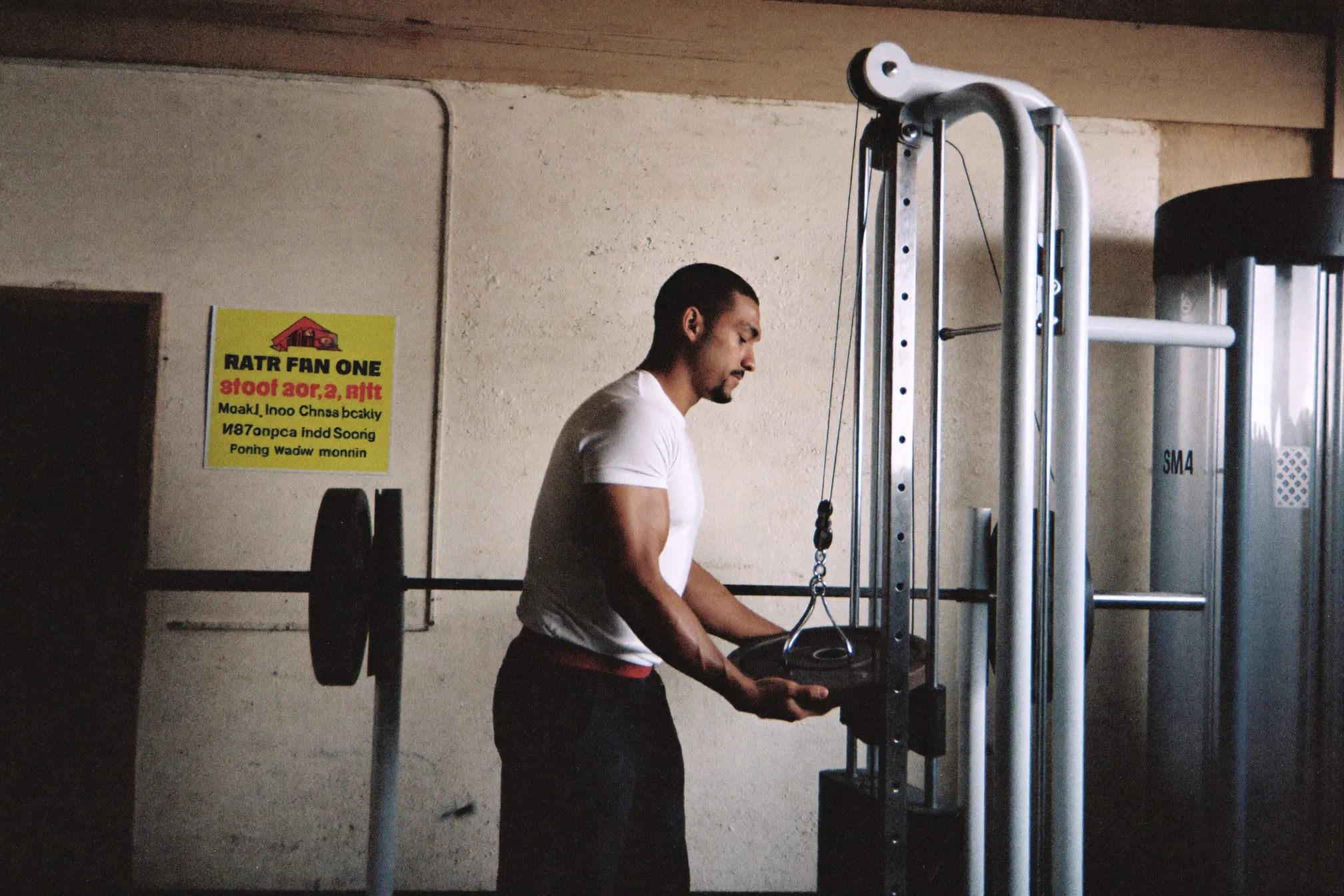
Skinny fat describes a man who looks lean in a shirt and soft out of one: normal body weight, not much muscle, and most of his body fat sitting around the middle. The fix is resistance training two to four days a week, enough protein, and calories near maintenance, held for six to twelve months. Eating less and running more makes it worse, because a deficit without lifting takes your muscle with the fat.
That last sentence is the one most men here get backwards. The default response to a soft stomach is a treadmill and smaller portions, and it produces a lighter man with the same silhouette. Our fitness coverage keeps circling the same conclusion, so this guide lays out the whole approach in one place.
What does skinny fat mean?
Skinny fat is a nickname, not a diagnosis. It describes a normal body weight carrying a low proportion of muscle and a high proportion of fat, concentrated at the belly. Your BMI reads fine. Your waist, your gym numbers and your reflection at 11pm disagree. The problem is composition, and the scale cannot see it.
BMI is the reason the term caught on. It divides weight by height squared and knows nothing about what the weight is made of. A 70kg man with visible shoulders and a 70kg man who has not lifted anything heavier than a laptop bag since school score the same number. The WHO links excess abdominal fat to type 2 diabetes and heart disease, and health services across Asia use lower BMI and waist thresholds for Asian adults than the global defaults, because Asian populations tend to carry more body fat at a given BMI. A waist above roughly 90cm for men is the figure that gets flagged in this region.
Measure yours before you read further. Soft tape, at navel height, standing normally, no sucking in. If that number bothers you more than your weight does, you are in the right article, and our guide to losing belly fat covers the fat side of the equation in more detail.
Why does eating less and running more make it worse?
A calorie deficit without resistance training takes muscle as well as fat. You finish lighter, softer per kilo, and shaped exactly the same. Cardio protects your heart and burns calories, both worth having. It gives your body no reason to build or keep the tissue that changes how you look.
The loop is familiar. Six weeks of skipped rice and evening runs, four kilos gone, waist down a centimetre, face looking gaunt. Then Raya or CNY arrives, the weight comes back, and it comes back as fat because nothing in the plan asked for muscle. Repeat that three times over a decade and you get a man who has lost 30kg in total and gained 15.
Muscle is the variable that fixes the shape, and progressive resistance is the only reliable signal that tells your body to build it. Both the NHS and the WHO recommend muscle-strengthening activity on at least two days a week alongside 150 minutes of moderate aerobic activity, and the strengthening half is the half almost everyone skips.
Should you cut, bulk, or recomp?
Most skinny fat men should recomp: eat close to maintenance calories, lift three times a week, keep protein high, and let the shape change while the scale sits still. Cut only if your waist is well above 90cm. Bulk only if you are genuinely underweight, which is rarer than gym forums suggest.
| Approach | Who it suits | What to expect |
|---|---|---|
| Recomp, calories at maintenance | Untrained, normal weight, soft middle | Scale barely moves for months, waist drops, shirts fit differently. The default. |
| Small cut, a few hundred calories under | Waist well over 90cm, belly visible in a t-shirt | 0.25kg to 0.5kg a week. Keep lifting through it, or you give back muscle. |
| Lean bulk, slight surplus | Already lean, already lifting a year or more | Strength climbs faster, some fat arrives with it, and you cut later. |
Recomposition works best for people new to training who have fat to lose. That window narrows after your first year of consistent lifting, when adding muscle and losing fat at once gets genuinely hard. Being untrained is the one advantage you will never have again, so spend it.
What does a skinny fat workout look like?
Three full-body sessions a week built on compound movements: a squat, a hinge, a push, a pull, and something for the core. Two to four sets of six to twelve reps each, adding a little weight or a rep most weeks. Two easy cardio sessions on top. That is the entire programme for your first year.
| Pattern | Pick one | Sets and reps |
|---|---|---|
| Squat | Goblet squat, leg press, back squat | 3 x 8 |
| Hinge | Romanian deadlift, hip thrust, trap bar deadlift | 3 x 8 |
| Push | Dumbbell bench press, push-up, overhead press | 3 x 8-12 |
| Pull | Lat pulldown, one-arm dumbbell row, inverted row | 3 x 10 |
| Core | Plank, dead bug, farmer’s carry | 2 sets |
Run the same five slots every session, Monday, Wednesday, Friday. Write down every weight and every rep. Next week, beat one number by a small margin. That is progressive overload, and it does more for your body than any exercise you have not heard of. Our beginner gym guide walks through the machines if a squat rack still looks like industrial equipment to you, and the muscle-building guide goes deeper on set counts and rest.
Core work belongs in the plan for strength, not for fat loss. No amount of crunches burns the layer sitting on top, which is the honest version of what an ab workout can and cannot do.
Access is cheaper than the excuse suggests. ActiveSG gyms in Singapore charge a few dollars an entry, most Malaysian chain gyms sit around RM100 to RM180 a month, and plenty of condos in PJ and Mont Kiara have a rack and dumbbells nobody touches. A pair of adjustable dumbbells from Decathlon or Shopee runs roughly RM250 to RM450 and covers every movement in that table.

What should a skinny fat diet look like?
Protein at every meal, vegetables where you can find them, and total calories near maintenance. Research on people training for muscle clusters around 1.6g of protein per kilogram of bodyweight a day, roughly 110g for a 70kg man. You do not need to cook every meal or weigh anything. You need to order differently.
What that means at the places you already eat:
- Chicken rice. Steamed over roasted, skin off, ask for extra chicken. Add a plate of vegetables and you have a real meal instead of a rice delivery system.
- Economy rice or nasi campur. Two protein dishes, one vegetable, one scoop of rice. The fried items and the coconut gravies are where the calories hide.
- Yong tau foo. Order the fish and tofu pieces, take the soup version, skip the fried skins and the sweet sauce.
- Mamak. Tandoori chicken with a thosai beats mee goreng most nights. Teh o kosong instead of teh tarik saves you the equivalent of a small snack, every single time.
- 7-Eleven at 11pm. Two hard-boiled eggs, a small carton of milk. It exists for exactly this reason.
Whey powder is a convenience, not a requirement, and a 2kg tub sits around RM180 to RM280 on Shopee during a sale. Useful if you struggle to hit protein on office days, pointless if your meals already cover it. We break down the labels in our whey protein guide.
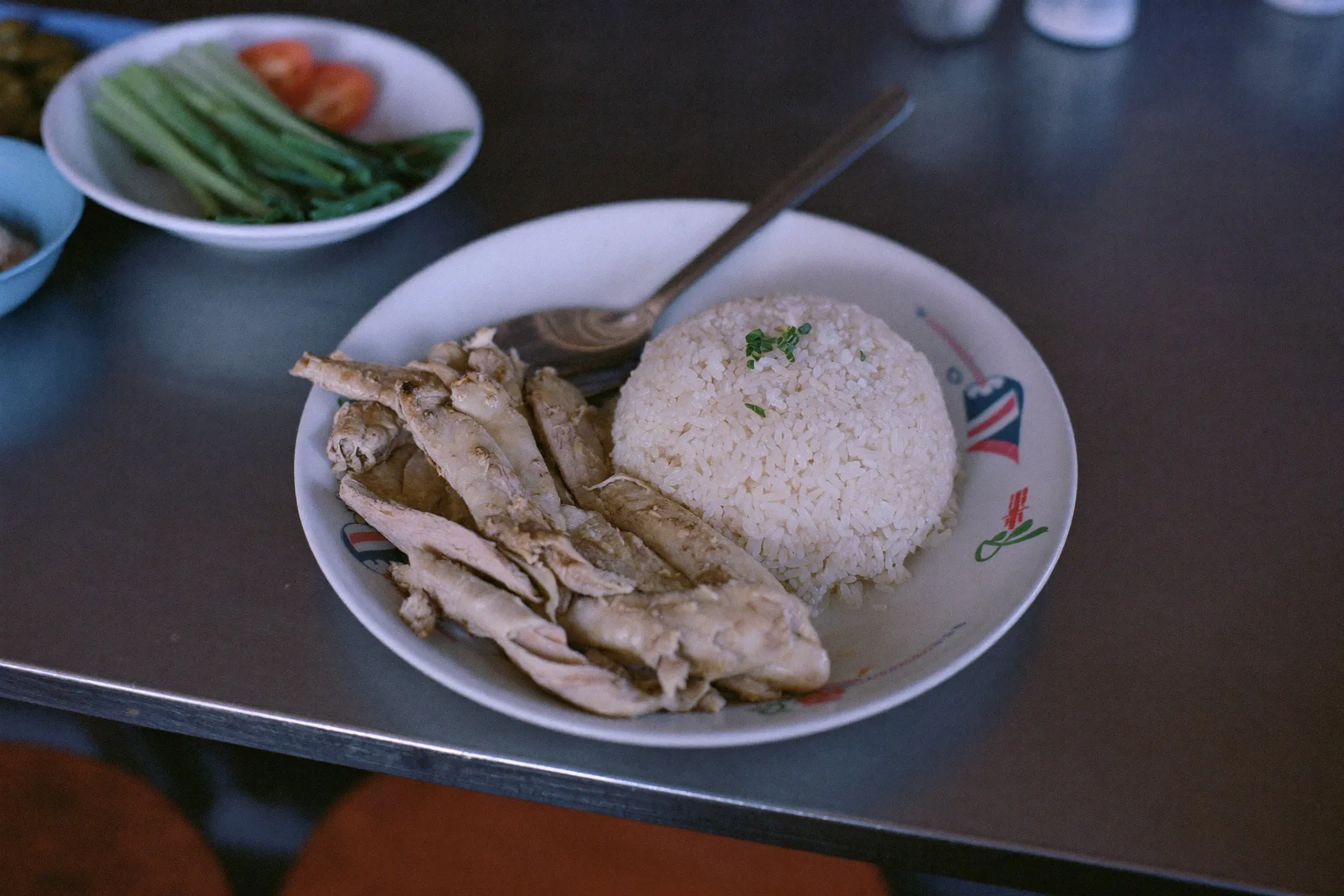
Now the part nobody sells a programme for. Skip the 1,200-calorie plans, the two-week detox and the one-meal-a-day advice from your gym uncle. NHS guidance puts steady loss at 0.5kg to 1kg a week, and anything faster in a man who already lacks muscle comes out of the muscle. If you want to lose a large amount of weight, or you live with diabetes, high blood pressure or any condition that affects what you eat, see a GP or a registered dietitian before you change your diet. The same goes for starting hard training after years at a desk.
How long does it take, and how do you know it’s working?
Strength usually climbs within eight to twelve weeks. Visible change takes four to six months. A year of consistent training gives you a body other people comment on. Recomposition moves slowly on the scale by design, so weight is the worst metric you could pick for tracking it.
Track these instead:
- Waist, monthly. Same tape, same navel height, same morning conditions. Down two centimetres in three months while your weight holds flat is a win.
- Your logbook. Squatting 40kg for eight reps in March and 60kg for eight in July means you built something.
- Photos, monthly. Same corner, same light, same time of day. Mirrors lie daily and photos do not.
- Weekly average weight, not daily. A flat line here alongside a shrinking waist is exactly the result you are aiming for.
Progress stalls will happen. The usual causes are sleep under six hours, protein sliding back to whatever the food court served, and a training log that has shown the same numbers for a month. Fix those three before you change the programme.
Measure your waist tonight and write the number in your phone with today’s date. Then pick five movements from the table above and do one session, three sets each, before the week ends. Two data points a month apart will tell you more about your body than a year of standing in front of the mirror trying to decide.
Quick answers
What does skinny fat mean?
It is a nickname for normal body weight with little muscle and a high proportion of body fat, most of it around the waist. Your BMI looks fine and your waist does not. Weight alone cannot show the difference, which is why the term exists at all.
Can you build muscle and lose fat at the same time?
Yes, and untrained men with fat to lose are the group it works best for. Eat close to maintenance calories, train against resistance two to four days a week, and keep protein high. The window narrows after your first year of consistent training, so use it now.
Should a skinny fat guy bulk or cut first?
Neither, in most cases. Eating at maintenance while you lift changes your shape without the scale moving much, which is what you want. Cut in a small deficit only if your waist sits well above 90cm, and keep lifting through it so you lose fat rather than muscle.
How long does it take to fix a skinny fat body?
Strength usually climbs within eight to twelve weeks, visible change takes four to six months, and a year of consistent training builds a body people notice. The NHS puts safe weight loss at 0.5kg to 1kg a week, and recomposition runs slower than that on the scale.