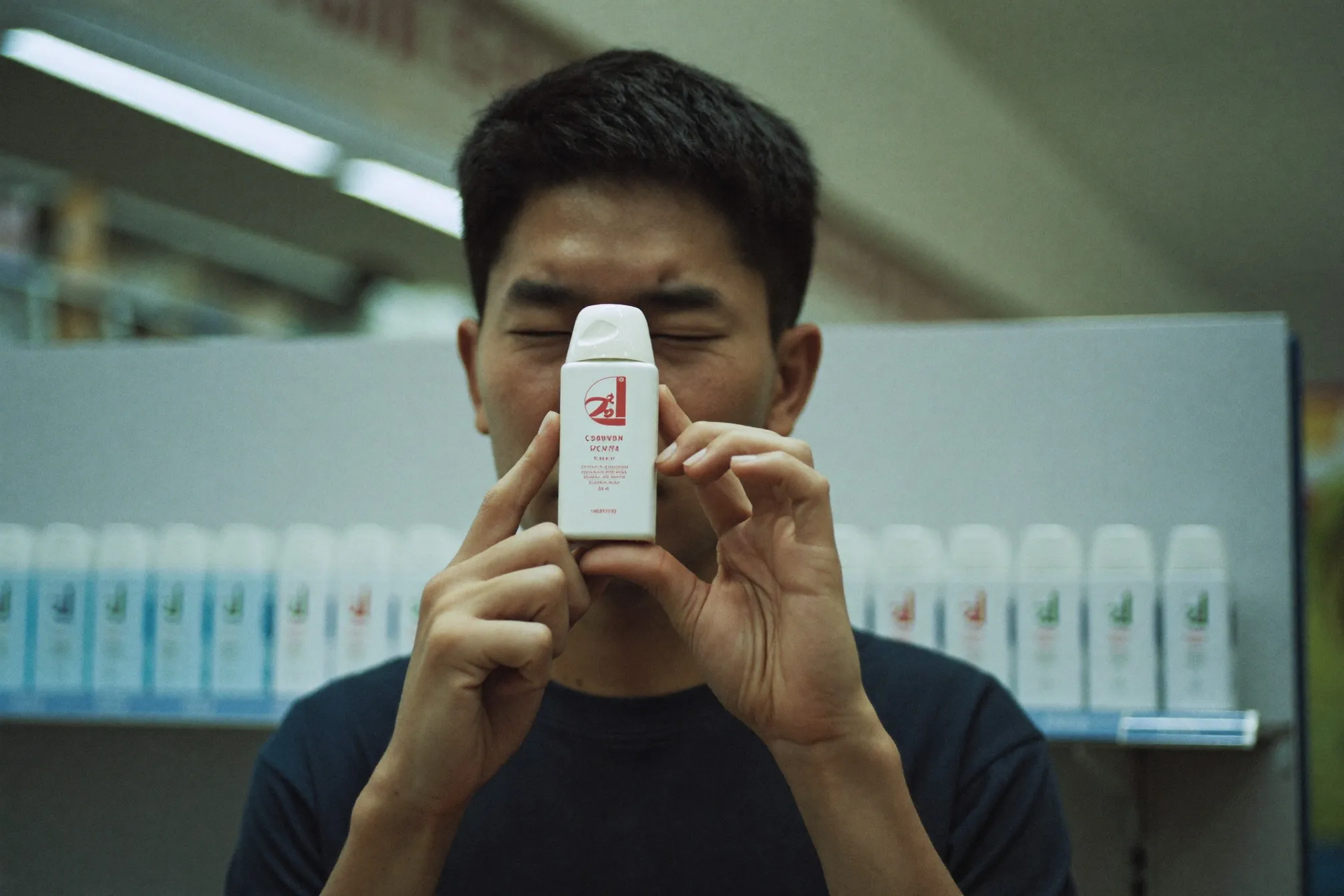
The best sunscreen you can buy at Watsons or Guardian is the one printed SPF 50+ PA++++ in a texture light enough that you’ll put it on every morning without negotiating with yourself. In Malaysia and Singapore that usually means a Japanese watery gel, and it costs between RM35 and RM60.
What follows is a label-reading guide, not a review round-up. Nobody can tell you how a formula behaves on your face from a product shot. What anyone can do is teach you to decode the small print that separates a RM40 bottle from a RM140 one, then point out which brands print which claims.
Which sunscreen should you grab if you have thirty seconds?
Take a bottle marked SPF 50+ and PA++++, in a gel or fluid texture, under RM60. Biore UV Aqua Rich Watery Essence and Sunplay Skin Aqua UV Super Moisture Gel both print exactly that, and both sit on the shelf at nearly every Watsons and Guardian in the country. Buy one. Use it daily.
The reason that shortcut works: SPF 50+ PA++++ is the ceiling of both rating systems, so you cannot buy more protection than that no matter how much you spend. Everything above RM60 buys you a different experience of wearing it, not a stronger shield.
Both chains stock sunscreen in three separate places, which is where most men go wrong. The sun care aisle near the body lotions holds thick beach and holiday formulas in big bottles. The Japanese and Korean skincare bay holds daily face sunscreens in small ones. The pharmacy counter at the back holds the dermatology-positioned brands. If you grab from the first aisle and put it on your face, you’ll hate sunscreen by Thursday.
How do you read a sunscreen label in twenty seconds?
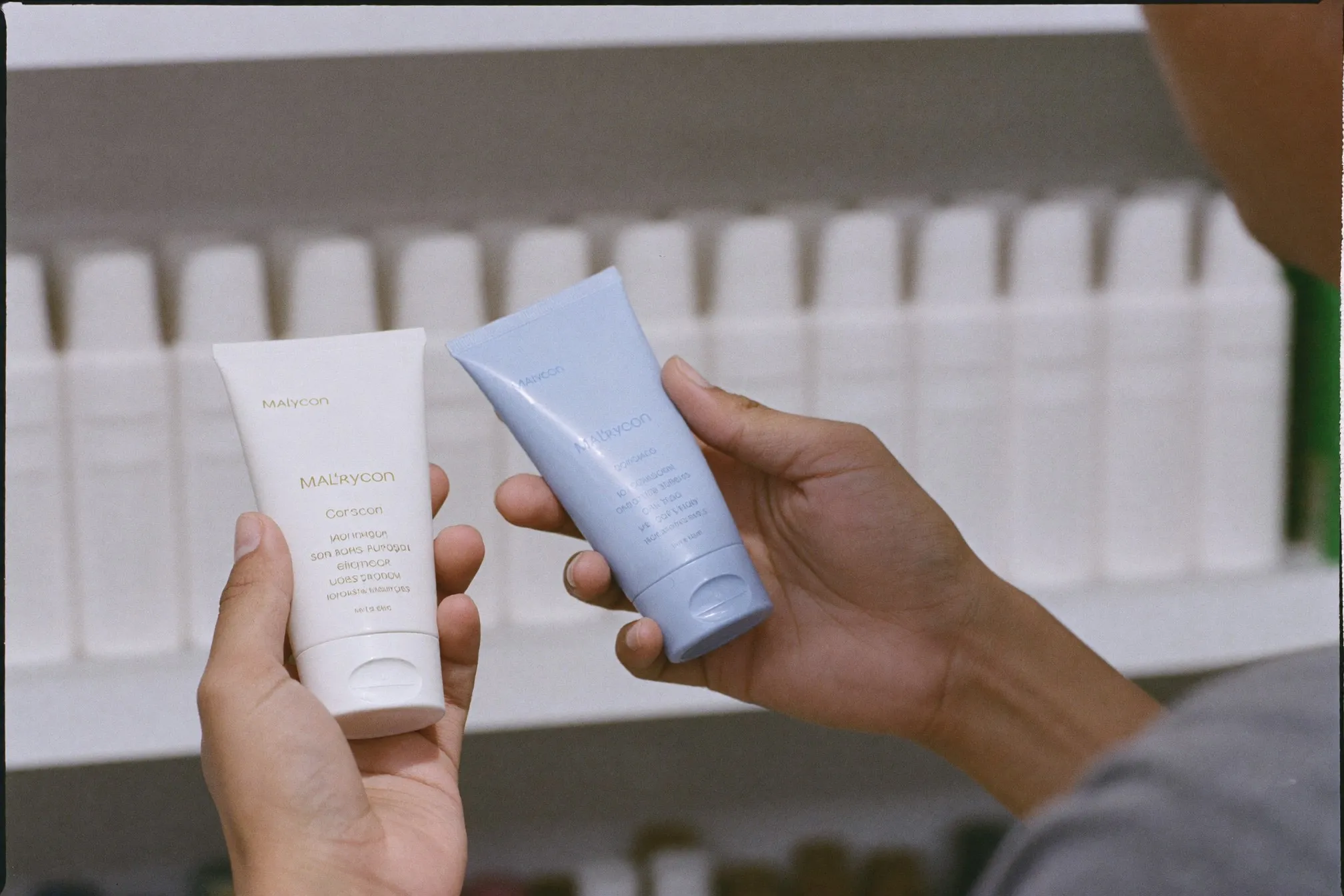
Flip the bottle and check four lines: the SPF number, the PA rating, the texture word on the front, and whether it says non-comedogenic. That takes about as long as reading a menu. Everything else on the packaging is marketing language, translated packaging, or a filter list you can safely ignore.
| What’s printed | What it tells you | What to look for here |
|---|---|---|
| SPF 50+ | UVB protection, the burning rays | 50+ near the equator, 30 as a floor |
| PA++++ | UVA protection, the ageing rays, Japanese scale | PA+++ minimum, PA++++ preferred |
| “Broad spectrum” | UVA and UVB, the wording European and US labels use instead of PA | Required if there’s no PA rating |
| “Water resistant 40 min / 80 min” | Tested for a stated duration, not forever | Only matters for outdoor days |
| “Non-comedogenic” | Formulated to avoid clogging pores | Required if you break out |
| Texture word (gel, essence, fluid, milk, cream) | How it will feel at 2pm | Gel, essence or fluid in this climate |
Two things people over-read. The filter list means little unless you already know your chemistry, though newer UVA filters like Tinosorb and Mexoryl 400 show up mainly on the pricier European bottles. And “waterproof” is not a claim regulators allow on its own, so treat any bottle leaning on it as a bottle leaning on marketing.
One thing people under-read: the little open-jar symbol with a number, usually 12M. That’s how long the formula holds after opening. A bottle you bought for last year’s Langkawi trip and left in the car is not the bottle to restart your habit with.
Which formula type suits your skin?
Match texture to skin type first, then pick a brand inside that category. Oily skin wants a gel or watery essence. Dry or aircon-battered skin wants a milk or fluid with humectants. Sensitive or stinging-prone skin wants a mineral or hybrid formula. Get that wrong and no amount of spending fixes it.
Oily skin, which covers most men in this climate. Watery essence and gel textures sink in within a minute and leave a semi-matte finish. Japanese daily sunscreens dominate this category because Japanese summers are humid too. If your face is shiny by noon anyway, the shine is sebum, not sunscreen, and blotting paper handles it.
Dry or dehydrated skin. Milk and lotion textures with glycerin or hyaluronic acid on the ingredient list. These double as a light moisturiser, which cuts your morning routine to one step.
Sensitive skin, or eyes that sting. Mineral formulas built on zinc oxide or titanium dioxide, or hybrids that combine mineral and chemical filters. The pharmacy-counter brands compete hardest here. Expect a slight white cast, which reads more obviously on deeper skin tones, so swatch on your jaw before you commit to a full bottle.
Acne-prone skin. Non-comedogenic gels, and a proper cleanse at night. Sunscreen left on overnight causes more trouble than sunscreen ever does during the day, a point worth reading alongside a real acne routine.
What do the shelf brands actually print on the label?
Here’s what you’ll find across both chains, described by claim rather than by verdict. Prices swing with promotions, so treat these as ranges to sanity-check against, not quotes.
| Brand and line | Label claim | Texture | Typical range (MY / SG) |
|---|---|---|---|
| Biore UV Aqua Rich Watery Essence | SPF 50+ PA++++ | Watery gel | RM40-55 / S$17-25 |
| Sunplay Skin Aqua UV Super Moisture Gel | SPF 50+ PA++++ | Light gel | RM30-45 / S$14-22 |
| Hada Labo Perfect UV Gel | SPF 50+ PA++++, hyaluronic acid | Gel | RM40-60 / S$18-26 |
| Anessa Perfect UV Skincare Milk | SPF 50+ PA++++, water resistant | Fluid milk | RM110-150 / S$45-65 |
| La Roche-Posay Anthelios | SPF 50+, broad spectrum, sensitive skin | Fluid or gel-cream | RM100-160 / S$45-70 |
| Cetaphil Sun | SPF 50+, broad spectrum, non-comedogenic | Light lotion or gel | RM60-95 / S$28-40 |
| Nivea Sun / Nivea Men | SPF 50 PA+++, oil control claims | Water gel | RM25-40 / S$12-20 |
Read that table as a map of price tiers. The RM30 to RM60 band is Japanese daily wear, and it’s where most men should start. The RM100-plus band is where you land if you’ve tried two cheap bottles, broken out or stung, and want a formula built around sensitivity. Anessa sits in that upper band on the strength of water resistance rather than sensitivity, which matters if your weekends involve futsal or Port Dickson.
Nothing in the lower band is a compromise on the rating. Biore prints the same SPF 50+ PA++++ as bottles costing three times more.
Why does the same bottle cost different amounts?
Both chains price sunscreen on rotation rather than on a fixed shelf price. Watsons member pricing, Guardian’s own card, mid-month promotions and two-for bundles on Japanese SPF all move the same bottle by RM10 to RM15 depending on the week you walk in.
A few habits that save real money:
- Check both chains. They sit in the same mall roughly 80 percent of the time, so it’s a two-minute walk.
- Compare against the brand’s official store on Shopee or Lazada. Official stores usually beat shelf price outside promo weeks. Unofficial sellers with suspiciously cheap listings are a different question, and expiry dates are the thing to ask about.
- Buy the bundle only if you’ll finish it. A daily face sunscreen lasts most men two to three months. Two bottles is a sensible stock-up. Four is a science experiment in your bathroom cabinet.
- In Singapore, Japanese import shops and the Don Don Donki chain carry domestic-market versions of the same lines. Formulations differ slightly between the Japan-market and Southeast Asia-market versions, so treat them as related products rather than identical ones.
What the label won’t tell you
Three gaps worth knowing before you spend.
The first is application volume. The rating on the bottle assumes a thicker layer than anyone puts on. Two finger-lengths of product for face and neck is the working standard, and most men use about a third of that, which quietly turns SPF 50 into something much lower. The full sunscreen guide covers the how and the why in more depth.
The second is “oil control”. Plenty of men’s sunscreens print it. What it means is a mattifying powder in the formula that manages the first few hours. Your sebum returns on its own schedule regardless. Judge those bottles on texture and rating, and treat the oil-control line as a bonus rather than a reason to buy.
The third is the men’s-range premium, or the lack of one. Grey bottle, sharper fragrance, same filters. Men’s versions are often the cheaper option on the shelf, so there’s no reason to avoid them, and equally no reason to seek them out. What matters is where the bottle fits in your morning routine, not the gender printed on the front.
Next time you’re in a mall, walk into the skin care section of whichever chain is closer, pick up three bottles under RM60, and check the same four lines on each: SPF, PA, texture, non-comedogenic. Buy the one that survives all four. If you hate how it feels after a week, you’ve spent RM40 learning your texture, and the pharmacy counter at the back is still there.
Quick answers
Which sunscreen is best for oily skin in Malaysia?
Look for a bottle labelled SPF 50+ PA++++ in a gel, watery essence or fluid texture, and check for the words non-comedogenic. Japanese daily formulas like Biore UV Aqua Rich and Sunplay Skin Aqua print all of that and sit under RM60 at Watsons.
Is Biore sunscreen good enough compared to expensive brands?
On label claims, Biore UV Aqua Rich matches most premium sunscreens: SPF 50+, PA++++, and a texture built for humid weather. You pay more at the pharmacy end for sensitive-skin formulation and newer UVA filters, not for a higher number on the front.
What is the difference between SPF and PA on a sunscreen label?
SPF rates protection against UVB, the rays that burn. PA rates protection against UVA, the rays linked to ageing, on a Japanese four-plus scale. Near the equator you want both maxed out, so SPF 50+ with PA++++ on the same bottle.
Is sunscreen cheaper at Watsons or Guardian?
Neither chain is consistently cheaper. Both run rotating member prices and two-for deals on Japanese SPF, so the same bottle swings RM10 to RM15 week to week. Check both, and compare against the brand's official Shopee or Lazada store before you commit.