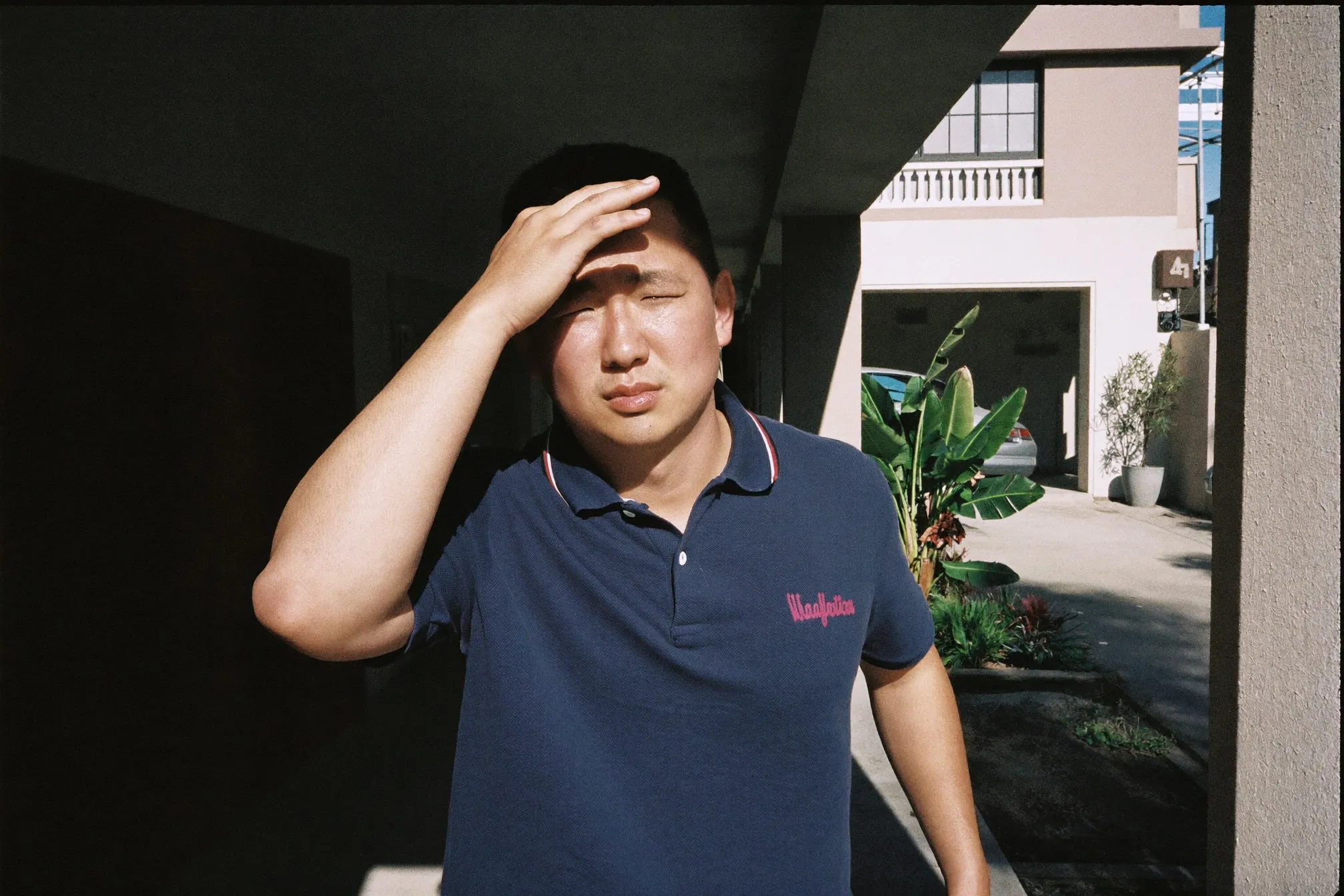
If you are turning 30 and want anti-ageing advice for men that survives contact with reality, the order is sunscreen, then a retinoid, then sleep, then everything else. That order is not a matter of taste. It is roughly how the evidence stacks up, and most men run it backwards, buying a RM280 serum while owning no sunscreen at all.
The good news for anyone in Kuala Lumpur or Singapore is that the top of that list costs less than two teh tariks a week. The bad news is that the sun here does not take a winter off.
What changes in your face at 30?
Skin thins, cell turnover slows, and oil production starts to shift. The lines that used to vanish when you stopped squinting begin to stay put. Sun damage accumulated through your teens and twenties surfaces now as uneven tone and rough texture rather than a tan.
Two separate processes are running. One is intrinsic ageing, the clock everyone carries, which you cannot negotiate with. The other is photoageing, the damage ultraviolet radiation does to the collagen and elastin holding your face up. MedlinePlus separates these clearly, and the split matters because only one of them takes instructions from you.
Living three degrees off the equator tilts that balance hard. Your face has been collecting UVA through car windows, covered walkways and every lunch run since primary school. The WHO classifies ultraviolet radiation as a carcinogen, and the same wavelengths that drive skin cancer risk also drive the sagging and mottling people read as “looking older”. Most of what men in their thirties call ageing is sun.
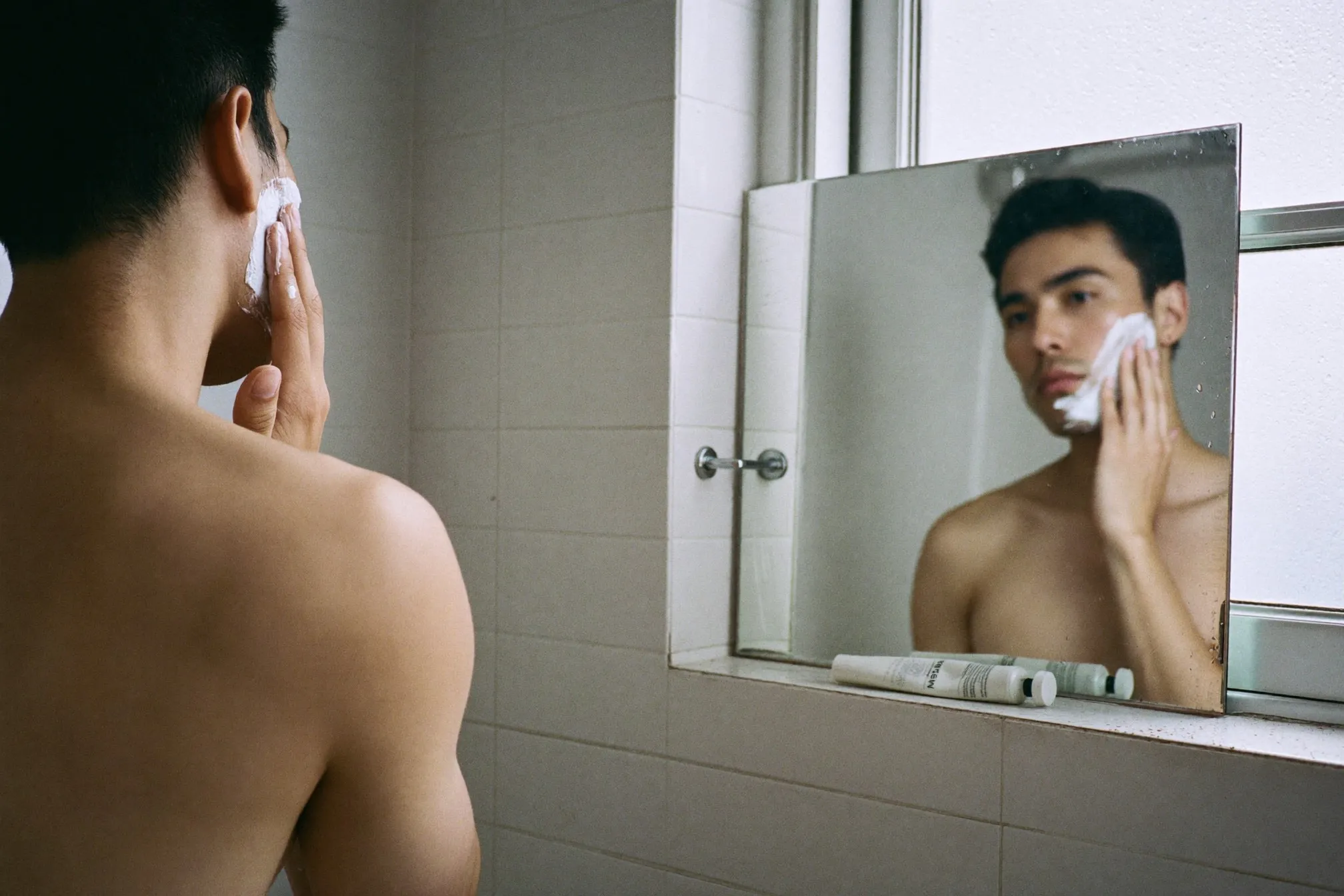
Why does sunscreen sit at the top of the list?
Because it prevents the largest cause of visible skin ageing you can still control. No cream reverses photoageing as efficiently as sunscreen stops it happening. The American Academy of Dermatology and the NHS both put daily broad-spectrum protection at the centre of skin care, and it costs a fraction of any serum.
The practical version: SPF 30 minimum, SPF 50 if you want margin, PA+++ or higher, applied every morning you leave the house. Two finger-lengths for face and neck. Gel or fluid textures if you are oily, which in this climate covers most of us. Expect RM40 to RM60 at Watsons or Guardian, less on Shopee during a sale, and a bottle lasts six to eight weeks at honest usage.
We wrote the full version of this in our sunscreen guide for Malaysia and Singapore. If you read one thing on this site about ageing, read that one instead of this paragraph.
Is a retinoid worth starting at 30?
For most men, yes. Retinoids are the one topical class with decades of dermatology evidence behind them for fine lines and rough texture. They speed up cell turnover and support collagen. They also irritate skin for the first month or two, which is why so many men buy one, peel, and abandon it.
Two tiers exist. Over-the-counter retinol and retinaldehyde sit in serums and creams from around RM60 upward at Watsons, Guardian, Sephora or Shopee. Adapalene, originally an acne drug, is stronger and cheaper, and whether you can buy it without a prescription depends on the pharmacy and the country, so ask the pharmacist. Prescription tretinoin is a doctor’s decision, full stop. Do not buy prescription-strength products from a Telegram seller because someone in a forum said it worked.
How to start without wrecking your face:
- Twice a week, at night only. Retinoids degrade in sunlight and make skin more sun-sensitive.
- Pea-sized for the whole face. More product does not mean faster results, it means more peeling.
- Moisturiser on top, or underneath as a buffer if you sting. Our moisturiser guide covers what works in humidity.
- Give it twelve weeks before you judge it. Texture improves first. Lines take longer.
- Sunscreen becomes non-negotiable. A retinoid without daily SPF is a bad trade.
If your skin stays red and raw past a few weeks, or you have rosacea, eczema or active acne you are already treating, see a GP or dermatologist before you continue.
Does sleep matter more than a serum?
Honestly, yes, and it is the tier men skip because you cannot buy it in a box. Short sleep shows in the face fast: duller skin and darker shadows under the eyes. Harvard Health treats adequate sleep as a baseline health input rather than a lifestyle bonus, and your face is downstream of it.
Adults generally need seven to nine hours. Getting there in KL or Singapore means fighting a culture built around 11pm mamak runs, late gym sessions and a commute that eats an hour at each end. Nobody fixes that with a hack. What helps: a fixed wake time, no caffeine after mid-afternoon, and putting the phone somewhere that is not your pillow.
The under-eye area is where all of this reports back first, and it is also where men waste the most money. Half of what gets sold as eye cream is treating a sleep and genetics problem with a RM150 moisturiser. Our dark eye circles guide breaks down which type you have before you spend anything.
Smoking and heavy drinking belong in this tier too. Both accelerate visible skin ageing, and no amount of skincare offsets a pack a day.
What about everything else in the aisle?
Real but small. Once sunscreen, a retinoid and sleep are handled, the remaining products fight over a modest slice of the result. Some are worth the money because you enjoy using them, and that is a legitimate reason. Just do not let them jump the queue.
| Product | What it does | Worth it? |
|---|---|---|
| Moisturiser | Supports the skin barrier, temporarily plumps fine lines | Yes, and it makes retinoids tolerable |
| Vitamin C serum | Antioxidant support, may help uneven tone over months | Optional, if you will use it daily |
| Niacinamide | Helps oiliness and redness for some people | Cheap, low risk |
| Peptide creams | Marketing outpaces the evidence | Skip unless you like the texture |
| Eye cream | A small moisturiser at a large price | Only for dryness, not for hollows |
| Collagen drinks | Evidence is mixed and mostly industry-funded | Not before the first three tiers |
| LED masks, gua sha | Pleasant, effects are modest or short-lived | Hobby spend |
Here is the whole hierarchy in one place, with what it realistically costs per month:
| Tier | What it is | Monthly cost | Why it ranks here |
|---|---|---|---|
| 1 | Daily broad-spectrum sunscreen | RM20 to RM30 | Prevents the biggest controllable cause of ageing |
| 2 | Retinoid at night | RM20 to RM60 | Longest evidence base of any topical |
| 3 | Sleep, no smoking | Free | Shows in your face faster than any product |
| 4 | Moisturiser and the optional extras | RM30 to RM200 | Genuine but small gains |
| 5 | Clinic treatments | Varies widely | A doctor’s conversation, not a website’s |
If you want the sequencing rather than the ranking, our skincare routine for men lays out the morning and night order step by step.
Do you need injectables, lasers or clinic treatments?
That is a question for a registered doctor, not for us. Clinic procedures address things creams cannot, including volume loss and deeper folds, and they carry real risks alongside real results. We are not going to recommend a treatment, a dose or a clinic.
What we will say: in Malaysia and Singapore, aesthetic clinics advertise aggressively and the quality range is wide. Check that the person holding the needle is a medically qualified practitioner registered with the relevant health authority, not a beautician working out of a shoplot. Ask what the treatment is, what happens if it goes wrong, and who manages the complication. If a price looks too good, it usually is.
Do the free and cheap tiers for a year first. Plenty of men discover that consistent sunscreen and eight hours of sleep solved most of what they were about to pay for.
What about the rest of you?
Faces get the attention, but the things men in their thirties notice in photos are often not skin at all. Hairline changes start earlier than most men expect, and the treatments that work best work best early, which our hair loss treatment guide covers. Posture and body composition change how old you read from across a room, and regular training is a better starting point than any cream in this article. For everything else on skin, the skin hub has the rest.
Tonight, go and look at your bathroom shelf. If there is a serum on it costing more than RM100 and no sunscreen, you have found your problem. Fix the order, spend the difference on breakfast, and start again tomorrow morning.
Quick answers
When should men start an anti-ageing routine?
Sunscreen from whenever you can be bothered, because ultraviolet exposure accumulates from childhood. A retinoid makes sense once you notice lines that stay after your face relaxes, which for most men lands somewhere in their early thirties. Starting later still helps.
Do anti-ageing creams actually work on men's skin?
Retinoids have the longest track record for fine lines and rough texture, and sunscreen prevents the damage that causes both. Most other creams hydrate and plump temporarily. Men's skin is thicker on average, so results can take longer to show than the packaging suggests.
Is a men's anti-ageing product better than a women's one?
No. The active ingredients are identical across the aisle. Men's versions differ in fragrance, texture and price, and the lighter gel formulas sold to men suit humid weather better. Buy on ingredients and finish, not on the colour of the bottle.
Can I fix wrinkles without going to a clinic?
You can soften fine lines and improve texture with sunscreen and a retinoid over months. Deep folds and volume loss respond to clinic treatments, not creams. If that bothers you, see a registered dermatologist or doctor rather than a beauty salon.