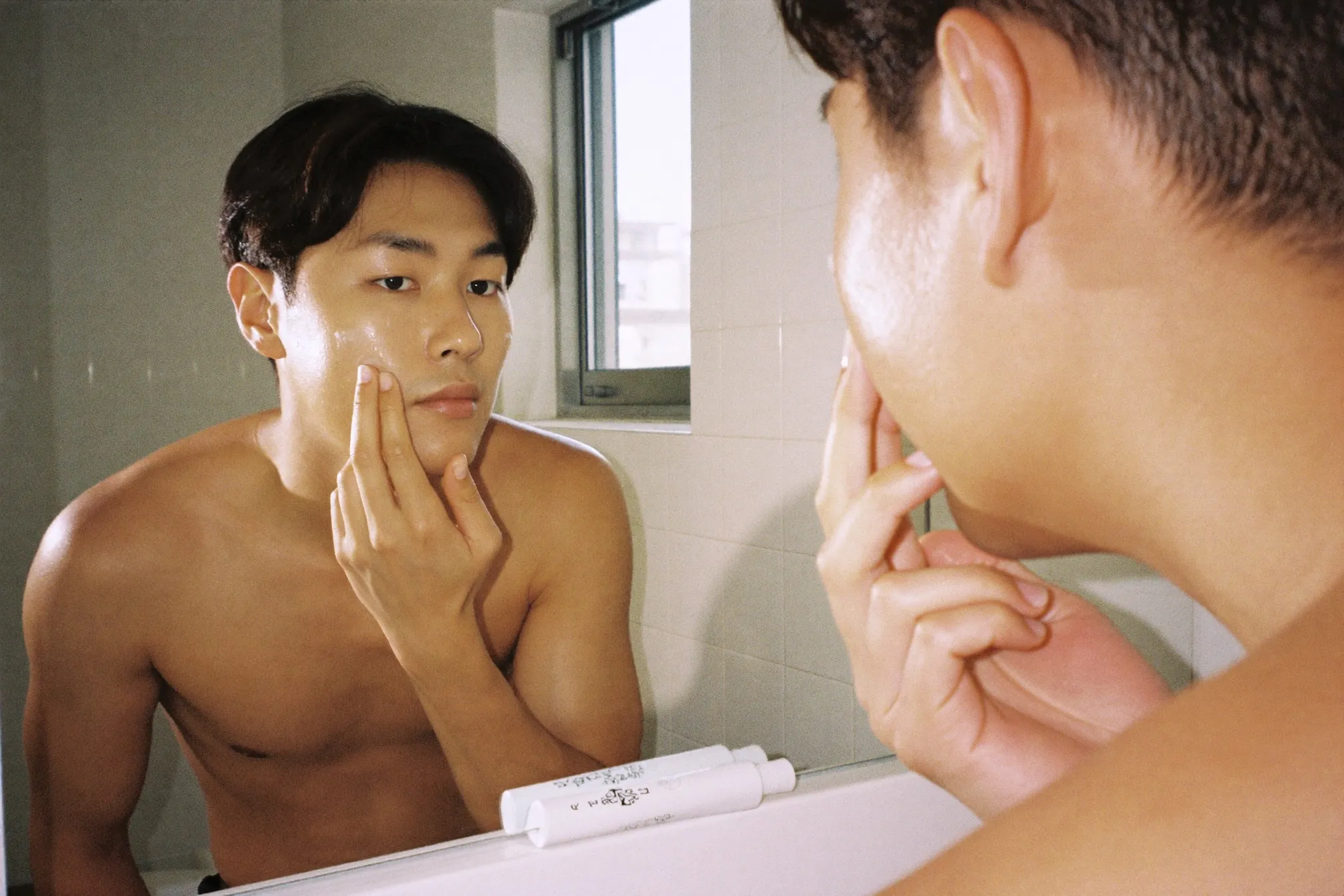
Most men in Malaysia and Singapore need one lightweight gel moisturiser, labelled non-comedogenic, applied at night after washing your face. It costs around RM25 to RM60 at Watsons or Guardian, and the whole step takes twenty seconds.
The hard part is the shelf. Walk into any pharmacy in Mid Valley or Tampines and you face a wall of tubs written for climates with winter: rich, nourishing, intensive, repair. Almost none of that vocabulary applies three degrees off the equator. This guide narrows the wall down to one tube.
Does oily skin still need moisturiser?
Usually, yes. Oily skin can still be short on water, a state that shows up as shine and tightness at the same time. Nine hours of office aircon pulls moisture out, and harsh face washes strip more. A light moisturiser puts water back without adding oil. Skip it only if your skin feels fine without one.
Here is the pattern worth recognising. You wash your face with a strong foaming cleanser, your skin feels squeaky and tight for an hour, then by noon you are shinier than before. That is often skin overcompensating for lost moisture, producing more oil to protect itself. Men respond by washing harder, which restarts the loop. A gel moisturiser after washing breaks it.
The aircon deserves specific blame. Cold, dry air conditioning strips humidity from your skin the entire workday, then you step out into a wet heat that triggers oil and sweat at once. Your skin runs both problems simultaneously: dehydrated underneath, greasy on top. Treating only the grease, with stronger cleansers and oil-blotting everything, tends to make both worse.
One honest exemption exists. If you wash with a gentle cleanser, spend little time in aircon and your skin sits comfortable through the day, you are not obliged to buy anything. Moisturiser solves a problem. No problem, no purchase.
What texture works in this climate?
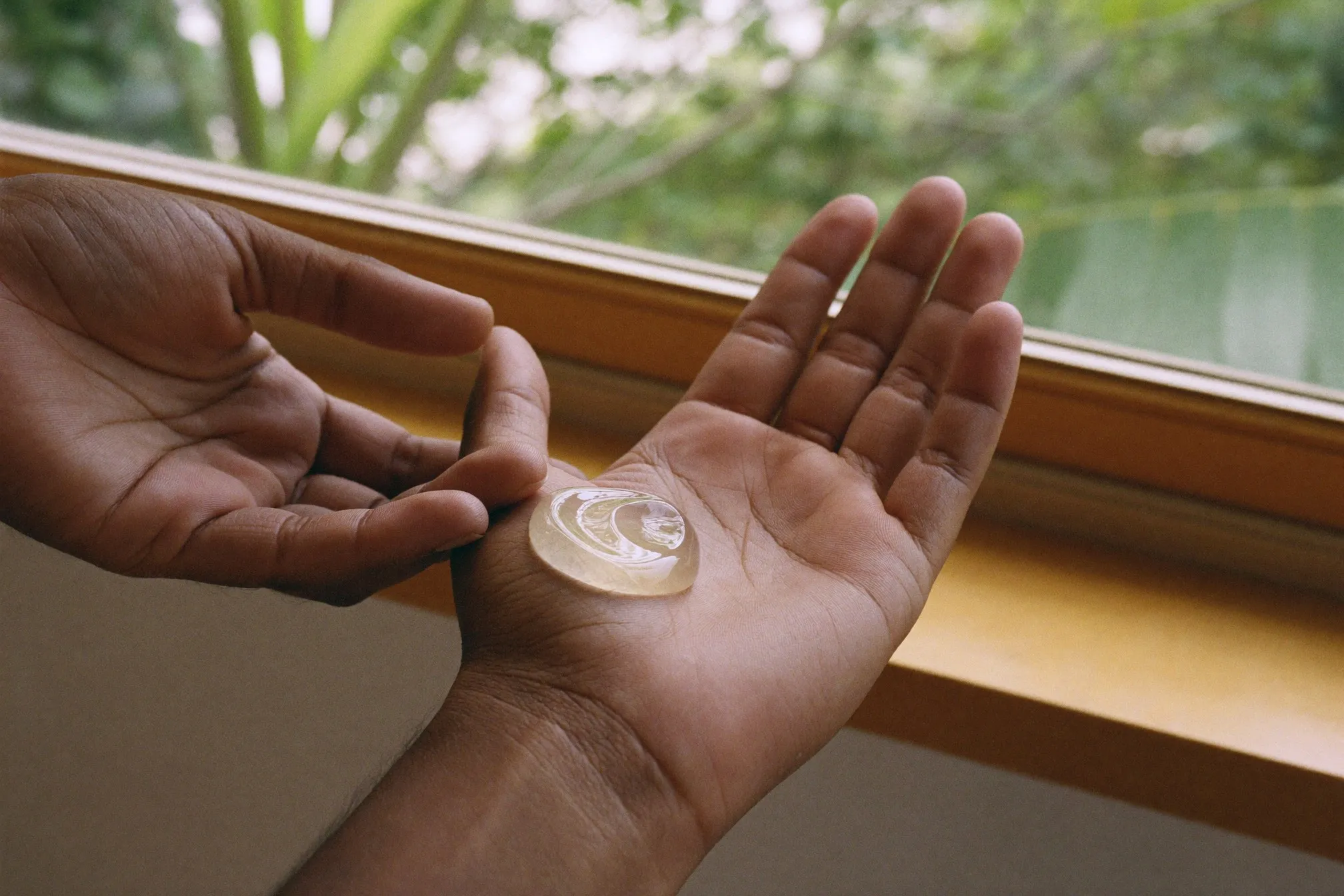
Gel or gel-cream. Anything described as rich, a butter or an overnight repair cream belongs in a country with seasons. In KL or Singapore humidity, a heavy cream sits on your face like a second coat of sweat and clogs pores that were already working overtime. Water-based textures absorb in seconds and leave nothing behind.
The texture question matters more than the brand question, so settle it first:
| Texture | Feels like | Best for | When |
|---|---|---|---|
| Gel | Water, gone in seconds | Oily and acne-prone skin | Day or night |
| Gel-cream | Light lotion, no film | Combination and normal skin | Day or night |
| Lotion | Standard cream, runnier | Normal to mildly dry skin | Night |
| Cream | Thick, stays present | Genuinely dry or flaky skin | Night only |
Most men here land in the first two rows. The cream row earns its place for the minority with dry skin, usually men over 40, men on acne medication that dries the skin, or anyone whose office aircon could preserve meat. If that is you, use the cream at night and something lighter for daytime.
Japanese and Korean brands build their gel textures for humid summers, which is why their moisturisers feel engineered for this region. You will find them at Watsons, Guardian and Sephora, and cheaper during Shopee campaign sales.
Which ingredients matter on the label?
Four things earn your attention: glycerin or hyaluronic acid near the top of the ingredients list, the phrase non-comedogenic anywhere on the tube, and ceramides if your skin feels tight after washing. Niacinamide is a useful bonus for oil control. The claims printed on the front of the box are marketing.
Glycerin and hyaluronic acid are humectants. They pull water into the skin and hold it there, which is the entire job you are hiring a moisturiser to do. Glycerin is cheap and effective, so a RM30 tube with glycerin high on the list beats a RM200 jar where it sits below the fragrance.
Non-comedogenic means formulated to not clog pores. No label guarantees anything, but it filters out the worst offenders, and if you break out along the hairline or jaw after starting a new product, the product is the first suspect.
Two cautions. Fragrance makes a product pleasant and irritates a minority of faces; if your skin stings or flushes with scented products, buy fragrance-free and move on. And treat “moisturiser with SPF” as a moisturiser, not as sun protection, because nobody applies enough of it to reach the labelled SPF. A separate sunscreen does that job properly, and we wrote up exactly how in our sunscreen guide.
When and how do you apply it?
At night, on a clean face, within a minute or two of washing. Damp skin absorbs better, and the moisturiser seals in the water from washing before the aircon takes it. Use a pea-sized amount, two if you count your neck. In the morning, apply a thin layer before sunscreen only if your skin feels tight.
Amount is where most beginners go wrong, in both directions. Too little does nothing. Too much leaves a film that migrates onto your pillow and your collar. A pea-sized blob, warmed between fingertips and pressed over the whole face, covers it. You should not feel the product ten minutes later.
Order is simple if you keep the routine simple. Night: cleanser, then moisturiser. Morning: rinse or cleanse, moisturiser if needed, sunscreen last. That is a complete routine for most men, and if you want the full version with the optional steps ranked, the skincare routine guide lays it out.
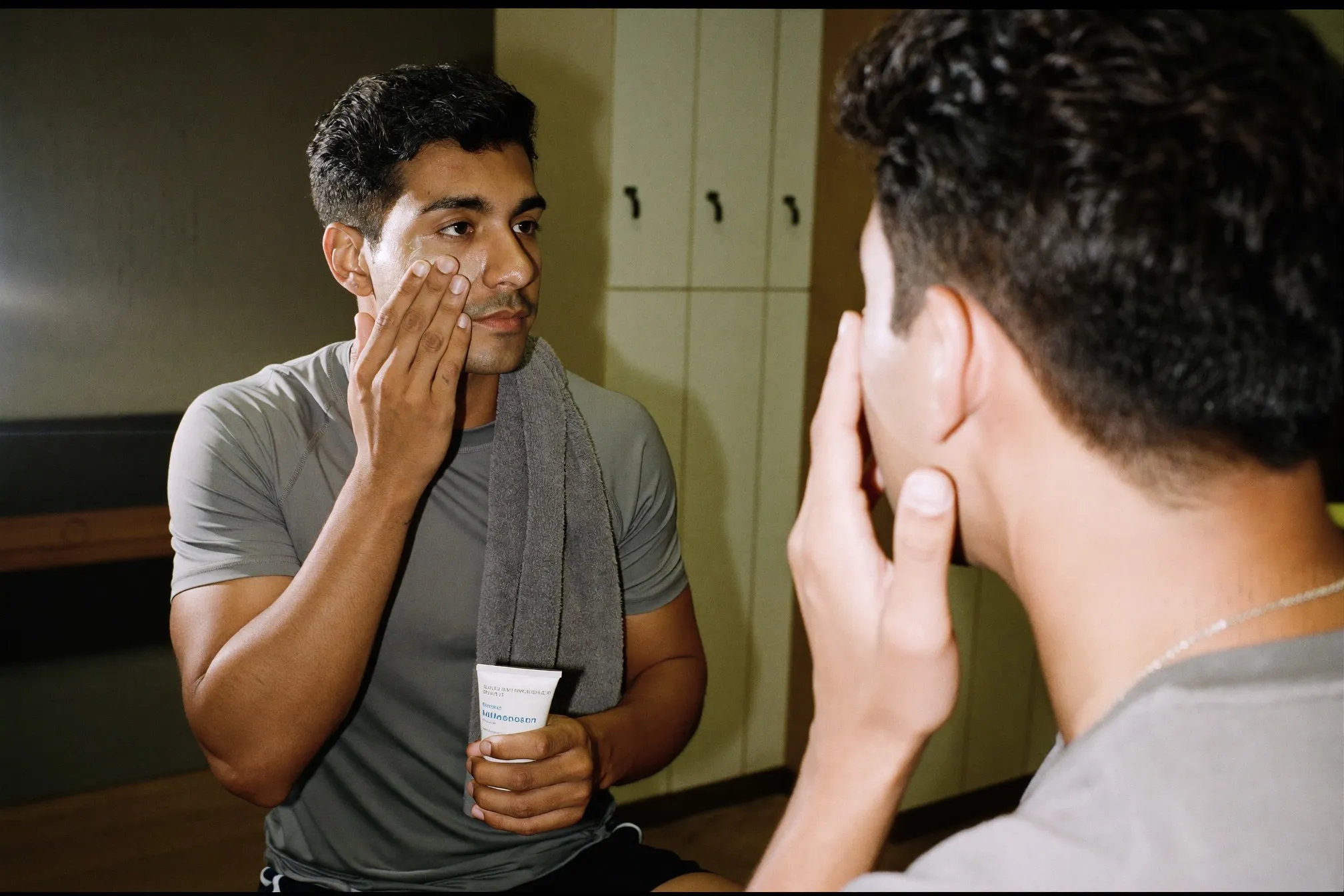
Two timing notes for real life. After the gym, shower, then moisturise there rather than waiting until home, because post-workout skin plus a long ride back is how you earn shoulder-strap breakouts (new to training? Start with the gym guide). And after shaving, moisturiser doubles as a decent balm. Let any sting settle first, then apply as usual.
How much should you spend?
RM25 to RM70, or roughly S$10 to S$25, buys a moisturiser that does everything described above. Pharmacy brands at Watsons and Guardian cover the range. Between RM70 and RM150 you get nicer textures and pumps. Past that, you are paying for the jar and the counter it sits on.
The price of a moisturiser tells you little about how well it moisturises. Formulation is cheap; glycerin costs sen per tube. Premium prices buy fragrance design, packaging weight and brand, which are legitimate pleasures but not skincare. If a S$120 moisturiser makes you enjoy the routine enough to keep it, fine, that consistency has value. Just know what you paid for.
Practical buying notes. Tubes and pumps beat open jars, since scooping with gym fingers every night seeds the jar with bacteria. Travel sizes exist for a reason: RM15 to RM20 buys a two-week test before you commit to the full tube. Check expiry stickers on heavy Shopee discounts. And ignore the “for men” tax entirely, because the grey-and-black packaging often costs more for the same formula in a different colour.
One caveat before you go shopping. If you have persistent acne, eczema, or skin that stings with everything you try, a moisturiser is not the fix. See a GP or a dermatologist. Consultations in MY start around RM50 to RM100 at a GP, and it beats a year of trial and error at the pharmacy shelf.
The rest of the skin section covers the surrounding steps, but this one is self-contained. Tonight, after you wash your face, apply a pea-sized amount of any non-comedogenic gel moisturiser and give it two weeks. If you do not own one yet, the pharmacy run costs less than your last Grab to Bangsar.
Quick answers
Do men with oily skin need moisturiser?
Usually, yes. Oily skin can still be short on water, especially after long hours in aircon and washing with harsh cleansers. A lightweight gel moisturiser adds water without adding oil. If your skin feels comfortable an hour after washing with nothing on it, you can skip the step.
What is the difference between gel and cream moisturiser?
Gel moisturisers are water-based, absorb in seconds and leave no film, which suits oily skin and humid weather. Creams carry more oils and butters, sit heavier and suit genuinely dry skin or cold climates. In Malaysia and Singapore, gel or gel-cream textures work for most men.
Should I apply moisturiser in the morning or at night?
Night is the priority, applied to a clean face within a minute or two of washing. In the morning, add a thin layer before sunscreen only if your skin feels tight. Men with oily skin can usually skip the morning layer and let sunscreen do the work.
Can I just use my partner's moisturiser?
If the texture suits your skin, yes. Skin does not check gender, and the formulas overlap far more than the packaging suggests. The usual problem is that her moisturiser is a rich cream chosen for dry skin, which will leave an oily face greasy by mid-morning.