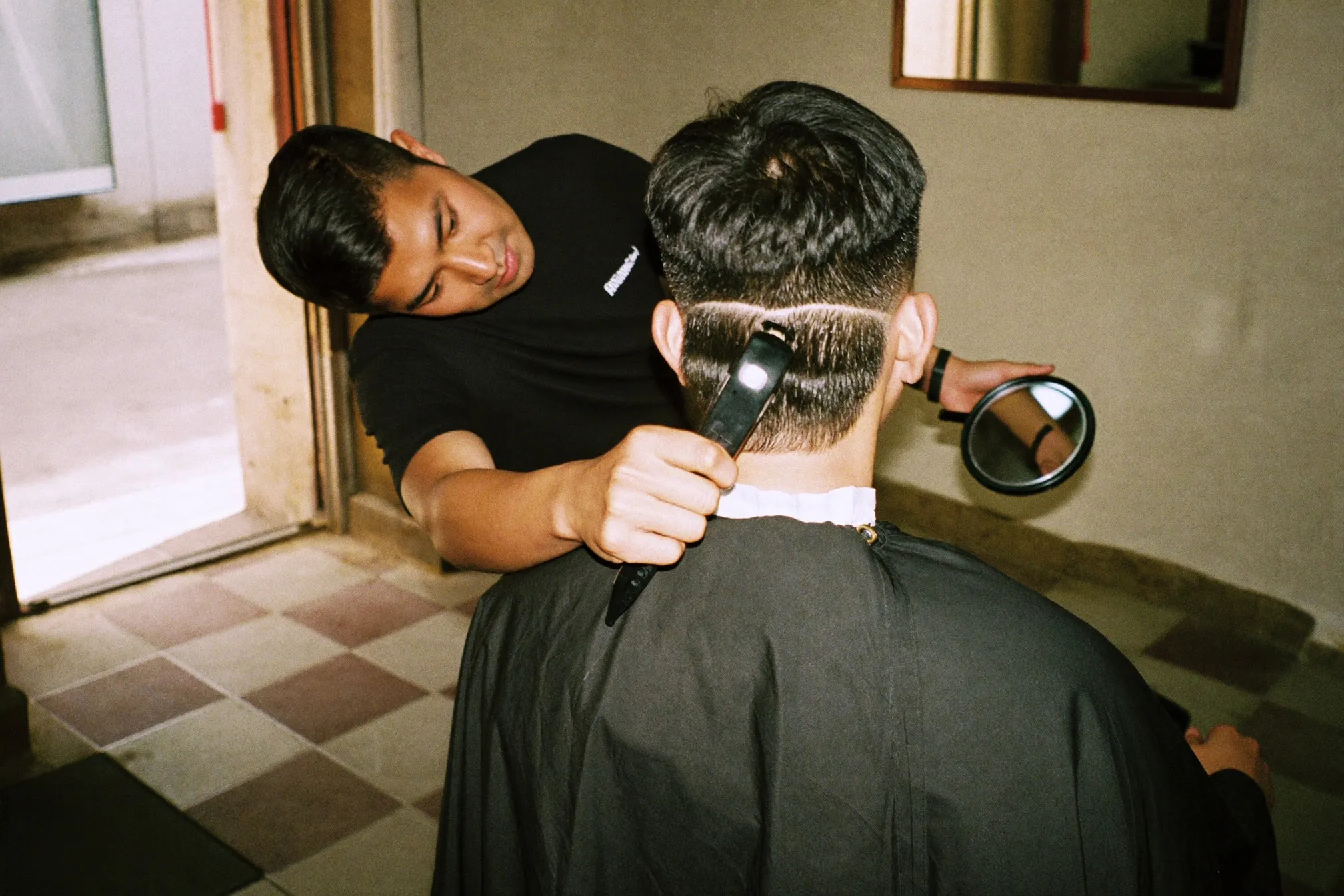
A mullet haircut keeps the front and sides short and leaves the length at the back. The modern version removes the cliff edge that made the 1980s original a punchline: the sides get a taper or a fade, the top gets layered so it moves, and the back stops somewhere between your collar and your shoulder blades. Cut that way, it reads current in KL and Singapore rather than costume.
Suitability is the harder question, and the honest answer is that the mullet is the most face-dependent cut a barber offers. It draws a vertical line down the back of your head and pulls attention to your jaw. On the right head that is free architecture. On the wrong one it is a very public mistake with a three-month recovery time.
What makes a mullet modern?
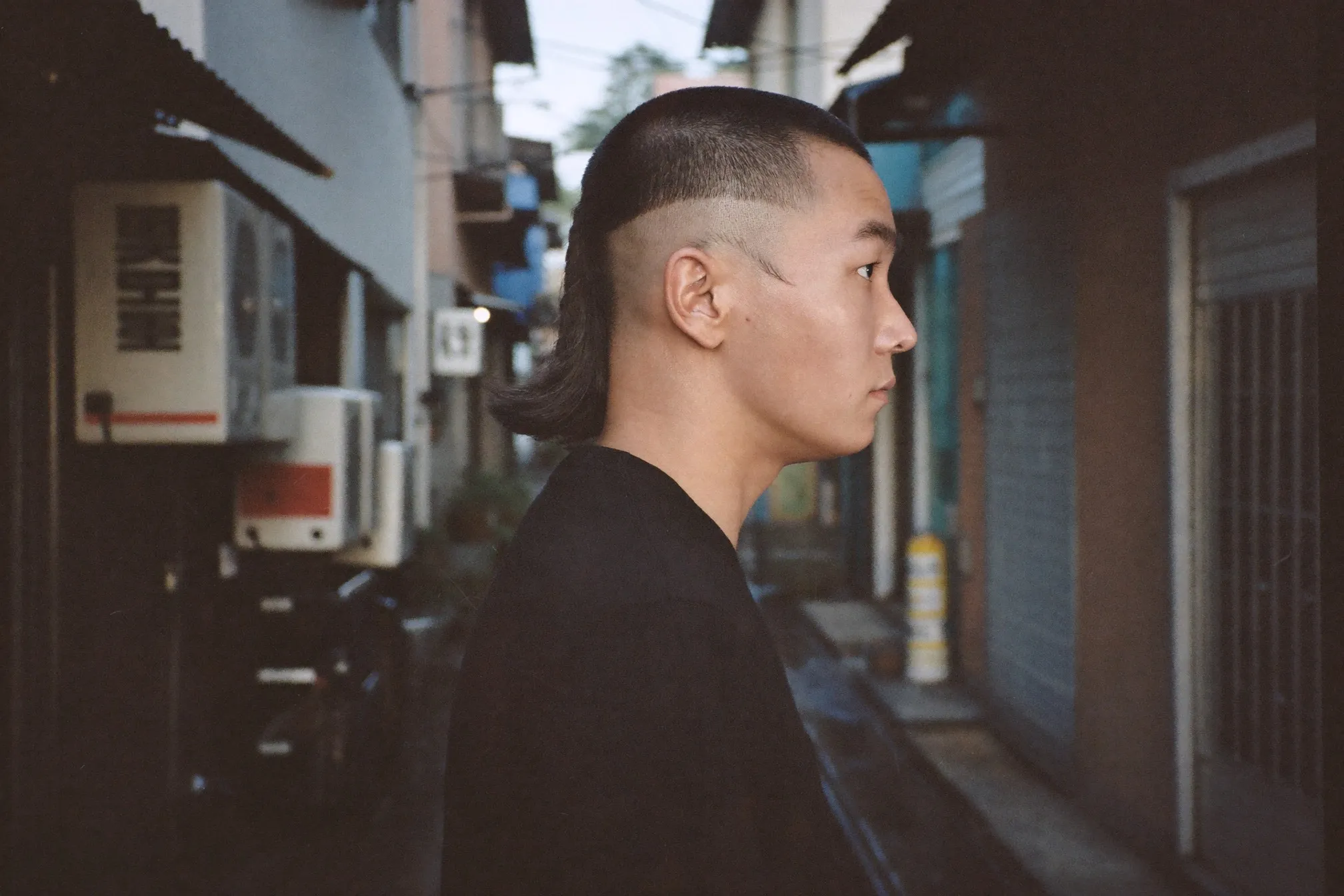
Three changes separate the modern mullet from the 1985 one: the sides are tapered or faded instead of chopped blunt, the top is texturised so it falls in pieces rather than sitting flat, and the back is shaped to a soft point or a rounded edge instead of a straight rectangle. The transition is a gradient, not a step.
The old mullet ran a length ratio of about one to four. Two inches at the front, eight at the back, with a visible line where one became the other. The modern ratio sits closer to one to two, and the shift happens over several centimetres so your eye never finds the seam.
The second thing that changed is where the influence comes from. The current wave arrived through Korean and Japanese salons rather than through rock bands, which is why so many versions here overlap with the wolf cut and the shaggy layered styles covered in our Korean hairstyles guide. Footballers pushed it further into the mainstream. The result is a cut your barber in Cheras has already done forty times this month.
Does a mullet suit your face and hair type?
Strong jaws and square faces get the most out of a mullet, because the short sides expose the jawline the cut is pointing at. Long faces get the least, since the tail adds vertical length to a shape that already has plenty. Hair texture matters as much as face shape, and thick straight Asian hair needs the most work.
| Face shape | Verdict | The adjustment |
|---|---|---|
| Square or strong jaw | Best case | Keep the sides tight, let the tail sit at collar length |
| Oval | Works with anything | Free choice on side length |
| Round | Yes, carefully | Height on top, no width at the temples, longer tail |
| Long or oblong | Risky | Short tail, leave a little weight at the sides |
| Heart, narrow chin | Yes | Soft feathered tail, avoid heavy volume on top |
Hair texture decides how much your barber has to thin. Wavy hair is the ideal, since the bend hides the transition on its own. Thick straight hair, which is most of us, turns into a solid shelf at the back unless the ends get point-cut or a light texture perm goes in. Fine hair can carry a mullet, but only a short one, because a thin tail past the collar goes stringy by the second week. Curly hair works beautifully and is close to a different cut entirely.
One test before you commit. Pull your hair back flat against your head and look at the shape of your skull from the side. A flat back of the head loves a mullet, since the tail adds the volume you were missing. A pronounced occipital bone already has that volume, so keep the tail shorter than the reference photo.
Which mullet variation should you ask for?
Four versions cover almost everything a barber here will cut. The difference is mostly in the sides: how high the short hair goes and how hard the line is. Pick based on how much attention you want the cut to attract, then adjust the tail length separately.
| Variation | What the sides do | Suits | Office risk |
|---|---|---|---|
| Taper mullet | Short scissor taper, no clipper line | First-timers, thick hair | Low |
| Burst fade mullet | Fade arcs around the ear, rest left long | Round faces, anyone wanting shape | Medium |
| Mullet fade | Full skin or low fade all round | Strong jaws, hot climates | Medium to high |
| Wolf cut mullet | Barely clipped, heavy layers everywhere | Wavy hair, creative jobs | High |
The burst fade mullet is the one most people are looking at when they save a reference photo. The fade curves around the ear in a semicircle and stops, so the hair behind it stays long and connects into the tail without a hard corner. It is a harder cut to execute than a straight fade, so check the barber’s own photos of it before you sit down. Our fade haircut guide covers how to specify fade height if you are going that route.
If the whole thing feels like too much, the two block is the safe neighbour. Same disconnected logic, none of the tail.
What do you tell the barber, and what does it cost?
Bring two photos: one from the front and one from the back. The back photo is the one that matters and the one nobody brings. Then say the length in centimetres rather than in adjectives, because “a bit long at the back” means something different to every barber in Malaysia.
The script that works:
- “Leave the back at collar length, please do not shorten it.”
- “Low taper on the sides, scissors not clippers.” (Or: “burst fade around the ear, everything behind it stays.”)
- “Texturise the top so it falls forward, keep the weight.”
- “Point the back so it comes to a soft V, not a straight line.”
Prices in Malaysia run around RM40 to RM80 at a normal barbershop, and RM90 to RM150 at a specialist in Bangsar, Mont Kiara or TTDI where the barber has an Instagram full of mullets. In Singapore, budget roughly S$35 to S$70 at a neighbourhood shop and S$70 to S$130 around Tanjong Pagar or Haji Lane. A texture perm to soften straight hair adds about RM200 to RM400, or S$100 to S$200.
Do not get your first mullet at the RM15 kedai gunting rambut. The taper is the whole cut, and a rushed clipper pass turns it into the 1985 version with no way back.
Can you wear a mullet to work here?
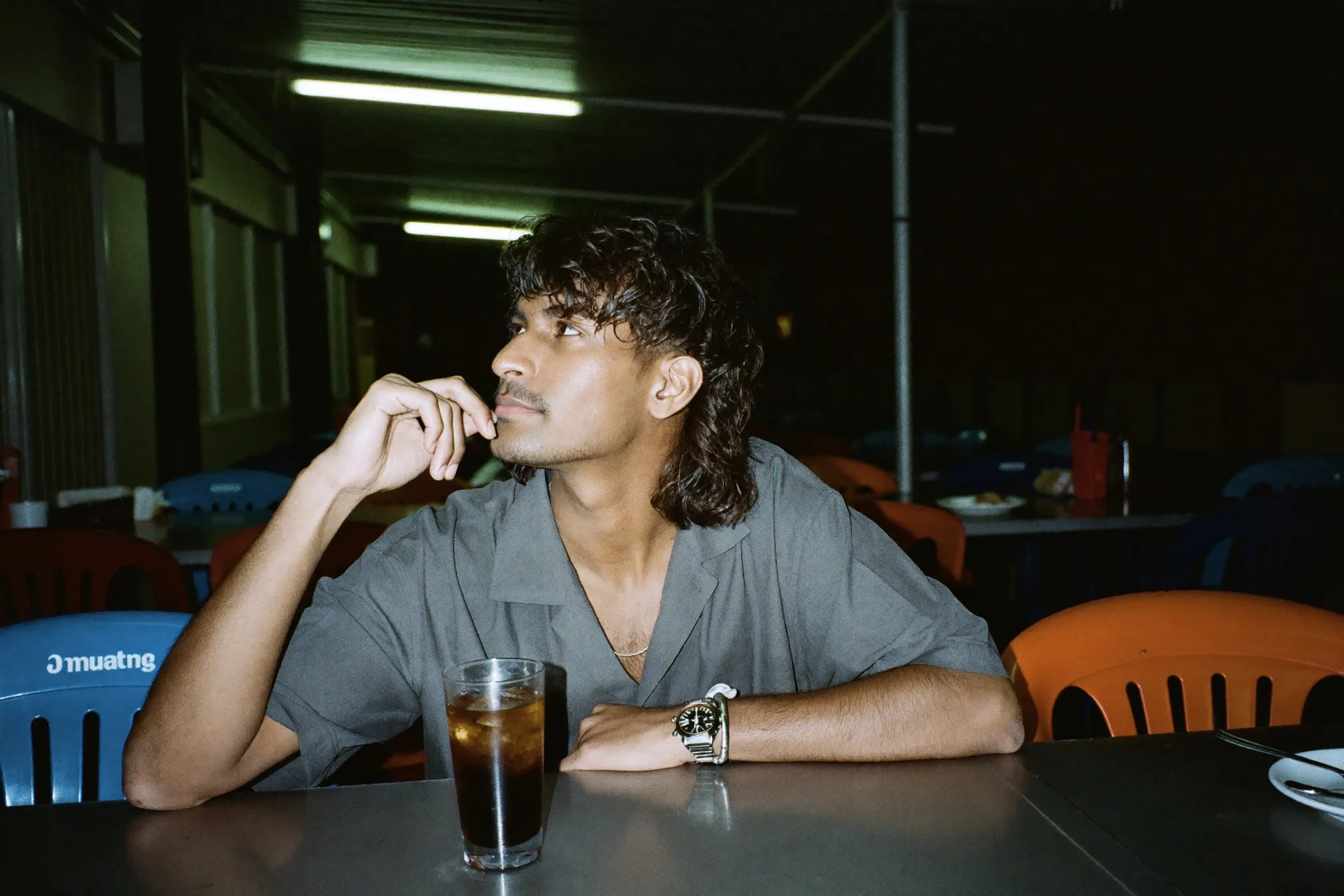
In agencies, tech, F&B and anything creative, yes, and nobody will comment. In banking, law, government-facing roles and most client-facing sales, a full mullet fade will cost you something you cannot measure. The taper mullet with a collar-length back passes almost everywhere, because from the front it looks like a normal cut.
The useful test: put on the shirt you wear to work and look in the mirror from the front. If the tail is invisible from that angle, you are fine. If it fans out over the collar, you have chosen a side.
Family is the other audience. Going back to the kampung for Raya or to your grandmother’s place for CNY with a mullet is a conversation you will have eleven times in one afternoon. Some men find this funny. Plan accordingly.
How do you keep it from falling apart by week three?
The sides grow out faster than the back, so a mullet needs a trim every three to four weeks even when you are keeping the length. Skip that and the taper closes up, the shape flattens, and the cut ages into something your barber did not intend. The back can go three months between trims.
Humidity is the other problem. In 85% humidity, a texturised top expands and the tail frizzes at the ends, so most of the styling here is about weight rather than hold:
- Air dry the top, blow dry the back. Point the dryer down the length of the tail on cool. Thirty seconds flattens the frizz for the day.
- Matte clay or sea salt spray on the top only. Keep product out of the tail or it clumps into strands. See our hair styling products guide for what survives this climate.
- Condition the back. The tail is the oldest hair on your head and the part everyone forgets to treat. Conditioner from the ears down, every wash.
- Riders, take the helmet into account. A full-face helmet presses the tail flat against your neck and holds sweat there for the whole commute. Tie it up or accept a shower at the other end.
Ask your barber to “clean up the sides only” on the in-between visits. Barbers here default to tidying everything, and everything includes the two inches of back length you spent six weeks growing.
Save two reference photos tonight, one front and one back, and book a taper mullet rather than a fade for the first attempt. You can always take the sides shorter in three weeks. You cannot put the back on again. If you want to know what else the hair pillar recommends before you commit, read the two block guide first and see whether the softer version scratches the same itch.
Quick answers
Is the mullet haircut still in style in 2026?
The blunt 1980s version is not. The tapered, layered version is standard in barbershops across KL and Singapore, and it has been for several years now. Ask for a taper mullet or a soft wolf cut and nobody will read it as a throwback.
How long does the back of a mullet need to be?
Roughly collar length is the working minimum, about two to three inches past your hairline. Shorter than that reads as a bad taper rather than a deliberate cut. Anything past the shoulder blades needs thick hair and daily conditioning to avoid looking stringy.
What is the difference between a mullet and a wolf cut?
A mullet concentrates length at the back and keeps the sides short. A wolf cut layers the whole head, so length sits at the crown and the sides stay shaggy rather than clipped. Most salon wolf cuts here land somewhere between the two.
How much does a mullet haircut cost in Malaysia and Singapore?
Expect around RM40 to RM80 at a decent KL barbershop and RM90 to RM150 at a specialist in Bangsar or Mont Kiara. In Singapore, budget roughly S$35 to S$70 at a neighbourhood shop and S$70 to S$130 in Tanjong Pagar or Haji Lane.