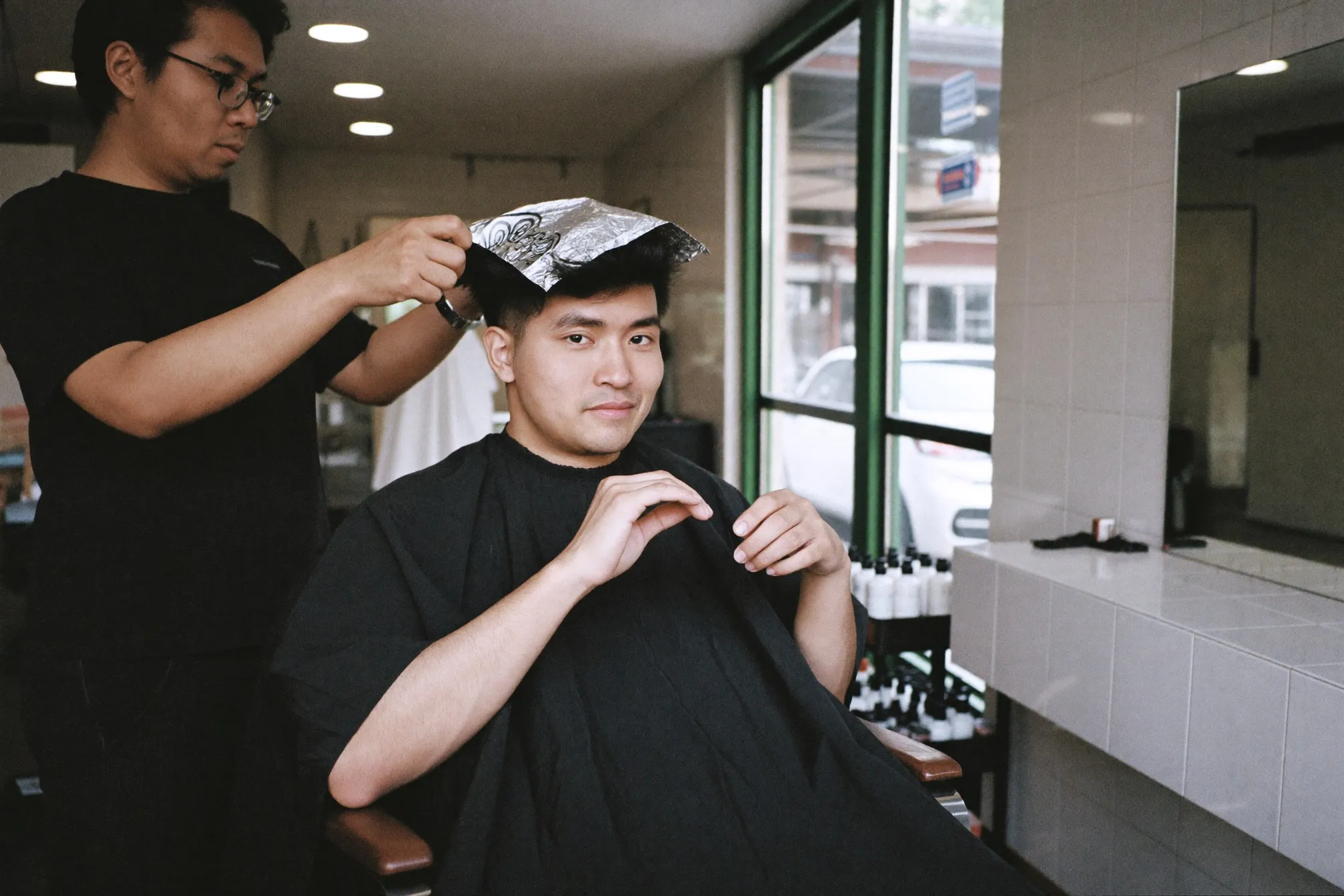
Asian hair sits at the darkest end of the colour scale, so anything lighter than a dark brown needs bleach first and toner second. That is the whole mechanic. What decides your result is how many levels you lift and whether your hair can take the trip.
Most of the disaster photos you have seen from friends in KL or Singapore come from one of two things: someone lifted too far in a single sitting, or someone put box bleach on hair that had been rebonded six weeks earlier. Both are avoidable. Neither is expensive to avoid.
Why does dark hair go orange instead of blond?
Asian hair carries a heavy load of dark pigment, and bleach removes it in stages rather than all at once. Black lifts to red, then orange, then yellow, then pale yellow. Stop halfway and you are left standing in the orange part of that sequence, which is where most home jobs end.
Colourists number this on a scale of 1 to 10, where 1 is black and 10 is the palest blond. Nearly every Asian man starts at 1 or 2. Every shade you have saved on your phone has a number too, and the difference between those two numbers is your workload.
| Target | Level | Lift from natural black | What it takes |
|---|---|---|---|
| Soft black, blue-black | 1–2 | none | Deposit-only colour or a gloss |
| Dark brown, chocolate | 3–4 | 1–2 levels | Permanent dye, no bleach |
| Ash brown, olive brown | 5–6 | 3–4 levels | One controlled bleach round, then toner |
| Light brown, dark blond | 7–8 | 5–6 levels | Bleach, often across two sessions |
| Blond, platinum, pastel | 9–10 | 7+ levels | Multiple sessions, weeks apart, high damage |
Ash brown is popular here because it reads clean on our skin tones and it sits at the last level you can reach without a serious commitment. Push to level 7 and you have doubled the maintenance and the damage.
Do you need bleach at all?
Not if you are going darker or staying within two levels. Permanent dye lifts a level or two on its own while depositing colour, which covers dark brown, warm brown and grey coverage without a bleach step. Anything cooler or lighter than that needs the pigment removed first.
Three options, in order of how hard they hit:
- Deposit-only colour and glosses. These sit on top of your existing shade. They add shine, richness or a subtle tint, and they wash out over four to six weeks. Zero lift, minimal damage. Good for a first move.
- Permanent dye. Opens the cuticle, lifts one or two levels, deposits new pigment. This is your dark brown and your grey coverage. It will not give you ash anything on virgin black hair, whatever the box photo shows.
- Bleach plus toner. Two steps. Bleach removes pigment to a raw yellow-orange base, toner neutralises what is left and drops the shade you want on top. Every ash, olive, grey and blond result is this process.
What does bleach do to hair and scalp?
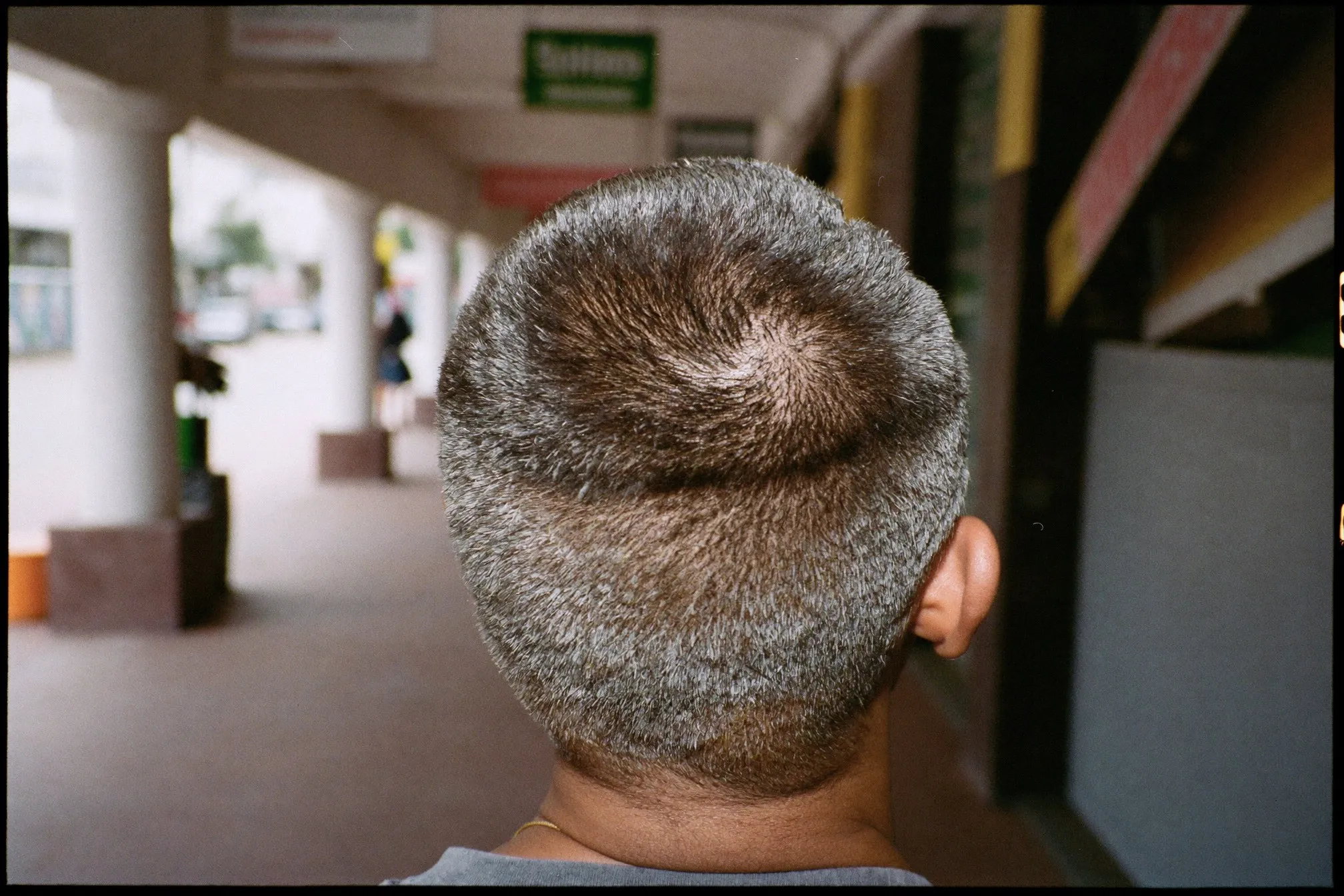
Bleach works by opening the outer cuticle layer and oxidising the pigment inside the shaft. It cannot remove pigment without also degrading the protein structure that holds a strand together. The visible results are rough texture, tangling, dull ends and strands that snap when you comb them wet.
That damage is permanent in the sense that hair is dead tissue and cannot repair itself. Conditioners, bond-building treatments and protein masks make damaged hair behave better, and they meaningfully reduce breakage between sessions, but the only true fix is growing it out and cutting it off. Hair grows roughly a centimetre a month, so plan accordingly.
The scalp side matters more and gets discussed less. Bleach and permanent dye can irritate or burn the scalp, and the permanent dyes that contain PPD are a well-documented cause of allergic contact dermatitis, which the NHS lists among common triggers. A reaction can show up as itching, redness, swelling or weeping skin, sometimes hours after the appointment rather than during it.
Practical rules that dermatology bodies broadly agree on:
- Patch test 48 hours before, every time, including with a brand you have used before. Allergy can develop after years of uneventful use.
- Never colour over broken, sunburnt or inflamed scalp. Wait for it to heal.
- Stop immediately if it burns rather than tingles. Rinse with cool water.
- See a GP or dermatologist for any reaction beyond mild redness that settles within a day, and for any blistering or swelling around the face.
If you have eczema, psoriasis or persistent flaking, sort the scalp out before you colour it. Our dandruff guide covers where that line sits.
What does it cost in KL and Singapore?
Colour is the one grooming service where paying more genuinely buys you a different outcome, because most of the cost is the colourist’s judgment rather than the product. Rough ranges as of 2026, for short to medium men’s hair:
| Service | Malaysia | Singapore |
|---|---|---|
| Gloss or deposit-only colour | RM80–150 | S$60–120 |
| Permanent dye, dark brown | RM120–250 | S$80–180 |
| Single bleach + toner | RM250–450 | S$150–300 |
| Two-session lift to blond | RM500–900 total | S$350–600 total |
| Root touch-up | RM100–200 | S$70–150 |
| Bond-building add-on | RM60–120 | S$40–80 |
Korean-style salons around Bukit Bintang, Mont Kiara, Orchard and Bugis sit at the upper end and generally earn it on cool tones, which are the hardest to land on our base colour. Neighbourhood salons in PJ, Cheras or Tampines do dark brown and grey coverage well at half the price. Match the shop to the job.
Ask two questions when you book: how many sessions they think your target needs, and what they will do if the lift stalls. A colourist who answers “we will stop at level 6 today and finish in three weeks” is protecting your hair. One who promises platinum in one sitting on virgin black hair is selling you breakage.
Is box dye from Watsons a bad idea?
For dark brown and grey coverage, no. A RM25 to RM45 box from Watsons or Guardian does that job fine, and Japanese and Korean brands sold here are formulated for our hair thickness. For anything requiring bleach, the odds turn against you fast.
Blame the process rather than the product. Bleaching is a timed chemical reaction happening on a part of your head you cannot see. Home bleach goes wrong in predictable ways: hot roots, because scalp heat lifts the roots faster than the lengths; patchy mids, because you ran out of mixture; and orange everything, because you rinsed at the twenty-minute mark on the instructions instead of when the hair reached pale yellow.
If you are doing it at home anyway, the harm-reduction version: buy a developer no stronger than 20 volume, mix more than you think you need, have someone else do the back, keep a purple toner ready for straight after, and accept a level 6 result rather than chasing 8. Do one round. Come back in three weeks if you want more.
How do you stop ash brown going brassy?
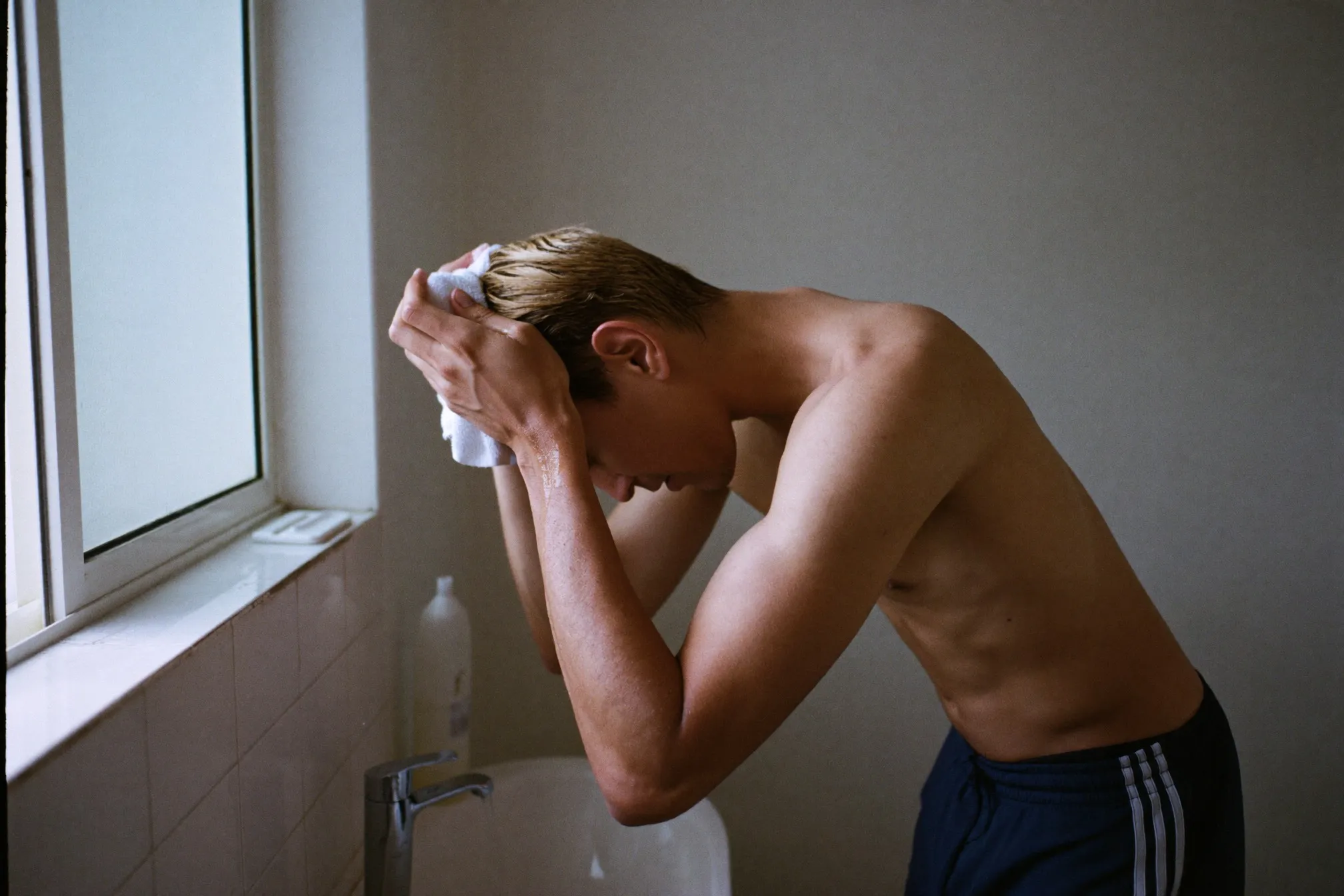
Toner is the least permanent part of the whole process, so the cool cast fades before the lift does and the warmth underneath comes back through. In this climate it happens faster: sun exposure, chlorine and daily washing in humid weather all strip toner.
What holds the colour:
- Purple or blue toning shampoo, once or twice a week. Purple kills yellow, blue kills orange. Around RM35 to RM70 at Watsons, Guardian or Shopee. Using it daily turns hair grey-lilac, so keep it to a rotation.
- Sulphate-free shampoo the rest of the week. Harsh surfactants pull toner out.
- Cooler water, fewer washes. Every wash costs you colour. Rinse-only days between shampoos help more than any product.
- Heat protectant before a hair dryer or straightener. Bleached hair burns at temperatures untouched hair shrugs off.
- A cap or a hat outdoors. Sun fades toner and it does not care how much you paid for it.
Book a toner refresh every four to six weeks and a root touch-up every six to eight. If your hair grows fast, the regrowth line arrives before the brassiness does, and a hard black line against light brown is the thing people notice first. A shorter cut buys you time here, which is one reason a two block cut or a tight fade carries colour so well: the grown-out roots read as intentional contrast rather than neglect.
What to sort out before you book
Tell your stylist everything you have put on your hair in the past six months. Rebonding, perms, keratin treatments and previous box dye all change what bleach will do, and henna reacts badly enough with bleach that most salons refuse to touch it.
Rebonded hair deserves its own warning. Both processes attack the same internal bonds, and stacking them close together is how people end up with hair that dissolves in the wash basin. Most Malaysian and Singaporean salons want at least two weeks between them, and a good colourist will say a month.
Also think about where you work. Government service, some schools and a fair number of conservative offices in both countries still expect natural shades. A level 5 ash brown reads as dark brown indoors and only shows its coolness in sunlight, which is why it has become the default for men who want colour without a conversation with HR. If you want to push further, our guides to Korean hairstyles and other cuts on the hair hub show where the shade sits against different lengths, and the hair styling products guide covers what to use once your hair texture changes after lightening.
Start with the patch test. Buy the dye or book the consultation, dab the mixture behind your ear, and leave it 48 hours before anyone touches the rest of your head. It costs you two days and it is the only step in this entire process you cannot undo by growing your hair out.
Quick answers
Do I need to bleach Asian hair to get ash brown?
Almost always, yes. Natural Asian hair sits around level 1 to 2 on the colour scale, and ash brown sits around level 5 to 6. That gap is three or four levels of lift, which permanent dye alone cannot clear on virgin black hair.
How damaged will my hair be after one bleach session?
Bleach strips pigment by opening the cuticle and breaking down structure inside the hair shaft, so expect rougher texture, more tangling and faster breakage. One controlled session on healthy hair is survivable. Repeated back-to-back rounds is where hair snaps off.
Can I colour my hair if it has been rebonded?
Not on the same day, and not without telling your stylist. Rebonding and bleaching both stress the same internal structure. Most salons in Malaysia and Singapore ask for a gap of at least two weeks, and many push it to a month or longer.
Why does my hair colour turn orange after a few weeks?
Lightening dark hair exposes warm underlying pigment, and the cool toner sitting on top of it washes out faster than the warmth does. Sun, hard water and daily washing all speed that up. A blue or purple toning shampoo once or twice a week holds it back.