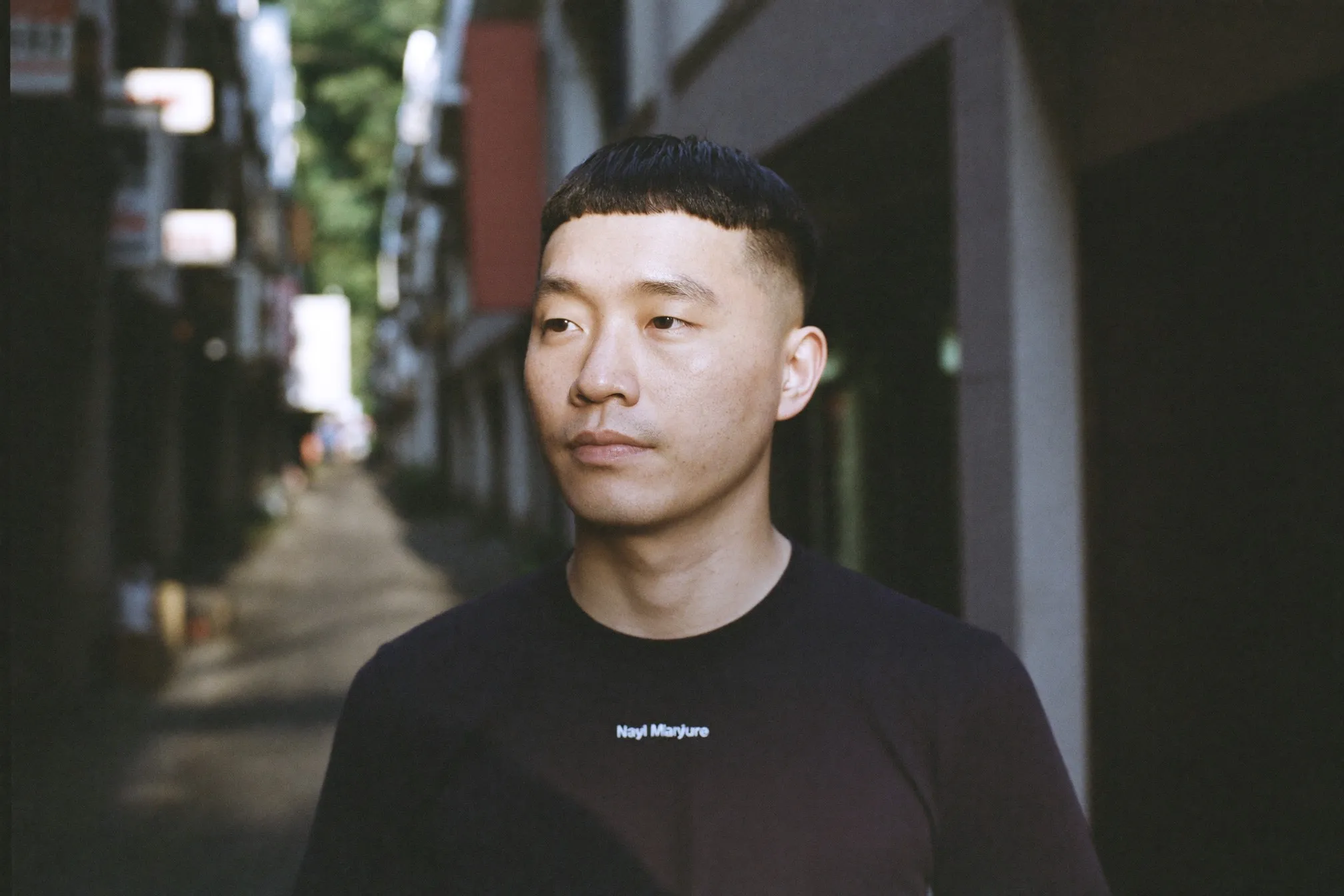
A French crop is a short haircut with the top left choppy and pushed forward into a blunt fringe, over back and sides that are either faded or clipped to one short length. It takes under a minute to style and it holds its shape through a KL afternoon, which explains why so many men in this region have quietly switched to it.
The cut does a second job most guides skip. That forward fringe covers the temples, so a hairline that has started to retreat stops being the first thing anyone notices. Barbers in Bangsar and Tiong Bahru have been recommending it for years to men who walked in asking what to do about a growing forehead.
What is a French crop, exactly?
Three parts define it. Short back and sides, either a fade or a single clipper grade. A top left roughly two to five centimetres long, cut with texture instead of a smooth weight line. A fringe combed forward and cut straight across, landing between mid-forehead and the eyebrows.
The cut descends from the Caesar, the flat forward-combed crop you see on Roman busts and on English footballers in the late nineties. The modern version swapped the blunt one-length top for point cutting, and swapped the hard clipper line for a fade. That is where “textured crop” comes from. Same cut, newer finish.
Names vary by shop. “French crop”, “textured crop” and “crop haircut” all land the same result at most barbershops in KL, PJ and Singapore. A photo lands it faster than any of them. Barbers here read reference pictures for a living, and every one of them has cut a hundred of these.
The variations worth knowing:
- Blunt fringe. Cut straight across, heaviest at the front. The most forgiving option if your hair is fine.
- Broken or choppy fringe. Point cut into soft spikes. Reads younger and needs a touch more product.
- Disconnected crop. The top drops onto skin-short sides with no blend. Sharp, and unforgiving of a lumpy skull.
- Long crop. Fringe past the brows, sides at a grade two. The safest step into the cut if you are coming from longer hair.
Why does it survive the weather here?
The crop has no height to lose. Volume-based styles collapse the moment you sweat through them, and a fringe already lying forward has nowhere to fall. You get the same silhouette at 8am and at 6pm, after a mamak lunch and a walk from the LRT.
The practical wins stack up fast in this climate:
- Helmet-proof. Riders get off the bike, run a hand through the fringe and carry on. Nothing to reset.
- Cap-proof. Same logic. The cut sits flat under a cap and looks the same when it comes off.
- No blow dryer. Aircon dries it. A dryer is optional even on wash days.
- Minimal product. A pea of matte clay, not a fistful of wax that turns to soup by noon.
- Short sides. Less hair against your neck, which matters more here than anywhere temperate.
Compare that to the two block haircut, which needs the top styled and separated to look intentional, or a slick back, which turns greasy under equatorial sun. The crop asks less of you and gives back the same amount every day.
Does it suit your face and your hairline?
The French crop shortens the visible face by covering the top of the forehead, which helps long faces and hurts short round ones. Hairline matters more than face shape. If your temples are going, this is the cut that buys you time without a comb-over.
| Your situation | Verdict | Adjustment to request |
|---|---|---|
| Long or oblong face | Best fit | Full fringe to the brows, tight sides |
| Round face | Workable | Skin or low fade, leave the top longer for height |
| Square jaw | Strong fit | Blunt fringe, keep the corners soft |
| Receding temples | Best available short cut | Blunt heavy fringe, no parting, no hard line |
| Thinning crown | Careful | Keep the top short so density reads even |
| Thick coarse hair | Excellent | Heavy point cutting so the fringe lies flat |
| Fine hair | Good | Blunt fringe for the illusion of density |
| Wavy or curly hair | Good, styled loose | Ask for a curly-friendly dry cut |
Curly hair takes the crop well when the barber cuts it dry and follows the curl pattern instead of fighting it. Our guide to curly hair for Asian men covers how to brief that properly.
One honest note on hair loss. A crop hides an early recession and does nothing to slow it. If you are watching your temples move each year, read our hair loss treatment guide and see a doctor before you spend another year on haircuts alone.
How do you ask a barber for one?
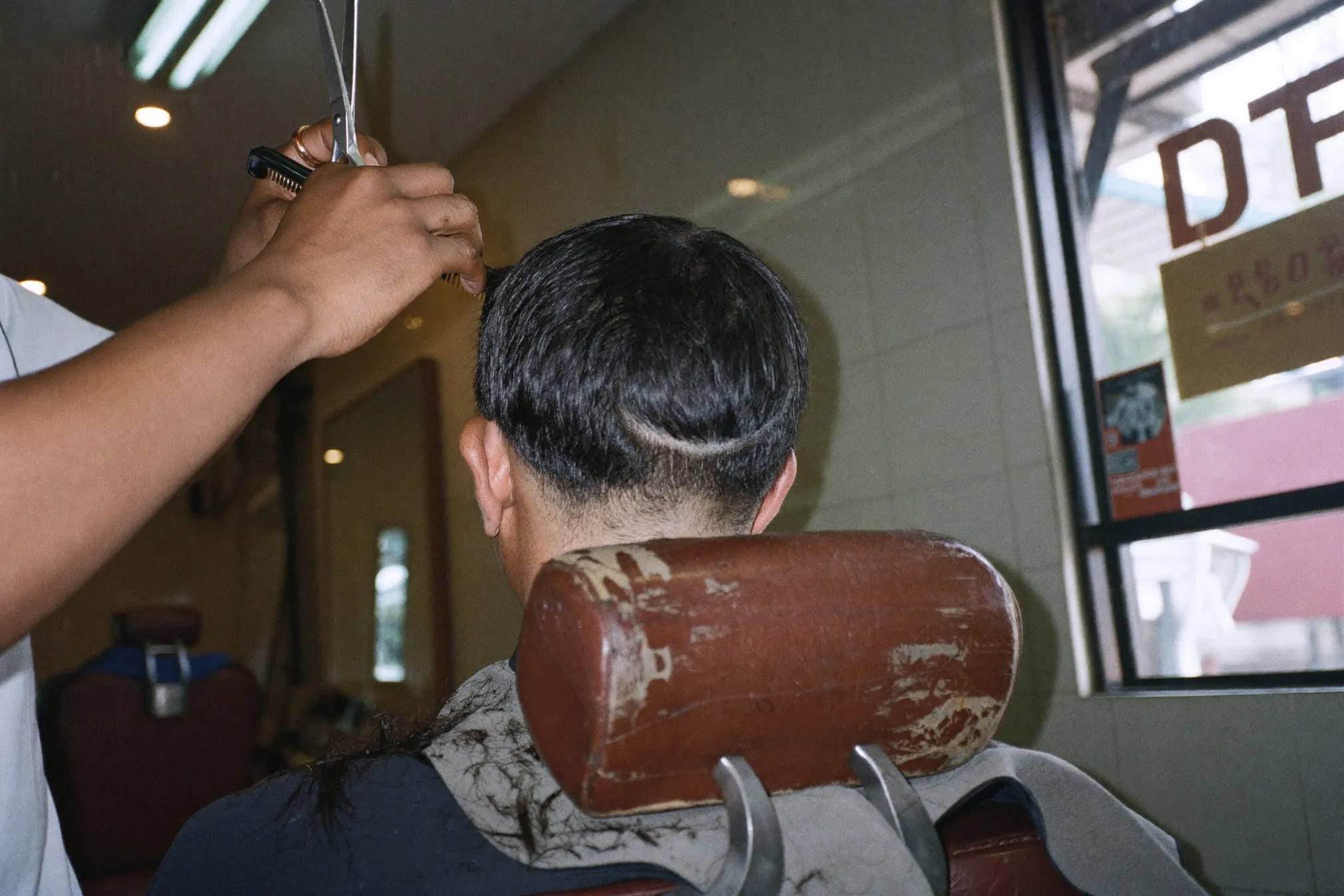
Bring a photo, then say the numbers. The script that works in most shops here: “Grade one on the sides, fade it up, taper the neckline. Leave about four centimetres on top, point cut for texture. Fringe forward and blunt across, sitting here.” Then put a finger on your forehead where you want the fringe to land.
Details that decide whether you walk out happy:
- Ask for the fringe longer than you want. You can trim two centimetres at home. You cannot glue them back on.
- Say taper, not blocked, at the neck. A squared-off neckline grows out looking heavy in three weeks.
- Name the grade. Grade zero or one for a sharp look, grade two for something an office reads as normal.
- Ask for thinning if your hair is thick. Coarse Malaysian and Singaporean hair stands straight up without it, and the fringe fails.
- Check the fringe line while sitting straight. Barbers cut it while your head tilts down, and it lands higher than you expected.
Budget shops handle this cut fine, because the crop hides small errors that a fade alone would expose. Where you pay more, you get a cleaner fade line and a fringe that has been cut to your actual hairline instead of a straight ruler line.
How do you style a textured crop in forty seconds?
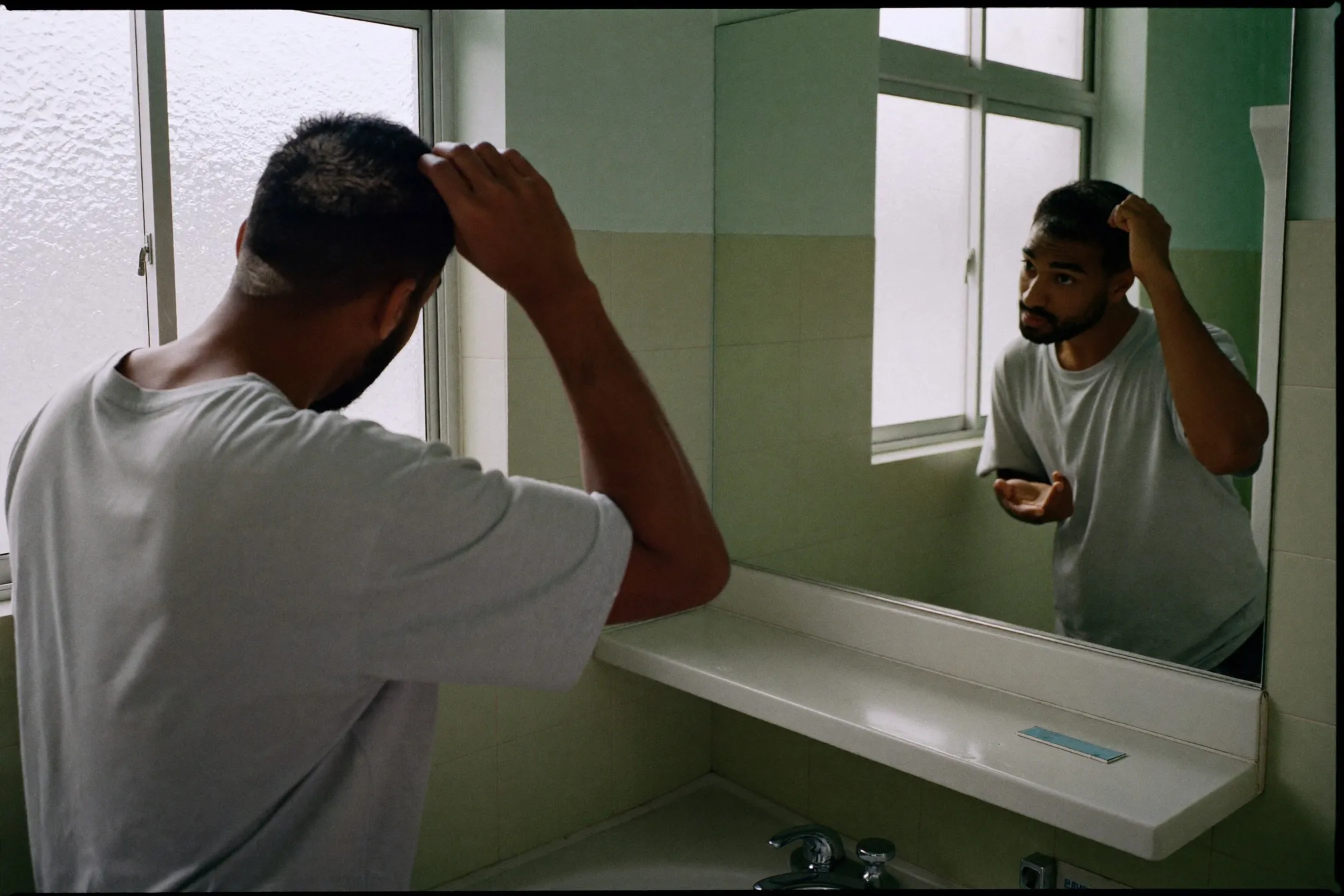
Towel dry to damp. Scoop a pea of matte clay or paste, rub it flat between your palms until it disappears, then push everything forward from the crown. Break the fringe apart with your fingertips. Do not use a comb, because a comb makes the crop look like a wig.
Product notes for this climate. Matte clay beats pomade, since shine plus sweat reads as oily by lunch. Fine hair does better with sea salt spray first, clay second. Expect around RM40 to RM70 at Watsons or Guardian, less during Shopee sales, and one tub lasts most men four to six months at this dosage. Our hair styling products guide breaks down the categories if you are still using whatever was on the shelf.
On days when you skip product, the cut still holds. That is the point of it.
What does it cost and how often do you go back?
| Where | Typical price | What you get |
|---|---|---|
| Neighbourhood kedai gunting rambut, MY | Around RM15 to RM25 | Clean clipper work, basic fade |
| KL or PJ barbershop | Around RM45 to RM80 | Sharper fade, fringe cut to your hairline |
| HDB heartland barber, SG | Around S$12 to S$18 | Fast, competent, no styling talk |
| Singapore CBD or Orchard barbershop | Around S$35 to S$60 | Detailed fade, wash, styling advice |
Rebook every three to four weeks if the sides are faded. A fade blurs long before the top misbehaves. On a single clipper grade you can stretch to five or six weeks and nobody will clock it. The fringe usually forces the appointment first, once it starts landing in your eyes at traffic lights.
Between cuts, trim the fringe yourself if you must, in daylight, dry hair, tiny snips pointing upward into the ends rather than straight across. Cutting straight across wet hair is how men end up wearing caps for a fortnight.
Book a cut for the week you already need one, bring two photos on your phone, and use the script above word for word. Give it one full growth cycle before you judge it. Most men decide by week three that they are not going back to anything that needs a mirror and five minutes. More short cuts worth considering sit in our hair section.
Quick answers
Does a French crop suit a receding hairline?
It is one of the better cuts for it. The fringe sits forward over the temples, so a retreating hairline stops being the first thing people read. Keep the fringe blunt rather than wispy, and skip hard partings, which draw a line straight to the thin patch.
What is the difference between a French crop and a Caesar cut?
They share a skeleton. A Caesar cut keeps the top one length and combs it flat forward. A French crop leaves the top textured and choppy, usually with a fade underneath rather than a blunt clipper line. Most barbers here treat the two names as the same request.
How often do I need to recut a French crop?
Every three to four weeks if the sides are faded, because a fade blurs fast. On a single clipper length you can stretch to five or six weeks. The fringe grows into your eyes before the sides look bad, so book by the fringe, not the calendar.
Can I get a French crop with thick, coarse Asian hair?
Yes, and it is one of the few short cuts that rewards thick hair. Ask the barber to point cut and thin the top so the fringe lies forward instead of standing up. Coarse hair holds the choppy texture longer than fine hair does.