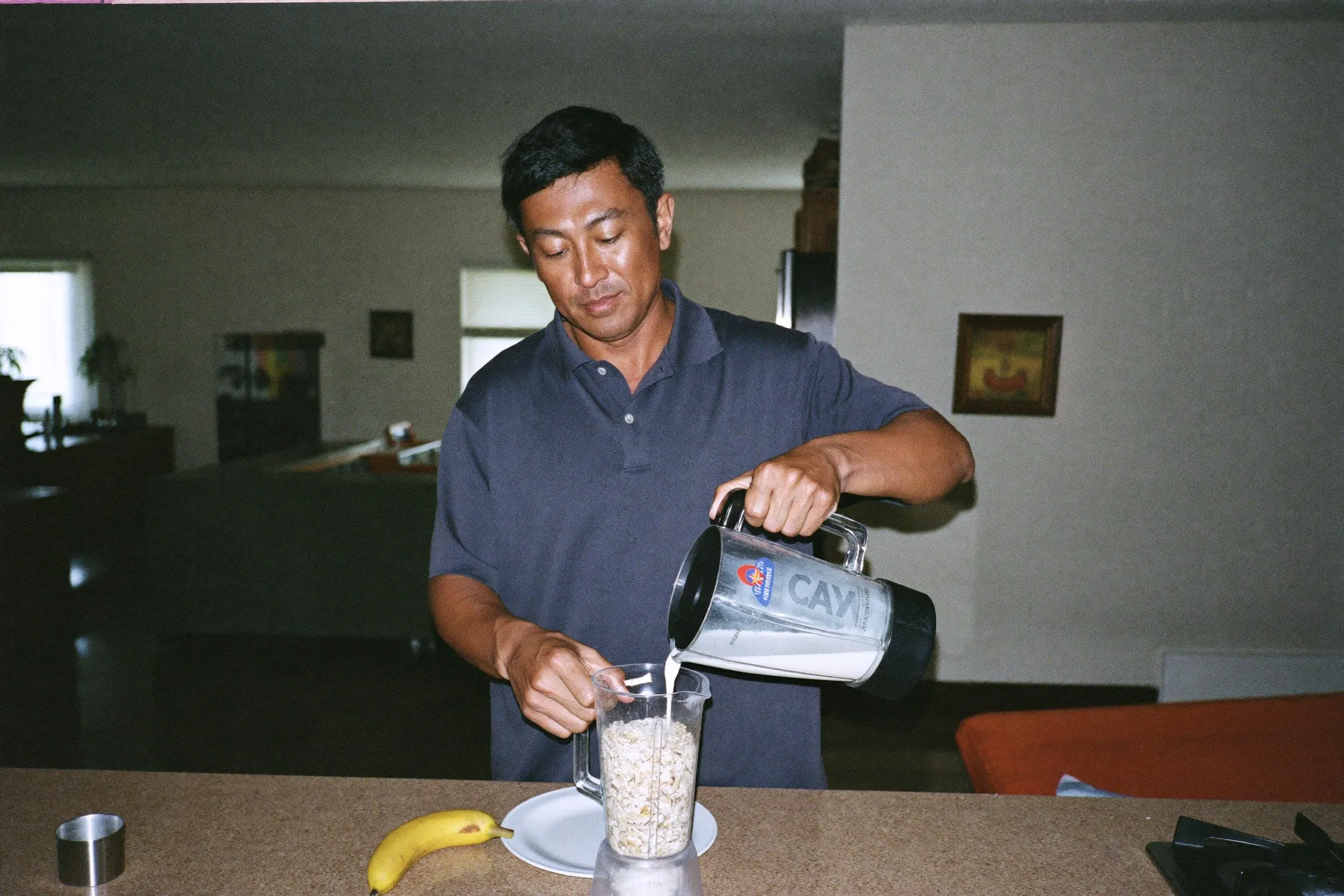
A protein shake worth drinking follows one formula: 250ml of cold liquid, one scoop of powder, one carbohydrate, one flavour anchor, and ice. Blend it rather than shaking it in a bottle. Everything below is that formula pointed at things already sitting in your kitchen, which in this part of the world means Milo, kopi, bananas, oats and peanut butter.
Most men buy one tub, mix it with tap water, drink something the texture of wet cement, and never touch it again. The powder was not the problem. The recipe was.
Why does your protein shake taste like chalk?
Three causes, in order of how often they happen: too much powder for too little liquid, water instead of milk, and nothing in the glass to carry the flavour. Protein powder needs fat, sugar or fibre to hide behind. Give it none of those and you taste the powder on its own, which is the point of the complaint.
Temperature does more work than people expect. A shake at 30°C tastes sweeter, thicker and more artificial than the identical shake at 5°C. That matters here, where a bottle mixed at home is lukewarm by the time you reach the car park in Bangsar. Ice is not a garnish in this climate, it is part of the recipe.
Grit is a separate issue. Powder needs about two minutes to hydrate fully. Blend or shake it, then let it sit while you find your keys, and the texture smooths out on its own.
What is the base formula for any protein shake?
Every good shake fills four slots. Pick one item from each column, add ice, and you have a drinkable result without following anyone’s recipe.
| Slot | Job | Local options | Amount |
|---|---|---|---|
| Liquid | Carries everything | Fresh milk, soy milk, oat milk, coconut water, cold kopi O kosong | 250–300ml |
| Protein | The point | Whey or soy powder, Greek yoghurt, silken tofu | 20–25g worth |
| Carbohydrate | Thickness and fuel | Banana, rolled oats, dates, cooked sweet potato | 1 banana or 3 tbsp oats |
| Flavour anchor | Stops the chalk | Milo, peanut butter, cocoa, gula melaka, cinnamon, kaya | 1–2 tsp |
Skip the carbohydrate if you are cutting and want the shake under 200 calories. Skip nothing else. A shake of powder and water is a supplement, not a drink, and you will find reasons to avoid it by week three.
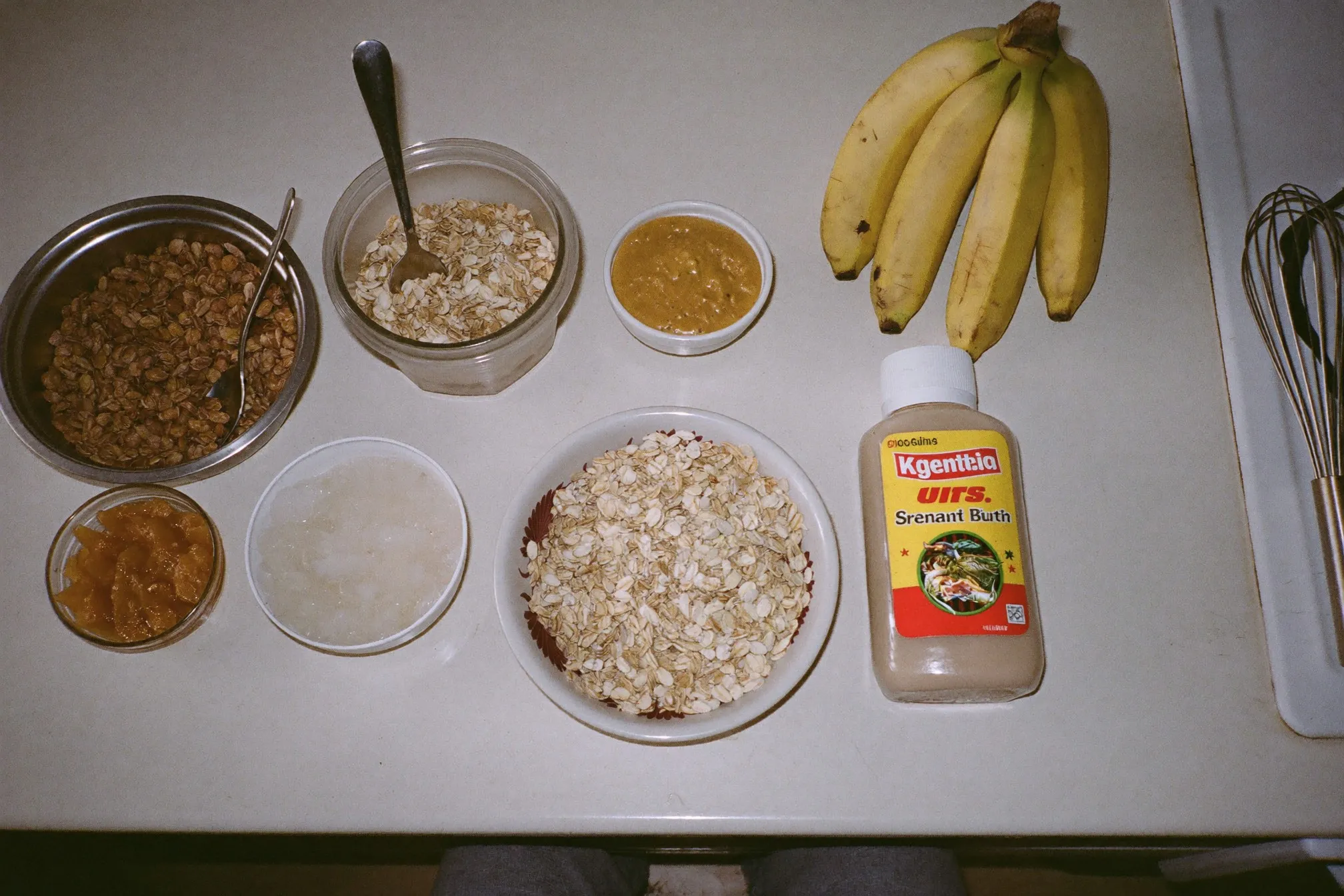
Which protein shake recipes work with what’s in the kitchen?
Six recipes below, all built from things you can buy at Jaya Grocer, Lotus’s, NTUC FairPrice or the shop downstairs. Each makes one large glass. Blend everything for about 30 seconds unless the recipe says otherwise.
Milo Ais Protein. 250ml cold fresh milk, 1 scoop chocolate or vanilla protein, 2 tsp Milo, 5 ice cubes. Two teaspoons, not four. Your powder already brings the sweetness, and a full mamak-strength scoop of Milo turns this into dessert. Blend on high so the malt granules break down instead of settling at the bottom like sand.
Kopi Protein. 150ml cold kopi O kosong, 150ml fresh milk, 1 scoop chocolate protein, 4 ice cubes. Brew the kopi the night before and keep it in the fridge, because hot coffee curdles whey into lumps you cannot blend out. This one replaces both your morning coffee and your morning excuse for not eating breakfast.
Banana Oat. 250ml milk, 1 frozen banana, 3 tbsp rolled oats, 1 scoop vanilla protein, pinch of cinnamon. Freeze bananas when they go spotty rather than throwing them out, and the shake comes out thick without ice diluting it. Closest thing on this list to an actual meal.
Peanut Butter Chocolate. 250ml milk, 1 tbsp peanut butter, 1 scoop chocolate protein, half a banana, 5 ice cubes. Use the natural kind where the oil separates, not the sweetened spread, or the sugar stacks up fast. Best post-gym option if you train at 9pm and dinner already happened.
Gula Melaka Coconut. 200ml milk, 100ml light coconut milk, 1 scoop vanilla protein, 1 tsp gula melaka syrup, 5 ice cubes. Tastes like cendol without the queue at the market. Coconut milk brings the fat that makes plain vanilla powder taste like something rather than nothing.
Mango Yoghurt. 200ml milk, 100g Greek yoghurt, half a frozen mango or 1 cup frozen mixed fruit, 1 scoop vanilla protein. Frozen mango from the supermarket costs less than fresh and blends better. The yoghurt adds roughly 10g of protein on top of the scoop, which makes this the highest-protein glass here.
How much protein does each one give you?
Rough numbers, assuming a 24g scoop and 250ml of fresh milk. Treat them as estimates, since scoops and brands vary.
| Recipe | Protein | Rough cost (MY) | Best for |
|---|---|---|---|
| Milo Ais Protein | ~33g | RM5 | Afternoon slump |
| Kopi Protein | ~29g | RM5 | Breakfast replacement |
| Banana Oat | ~39g | RM6 | Meal replacement, bulking |
| Peanut Butter Chocolate | ~37g | RM6.50 | Late post-gym |
| Gula Melaka Coconut | ~30g | RM6 | When you want dessert |
| Mango Yoghurt | ~43g | RM8 | Highest protein, hottest days |
Singapore prices land around S$2 to S$3.50 per glass on the same ingredients. Either way, you are under the price of a kopitiam breakfast set for 30g of protein and change.
If you want the background on which powder to buy and whether you need one at all, our whey protein guide covers isolate versus concentrate and what a kilo should cost in KL and Singapore.
Do you need a blender?
For powder and milk, no. A shaker bottle with a wire ball handles that in ten seconds. Anything involving banana, oats or ice needs a motor, and that is where the recipes get good.
A personal blender (the kind where the cup screws on and becomes the bottle) runs around RM80 to RM150 on Shopee, or S$40 to S$70 in Singapore. Buy one with a glass or Tritan cup, since the cheap plastic ones hold the smell of yesterday’s peanut butter no matter how you wash them. Full-size blenders make better oat shakes but you will wash the jug less often than you think, and an unwashed jug in this humidity smells feral by evening.
One practical detail: add liquid first, powder last. Powder at the bottom cakes onto the blades and you spend longer scraping than blending.

What if you skip the powder entirely?
Whole food shakes hit the same numbers with more chewing involved. Greek yoghurt brings around 10g per 100g. Silken tofu (the soft kind from the chilled aisle, not firm) blends invisibly into fruit shakes and adds roughly 5g per 100g with no taste of its own. Full cream milk powder pushes an ordinary milk base higher for a couple of ringgit.
A workable no-powder version: 200ml soy milk, 150g Greek yoghurt, 1 frozen banana, 1 tbsp peanut butter, 2 tsp Milo. That lands near 25g of protein and tastes better than most powder shakes, though it costs more per gram and takes up more room in your stomach.
The mistakes that ruin a good shake
- Treating it as an extra. A shake is 300 to 500 calories. Drink it on top of three full meals and you are not getting leaner, whatever the tub says. Our guide to losing belly fat covers where those calories go.
- Hot liquid. Whey curdles. Cool your kopi first.
- Stacking sweeteners. Milo plus honey plus banana plus sweetened powder is a dessert with a gym label on it.
- Mixing in the morning for the afternoon. Blended banana turns brown and sour by lunch in a car boot. Mix fresh or carry powder separately in a small container.
- Buying a 5kg tub of a flavour you have not tried. Every unfinished tub in every KL kitchen cupboard started as a bulk-discount decision.
Shakes fill a gap, they do not build anything on their own. The training does that, and if you are still working out what to do in the gym, start with building muscle or the rest of our fitness guides.
Tonight, put two spotty bananas in the freezer. Tomorrow morning, blend one with 250ml of milk, a scoop of vanilla and two teaspoons of Milo. That’s the whole experiment, it costs about RM5, and it tells you within one glass whether the problem was ever the powder.
Quick answers
What is the best liquid for a protein shake?
Cold fresh milk gives you the creamiest result and adds roughly 8g of protein per 250ml. Soy milk works if dairy bloats you. Water is the thinnest option and makes powder taste chalky, so use it only when you want the lowest calorie version.
Can I put Milo in a protein shake?
Yes, and it fixes the flavour of most plain powders. Use two teaspoons rather than the three or four you would put in a normal Milo ais, because your powder is already sweetened. Blend it with ice and cold milk so the malt granules dissolve properly.
Do I need a blender to make a protein shake?
Only for recipes with banana, oats or ice. Powder and milk alone mix fine in a shaker bottle with a wire ball. A personal blender costs around RM80 to RM150 in Malaysia or S$40 to S$70 in Singapore, and it opens up every recipe on this page.
Can you make a protein shake without protein powder?
Yes. Greek yoghurt, silken tofu, full cream milk powder and soy milk all push a shake past 20g of protein. The texture is thicker and the taste is less sweet than powder versions. Cost per gram of protein runs higher, but nothing tastes artificial.