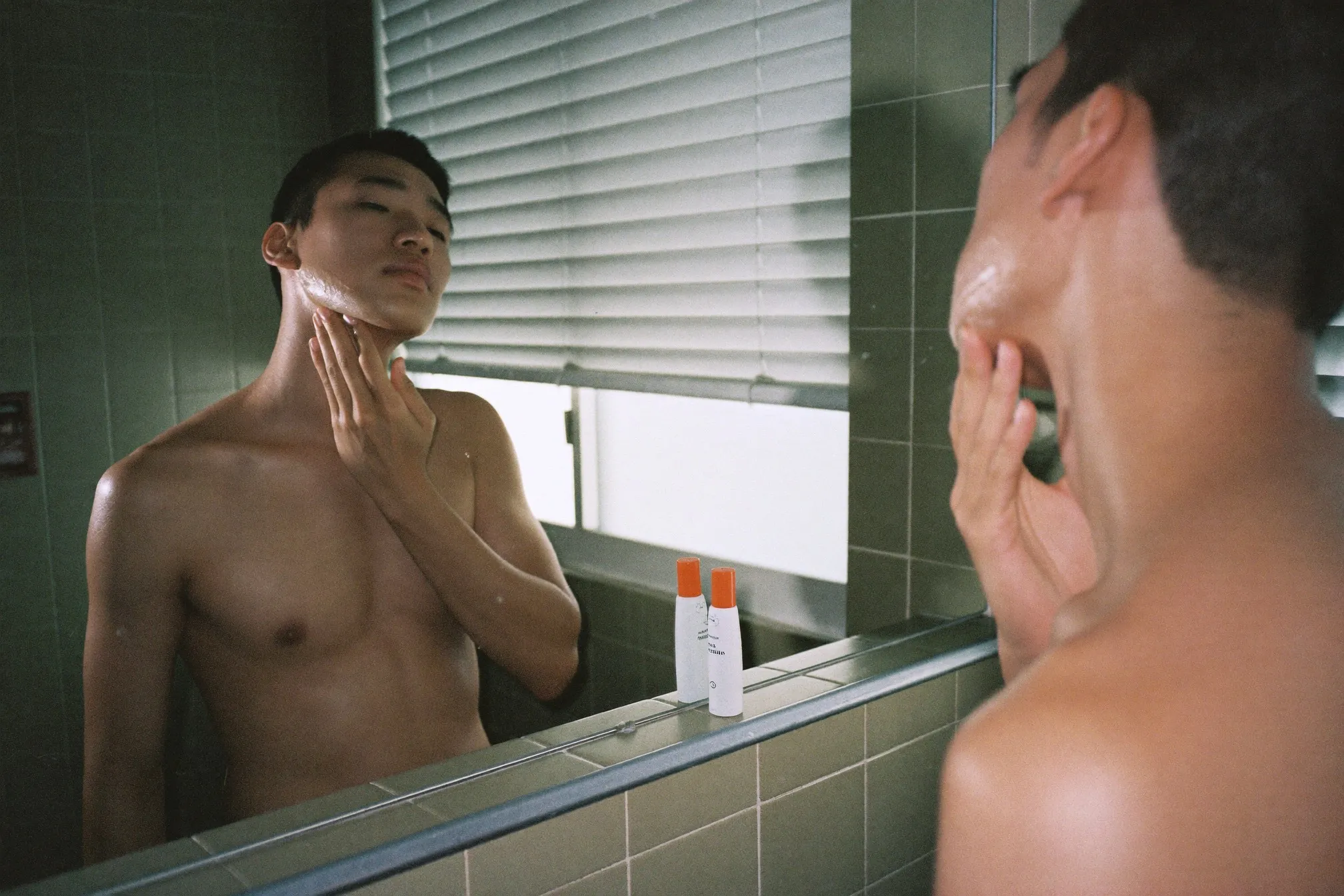
Tinted sunscreen is ordinary sunscreen with pigment mixed in, almost always iron oxides. The pigment cancels the grey-white cast that mineral filters leave behind, softens redness and uneven tone, and finishes matte instead of shiny. It is sunscreen first. Nobody reads it as makeup if the shade matches your jaw.
Most men here arrive at tinted SPF by the same route. The chemical sunscreen stung their eyes, so they switched to a zinc-based one, then caught themselves in a lift mirror at 8.30am looking two shades paler than their neck. Tinted formulas solve that. They also bring a few problems of their own, mostly shade range and transfer, and those are worth knowing before you hand over RM80.
What does the tint in tinted sunscreen do?
The tint is pigment suspended in the sunscreen base, usually iron oxides. It neutralises the white cast from zinc oxide and titanium dioxide, blurs redness, and leaves a soft matte finish. The pigment adds no SPF. Your protection still comes from the UV filters printed on the back of the tube.
Iron oxides are the same pigments that give mineral foundation its colour, which is why the finish looks familiar even if you have never worn makeup. The useful part is what they do beyond cosmetics. Iron oxides absorb some visible light, and untinted mineral sunscreen mostly does not. Visible light is one of the things dermatologists point to in stubborn pigmentation and the brown marks left behind after a breakout, which show up more on brown and olive skin than on fair skin. If dark marks are your main complaint, a tinted SPF may help alongside the rest of your acne treatment plan. If the patches are spreading or changing, see a GP or dermatologist rather than shopping harder.
Tinted, untinted or BB cream: which one suits you?
Three products get confused in the same aisle. Untinted sunscreen protects and nothing else. Tinted sunscreen protects and evens out tone sheerly. BB cream sits closest to makeup, with real coverage and, in most cases, an SPF number you will never reach because of how thinly people apply it.
| Tinted sunscreen | Untinted sunscreen | BB cream with SPF | |
|---|---|---|---|
| Coverage | Sheer, evens tone | None | Light to medium, hides marks |
| White cast | None when the shade fits | Common with mineral filters | None |
| Protection you end up with | Full, if you apply enough | Full | Usually well short of the label |
| Transfer to collars | Some | None | More |
| Easy to reapply at 2pm | No | Yes | No |
| Typical price | RM60 to RM110 | RM30 to RM60 | RM40 to RM90 |
The honest read: if white cast has never bothered you, an untinted gel is cheaper, easier to reapply and does the same protective work. Our full sunscreen guide covers SPF and PA ratings in detail, and none of that changes because a product has pigment in it.
How do you pick a shade that does not look off?
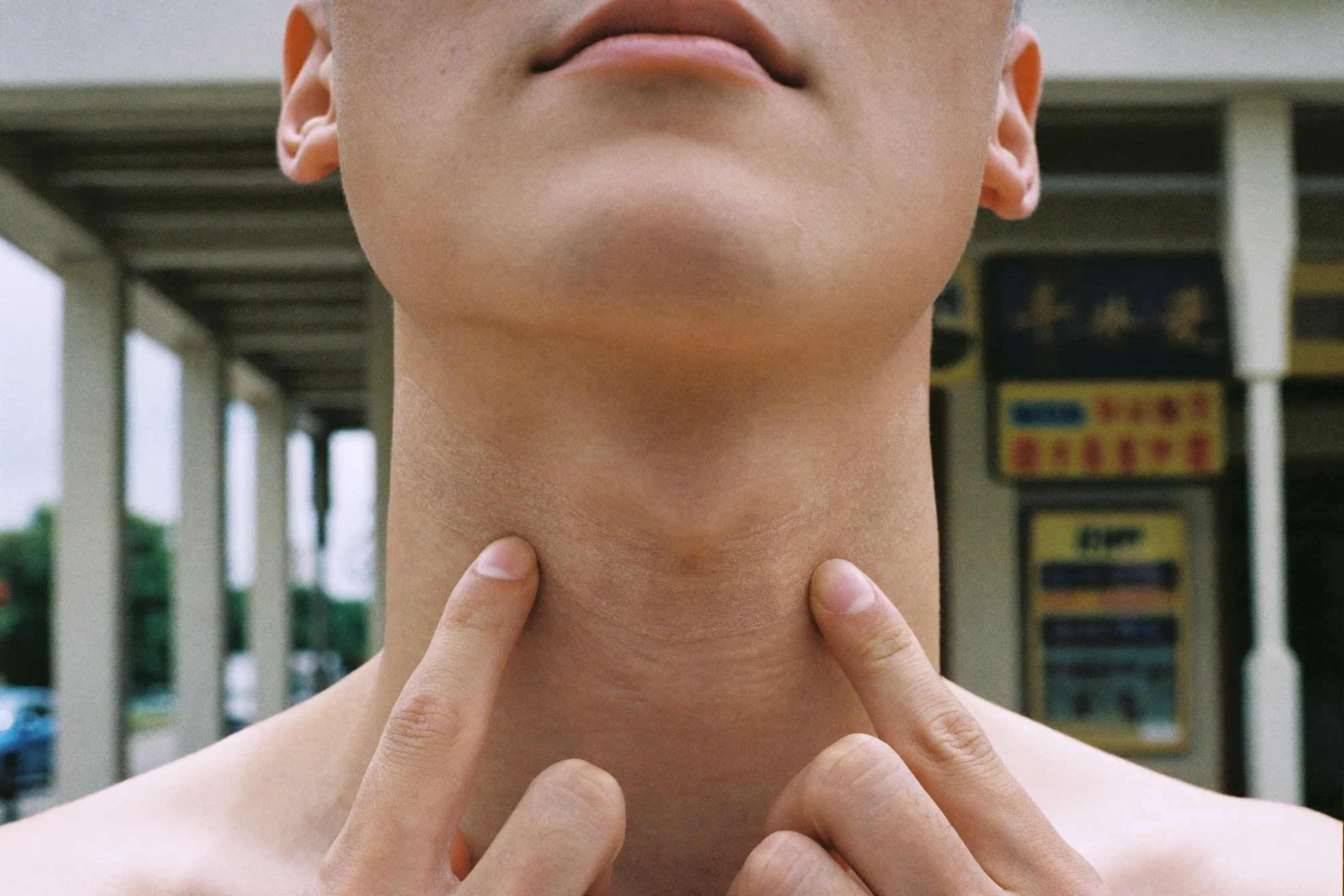
Match the tint to your jawline and neck, not the back of your hand. Swatch two shades side by side, blend both, then walk outside and look in your phone camera. Shop lighting is warm and flattering, and it has sold a lot of men a shade too pale.
Foundation brands run forty shades. Tinted sunscreens run two to four, sometimes one, so precision is off the table. A few rules that survive that limitation:
- Between two shades, take the deeper one. Slightly deep blends into your neck and passes as a tan. Slightly pale looks like a mask from a metre away.
- Ignore “universal shade” claims. Universal means a narrow middle band. Deeper skin still gets a grey veil, very fair skin goes orange.
- Watch the undertone. Most Malaysian and Singaporean complexions run neutral to olive-yellow, so tints described as beige, warm or golden sit better than ivory or rose.
- Wait five minutes before judging. Some formulas oxidise and settle a shade darker, which is fine if you planned for it and a problem if you did not.
Two brand shades will rarely land dead on. Close enough is the target, because sheer pigment forgives a small mismatch in a way foundation never does.
Where do you buy it in Malaysia and Singapore?
Watsons and Guardian carry the mainstream Japanese and Korean tinted sunscreens, usually RM60 to RM90. Sephora stocks the Western dermatology-adjacent brands at RM120 upwards, or S$40 to S$70 in Singapore. Shopee undercuts both by RM10 to RM30, with a caveat attached.
That caveat: sunscreen is a chemical product with a shelf life, and it degrades in a hot warehouse. Buy from a brand’s official Shopee store rather than the cheapest listing, check the expiry date when it arrives, and treat a suspiciously cheap price as information. A bottle that has spent three months in an unairconditioned storeroom in Klang is not the bargain it looks like.
Sampling matters more here than with most skincare, because shade is the whole risk. Sephora will swatch on request. Watsons and Guardian mostly will not, so buy the smaller size first if the brand sells one.
How do you wear it in this heat?
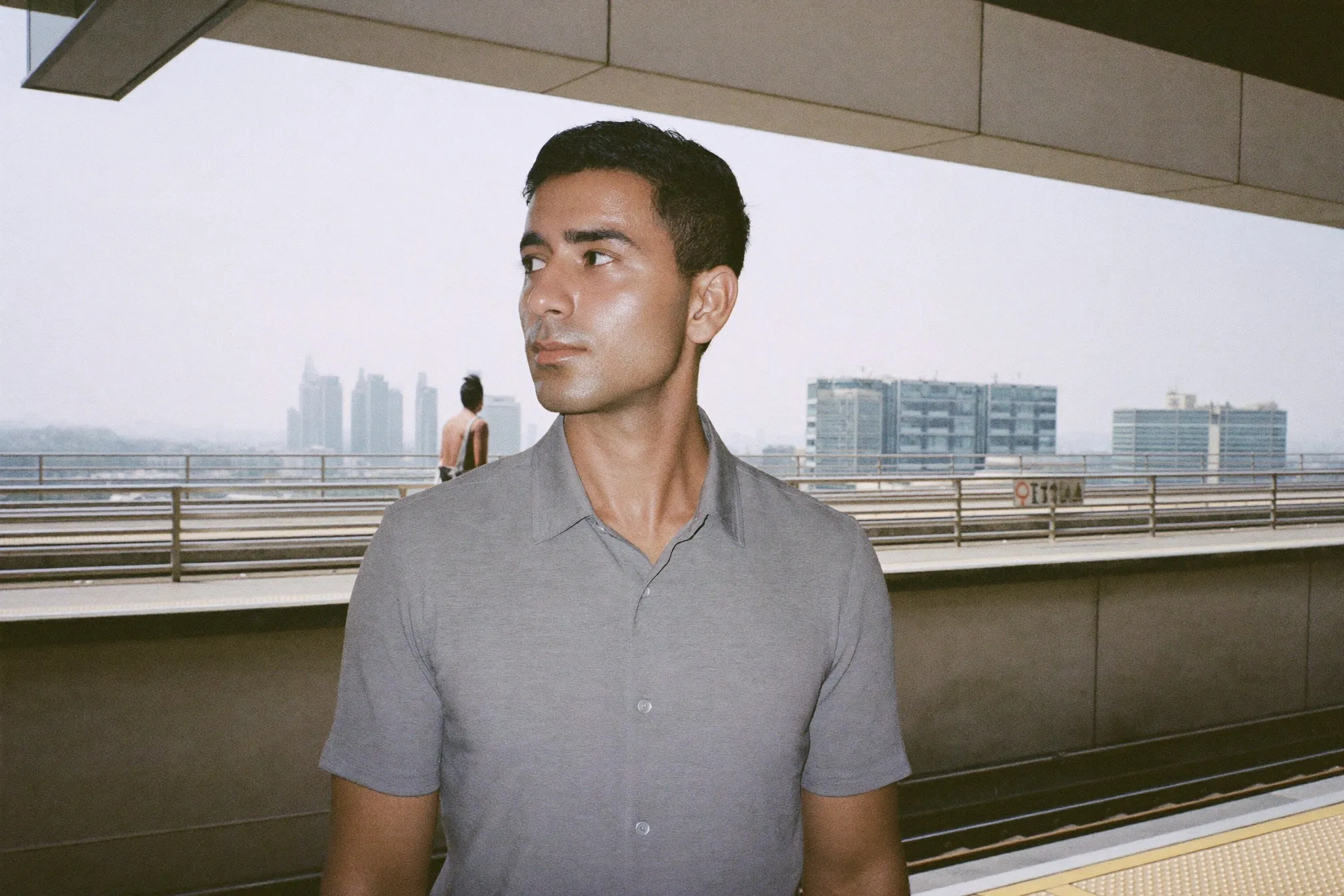
Two fingers of product, same as any sunscreen, applied last before you leave. Press it in with your fingertips rather than rubbing in circles, which drags pigment into patches. Give it two minutes to set before your collar touches your neck, then leave it alone until you get home.
The failure everyone hits is under-application. Men treat tinted SPF like makeup, use a pea-sized amount because the colour looks strong, and end up with maybe a third of the labelled protection. The tint should look slightly too much for the first thirty seconds. If it disappears the instant you spread it, you used too little.
At 2pm, blotting paper beats more product. A tissue works. Adding a second layer of tinted sunscreen over a sweaty face produces streaks and a collar you will regret, so save reapplication for outdoor days and use a clear stick over the top instead of the tinted cream. If your face is shining through the tint by midday, the problem is your oily skin routine rather than the sunscreen.
Wash it off properly at night. Pigment plus sebum sitting in your pores until morning is a straightforward route to congestion, and bar soap does not shift it. A gel or foaming face wash handles it in one pass.
Who should skip tinted sunscreen?
Beards are the clearest case. Pigment collects at the beard line and on stubble, so a tinted formula that looks clean on a shaved face reads patchy on a two-week beard. Apply lightly around the jaw or stay untinted.
Skip it too if you sweat hard outdoors. Futsal at 6pm, a hike up Broga, a long ride: all of it moves pigment around your face and onto your shirt. Untinted gel with honest reapplication wins those days.
And keep expectations in range. Tinted sunscreen does not fix dark eye circles, which are usually structural or vascular and need a different approach entirely. It softens tone across your face. It does not conceal anything specific.
Next time you pass a Watsons, Guardian or Sephora, swatch the two closest shades along your jawline, walk outside into real daylight, and buy the deeper one in the smallest size available. Wear it for a week before deciding. If your neck and face match in the lift mirror at 8.30am, you have found it. More skincare guides if you want to sort out the rest of the routine while you are at it.
Quick answers
Is tinted sunscreen makeup?
Not in any way people will notice. The tint is sheer pigment that cancels the grey cast from mineral filters and softens redness. It cannot hide a pimple or a scar, which is the job foundation does. Match the shade to your jaw and nobody reads it as makeup.
Does the tint add extra sun protection?
The SPF number comes from the UV filters, not the pigment. The iron oxides used for tinting do block some visible light, which untinted mineral sunscreens mostly let through. That is a bonus for dark marks and uneven tone, not a reason to expect a higher SPF.
What shade do I pick if the brand only sells two?
Take the deeper one. A tint slightly darker than your face blends into your neck and reads as a mild tan. A tint lighter than your face reads as a mask, especially in KL and Singapore daylight, which is unforgiving from about 10am onwards.
Will tinted sunscreen stain my shirt collar?
Some of it will transfer, yes, particularly on a humid commute. Give the product two minutes to set before you put a collared shirt on, keep the layer thin around the jaw and neck, and expect a faint mark on white collars by evening.