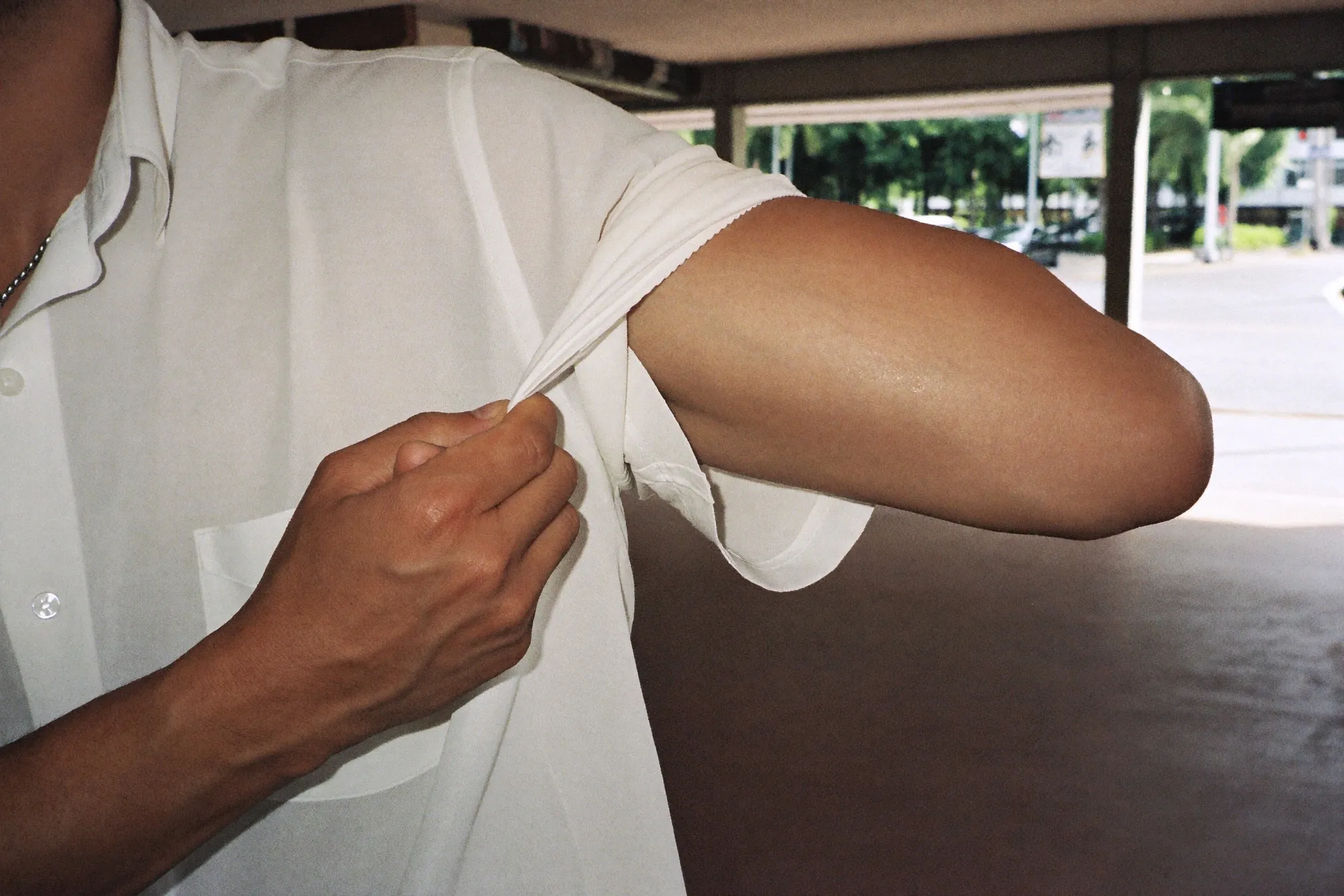
A sun tan fades on its own. Your skin sheds and rebuilds its outer layer continuously, so a long weekend in Langkawi usually clears within a month, while a tan you have collected over a year of riding to work only fades once the daily exposure stops. Nothing on a Watsons shelf speeds that up in any dramatic way.
The more useful question is whether you are looking at a tan at all. Even brown across the exposed parts of your body is a tan. Patches, spots and marks that stay after everything else lightens are pigmentation, and they run on a completely different clock.
Why does skin tan in the first place?
Tanning is a damage response. UV light reaches the living cells in your skin, and pigment-producing cells push melanin upward to shield the layers underneath. The colour you see is the aftermath of an injury, which is why the American Academy of Dermatology states there is no safe tan.
Two things happen at different speeds. Some darkening appears within hours as existing pigment reacts to light, and it fades fast. The tan that lasts comes from new melanin produced over the following days, which is also the version that means real UV has landed. The World Health Organization classifies ultraviolet radiation as a carcinogen, and the darkening is the visible receipt.
The protection a tan buys you is small. Far smaller than a bottle of SPF 50 that costs around RM40 to RM60. Building a “base tan” before a holiday trades a real hazard for an imaginary shield.
How long does tanned skin take to fade?
Most tans lighten over weeks to months, driven by skin turnover rather than anything you apply. The single variable that matters is whether you keep adding UV. A rider who tans every morning on the Federal Highway never gets a clean baseline, so his arms look permanently two shades darker than his chest.
| Situation | Rough fade time | What moves the needle |
|---|---|---|
| One sunburnt weekend at Port Dickson | 2 to 4 weeks | Stop the exposure, moisturise, no picking at peeling skin |
| Two-week beach holiday | 1 to 3 months | Daily sunscreen once you are back |
| Year-round motorbike or outdoor work | Does not fully fade while it continues | Sleeves and gloves matter more than any cream |
| Dark marks left by acne | Months, sometimes past a year | Sun protection, and treating the acne itself |
| Melasma-type patches | No reliable self-fade | See a doctor rather than experimenting |
Peeling after a burn is not fading. It is your skin discarding cells that took too much damage, and the NHS advises treating sunburn with cool water, moisturiser and shade rather than picking or bursting blisters. Scrubbing peeling skin off early leaves red, tender patches that go darker than the skin around them.
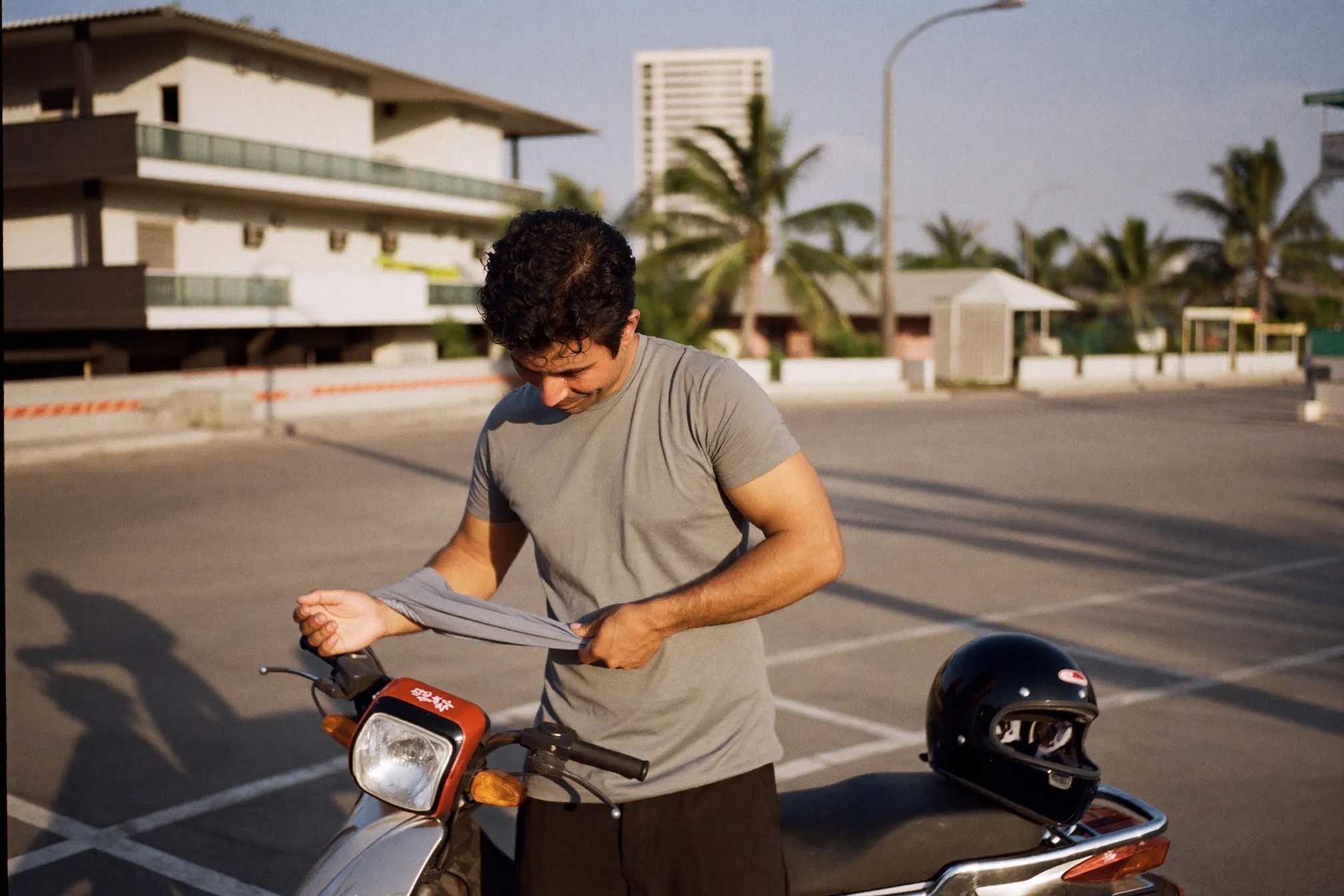
Is it a tan or is it pigmentation?
A tan is broad and even, sits only where sun reaches, and lightens as a whole. Pigmentation is patchy, holds its shape, and often sits on skin that gets little direct sun. Telling them apart decides whether you wait it out or book an appointment.
| What you see | Where it shows up | Fades on its own? |
|---|---|---|
| Even brown on arms, neck, face | Exposed skin only, with a clear line at the sleeve | Yes, over weeks to months |
| Flat dark marks after spots or ingrown hairs | Wherever the breakout was, jaw and neck for most men | Slowly, over many months |
| Small defined dark spots | Face, forearms, backs of hands | Rarely, they tend to persist |
| Larger symmetrical patches | Cheeks, forehead, upper lip | No, and sun makes it worse |
MedlinePlus groups these under skin pigmentation disorders, and the practical takeaway is that they respond to different treatment. Chasing a melasma patch with a scrub aimed at a tan wastes months. If you also deal with breakouts, the pigment left behind is the part that lingers, so read our guide to acne treatment for men before attacking the marks.
What actually helps a tan fade?
Four things, in order of how much they do. Block further UV, keep the skin barrier intact, exfoliate gently, then wait. That is the entire honest list, and the first item does more than the other three combined.
Daily sunscreen. SPF 30 or higher, broad spectrum, applied every morning. This is the only step that stops the tan being topped up before it has a chance to clear. Our sunscreen guide for Malaysia and Singapore covers what survives this humidity.
Moisturiser at night. Dry, damaged skin sheds unevenly and looks duller than it needs to. A basic lotion is enough. See choosing a moisturiser if your face turns greasy by noon.
Gentle exfoliation, once or twice a week. A mild chemical exfoliant beats a gritty scrub. Overdoing it causes irritation, and irritated skin in this part of the world leaves darker marks than the tan you were trying to shift.
Patience. Skin turnover has a fixed speed and no product overrides it.
What to skip: lemon juice, toothpaste, baking soda, aggressive scrubbing, and whitening creams from unverified online sellers. The WHO has flagged mercury as an ingredient found in some skin-lightening products, and mercury exposure is a serious health risk, not a cosmetic trade-off. Buy from a pharmacy counter at Watsons or Guardian, or buy nothing.
One more thing worth saying plainly. The goal here is even tone and undamaged skin, not lighter skin. Deeper skin looks entirely fine. What looks off is the mismatch between a dark forearm and a pale bicep, and that gap closes by protecting the dark side rather than bleaching it.
How do you fix the motorbike arm and the collar line?
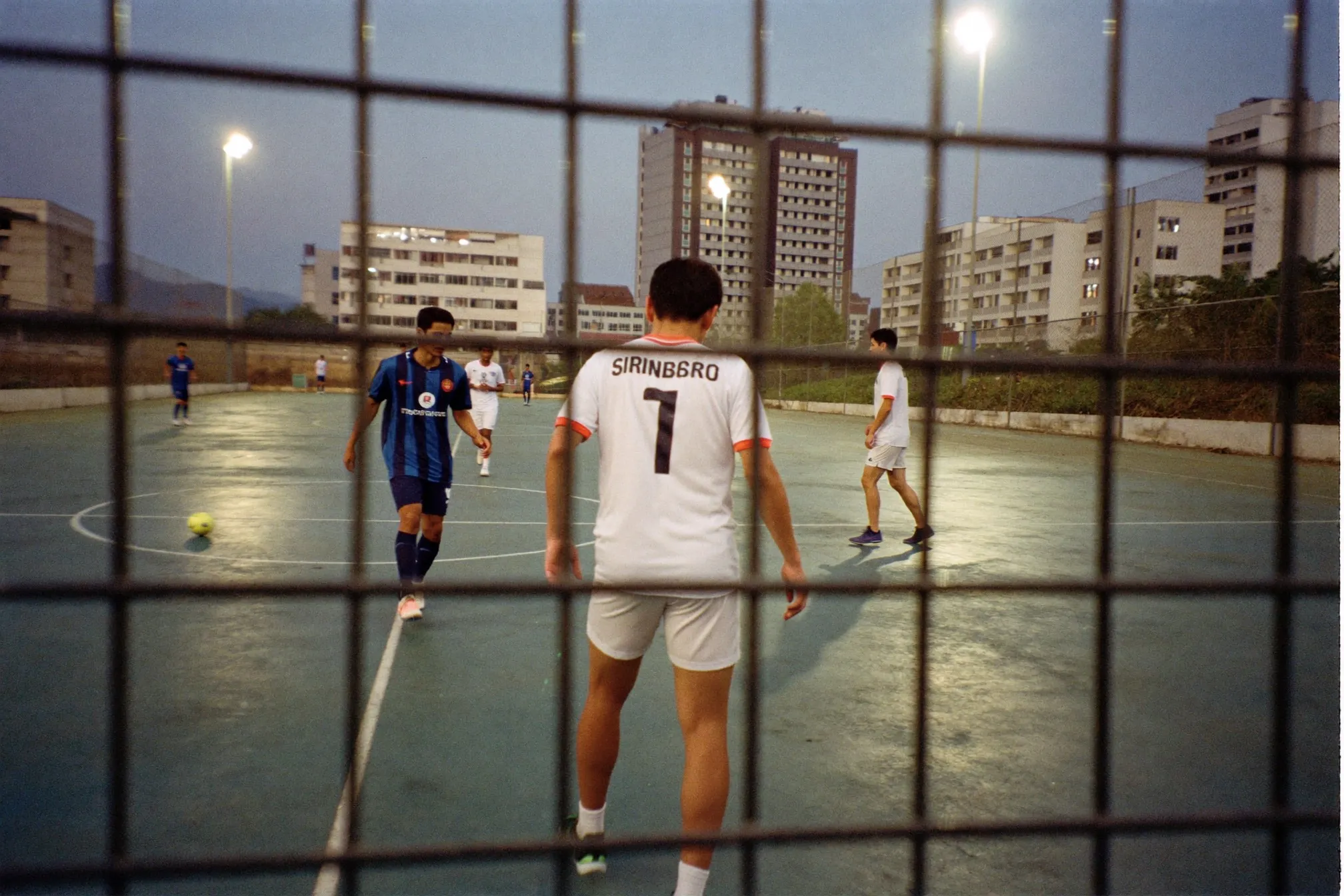
You prevent the next one instead of removing the last one. Tan lines in KL and Singapore follow predictable shapes: right forearm darker than left from driving, hands and wrists darker than arms, a V at the collar, and a sharp cutoff mid-thigh from futsal shorts.
The fixes are boring and they work:
- UV sleeves for riders. Decathlon and Shopee sell plain arm sleeves for roughly RM25 to RM45. They beat sunscreen on a bike because wind and sweat strip a cream in one commute.
- Sunscreen on the driving hand and forearm. Ten seconds before you start the car. Both hands, backs included.
- Long-sleeve jersey for outdoor sport. Lightweight athletic long sleeves cost about the same as a T-shirt and remove the biceps line completely.
- Neck and ears. Everyone stops at the jawline. The V at your collar and the tops of your ears take a beating and nobody covers them.
- A cap or a small umbrella. Half of Singapore already walks with one. They are right.
Give it three months of consistent protection and the lines soften considerably. They will not vanish overnight, and any product promising that is selling you the fade your own skin was going to do anyway.
When should you see a dermatologist?
Book an appointment when pigmentation stops behaving like a tan. That means patches that have not budged after several months of sun protection, dark areas appearing on skin that rarely sees sun, or symmetrical patches across the cheeks and forehead. Prescription options exist, and they belong with a doctor.
See someone sooner for anything that changes. The AAD’s guidance on skin cancer points to moles or spots that shift in size, shape or colour, that have uneven borders or more than one colour, that itch, bleed or refuse to heal. Darker skin is not exempt, and skin cancer on Asian skin often turns up in less obvious places such as the soles of the feet, the palms and under the nails. A GP can look and refer.
Private dermatology consultations in KL usually run around RM100 to RM250, and in Singapore around S$100 to S$200 before treatment. A government clinic referral costs less and takes longer. Either is cheaper than a year of guessing with products bought off a livestream.
The practical move today: put a bottle of SPF 30 or higher next to your car keys or your helmet, and use it on your hands, forearms, neck and ears before you leave. Then leave the existing tan alone and let your skin do the work it was already doing. If a patch is still there in three months, that is your cue to see a doctor rather than buy another cream. For the rest of the routine, start with our skincare basics for men or browse the full skin section.
Quick answers
How long does a sun tan take to fade?
Skin replaces its outer layer over a matter of weeks, so a tan from one beach weekend usually clears in about a month. A tan built up over a whole year of outdoor commuting fades slowly and only once the daily exposure stops. Patchy pigmentation takes much longer.
Can you remove a sun tan faster?
Not by much. Blocking further UV, keeping skin moisturised and gentle exfoliation once or twice a week are the honest levers. Harsh scrubs, lemon juice and unverified whitening creams cause irritation, and irritation leaves darker marks than the tan you started with.
Why is my face darker in some patches than others?
Uneven patches are usually pigmentation rather than tan. Old spots and acne marks darken further with sun, and melasma shows up as larger symmetrical patches on the cheeks and forehead. None of these fade on the same schedule as a tan. A dermatologist can tell them apart.
Does a tan protect you from sunburn?
Barely. A tan gives a small amount of protection, far below what sunscreen provides, and the colour only appears because UV already injured the skin. Dermatology bodies are clear that there is no safe tan. Use SPF 30 or higher instead of building a base tan.