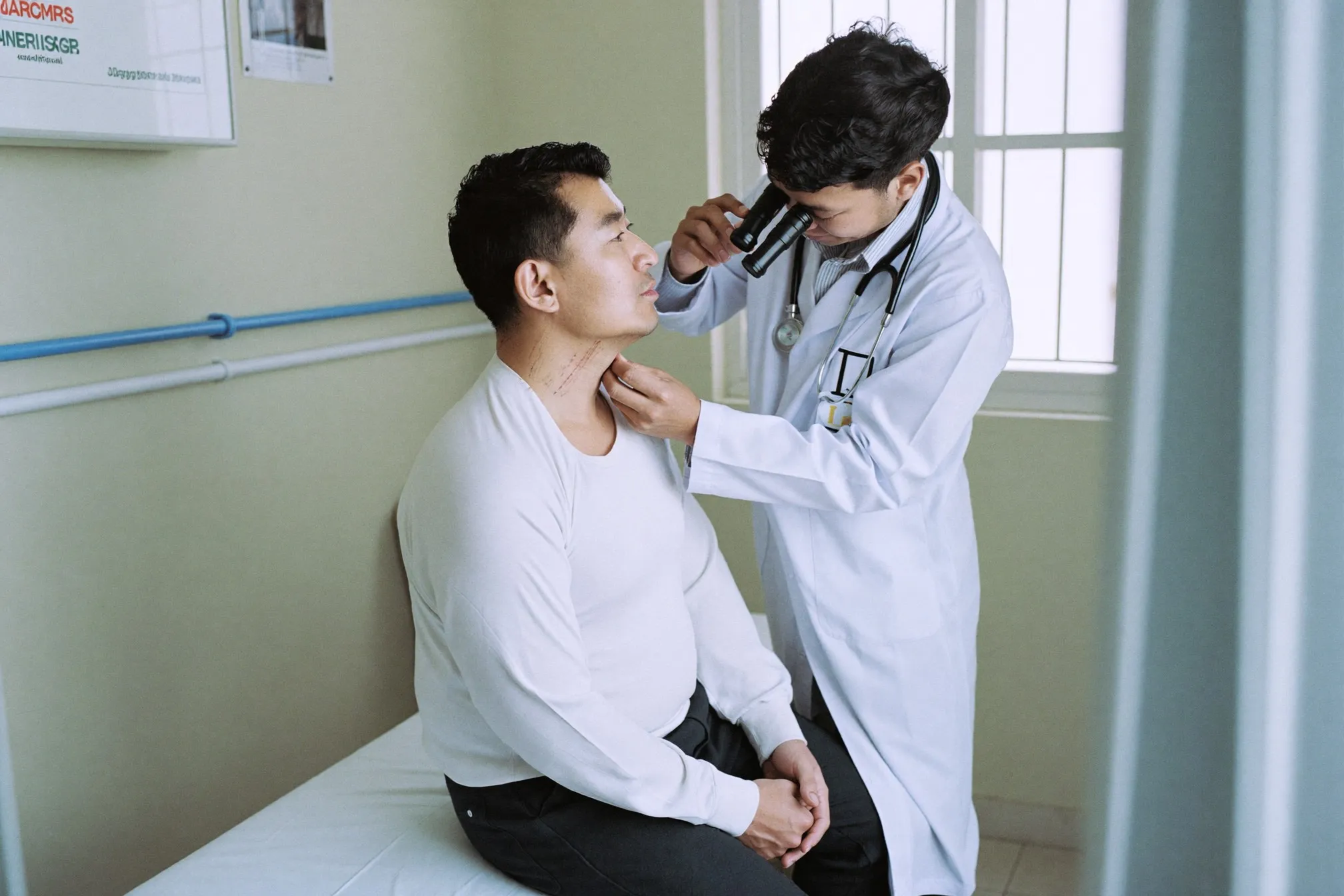
A skin tag is a small, soft growth that hangs off the skin on a thin stalk, most often on the neck, armpits, groin or eyelids. The NHS describes them as harmless, common and not in need of treatment. If one bothers you, a doctor removes it in a few minutes.
You do not remove it yourself. That is the whole reason this guide runs long. Skin tags are the least dramatic thing your skin can do, right up to the moment the growth you assumed was a skin tag turns out to be something else entirely.
What does a skin tag look like?
A skin tag is a soft flap of tissue, usually 1mm to 5mm across, attached by a narrow stalk. It wobbles when you push it and it matches your skin tone or runs slightly darker. It causes no pain unless a collar, chain or razor catches it. The NHS notes they become more common with age.
A few get larger, up to a centimetre or two, though those are the exception. On brown and deeper skin tones they often read darker than the skin around them, which by itself means nothing. The stalk is the giveaway. A skin tag hangs. A mole or a wart sits flat against the skin or bulges out of it with a broad base.
They also arrive in company. Most men who get one get several over the following years, in the same friction-prone spots.
What causes skin tags?
Friction, age and body weight do most of the work. Skin rubbing against skin or fabric is the common thread across every typical location. The NHS links skin tags to being overweight and to type 2 diabetes, and notes they commonly appear during pregnancy. Family history plays a part too.
Nothing about your hygiene caused them. That matters, because plenty of men here read a growth on their neck as a sign they are dirty and attack it with a harsher scrub. Scrubbing changes nothing except your skin barrier. The skincare routine guide covers what a face and neck routine should look like in this climate.
The tropical layer on top: heat and humidity keep skin damp, and damp skin under friction rubs harder. A buttoned collar on a 33 degree afternoon, a helmet strap on a Grab ride, a gym bag on the same shoulder five days a week. None of these guarantee a skin tag. All of them describe the conditions where one is likelier to show up.
If you get a run of new skin tags over a short period, mention it at your next GP visit. The NHS association with type 2 diabetes does not mean you have diabetes, and a doctor is the right person to decide whether a blood sugar check makes sense.
Where do they show up on men?
The friction map is predictable:
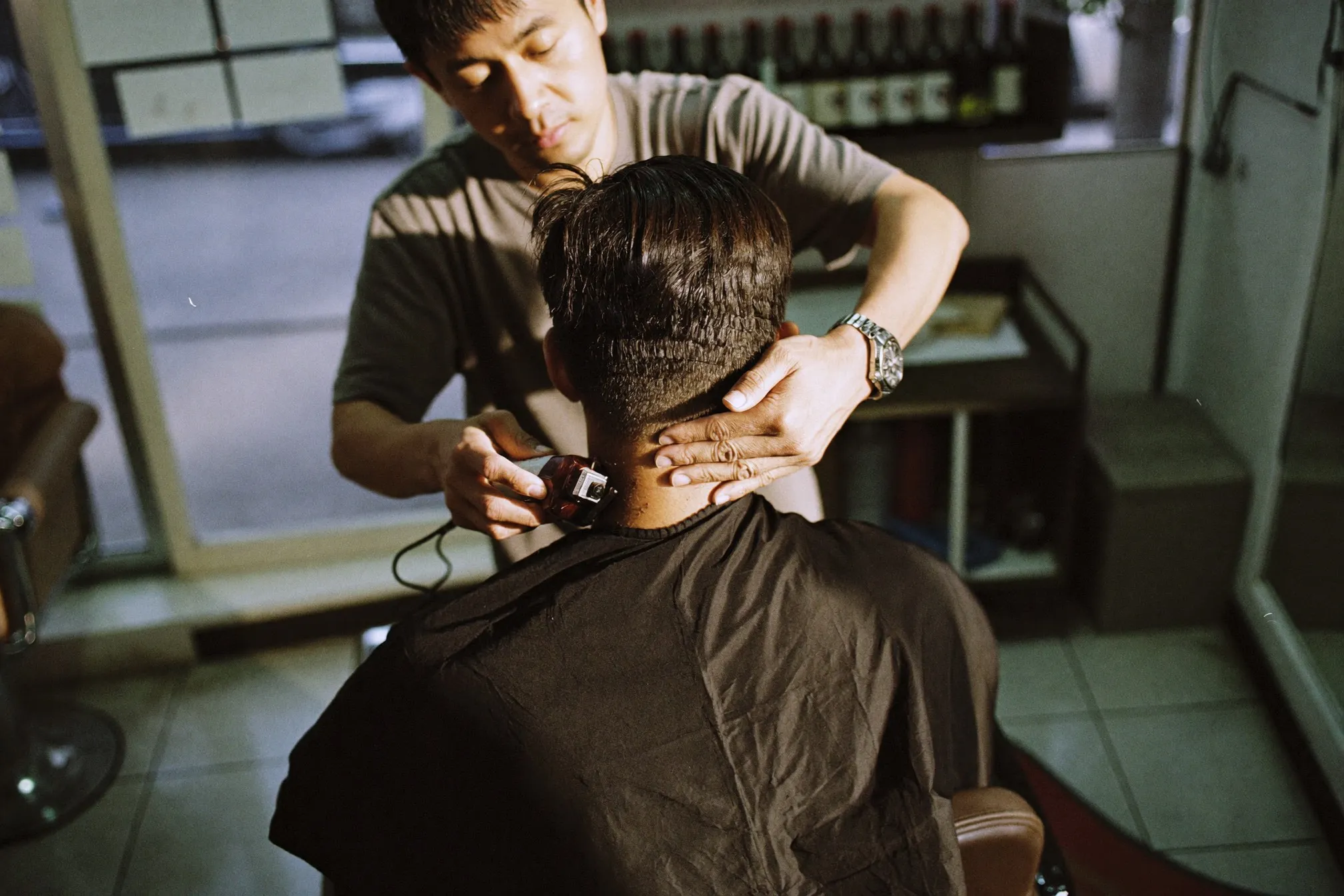
- Neck and collar line. The most common spot, and the one your barber notices before you do. Tell him if you have tags at the nape so he works around them rather than through them.
- Armpits. Skin on skin, all day, plus deodorant on freshly shaved skin. If you shave or trim there, read the manscaping guide before you take a razor anywhere near a raised growth.
- Groin and inner thigh. Same mechanics, worse ventilation.
- Eyelids. Small, soft, and the one place you must never improvise. Anything on an eyelid goes to a doctor.
- Under the chin and along the jaw. Beard territory, which is why they get nicked.
- Waistband and bra-strap lines. Anywhere elastic sits for eight hours.
Getting nicked matters more than it sounds. A tag that bleeds every shave is a weekly infection risk in humid weather, and that alone is a reasonable medical reason to have it removed properly.
Is it a skin tag or something else?
You cannot diagnose a growth by reading an article, including this one. What you can do is recognise which category you are probably looking at, then get it confirmed. The American Academy of Dermatology maintains an A to Z of skin conditions worth a look before your appointment.
| What you see | Typical look | What to do |
|---|---|---|
| Skin tag | Soft, hangs on a thin stalk, moves easily, skin-coloured or darker | Leave it, or ask a doctor to remove it |
| Wart | Rough, firm, broad base, can spread to nearby skin | See a GP or pharmacist |
| Mole | Flat or slightly raised, even colour, stable for years | Photograph it, watch for change |
| Seborrheic keratosis | Waxy, “stuck-on” brown patch, common after 40 | Get it confirmed once |
| Cyst | Firm lump under the skin, no stalk, sometimes tender | See a GP |
| Anything bleeding, growing or changing colour | No fixed look | See a doctor promptly |
That last row does the heavy lifting. Both the AAD and Mayo Clinic describe change as the signal that matters with any skin growth: change in size, shape, colour or texture, a sore that will not heal, or new bleeding, crusting or itching. Skin cancer can appear on skin that rarely sees the sun, which rules out “but it is under my arm” as reassurance.
Two more things worth knowing. Darker skin tones are not exempt, and cancers on brown skin are often found late because everyone assumes the risk sits with fair skin. And a skin tag will not become cancerous. The concern runs the other way: something serious being written off as a skin tag for two years.
When should you see a doctor?
Book an appointment for any new growth you cannot confidently identify, and for any existing growth that changes. Also book if a tag bleeds, hurts, itches, sits on an eyelid, or keeps catching on clothing. A GP consultation in Malaysia or Singapore is cheap relative to what a delayed diagnosis costs.
The red flags, plainly:
- It changes size, shape or colour.
- It bleeds without anything knocking it.
- It hurts or itches persistently.
- It is a sore that has not healed in a few weeks.
- It has more than one colour in it, or ragged edges.
- Several appeared in a short window.
A GP handles most of this and refers you to a dermatologist when needed. Bring your phone. A photo from three months ago beats any description you can give from memory. Add a look at your moles while you are at it, and keep the sunscreen basics running, since sun damage is the one skin risk here you can genuinely reduce.

How do doctors remove skin tags?
In-clinic removal is quick, done under local anaesthetic where needed, and usually finished in one visit. A doctor picks the method based on size, location and how many you have.
| Method | What happens | Worth knowing |
|---|---|---|
| Snip excision | The area is numbed and the tag is cut at the stalk with sterile scissors | Fast, suits small and medium tags |
| Cryotherapy | The tag is frozen with liquid nitrogen | May need a repeat; can leave a lighter or darker mark |
| Electrosurgery | The stalk is burned through and the vessel sealed | Practical when clearing several at once |
| Ligation | The base is tied off to cut the blood supply | Less common, slower to drop off |
Cost is the part nobody publishes clearly, because removal is normally classed as cosmetic and paid out of pocket. Private clinics in KL and PJ tend to land somewhere around RM150 to RM500 a session depending on the count and the method; Singapore private clinics around S$100 to S$400 plus consultation. Ring two and ask for a quote by number of tags. A per-tag quote and a per-session quote are different animals.
Removal treats what is there now. New tags can still appear elsewhere, so treat it as maintenance rather than a cure.
Why you should never remove a skin tag yourself
This is the section to take seriously. Cutting, tying off, freezing or burning a growth at home carries four real problems, and they compound.
You might be wrong about what it is. Destroy the tissue and you also destroy what a doctor would have examined. A growth that needed a biopsy becomes a scar with no answer attached.
It bleeds more than you expect. Skin tags carry a blood supply through that stalk, and a nick at the sink at 11pm is a poor time to discover it.
Infection follows easily in this climate. Warm, humid, sweaty skin plus an open wound plus a collar rubbing it is the whole recipe.
Marks last. On brown and deeper skin tones, inflammation from a botched removal frequently leaves post-inflammatory pigmentation that outlives the tag by years, which is a worse cosmetic outcome than the thing you were trying to hide.
The same applies to the removal pens, freezing kits, acid drops and herbal creams sold on Shopee and Lazada. They are unregulated for this use, they carry every risk above, and none of them can tell you what they are burning. Dental floss and thread do not belong here either. A clinic visit costs less than the scar revision.
Can you prevent them?
Not reliably, and anyone promising otherwise is selling something. You can reduce the friction that favours them: a collar with a bit of room, moisture-wicking fabrics instead of clingy cotton on hot days, a clean dry towel after the gym, alternating which shoulder carries the bag.
Body weight is the other lever the NHS mentions, and it is a slower one. If that is already on your list, the belly fat guide sticks to sane, boring methods. Treat it as general health rather than a skin tag cure, because the evidence supports the association, not a promise.
The rest of the skin section covers the daily habits that keep everything else in decent shape.
Do this tonight: after your shower, spend one minute checking your neck, armpits and waistband in good light. Photograph anything raised, with a coin next to it for scale, and note the date in your phone. If it looks different in three months, or if any of the red flags above apply now, book a GP appointment instead of opening a shopping app.
Quick answers
Are skin tags dangerous?
No. The NHS describes skin tags as harmless growths that do not usually need treatment. They are not cancerous and they do not turn cancerous. The risk sits elsewhere: assuming a growth is a skin tag when it is something else. Get any new growth confirmed by a doctor once.
Can I remove a skin tag at home?
Do not try. Cutting, tying or burning a growth yourself risks bleeding, infection and a permanent mark, and it destroys the tissue a doctor would need to examine if the growth was not a skin tag. Removal kits sold online carry the same problems. A clinic visit takes minutes.
Do skin tags grow back after removal?
A properly removed skin tag rarely returns in the same spot. New ones often appear elsewhere, because the conditions that produced the first one have not changed. Removal treats the growth in front of you, not the tendency, so plan for the occasional repeat visit.
Why am I suddenly getting a lot of skin tags?
Age, body weight and friction are the usual drivers, and the NHS notes skin tags are more common in people who are overweight and in people with type 2 diabetes. A sudden crop of many is worth raising with a GP, who may want to check your blood sugar.