
Eczema is a long-term condition where your skin barrier leaks moisture and inflames, so the same patches keep flaring for years. Heat rash is short-term: sweat ducts block, tiny bumps appear, and the skin clears within days once you cool down. Both go off constantly in Malaysia and Singapore, and the fixes are different enough that guessing wrong wastes months.
The overlap is the itch. An itchy patch on your forearm at 2pm in Bangsar could be either, plus a third possibility (a fungal rash) that gets worse if you treat it as eczema. This guide covers how to tell them apart, what you can do at home, and the point at which you stop experimenting and see a GP.
What’s the difference between eczema and heat rash?
Heat rash comes on within hours of heavy sweating, sits under waistbands and collars, and disappears when you cool down. Eczema returns to the same places over months, leaves the skin dry or thickened, and flares with irritation rather than heat alone. Timing and location tell you most of what you need.
| Heat rash (miliaria) | Eczema (atopic dermatitis) | |
|---|---|---|
| Onset | Hours after sweating | Builds over days, recurs for years |
| Look | Tiny clear or red bumps, sometimes prickly | Dry, red or darker patches, scaly, can weep or crack |
| Where | Chest, back, waistband, groin, under straps | Elbow and knee creases, hands, neck, eyelids |
| Feel | Prickling, stinging | Deep itch, worse at night |
| Clears | Days, once cool | Improves and returns in cycles |
The NHS describes heat rash as blocked sweat ducts, which is why it clusters exactly where a strap, a belt or a damp shirt sits against you. Eczema is a barrier problem: water escapes, irritants get in, the immune system overreacts. On deeper skin tones, eczema patches often look grey, purple or darker brown rather than red, which is one reason it gets missed here.
Then there is the third option. A rash with a raised, scaly edge and a clearer middle, spreading outward in a ring, may be a fungal infection rather than eczema. The NHS notes it thrives in warm, moist skin folds, which describes most of us by Thursday. Fungal rashes need antifungal treatment, and the creams used for eczema flares can make them worse. That is a strong reason to get a proper look at anything ring-shaped instead of self-treating.
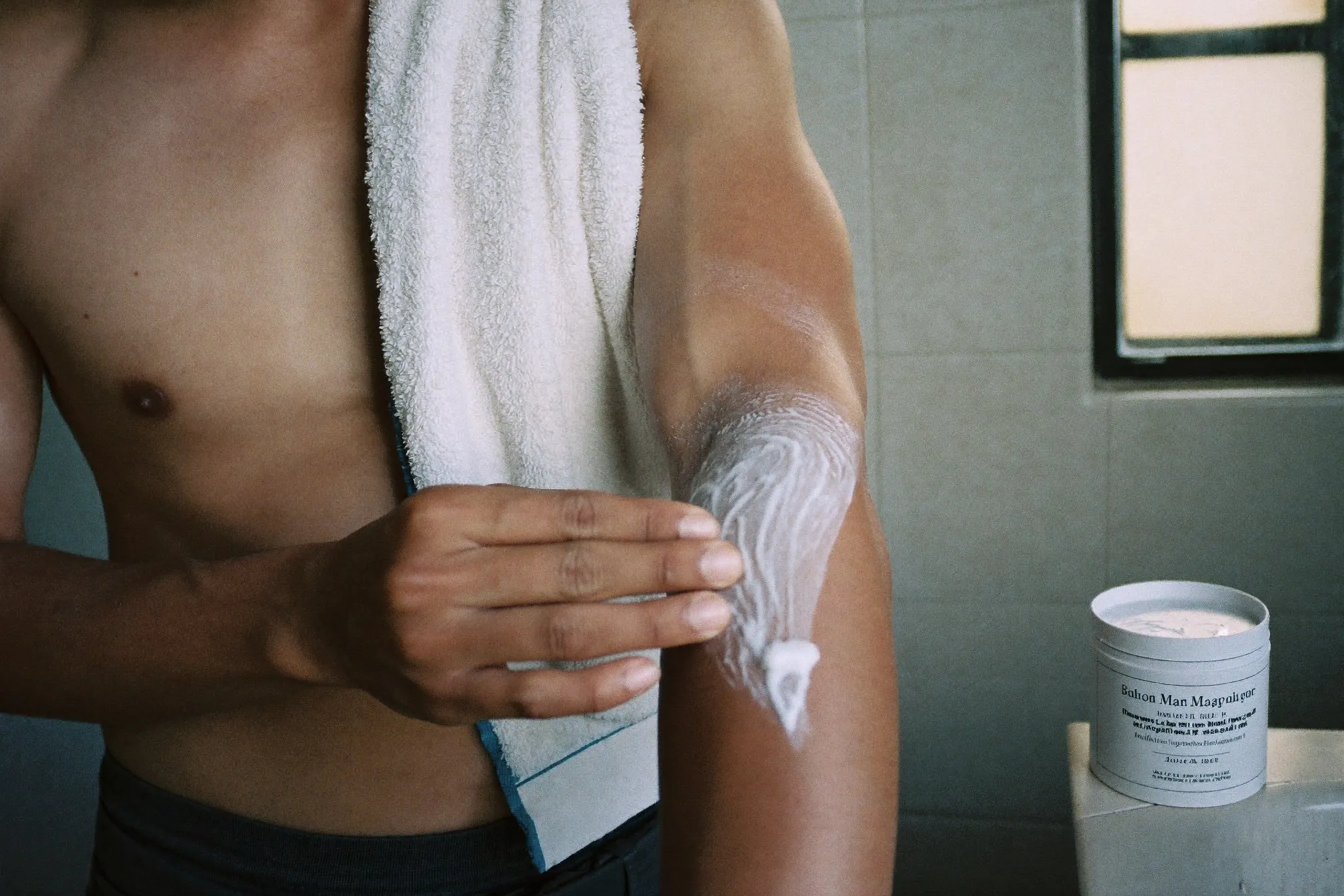
Why does this climate make both worse?
You sweat all day, then sit in aircon that pulls moisture out of the air, then walk back into 33°C. That cycle blocks sweat ducts and dries the skin barrier in the same afternoon. Add dust mites, which do well in warm humid homes, and you get a year-round trigger list instead of a seasonal one.
The specific offenders in a KL or Singapore week:
- Damp clothing. A shirt that stays wet from the LRT platform to your desk keeps skin macerated for hours.
- Aircon swings. Cold dry office air, then a humid car park. Your skin never settles.
- Hot showers. A long hot shower feels great after futsal and strips oils that took all day to rebuild.
- Fragranced everything. Heavily perfumed body wash, fabric softener and hand soap all irritate a compromised barrier.
- Sun and sweat on the same patch. Sunburn plus salt is a reliable way to set off an old eczema spot.
None of this means you need a fourteen-step routine. It means the boring parts matter more here than they would in a temperate country. Our skincare routine for men covers the base, and the moisturiser guide explains textures if your skin runs oily on the face and dry everywhere else, which is common in this weather.
What do you do about heat rash today?
Cool the skin and stop the sweating. Get out of the damp shirt, rinse with cool water, dry properly, and let the area breathe in loose cotton. Mayo Clinic and the NHS both put cooling first, because heat rash clears on its own once the ducts unblock. Most cases settle in a few days without any cream at all.
Practical version, for a normal weekday:
- Change out of wet clothes as soon as you can. Keep a spare tee in your bag or at the office.
- Rinse cool, not cold, and pat dry rather than rubbing.
- Skip thick occlusive balms on the rash itself. Anything that seals the skin keeps the duct blocked.
- Wear loose cotton or a technical fabric that moves sweat away, and change it after training.
- Leave it alone. Scratching breaks the skin and invites infection.
If the bumps turn into pus-filled spots, if the area gets hot and painful, or if the rash is still there after a week of cooling down, see a GP. Infected skin needs treatment you cannot buy off a shelf at Watsons.
For the gym-specific version of this problem, the same rules that clear back acne apply: shower soon after training, wash the kit, and stop rewearing yesterday’s shirt because it “still smells fine”.
How do you manage eczema without making it worse?
Moisturise more often than feels reasonable, wash gently, and avoid your known triggers. Both the NHS and the AAD build their eczema guidance on daily emollient use, applied even when your skin looks fine. That is the whole foundation. Prescription treatments handle flares, but they sit on top of the moisturising, never instead of it.
What that looks like day to day:
- Apply moisturiser at least twice a day, and always within a few minutes of showering while skin is still slightly damp.
- Use fragrance-free products. Fragrance is one of the most common irritants in the aisle, and “natural” says nothing about that.
- Shower warm and short. Ten minutes at a comfortable temperature beats twenty minutes hot.
- Swap harsh body wash for a soap substitute or a gentle non-foaming cleanser. Our body wash guide covers the mild end of what’s on local shelves.
- Keep nails short. You will scratch in your sleep. Short nails do less damage.
- Wash new clothes before wearing and cut the fabric softener.
Scalp involved? Flaking on the scalp and around the nose is often seborrhoeic dermatitis rather than atopic eczema, and it responds to different products. The dandruff guide has that one covered.
What eczema cream should you buy?
Buy a plain, fragrance-free moisturiser in a texture you will use every day, and buy a big tub of it. Ceramide-based creams, or basic emollients with glycerin, are the standard recommendation. In humid weather most men tolerate a lotion or light cream better than a heavy ointment, so the lighter one usually wins because it gets applied.
| Type | Feels like | Best for | Rough price, MY/SG |
|---|---|---|---|
| Lotion | Thin, absorbs fast | Daytime, aircon office, humid days | RM25 to RM50 / S$12 to S$20 |
| Cream | Richer, slight residue | Most people, most of the time | RM40 to RM80 / S$18 to S$35 |
| Ointment | Greasy, sits on top | Overnight, cracked hands and feet | RM30 to RM60 / S$15 to S$25 |
| Soap substitute | Non-foaming wash | Replacing drying shower gel | RM30 to RM60 / S$15 to S$25 |
Watsons and Guardian carry ceramide and emollient ranges in both countries, and pharmacy staff can point you at the fragrance-free shelf. Shopee and Lazada are cheaper for the big 400ml tubs, which is the size you want if you are moisturising properly.
One thing this guide will not do: tell you how to use a steroid cream. Topical steroids come in different strengths, and the right one depends on where the patch is, how bad it is and how old you are. That is a conversation with a doctor or pharmacist, not a decision to make from an article or from whatever a friend has left in his drawer.
When should you see a GP or dermatologist?
Book an appointment if the rash is spreading, weeping, painful or not improving after a week or two of decent home care. Also go if the itch is costing you sleep, if a ring-shaped patch is growing, or if you have been buying creams for months without progress. Persistent itchy skin has many causes, and some of them need a prescription.
Clear reasons to stop self-treating:
- The skin is broken, oozing, crusted yellow, or the area feels hot and tender. Those suggest infection.
- The rash spreads quickly, or comes with fever or feeling unwell.
- It keeps you awake, or affects your hands enough to interfere with work.
- Nothing over the counter has helped in a month.
- You have used a leftover steroid cream from a previous prescription. Tell the doctor. It changes what they see.
In Malaysia, a private GP visit runs roughly RM40 to RM90 before medication, and a Klinik Kesihatan visit costs RM1 for citizens. In Singapore, a polyclinic visit is subsidised for citizens and PRs, and a private GP typically charges S$40 to S$70. A dermatologist referral costs more, and eczema that has resisted a year of guessing is worth that money.
Start tonight: pick up one fragrance-free moisturiser, put it next to your towel so you use it straight out of the shower, and give it two weeks. If the itch is still winning at the end of that, make the GP appointment instead of buying a third cream. More on the rest of your routine in the skin section.
Quick answers
How do I know if it's eczema or heat rash?
Heat rash appears fast after sweating, sits where clothes trap heat, and fades within days once you cool down. Eczema returns to the same spots over months, often at elbow and knee creases, with dry or thickened skin. A GP can confirm which one you have.
What eczema cream should I use in this climate?
A plain fragrance-free moisturiser, applied often, is the base of every eczema plan the NHS and AAD describe. Lighter lotions suit humid days better than thick ointments. Prescription treatments exist for flares, but a doctor decides which one and for how long.
Can aircon make eczema worse?
Yes. Air conditioning dries the air around you, and moving between a cold office and 33°C outside stresses an already leaky skin barrier. Moisturise before you go into a long aircon stretch, and keep a small tube at your desk.
Why does my rash come back every time I go to the gym?
Sweat trapped under a wet shirt blocks sweat ducts and irritates the skin, which triggers heat rash and can set off an eczema flare. Change out of damp kit straight after training and rinse off. If the rash spreads in a ring shape, see a GP: that pattern can point to a fungal infection.