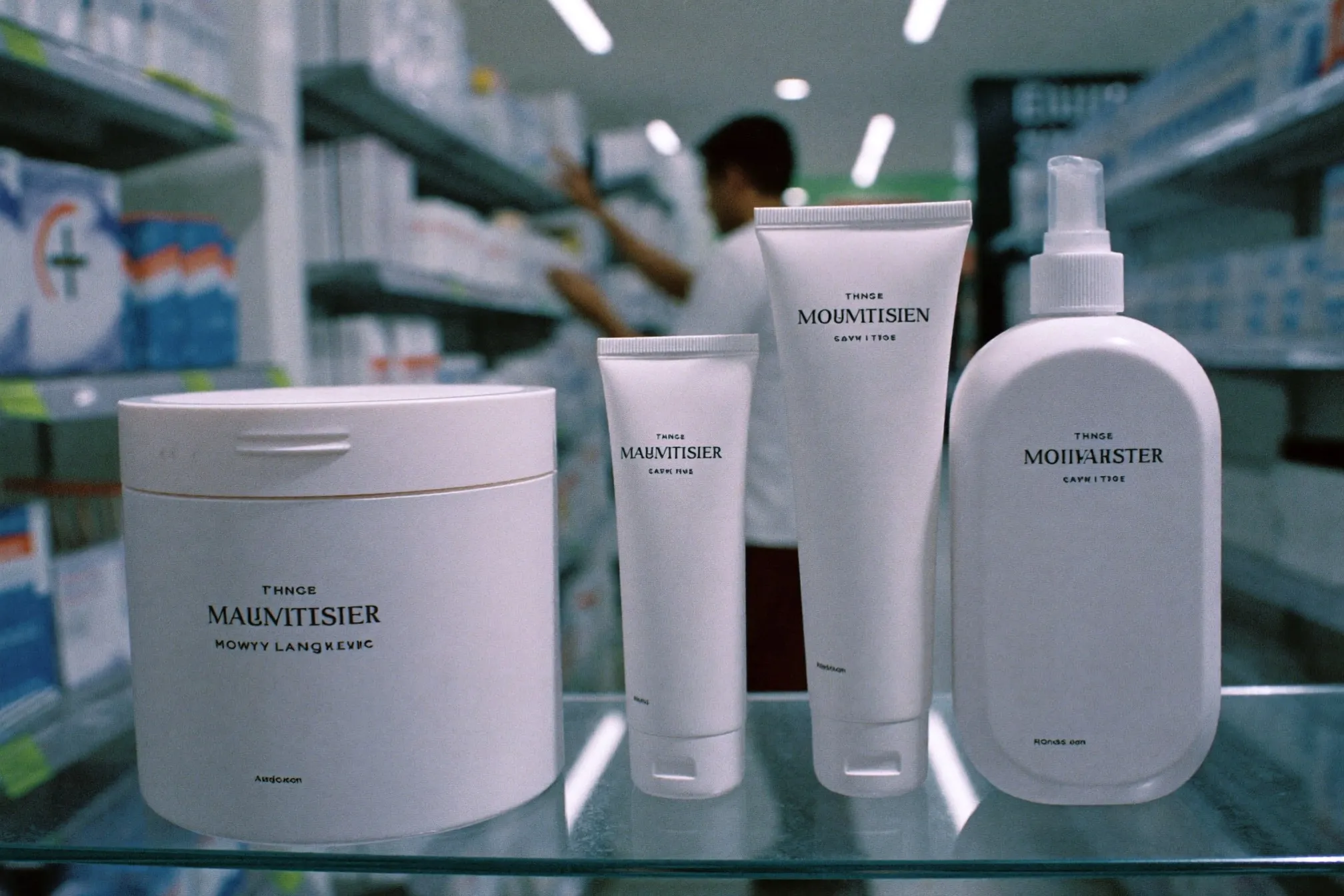
CeraVe Moisturizing Cream is the only one of the three that contains ceramides and cholesterol, so it wins if you want a barrier repair formula and can absorb the price. Cetaphil Moisturising Cream costs less per gram and throws in niacinamide. QV Cream is the cheapest by a wide margin and the plainest: glycerol, paraffin, nothing else worth naming.
The complication nobody mentions at the shelf is that all three were formulated for dry skin in dry countries. Standing in a Watsons at Mid Valley or a Guardian in Tampines, you are looking at products built for Australian winters and American central heating. That does not make them wrong. It does change which size you buy, which sibling product you should be reaching for, and which part of your body the tub belongs on.
What is actually in each cream?
CeraVe leads on barrier lipids: ceramides NP, AP and EOP, plus cholesterol, phytosphingosine and sodium hyaluronate. Cetaphil runs on glycerin, petrolatum and dimethicone, with niacinamide, panthenol and sweet almond oil added. QV Cream has the shortest list of the three: glycerol at 10 percent, light liquid paraffin and white soft paraffin.
CeraVe launched in the US in 2005 and built its whole pitch on those three ceramides, delivered through a patented MultiVesicular Emulsion system that releases them slowly rather than all at once. Ceramides and cholesterol are components of your own skin barrier, so the logic is replacement rather than decoration. It is now a L’Oréal brand, which is part of why it costs what it costs.
Cetaphil belongs to Galderma and has been the dermatologist default in Malaysian and Singaporean clinics for decades. The current cream carries niacinamide and panthenol alongside the glycerin and petrolatum, along with sunflower seed oil and sweet almond oil. Read that last one twice if you have a tree nut allergy.
QV comes from Ego Pharmaceuticals in Australia and has been in pharmacies since the 1970s. The ingredient list is short on purpose. Glycerol pulls water into the skin, the two paraffins seal it in, and two preservatives keep the tub alive. No fragrance, no colour, no lanolin, no propylene glycol. There are no actives to benefit from and nothing much to react to, which is the entire point.
| CeraVe Moisturizing Cream | Cetaphil Moisturising Cream | QV Cream | |
|---|---|---|---|
| Maker | L’Oréal (US) | Galderma | Ego Pharmaceuticals (Australia) |
| Humectant | Glycerin, sodium hyaluronate | Glycerin | Glycerol, 10% |
| Occlusive | Petrolatum, dimethicone | Petrolatum, dimethicone | Light liquid paraffin, white soft paraffin |
| Barrier lipids | Ceramides NP, AP, EOP, cholesterol | None listed | None |
| Extras | MVE slow release, phytosphingosine | Niacinamide, panthenol, vitamin E, sunflower oil | None |
| Fragrance | None | None | None |
| Nut-derived oil | No | Yes, sweet almond | No |
| Ingredient count | Around 25 | Around 20 | Under 10 |
Which one survives 32°C and 80 percent humidity?
All three are heavy for daily face use here. QV Cream is the most occlusive and the slowest to sink in, and it leaves a shine you can see across a room. CeraVe sits in the middle: thick coming out of the tub, gone in about a minute. Cetaphil spreads thinnest of the three because of the dimethicone and dicaprylyl ether.
Texture matters more in this region than ingredient lists do, and the pharmacy shelf keeps burying that. A cream that performs beautifully in a Melbourne July becomes a film of grease on a face that is already producing oil, sitting in aircon for nine hours, then walking into wet heat at 6pm. Your skin is not short of occlusion here. It is short of water underneath.
Each brand solves this with a lighter product that almost nobody buys because the cream gets all the shelf space:
- CeraVe Daily Moisturising Lotion. Same ceramide trio, pump bottle, far lighter. This is the CeraVe most men in MY and SG should be buying.
- Cetaphil Moisturising Lotion. The thinner sibling, sold in 236ml and 473ml pumps at Watsons.
- QV Skin Lotion. Same philosophy as the cream, pours instead of scoops.
If your only exposure to these brands is the tub, you have been comparing the wrong three products. Our broader guide to choosing a moisturiser for men covers what texture to look for before you look at a brand at all.
Should any of them go on your face?
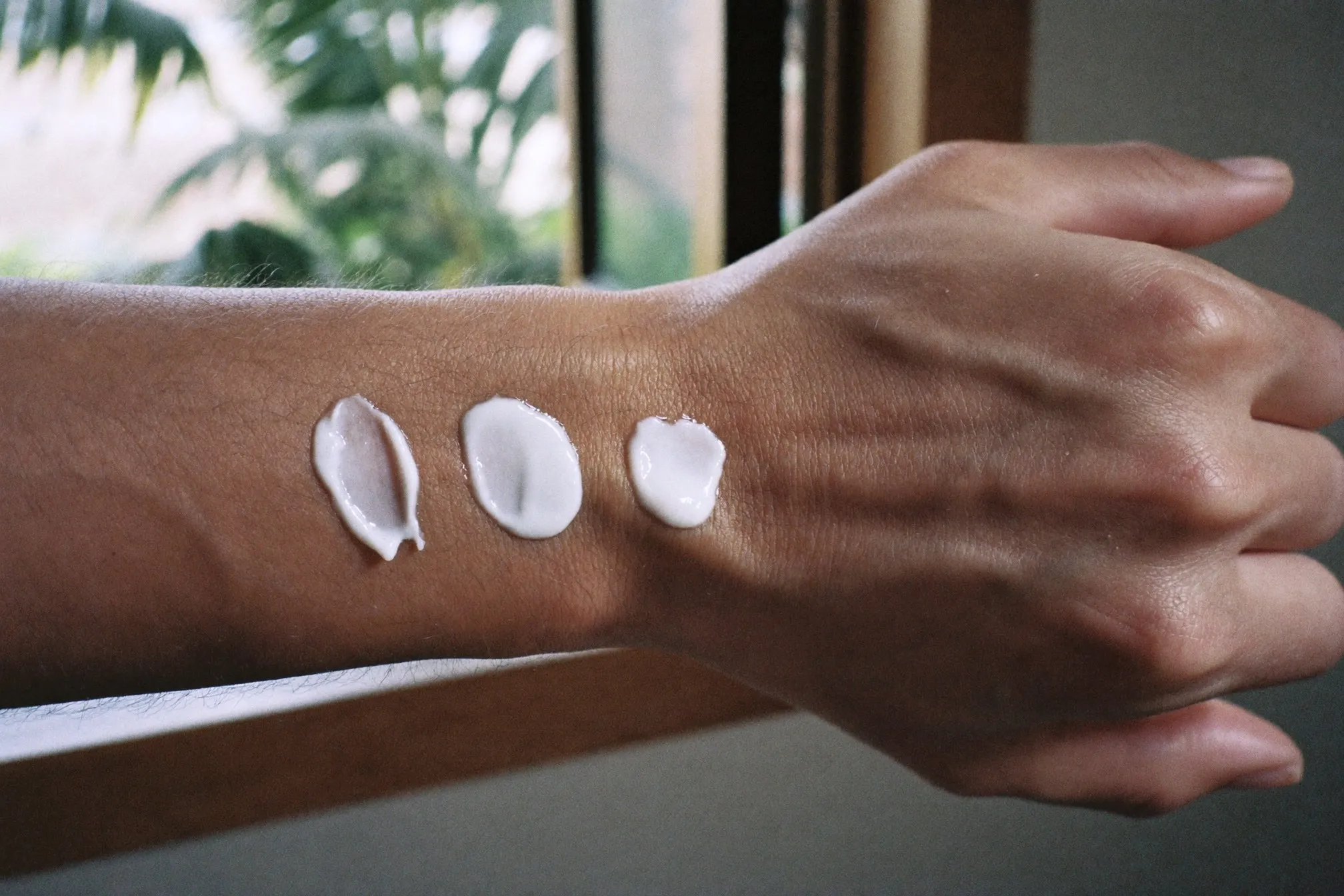
CeraVe Moisturizing Cream is labelled non-comedogenic and works on a dry or barrier-damaged face, especially at night. Cetaphil’s cream is fine on dry faces for the same reason. QV Cream on an oily face at 8am in Klang Valley heat is a decision you will feel by lunch, and it will show up in photos.
The split most men should run is simple. Cream on the body, lotion or gel on the face. Elbows, shins, knuckles and the patch of shin that goes ashy after a hot shower all take a thick paraffin cream happily. Your T-zone does not. If your face runs shiny by noon, start with the oily skin playbook instead of a tub built for dryness.
There are two situations where the heavy cream earns its place on your face here. The first is retinoid or benzoyl peroxide use: those dry and flake the skin, and a ceramide cream at night takes the edge off. If you are working through breakouts, our acne treatment guide explains where the moisturiser fits in that sequence. The second is aircon damage, the tight, dull feeling after a long-haul flight or a week of sleeping under a blasting unit. Two or three nights of CeraVe cream sorts it, then you go back to something lighter.
Beard skin is its own case. Cream under a beard tends to sit on the hair rather than reach the skin, and it can smell stale by evening. Warm a small amount between your palms and press it in against the grain, or use a lotion.
What do they cost at Watsons and Guardian?
QV Cream is the cheapest per gram by a distance, Cetaphil sits in the middle, and CeraVe costs roughly double QV for the same weight. Prices below are typical shelf ranges at Watsons and Guardian before promotions, which run often enough that patient shoppers pay less. Big tubs always beat small tubes on cost per gram.
| Product | Size | Malaysia | Singapore |
|---|---|---|---|
| CeraVe Moisturizing Cream | 177ml | around RM55–70 | around S$22–28 |
| CeraVe Moisturizing Cream | 454g | around RM95–110 | around S$38–48 |
| Cetaphil Moisturising Cream | 100g | around RM40–48 | around S$16–20 |
| Cetaphil Moisturising Cream | 226g | around RM80–95 | around S$30–38 |
| QV Cream | 100g | around RM30–40 | around S$12–16 |
| QV Cream | 500g | around RM75–95 | around S$30–38 |
Two things move these numbers. Watsons and Guardian both run brand days where a single line drops 20 to 30 percent, and CeraVe in particular cycles through them. Shopee and Lazada sellers undercut the pharmacies constantly, but check the expiry date and the seller rating, because grey imports and near-expiry stock are a real part of that market. A tub you paid RM60 for and cannot finish before it turns is not a bargain.
The honest maths on size: the 454g CeraVe tub costs less than double the 177ml and gives you two and a half times the product. If you are using it on your body, buy the big one. If you are testing whether your skin likes it, buy the small one and accept the premium.
So which one should you buy?
Dry, tight or flaky skin, and you want the best formula. CeraVe Moisturizing Cream, 454g tub, on the body and on the face at night. The ceramides and cholesterol are a real point of difference, not marketing language, and no amount of glycerol replaces them.
Sensitive skin, eczema-prone, or you react to everything. QV Cream. The list is too short to hide a trigger, and the fragrance-free, lanolin-free formulation is why Australian pharmacists have pushed it for fifty years. Cheap enough to use generously on arms and legs, which is how these creams work.
You want one tub that does everything and does not cost much. Cetaphil Moisturising Cream. Lighter than QV, cheaper than CeraVe, with niacinamide and panthenol as a small bonus. Skip it if almond oil is a problem for you.
Oily or combination skin, which describes most men in this climate. None of the three creams. Buy the lotion version, or a gel moisturiser, and put the cream money into a sunscreen you will wear every day. Our skincare routine for men sets the order, and the face wash guide covers the step that causes most of the tightness men then try to fix with cream.
One caveat worth stating plainly. These are moisturisers, not treatments. If you have patches that crack, weep, spread or keep returning in the same spot, book a GP or a dermatologist instead of buying a fourth tub. Pharmacy creams manage dryness. They do not diagnose anything.
Next Watsons or Guardian run, do this: buy the 100g QV for your body, and a 236ml lotion from either CeraVe or Cetaphil for your face. That is under RM100 in Malaysia, roughly S$40 in Singapore, and it covers both jobs properly instead of forcing one thick tub to do both badly. More from the skin desk if you want the rest of the routine sorted.
Quick answers
Is CeraVe or Cetaphil better for oily skin?
Neither cream, if you mean the thick tubs. Both brands make lighter lotions that suit oily skin better in this climate. Between the two creams, Cetaphil spreads thinner thanks to its dimethicone, but an oily face in KL or Singapore is better served by a gel moisturiser.
Can I use QV Cream on my face?
You can, and people with very dry or flaky skin do. QV Cream is mostly paraffin, so it sits on the surface and stays shiny for a long time. On oily or acne-prone skin in tropical humidity, that occlusive layer plus sweat is a combination most men regret by lunchtime.
Why does CeraVe cost so much more than QV?
You are paying for the ceramide trio, cholesterol and sodium hyaluronate, plus the MVE slow-release system CeraVe built the brand on. QV Cream contains glycerol and paraffin and nothing else of note. Both moisturise. Only one claims to rebuild the skin barrier with lipids.
Which one is best for eczema or very dry patches?
QV Cream and CeraVe both get used for dry, irritated skin, and both are fragrance-free, which matters more than the price. Patch test on a small area first. If patches keep coming back, weep or crack, see a GP or dermatologist rather than working through the pharmacy shelf.