
Frizzy hair in Malaysia and Singapore is a moisture problem. Dry hair pulls water out of humid air, the strand swells, the cuticle lifts, and hair that sat flat at 8am is standing up in six directions by lunch. Put the moisture in yourself during the shower, seal it with a leave-in or an oil, and the air has nothing left to give you.
That is the whole mechanism. Everything below is how to apply it on a Tuesday in KL, with products you can buy at Watsons for under RM50 and a routine that takes ninety seconds.
Why does humidity make your hair frizzy?
Hair is hygroscopic, meaning it absorbs water from the air around it. Relative humidity here runs above 80 percent through most mornings. Dry strands soak that up, the cortex inside swells, and the cuticle scales on the outside lift like roof tiles in a storm. Lifted cuticle equals frizz.
Two things follow from that. First, frizz is worse on hair that starts dry, which is why the same weather flattens one colleague and detonates another. Second, the damage history matters. Bleach, rebonding, daily hot air from a blow-dryer and years of chlorine all leave the cuticle rough and porous, and porous hair drinks faster.
Asian hair adds its own wrinkle. The strands are thick and round in cross-section, so they resist bending but hold moisture unevenly along the length. You get individual coarse hairs launching off the top of your head while the rest of it behaves. Those are not new hairs or grey strays. They are the ones whose cuticle gave up first.
Is it frizz, or is your hair damaged?
Frizz from dryness and frizz from damage look similar and need different fixes. Dryness responds to conditioner and oil within a week or two of consistent use. Damage means the cuticle is gone in places and the ends have split, and no product repairs a split, though plenty of bottles claim otherwise.
Run a strand between two fingers from root to tip. Smooth all the way down, and you are dealing with dryness alone: fix the routine. Catch a rough patch or feel it snag, and part of that strand has lost its cuticle. Those centimetres need cutting off, not treating.
The usual causes of the damage version here:
- Rebonding or perming, then heat styling on top of the result
- Blow-drying on high heat at close range, most days
- Swimming without rinsing, especially in condo pools
- Aggressive towel-drying, which is the one nobody suspects
That last one does more harm than it should. A rough cotton towel scrubbed over wet hair lifts the cuticle mechanically while it is at its most swollen and vulnerable.
What should your wash routine look like?
Wash two or three times a week, condition every single time, and rinse the conditioner with the coolest water you can stand. Squeeze the water out rather than rubbing, then blot with an old cotton t-shirt. That routine costs you nothing extra and removes maybe half your frizz before any product touches your head.
Daily shampooing is the default here because everyone sweats, and it is the wrong default for frizzy hair. Shampoo strips the sebum that coats and seals each strand. If you train after work or ride a motorbike home, rinse with water and use conditioner only, then save the shampoo for every second or third day. Your scalp adjusts inside a fortnight.
Pick a shampoo without sulphates listed high in the ingredients (sodium lauryl sulphate, sodium laureth sulphate). Sulphate-free options at Watsons and Guardian start around RM25. If you have flaking as well as frizz, treat the scalp first, because most anti-dandruff formulas are drying and you will need to compensate with more conditioner. Our dandruff guide covers that balance.
Conditioner goes on the mid-lengths and ends, not the scalp. Leave it two minutes while you do something else in the shower. Cool rinse at the end helps the cuticle lie back down, and yes, cool water at 7am in this climate is not a hardship.
Which anti frizz products hold in this weather?
The product goes on damp hair, never dry. Damp hair still has water in it, and your job is to trap that water inside before the aircon or the afternoon air renegotiates the terms. On dry hair, the same product sits on top and does a fraction of the work.
| Product | How it fights frizz | Best for | Rough price |
|---|---|---|---|
| Leave-in conditioner | Adds moisture the air can’t add | Fine to medium hair, daily use | RM25–45 / S$12–20 |
| Hair oil or serum | Coats the cuticle and seals water in | Thick, coarse, wavy hair | RM30–60 / S$15–25 |
| Curl or styling cream | Moisture plus light shaping | Wavy hair that needs direction | RM35–60 / S$15–25 |
| Light gel | Forms a cast that locks the shape | Curls, or high-humidity days | RM20–40 / S$10–18 |
| Anti-humidity spray | Water-repellent film over the top | Long days out, event mornings | RM40–70 / S$20–30 |
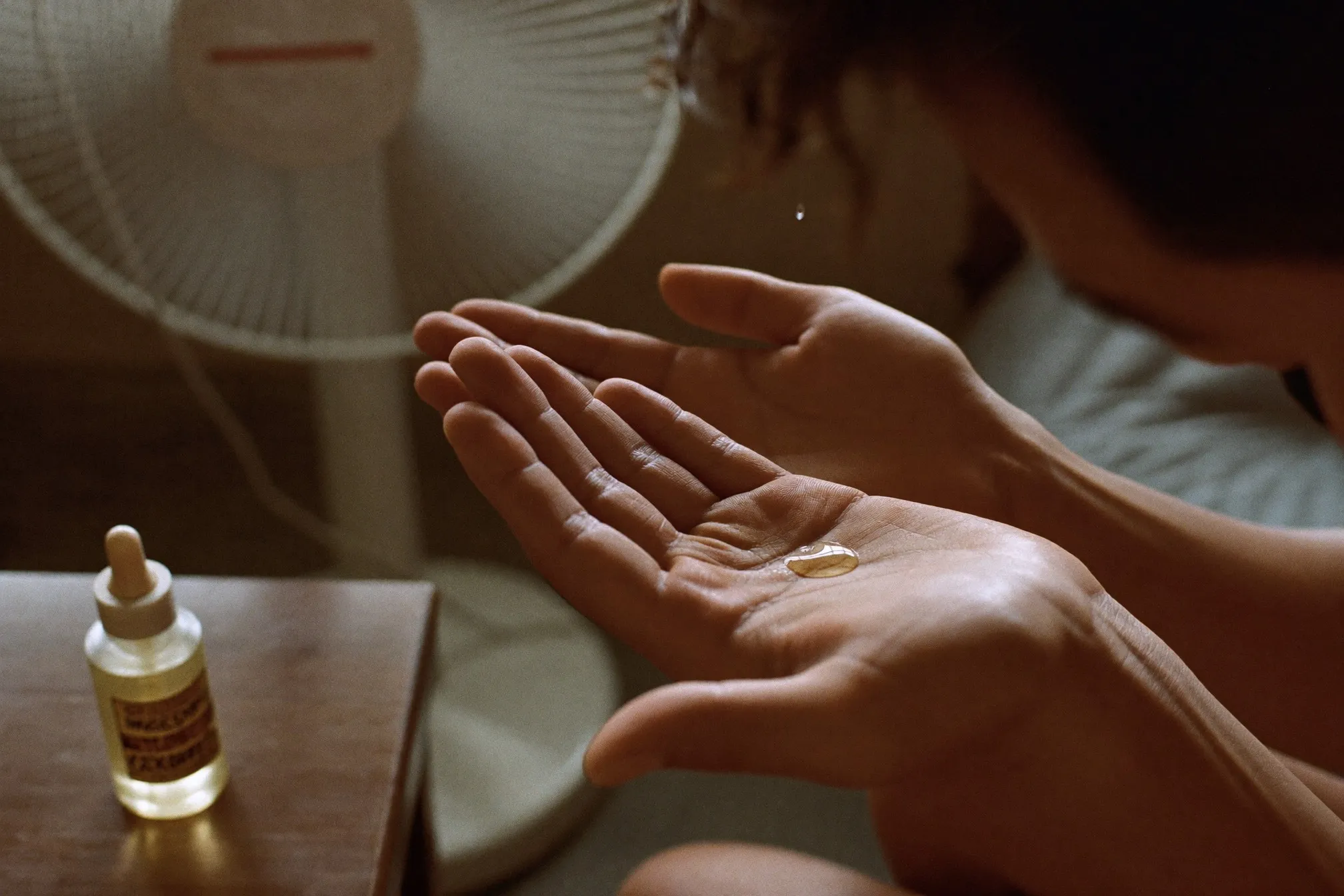
Two dosing rules. Oil: two or three drops for short hair, warmed between the palms first, then pressed through the ends and whatever is left smoothed over the top. More than that and you look like you cycled here. Leave-in: a ten-cent coin’s worth, distributed with your fingers rather than a comb.
What to stop buying: matte clay, dry texture spray and anything selling “volume”. They work by roughing the cuticle up, which is the exact thing you are trying to prevent. Same goes for alcohol-heavy hairsprays. If you want hold without the drying, the options in our hair styling products guide sort by finish and hold strength.
Does your haircut make it worse?
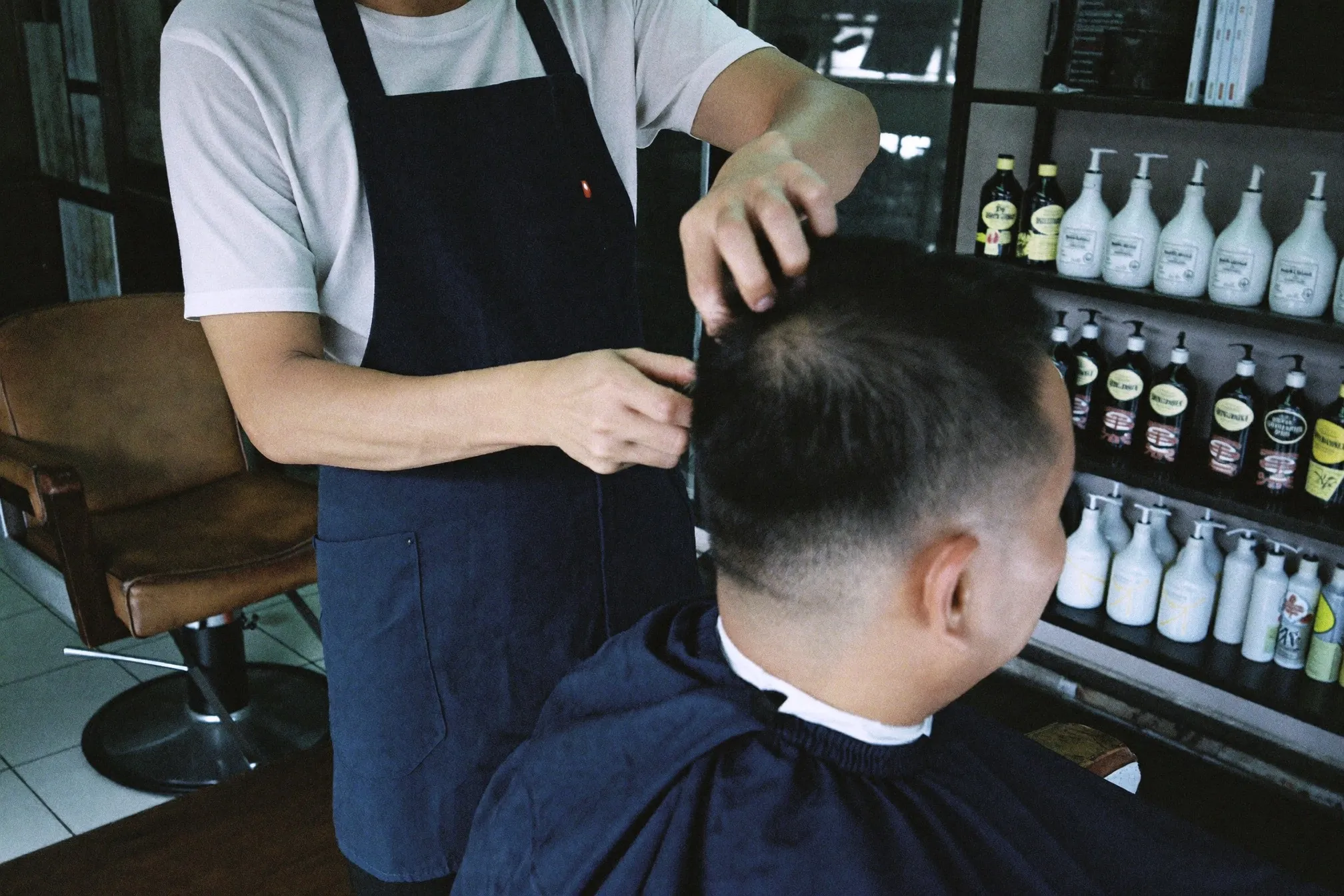
Yes, more than most men realise. Thinning shears cut strands at random points along their length, and every one of those chopped mid-strand ends is a short hair with nowhere to lie down. In dry climates it reads as texture. In KL it reads as a halo.
Tell your barber two things: no thinning shears through the top, and point-cut the ends instead of blunt-cutting them. If your Mandarin or Malay is shaky, the universal phrase is “don’t thin it, just take the length off”. Most barbers here reach for the thinners by reflex on thick Asian hair, because it makes the cut sit flatter in the chair. It sits flatter for about four days.
Length works in your favour up to a point. Weight pulls hair down, so a slightly longer top frizzes less visibly than a mid-length one. Very short is the other safe end: under about two centimetres, there is nothing to stand up. The awkward zone is between, which is where most men live.
Trim every six to eight weeks. Frizz concentrates at the ends because those are the oldest, most weathered centimetres of the strand, and cutting them off is faster than any treatment. If you are growing something out, look at the shapes in our Korean hairstyles guide, most of which are built around weight rather than texture.
How should you dry it?
Air-drying is not the safe option people assume. Hair sitting wet for an hour stays swollen for that hour, and the cuticle stays open while it dries in whatever direction the fan blows. Half-drying with a blow-dryer on cool or low, with the nozzle on and pointing down the strand, gives you a smoother result than the standing fan.
The sequence that works:
- Blot with a t-shirt until hair is damp, not dripping.
- Apply leave-in or oil to damp hair.
- Dry to about 80 percent with low heat, nozzle attached, airflow pointing from root to tip.
- Finish on the cool setting for the last twenty seconds.
Never dry hair while it is wrapped in a towel, and never leave the house with a wet head. Walking into 85 percent humidity with soaked hair is handing the air a blank cheque.
What do you do when frizz shows up at 2pm?
Wet your palms at the pantry sink, shake off the excess, then smooth them over the surface of your hair. Water plus the residual product from the morning will re-lay most of the loose strands. Press down, do not rub. This takes fifteen seconds and works better than anything you can buy at a 7-Eleven.
Do not use a comb. Combing dry frizzy hair separates strands that were behaving and multiplies the problem, which is why hair looks worse after every desk-drawer comb-through.
Keep a travel-size oil in your bag if you have afternoon meetings. One drop, palms, press. For long days that start at a mamak breakfast and end at a dinner, the anti-humidity spray earns its price in the morning rather than as a rescue.
Wavy and curly hair plays by adjacent rules, and the sealing logic works the same way. The specifics for holding a curl pattern in this climate sit in our curly hair guide, and the rest of the pillar lives on the hair hub.
Tonight, do one thing: shampoo, condition for two minutes, cool rinse, blot with a t-shirt, then two drops of oil on damp hair before bed. Check the mirror at 3pm tomorrow. If your hair has held its shape past lunch for the first time in years, buy the sulphate-free shampoo on the next Shopee sale and make it permanent.
Quick answers
Why does my hair get frizzy in humid weather?
Dry hair pulls water vapour out of humid air. As each strand absorbs it, the inner core swells and the outer cuticle scales lift, so hair that lay flat in the morning separates and stands up by afternoon. Hair that already holds enough moisture has less to absorb, so it stays put.
What is the best product for frizzy hair on men?
A leave-in conditioner or light hair oil on damp hair does most of the work, at roughly RM25 to RM50 at Watsons or Guardian. If you need hold as well, use a cream or a light gel on top. Skip matte clay and dry texture spray, both of which strip moisture.
Does cutting your hair short stop frizz?
Short hair hides frizz rather than fixing it, and a buzz cut does end the problem. Anything longer than about two centimetres still frizzes. What helps more is asking your barber to skip heavy thinning shears, because chopped mid-strand ends fan out in humidity.
Can you fix frizzy hair permanently?
Keratin smoothing and rebonding relax the hair structure for three to six months, and cost around RM250 to RM600 in Malaysia or S$150 upwards in Singapore. Regrowth brings the frizz back. Ask the salon what is in the formula and how they ventilate, then patch test if your scalp reacts easily.