
Excessive sweating usually responds to one change: a clinical-strength antiperspirant applied to dry skin at night, not after your morning shower. That switch alone handles most cases of “my shirt is soaked by 10am” in this climate, and it costs less than a decent lunch per month.
If it doesn’t work, you may be dealing with hyperhidrosis, a recognised medical condition where sweat glands fire without heat or exertion prompting them. The NHS lists it as treatable, with a ladder of options that starts at the pharmacy counter and ends in a dermatology clinic. Here’s how to work through that ladder without wasting money on the wrong rung.
What counts as excessive sweating?
Normal tropical sweating tracks the weather. Excessive sweating doesn’t. If you soak a shirt in an air-conditioned office, leave damp prints on paperwork, or change clothes at midday without having exercised, that pattern points to hyperhidrosis rather than KL humidity doing its job.
Doctors split it into two types. Primary hyperhidrosis affects specific areas, usually both armpits, palms, soles or the face, and it tends to show up before age 25 with a family history behind it. Mayo Clinic notes it often eases during sleep. Secondary hyperhidrosis comes from something else: a thyroid condition, diabetes, an infection, or a medication you started recently. It typically affects the whole body and can wake you at night.
That distinction matters for what you do next. Primary hyperhidrosis is a product-and-treatment problem. Secondary hyperhidrosis is a “find the underlying cause” problem, and no antiperspirant on the shelf will touch it.
How is a clinical antiperspirant different from a normal one?
Both work the same way. Aluminium salts dissolve in sweat and form temporary gel plugs in the sweat ducts, cutting how much reaches the skin surface. Clinical formulas carry a higher concentration of those salts, most often aluminium chloride hexahydrate, and they’re built for overnight application rather than a quick swipe on the way out.
Worth clearing up the vocabulary, because most men buy the wrong category and blame the product:
| Product | What it does | Typical price (MY/SG) | Best for |
|---|---|---|---|
| Deodorant | Masks or kills odour bacteria. No effect on sweat volume | RM12–25 / S$5–10 | Odour without heavy sweating |
| Standard antiperspirant | Modest sweat reduction, morning application | RM15–35 / S$7–14 | Average sweating in this heat |
| Clinical antiperspirant | Higher-strength aluminium salts, night application | RM60–130 / S$25–45 | Soaked shirts, visible marks |
| Prescription topical or procedure | GP or dermatologist territory | Consultation-dependent | No response to the above |
Clinical formulas are sold over the counter at Watsons and Guardian and are widely stocked on Shopee and Lazada, though check seller ratings on marketplace listings because counterfeits circulate. Follow the directions printed on your product. Applying more than the label says increases irritation without improving results.
One recurring worry deserves a straight answer: reviews of the available research by cancer bodies and dermatology groups have not established a link between aluminium-based antiperspirants and breast cancer or Alzheimer’s disease. If you’d still rather skip aluminium, our deodorant guide covers what the aluminium-free options can and cannot do.
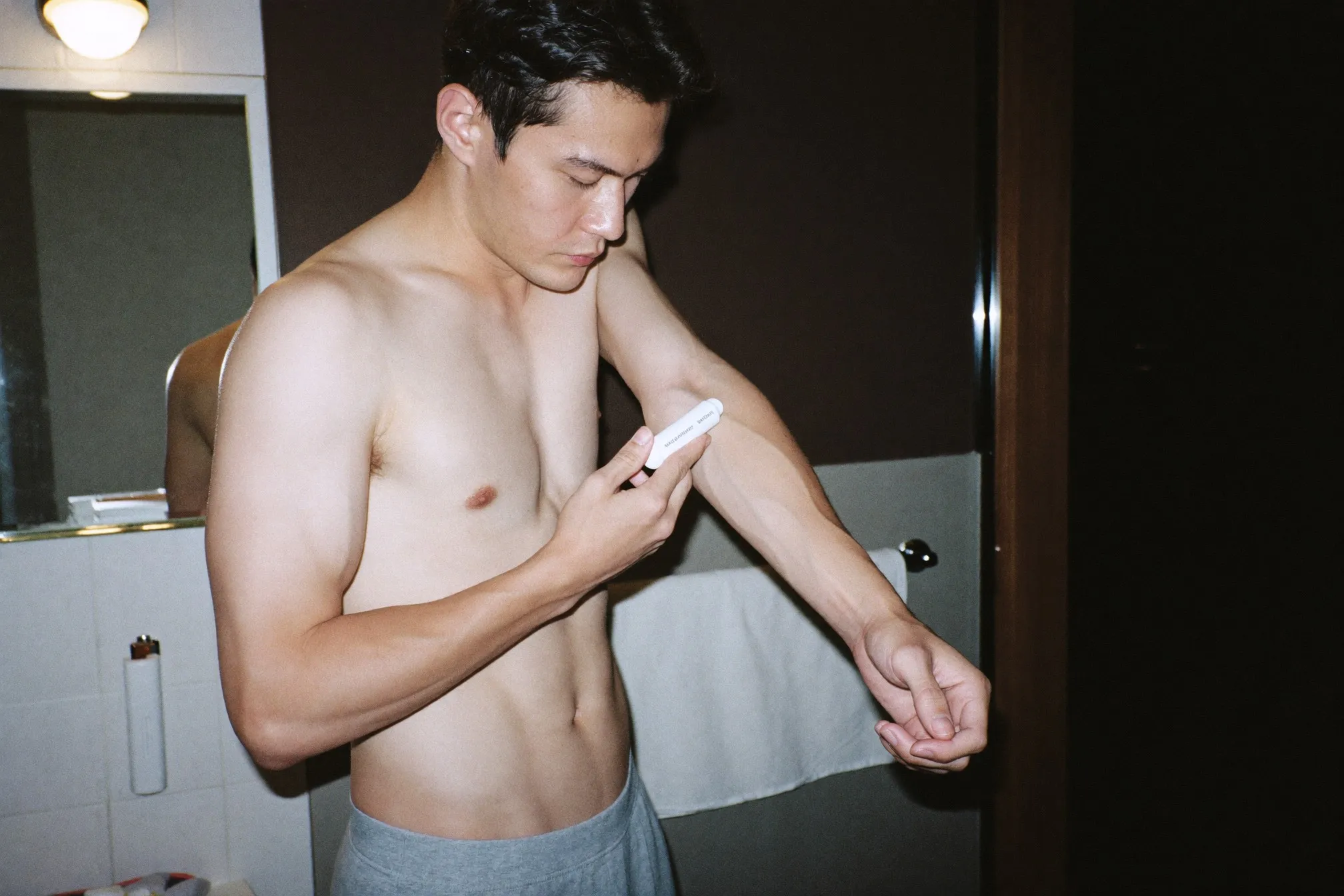
Why does applying it at night work better?
Your sweat ducts run quietest overnight, so the aluminium salts get hours to settle and form plugs instead of being flushed out on contact. Apply to completely dry skin before bed, sleep, then shower as normal in the morning. The plugs survive the shower. Morning application on a hot, damp armpit washes most of the product straight down the drain.
Three details decide whether this works or turns into a red, itchy fortnight:
- Dry means dry. Towel off, then give it a few minutes. A cool hairdryer on the armpit for twenty seconds is not overkill in a Malaysian bathroom with no aircon.
- Don’t apply after shaving. Freshly shaved skin plus concentrated aluminium salts is how you get stinging. Leave a day between the two, and read our manscaping guide if you shave that area regularly.
- Front-load, then taper. Most clinical products ask for consecutive nights at the start, then a maintenance schedule of a couple of nights a week. The label tells you which. Stick to it rather than inventing your own.
If your skin turns red, itches or burns, stop and speak to a pharmacist. Every Watsons and Guardian branch has one on duty, and this is exactly the question they’re there for. Irritation is the most common reason men abandon clinical antiperspirants, and it’s usually a technique problem rather than a product problem.
What actually removes sweat stains?
Yellow underarm stains come from aluminium salts binding with sweat proteins in the fabric, so they’re a by-product of the fix rather than of sweat alone. White cotton shows them first. The rule that matters: wash the shirt the same day, in cold water, and pre-treat the underarm before the stain has time to oxidise.
What works, in order of effort:
- Same-day wash. A shirt left in the hamper for three days in this humidity is already halfway to yellow.
- Enzyme pre-treatment. Any enzyme laundry liquid, worked into the underarm and left 30 minutes before washing. A bicarbonate soda paste does the same job for around RM4 a box.
- Vinegar soak for existing yellowing. One part white vinegar to four parts cold water, an hour, then wash. It lifts light staining and does nothing for years-old marks.
- Cold water only. Heat sets protein stains permanently. So does chlorine bleach, which reacts with sweat residue and deepens the yellow.
- A grey or skin-tone undershirt. It catches sweat before your shirt sees it. Skip white undershirts, which show wet patches worse than the shirt over them.
Fabric choice does half the work. Cotton and linen breathe and release odour in the wash; polyester traps both. Our guide to office wear in the tropics covers which shirt fabrics survive a KL commute.
What if a clinical antiperspirant isn’t enough?
Book a GP appointment. Once over-the-counter products have failed, the American Academy of Dermatology lists several standard treatments for hyperhidrosis: prescription-strength topicals, iontophoresis (a machine that passes a weak electrical current through water to treat hands and feet), botulinum toxin injections for the underarms, oral medications, and surgery in rare, severe cases.
Which one suits you is your doctor’s call, not a decision to make from a forum thread. Botulinum toxin for underarm sweating, for example, may reduce sweating for several months at a time, but it needs repeating and it needs a qualified clinician. Both Malaysia and Singapore have dermatology clinics that handle hyperhidrosis routinely, in KL, PJ and across Singapore. Ask for the consultation fee when you book, since private rates vary a lot between clinics.
Go in with specifics: when the sweating started, which areas, whether it happens at night, what you’ve already tried and for how long. “My shirt is soaked by 10am in an air-conditioned office despite eight weeks of clinical antiperspirant” gets you taken seriously. “I sweat a lot” gets you a shrug.
When should you see a GP sooner rather than later?
Some sweating patterns need a doctor before you try anything from a shelf. Both the NHS and Mayo Clinic flag the same warning signs, and they’re worth memorising.
See a GP promptly if:
- Sweating starts suddenly after years of normal sweating, or spreads to your whole body.
- It happens mainly at night, especially with weight loss, fever, or a cough.
- It arrives with chest pain, nausea, a racing heart or light-headedness. Treat that combination as urgent.
- It began after starting a new medication.
- It’s disrupting your work, your sleep or your willingness to leave the house.
That last one counts. Hyperhidrosis affects how people work and socialise, and doctors treat that impact as a valid reason to act. You don’t need to prove hardship to ask for help, and if odour is part of the problem, our body odour guide separates the sweat issue from the bacteria issue. More on skin and scent across the fragrance and body hub.
Tonight, do the one thing that moves the needle: towel your armpits properly dry, apply a clinical antiperspirant before bed, and shower as normal tomorrow. Repeat for the consecutive nights the label specifies, then judge it. If you’re still soaked through by mid-morning after two weeks of doing it correctly, write down that sentence and take it to a GP. The detail is what gets you a referral.
Quick answers
What is the difference between a clinical antiperspirant and a normal one?
Both use aluminium salts to form temporary plugs in your sweat ducts. Clinical formulas carry a higher concentration of those salts and are designed for night application on dry skin. Deodorant is a different product again: it handles odour and does nothing to sweat volume.
Why should I apply antiperspirant at night instead of after my shower?
Sweat ducts run quietest overnight, so the aluminium salts have hours to settle in and form plugs. Apply to fully dry skin before bed and shower as normal the next morning. The protection stays. Applying to a damp armpit after a hot shower rinses most of it away.
How do I get yellow sweat stains out of white shirts?
Yellowing comes from aluminium salts reacting with sweat proteins in the fabric. Wash the shirt the same day in cold water, pre-treating the underarm with an enzyme laundry liquid or a bicarbonate soda paste. Hot water and chlorine bleach both set the stain permanently.
When does sweating become a medical issue?
See a GP if sweating disrupts your work or social life, starts suddenly after years of normal sweating, happens mostly at night, or arrives with weight loss, fever or a racing heart. Persistent sweating despite a clinical antiperspirant is also worth a consultation.