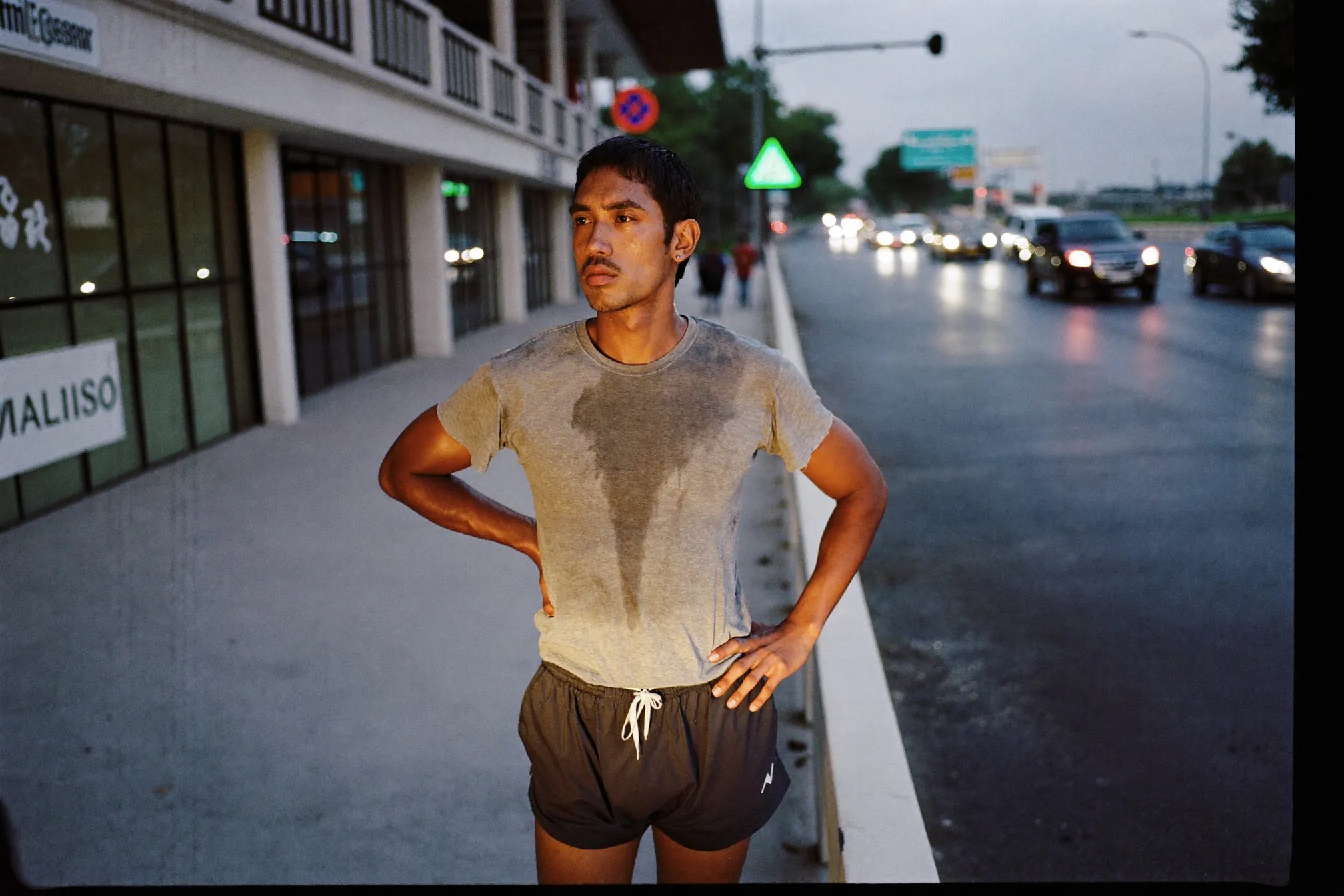
Chafing happens when skin rubs against skin or fabric long enough to wear the surface raw, and sweat speeds up the whole process. In Malaysia and Singapore that puts most men on the list: inner thighs, underarms, nipples, the waistband line. The fix is friction control and dryness, not harder scrubbing.
Body breakouts run on the same fuel. Sweat sits trapped under a shirt, mixes with oil and dead skin, and the follicles across your back and shoulders block up. Different symptom, same climate. This guide covers both, because you deal with them in the same ten minutes after you get home.
Why does chafing hit harder in this climate?
Sweat only cools you when it evaporates. At 85% humidity it has nowhere to go, so it stays on your skin as liquid, soaks into fabric and turns every seam into sandpaper. Wet skin also loses strength, which means it tears at a fraction of the friction dry skin shrugs off.
Cotton is the quiet villain. It absorbs sweat and holds it against you for hours, so a cotton brief that felt fine at 8am is a wet compress by lunch. Add a twelve-minute walk from the LRT and a full afternoon in a chair, and the inner thigh gets thousands of rub cycles under load.
Weight is a factor but not the factor. Runners with single-digit body fat get thigh chafing and bleeding nipples in the same weather. The variables you control are moisture, fabric and barrier.
Salt makes it worse on the way out. As sweat dries it leaves crystals on the skin and inside the fabric, which is why an unwashed pair of shorts chafes faster on its second wear than its first. Rinse gym kit the day you use it, even if you only have a bucket and a balcony rail.
How do you stop thigh chafing?
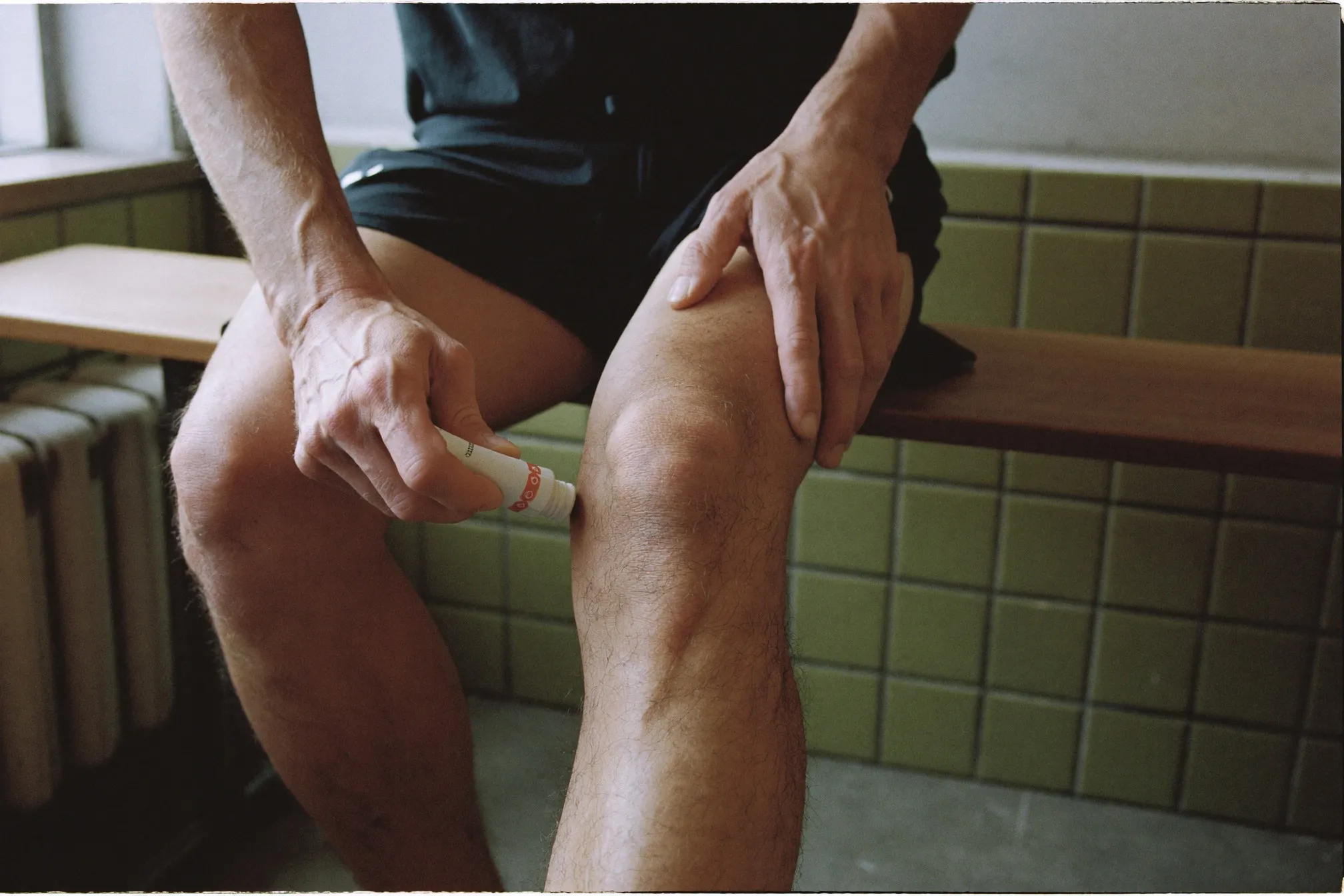
Put something between the two surfaces and stop them staying wet. A balm before you dress plus a moisture-wicking layer solves the majority of cases within a day. Skin that has already broken needs looser clothing and a few days before it holds up to friction again.
| Fix | Rough cost | How long it holds | Best for |
|---|---|---|---|
| Anti-chafing balm or stick | RM35 to RM60 / S$15 to S$25 | 3 to 6 hours, less when soaked | Daily commute, long walks, runs |
| Petroleum jelly | RM10 to RM15 a tub | 1 to 2 hours in humidity | Emergencies and overnight repair |
| Compression shorts under trousers | RM40 to RM70 / S$15 to S$30 | Full day | Office wear, futsal, hikes |
| Moisture-wicking boxer briefs | RM30 to RM60 each | Full day | Everyone, as the default |
| Powder (talc-free) | RM8 to RM20 | Until you sweat properly | Light days in aircon |
Watsons, Guardian and Decathlon all stock anti-chafing sticks, and Decathlon is the cheapest for compression shorts. Shopee sells the same balms for less if you can wait a week and read the seller ratings.
A few details that decide whether it works:
- Apply the balm to dry skin before you get dressed, not over a damp patch after your walk.
- Cover a wider area than the sore spot. Chafing migrates as your gait changes.
- Reapply before the second half of a long day out. One morning application does not survive a Sunday at a mall plus a walk to the car.
- Trim, do not shave, the areas that rub. Sharp regrowth stubble makes friction worse, which the manscaping guide covers in more detail.
Nipple chafing is its own small hell for anyone doing distance. Two strips of surgical tape or a smear of balm before you head out costs nothing. If you are building mileage, the same rules apply to your feet, and our running for beginners guide gets into sock choice.
Why do you get body breakouts on your back and chest?
Your back, chest and shoulders carry large oil glands under thicker skin. Sweat and dead skin plug the follicles, bacteria multiply, and you get the deep, slow bumps that never quite look like face acne. The American Academy of Dermatology treats this as acne, so acne ingredients apply.
Four habits cause more of it than anything you can buy:
- Sitting in a damp shirt. The gap between finishing at the gym and showering matters more than which body wash you own. Rinse within half an hour where you can.
- Washing your hair last. Conditioner runs down your back and coats the skin on the way to the drain. Shampoo and condition first, rinse, then wash your body.
- Re-wearing gym clothes. A dried shirt is not a clean shirt. It is a shirt with the bacteria still on it.
- Backpack straps and car seats. Constant pressure plus sweat under a strap is a reliable way to produce a stripe of bumps across each shoulder.
For product, look for benzoyl peroxide or salicylic acid on the label of a body wash, leave it on the skin for a minute before rinsing, and ask the pharmacist at Watsons or Guardian which strength suits you if the options confuse you. Expect around RM40 to RM70 for a bottle. Benzoyl peroxide bleaches towels and dark shirts, so use a white towel and accept the loss. Our body wash guide breaks down what else is worth paying for, and back acne goes deeper on the stubborn cases.
Two things to leave alone. Do not scrub with a loofah or a coarse mitt, because grinding an inflamed follicle spreads it and leaves marks that outlast the spot. Do not squeeze the deep ones on your back either. You cannot see what you are doing, and the scar sits there for a year.
Give any routine six to eight weeks before judging it. Skin on the back turns over slowly and nothing works in a fortnight.
Is it chafing, heat rash or something fungal?
Friction, heat and fungus all produce red patches in the same folds, and they need different responses. The location, the edge of the rash and the itch tell you most of what you need.
| What you see | Likely cause | What to do |
|---|---|---|
| Raw, stinging patch where skin met skin or a seam | Chafing | Keep it dry and unrubbed, barrier cream, heals in days |
| Clusters of tiny prickly bumps under clothing after heat | Heat rash | Cool down, loose cotton, avoid heavy creams (see NHS) |
| Itchy rash with a clear ring-shaped edge in the groin | Fungal, often jock itch | Antifungal cream from a pharmacy, GP if it persists |
| Small pus-topped bumps around individual hairs | Folliculitis | Stop shaving the area, see a GP if it spreads |
| Dark, velvety thickening in a fold that never heals | Needs assessment | See a GP rather than treating it yourself |
Heat rash is the one men here misdiagnose most. The NHS describes it as blocked sweat ducts, and the treatment is cooling and airflow rather than the thick barrier balm you would use for chafing. Slathering an occlusive over prickly heat traps the sweat further and prolongs it.
If a rash keeps returning to the exact same spot after you have fixed the friction, stop guessing and get it looked at.
What does a below-the-neck routine actually look like?
Three moments, none of them long:
Morning. Balm on the thighs before you dress. Moisture-wicking underwear. Deodorant on dry underarms, which the deodorant guide covers properly.
After sweating. Shower within half an hour. Hair first, body second. Medicated wash on back, chest and shoulders if you break out there. Dry the folds fully, including behind the knees and under the belt line, before you dress.
Night. Fresh sheets weekly, fresh pillowcase more often. Let the skin breathe in something loose. If odour is your bigger problem than spots, the body odour guide tackles that side, and the rest of the fragrance and body hub fills in the gaps.
One caveat worth stating plainly. Everything above is prevention and basic care. Skin that weeps, bleeds, spreads fast or comes with a fever needs a GP, and persistent body acne that scars is worth a dermatologist referral rather than another bottle from the pharmacy shelf.
Tonight, run the two-minute audit. Check the label on the underwear you wore today, and if it says 100% cotton, put it in the rotation for aircon days only. Then order one anti-chafing stick and one three-pack of wicking boxer briefs. Total damage is under RM120, and it settles the problem before the next long walk does.
Quick answers
What is the fastest way to stop thigh chafing?
Put a barrier between the surfaces and stop the skin staying wet. An anti-chafing balm on both inner thighs before you dress, plus compression shorts or moisture-wicking boxer briefs, handles most cases. Already raw skin needs a few days of loose clothing to heal.
Does powder work for chafing in humid weather?
Powder helps on light days in an aircon office. Once you sweat properly it clumps in the crease and adds grit, which makes the rubbing worse. Balms and creams hold up better in Malaysian and Singaporean humidity because water does not break them down as fast.
Why do I get body breakouts on my back and shoulders?
Sweat, oil and dead skin sit under a shirt and block the follicles on your back, chest and shoulders. Dermatology guidance treats this as acne on thicker skin. Showering soon after you sweat and using a benzoyl peroxide or salicylic acid wash usually improves it.
When should chafing be checked by a doctor?
See a GP or dermatologist if the skin breaks and weeps, if it does not improve after a week of keeping it dry, or if the rash spreads, itches intensely or has a defined ring-shaped edge. Those patterns point to infection or a fungal cause rather than friction.