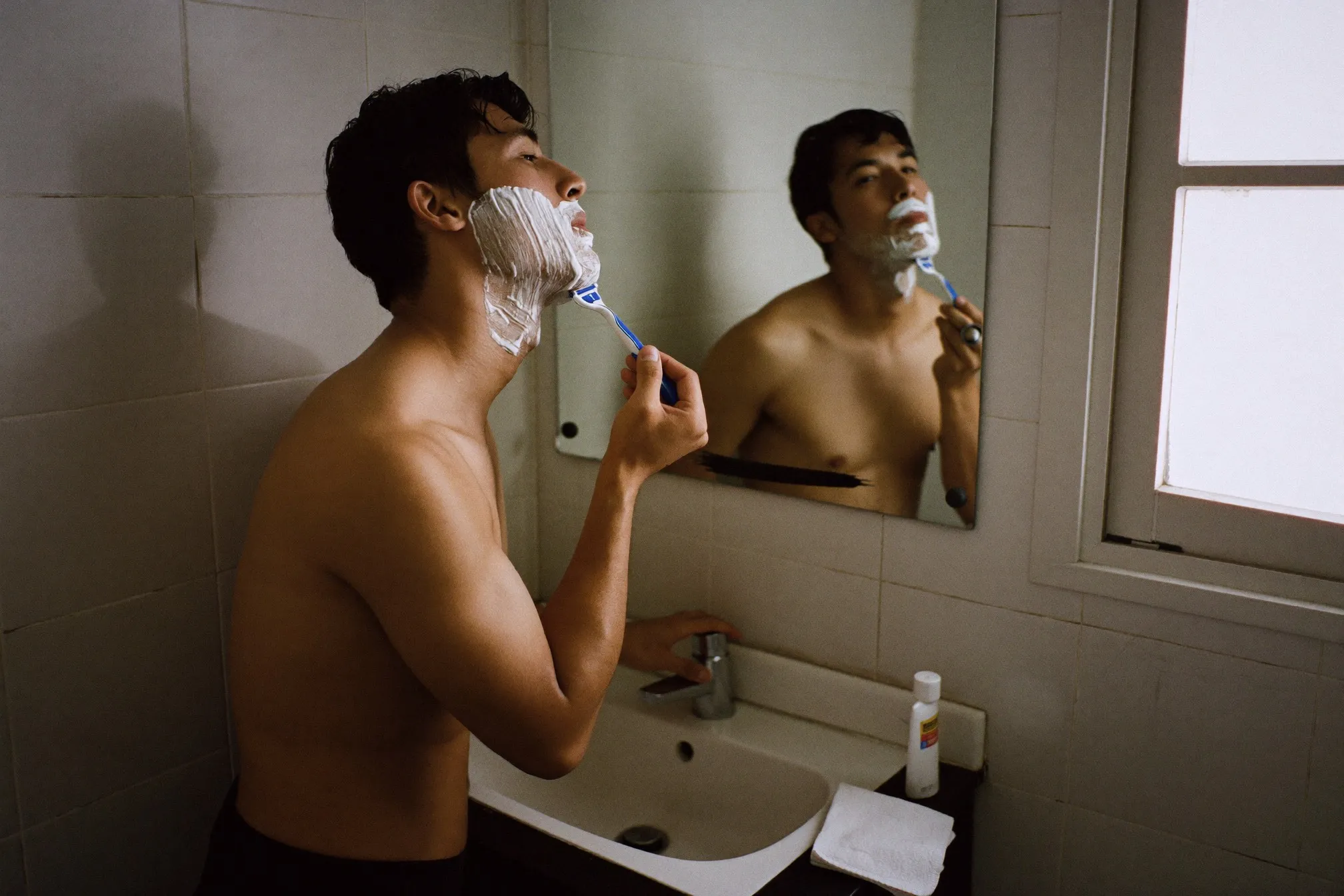
Shave with a sharp blade, on wet skin, in the direction the hair grows. Those three things prevent most razor burn and most ingrown hairs, and they cost nothing to change. The American Academy of Dermatology gives the same core advice, plus one addition: short strokes and a light hand.
Most men here learned to shave from a disposable razor and no instructions at all. You can see the results on any weekday morning train. The red neck after a Monday shave, the dark bumps along the jawline that never fully clear, the ingrown hair someone is picking at with a fingernail. All of it is fixable, and the fix is cheaper than one visit to a barber.
How should you shave, step by step?
Soften the beard with warm water for two or three minutes, apply a shaving cream or gel, then take short strokes with a sharp blade in the direction the hair grows. Rinse the blade every few strokes. Finish with cool water and a fragrance-free moisturiser. That sequence covers 90% of what matters.
- Shave after the shower, not before. Warm water and steam soften the hair shaft, which means the blade cuts instead of tugging. Two minutes under the water does more for your shave than any pre-shave oil.
- Use cream or gel, never bar soap. Soap strips the skin and leaves the blade dragging across it. A decent shaving cream runs RM20 to RM35 at Watsons or Guardian and lasts months.
- Short strokes, no pressure. Let the weight of the razor do the work. Pressing harder does not cut closer, it just scrapes off the top layer of skin along with the hair.
- Rinse the blade every two or three strokes. A clogged blade drags, and drag is what irritates skin.
- Follow the grain. Run your palm up your neck. Where it feels rough, you are going against the growth. Neck hair often grows sideways or upward while cheek hair grows down, so the direction changes across your face.
- Cool rinse, then moisturise. Skip the classic alcohol splash. It stings because it is drying skin you have just scraped.
If your face is oily by mid-morning anyway, a lightweight gel moisturiser handles the post-shave step without adding shine. Our skincare routine guide covers where shaving fits into the rest of it.
What causes razor burn?
Razor burn is friction damage. A dull blade, a dry face, too much pressure or four passes over the same patch will each produce it. You get redness, stinging and a rash-like patch within an hour of shaving, usually on the neck. Left alone, it settles in a day or two.
The dull blade is the main culprit. Dermatology guidance puts blade life at around five to seven shaves, and our climate shortens that. A razor parked on a wet shower ledge in a KL or Singapore bathroom starts corroding within a fortnight, because the air never dries out. Keep it on the counter, rinse it properly, stand it upright.
Once you have razor burn, stop shaving that area for two or three days. A cool compress and a plain fragrance-free moisturiser cover the rest. Resist the urge to shave over the top of it tomorrow because you have a meeting. That is how a two-day irritation becomes a two-week one.
Worth separating two things people confuse: razor burn appears immediately and fades, while breakouts along the jaw come up over days and behave differently. If it hurts right after you shave, it is the razor.
Why do you get ingrown hairs?
An ingrown hair grows back into the skin instead of out of it, leaving a small itchy bump that sometimes darkens. The NHS notes they are most common in people with curly or coarse hair, and that shaving very close makes them more likely. Most clear on their own within a week or two.
The mechanism explains the fix. Shaving against the grain cuts the hair below the skin line at a sharp angle, so a curly hair has both the point and the room to curl back in. Multi-blade cartridges do the same thing by design: the first blade lifts the hair, the second cuts it under the surface.
So the counterintuitive answer to recurring neck bumps is to shave less closely. Leave a hint of stubble. Use a single-blade razor or an electric shaver with a guard. Shave every second or third day rather than daily. Men with tightly curly beard hair get the worst of this, and a dermatologist can confirm whether persistent bumps are pseudofolliculitis barbae rather than acne.
Whatever you do, do not dig one out with a needle or tweezers. The NHS advice on ingrown hairs is to leave them alone, because picking risks infection and scarring. Warm compress, gentle exfoliation two or three times a week, patience. The same rules apply below the neck, which our manscaping guide goes into.
If a bump turns painful, fills with pus or the area spreads, that is likely folliculitis, an inflamed or infected hair follicle. The NHS describes most cases as mild and self-resolving, but a spreading or painful patch is a reason to see a GP rather than to buy stronger products.
Which razor should you use?
Four categories, and the right one depends on your skin more than your budget. Ingrown-prone skin does better with fewer blades. Sensitive skin often does better with an electric shaver. Everyone else can use whatever they find at the pharmacy and focus on technique instead.
| Type | Upfront | Running cost | Suits | Watch out |
|---|---|---|---|---|
| Cartridge | RM30–60 handle | RM8–15 per cartridge | Beginners, speed | Multi-blade closeness raises ingrown risk |
| Safety razor | RM80–150 | Under RM1 per blade | Ingrown-prone skin, long-term cost | Learning curve on angle and pressure |
| Electric (foil or rotary) | RM150–500 | New head yearly | Sensitive skin, daily quick shaves | Less close, so daily use needed |
| Disposable | RM1–3 each | Same | Travel and nothing else | Dulls fastest, irritates most |
The safety razor is the value play. A pack of 100 double-edge blades goes for around RM30 on Shopee, which is a year of shaving for the price of two cartridges. It also asks something of you: hold it at roughly 30 degrees, no pressure, and expect a nick or two in the first fortnight.
Electric shavers make sense if you shave daily and your neck rebels every time. They cut just above the skin surface, which is exactly why the result feels less close and why the bumps stop.
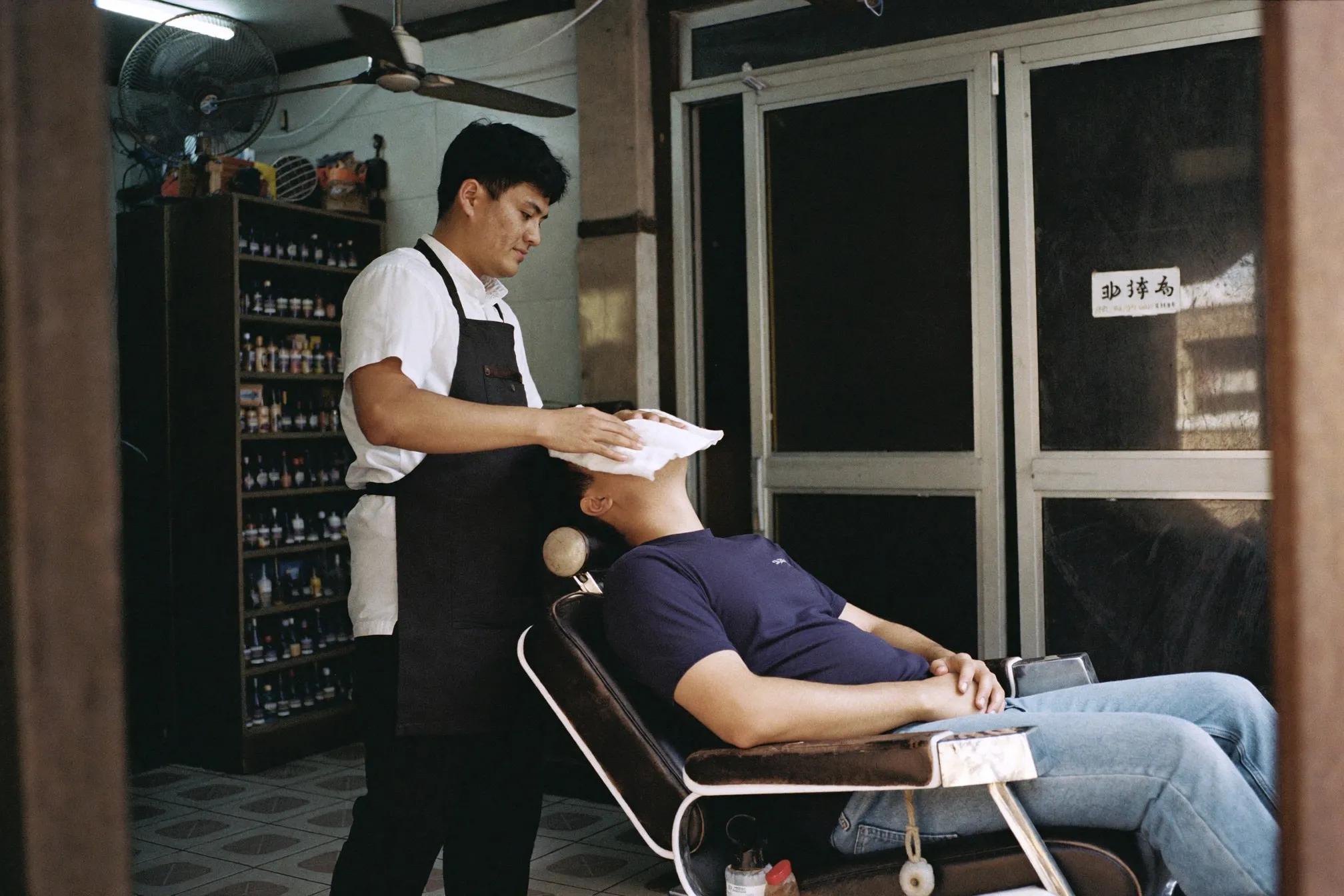
For the once-in-a-while proper shave, a neighbourhood barber charges around RM25 to RM40 in KL, more in Singapore, and includes the hot towel. Book it on the same visit as your haircut and you have solved two problems in one sitting.

Does the tropical climate change anything?
Humidity helps you soften the beard and works against you everywhere else. Sweat on a freshly shaved neck stings, aircon dries the skin you just scraped, and a damp bathroom blunts blades early. The main adjustment is timing: shave at night if your mornings end in a sweaty commute.
A few habits that matter more here than in a cold climate:
- Do not shave right before futsal or the gym. Salt in sweat on open micro-cuts is the sting you feel an hour later.
- Rinse your face after any sweaty commute. A proper face wash beats a swipe with a tissue at your desk.
- Shave the night before a wedding or an interview, not the morning of. Redness needs a few hours to settle.
- Freshly shaved skin burns faster, so do not skip sunscreen. Choose a formula that does not sting.
When should you see a doctor?
Book a GP or dermatologist if bumps stay painful beyond a week, fill with pus, spread across the neck, leave dark marks or raised scars, or return after every single shave. Persistent razor bumps and infected follicles have real treatments. Do not buy antibiotics over the counter for them.
Two things deserve extra caution on brown and deeper skin tones. Post-inflammatory hyperpigmentation, the dark patch left behind after inflammation clears, lasts far longer than the bump that caused it. And raised keloid scarring along the jaw and neck is harder to treat than to prevent. Both are arguments for seeing someone early rather than shaving through it for six months.
More on the skin pillar if your concerns run past the razor.
Tonight, do two things. Throw out the cartridge you have been nursing since the last long weekend, and run your palm up your neck to work out which way the hair actually grows. Tomorrow’s shave, with a fresh blade and the grain, will tell you within a day whether the problem was ever your skin.
Quick answers
Should you shave with or against the grain?
With the grain. Dermatology guidance is consistent on this: shaving in the direction the hair grows lowers your risk of irritation and ingrown hairs. Against the grain gets you a closer result and a rougher next morning. If you need extra closeness, go across the grain instead.
How often should you change your razor blade?
Every five to seven shaves is the usual dermatology advice, and sooner if the blade drags or tugs. Humidity here shortens blade life further. Keep the razor out of the shower, rinse it after use and stand it somewhere dry so it does not corrode between shaves.
How do you get rid of razor bumps on your neck?
Stop shaving that area for a few days and let the hairs grow out past the skin. Use a warm compress and a gentle exfoliant two or three times a week. Do not dig at the bumps with tweezers or a needle. If they fill with pus or keep returning, see a GP.
Is an electric shaver better for sensitive skin?
Often, yes. An electric foil or rotary shaver cuts hair slightly above the skin surface rather than below it, which reduces ingrown hairs and friction burn. The trade-off is a less close result and a higher upfront cost, roughly RM150 to RM500 depending on the model.