
Bad breath comes from bacteria in your mouth, mostly on the back of your tongue and in the gaps between your teeth. Clean those two places daily, keep your mouth wet, and the smell goes. The NHS is clear that if it survives a few weeks of proper cleaning, the next step is a dentist, not a stronger mouthwash.
Nobody tells you this. Your colleague won’t, your friends won’t, and the person across the table on a first date certainly won’t. You can have your body odour sorted, the right deodorant on, a good fragrance, and still lose the room from 40cm away.
Why does your breath smell?
Bacteria in your mouth break down food debris and dead cells, and release sulphur compounds as they go. Those compounds are the smell. The NHS lists gum disease, tooth decay, dry mouth, smoking and strong-flavoured food as the common causes, and MedlinePlus adds poor oral hygiene to the same list.
The single biggest reservoir is the back of your tongue. Its surface is rough, it traps debris, and a toothbrush aimed only at your teeth never touches it. That soft white or yellowish coating you see if you stick your tongue out and look properly is the thing you can smell.
After that, in rough order of how often it turns up:
- Gum disease. Gums that bleed when you brush are inflamed, not normal. The NHS treats bleeding gums as a reason to see a dentist. Inflamed gum pockets hold bacteria that brushing cannot reach.
- Dry mouth. Saliva rinses your mouth constantly. Take it away and the smell builds. That is morning breath in one sentence, and it is also why an eight-hour aircon office day ends worse than it started. Some medicines cause it too.
- Food. Garlic, onion, petai and durian get absorbed into your blood and leave through your lungs. Brushing does nothing. You wait it out.
- Smoking and vaping. Both dry the mouth and raise gum disease risk.
- Less common causes. Mayo Clinic points to sinus problems, throat conditions, chronic bronchitis and reflux. These matter when your mouth is genuinely clean and the smell stays.
The persistent local myth is that bad breath means “heaty” or a stomach problem. Occasionally reflux plays a part. Most of the time the answer is sitting on your tongue.
How do you test your own breath?
You cannot smell your own breath. Your nose stopped registering it years ago. Two tests get you close: lick the back of your clean wrist, wait ten seconds for the saliva to dry, then smell it. Or scrape the back of your tongue with a clean plastic spoon and smell the residue.
The wrist test tells you about the front of your mouth. The spoon test tells you about the source, and it is the harsher of the two. If the spoon comes back with a pale coating and a smell, you have found your problem and your fix in the same thirty seconds.
The other signal is behavioural, and you already know it. People angle their heads back slightly when you talk. Someone offers you gum twice. A dentist can measure this properly with a sulphide monitor, but you rarely need the machine to know the answer.
How do you get rid of bad breath?
Clean the back of your tongue daily, clean between your teeth daily, brush twice a day for two full minutes with fluoride toothpaste, and keep water going in. That is the NHS list, in roughly the order that moves the needle. Mouthwash comes last and replaces none of it.
| Fix | Time | Cost in MY / SG | How much it helps |
|---|---|---|---|
| Tongue cleaning, daily | 20 seconds | RM10 to RM25 / S$5 to S$12 | The most, for most men |
| Floss or interdental brushes, daily | 2 minutes | RM15 to RM30 / S$8 to S$15 | A lot, and it settles bleeding gums |
| Brushing twice, two minutes, fluoride | 4 minutes | RM12 to RM20 a tube | Baseline. Not optional |
| Water through the day | None | Free | Real, especially in aircon |
| Dental scaling every 6 to 12 months | One visit | RM80 to RM150 / S$60 to S$150 | Removes hardened plaque you cannot |
| Mouthwash | 30 seconds | RM15 to RM35 | Masks for an hour or two |
Two notes on that table. Interdental brushes beat floss for most adults because people give up on floss by day four, and the little brushes take twenty seconds for the whole mouth. If your gums bleed during the first week of cleaning between your teeth, that is usually inflammation settling down. If they are still bleeding after two weeks, book the dentist.
And water is doing more work here than it looks. In this climate you are dehydrated more often than you think, and a dry mouth at 4pm smells worse than the same mouth at 9am with identical hygiene.
Do tongue scrapers work?
Yes, and the effect is quick. The back of the tongue carries the densest bacterial coating in your mouth, and a scraper lifts that coating off rather than pushing it around, which is what a toothbrush does. Both the NHS and MedlinePlus list tongue cleaning as standard oral care, not a wellness fad.
The technique takes twenty seconds. Stick your tongue out, place the scraper as far back as you can manage, pull it forward with light pressure, rinse it under the tap, repeat four to six times until nothing comes off. Do it before breakfast, when the coating is thickest.
If you gag, start halfway along the tongue and work backwards over a week or two. Your reflex adapts. Never press hard enough to draw blood or leave the tongue sore; you are removing a film, not sanding a surface.
Stainless steel scrapers run around RM15 to RM25 at Watsons or Guardian, and plastic ones sell for less on Shopee. The cheap one works. If you own neither tonight, use your toothbrush on the tongue, then buy the scraper this week.
Mouthwash deserves a straight answer too. It masks the smell temporarily and does not remove the coating or the plaque producing it. Alcohol-based rinses dry your mouth out, which makes the following few hours worse, so pick alcohol-free if you use one at all. Sugar-free gum is the more honest quick fix before a meeting or a first date, because chewing drives saliva, and saliva is your actual defence.
What about teeth whitening?
Whitening changes the colour of your teeth and does nothing for your breath. Most of what men here call yellow teeth is surface staining from kopi O, teh tarik, tea and tobacco, and a dental scaling and polish removes a good share of it. Find out what your clean teeth look like before you spend on anything else.
The American Dental Association splits staining into two kinds, and the split decides everything:
| Extrinsic staining | Intrinsic staining | |
|---|---|---|
| Where it sits | On the enamel surface | Inside the tooth |
| Usual cause | Coffee, tea, red wine, tobacco | Ageing, thinning enamel, some medicines, old trauma |
| What shifts it | Scaling and polish, whitening toothpaste (modest) | A dentist-supervised option, if anything |
A dentist tells you which one you have in about a minute. Buying strips or a pen for intrinsic staining is money set on fire.
Two warnings that the marketing skips. Sensitivity is the common side effect of peroxide products, and they can irritate gums if the tray or strip sits wrong. And if you have crowns, veneers or fillings on your front teeth, they do not whiten. Bleach the teeth around them and you end up with a mismatched smile that looks worse than the one you started with. Untreated decay or gum disease makes the whole exercise painful and pointless.
Skip the internet remedies. Charcoal powder, baking soda mixed with lemon juice, and anything gritty you scrub with all strip enamel through acid or abrasion, and enamel does not grow back. Thinner enamel makes teeth look yellower, because the dentine underneath is naturally yellow. You get the opposite of what you paid for, permanently.
When should you see a dentist?
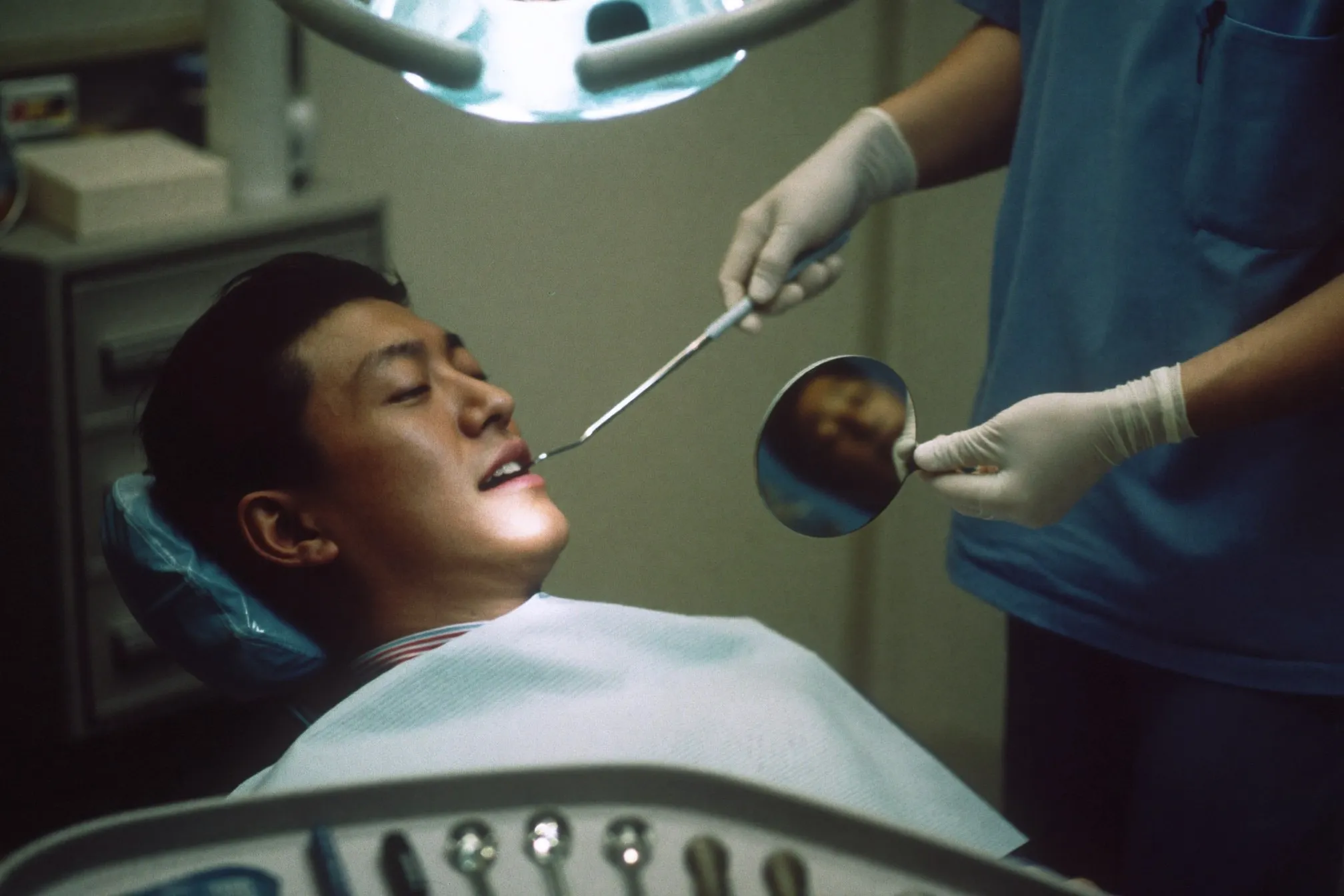
The NHS says see a dentist if bad breath continues after a few weeks of proper cleaning, and sooner if your gums are painful or bleeding, you have toothache, a tooth feels loose, or dentures no longer fit. Those signs point at gum disease or decay, and neither one resolves on its own.
Book it also if the smell returns within minutes of a thorough clean, if you have a dry mouth that water does not fix, or if you notice a bad smell from one side of your nose. If your dentist finds a clean, healthy mouth, that is useful information: the next conversation is with a GP about sinuses, reflux or a medicine you are on. Do not stop any prescribed medicine over dry mouth. Ask instead.
On cost and access, a scaling and polish at a private clinic in KL or PJ generally lands somewhere around RM80 to RM150, and in Singapore private clinics sit roughly in the S$60 to S$150 range, with polyclinics and government dental services cheaper. Prices move, so ring two clinics near you before you book. Once a year is the minimum worth defending in your calendar.
Do this tomorrow morning. Before your first kopi, scrape the back of your tongue and look at what comes off the scraper. That is your baseline, your diagnosis and your motivation in one go. Then put the dental check-up in your calendar for the same week, because the half of this you cannot fix at home is the half that matters. The rest of our fragrance and body guides cover everything from the neck down, including choosing a fragrance that no longer has to compete with your breath.
Quick answers
How do I get rid of bad breath fast?
Clean the back of your tongue, drink water, and chew sugar-free gum to get saliva moving. That buys you an hour or two. The lasting fix is daily tongue cleaning plus cleaning between your teeth, which is what the NHS recommends.
Does bad breath come from the stomach?
Rarely. Most bad breath starts in the mouth, from bacteria on the tongue and gum disease. Mayo Clinic notes that sinus problems, throat conditions and reflux can contribute, so if your mouth is clean and the smell persists, see a dentist first, then a GP.
Is a tongue scraper better than brushing your tongue?
A scraper lifts the coating off in one pass, while a toothbrush tends to move it around. Either is better than skipping the tongue. Scrapers cost around RM10 to RM25 at Watsons, Guardian or Shopee, and the technique takes about twenty seconds.
Will teeth whitening help my breath?
No. Whitening changes colour and does nothing to the bacteria causing the smell. Most yellowing here is surface staining from kopi, teh and tobacco, which a dental scaling removes. Get your teeth cleaned and assessed before you spend on any whitening product.