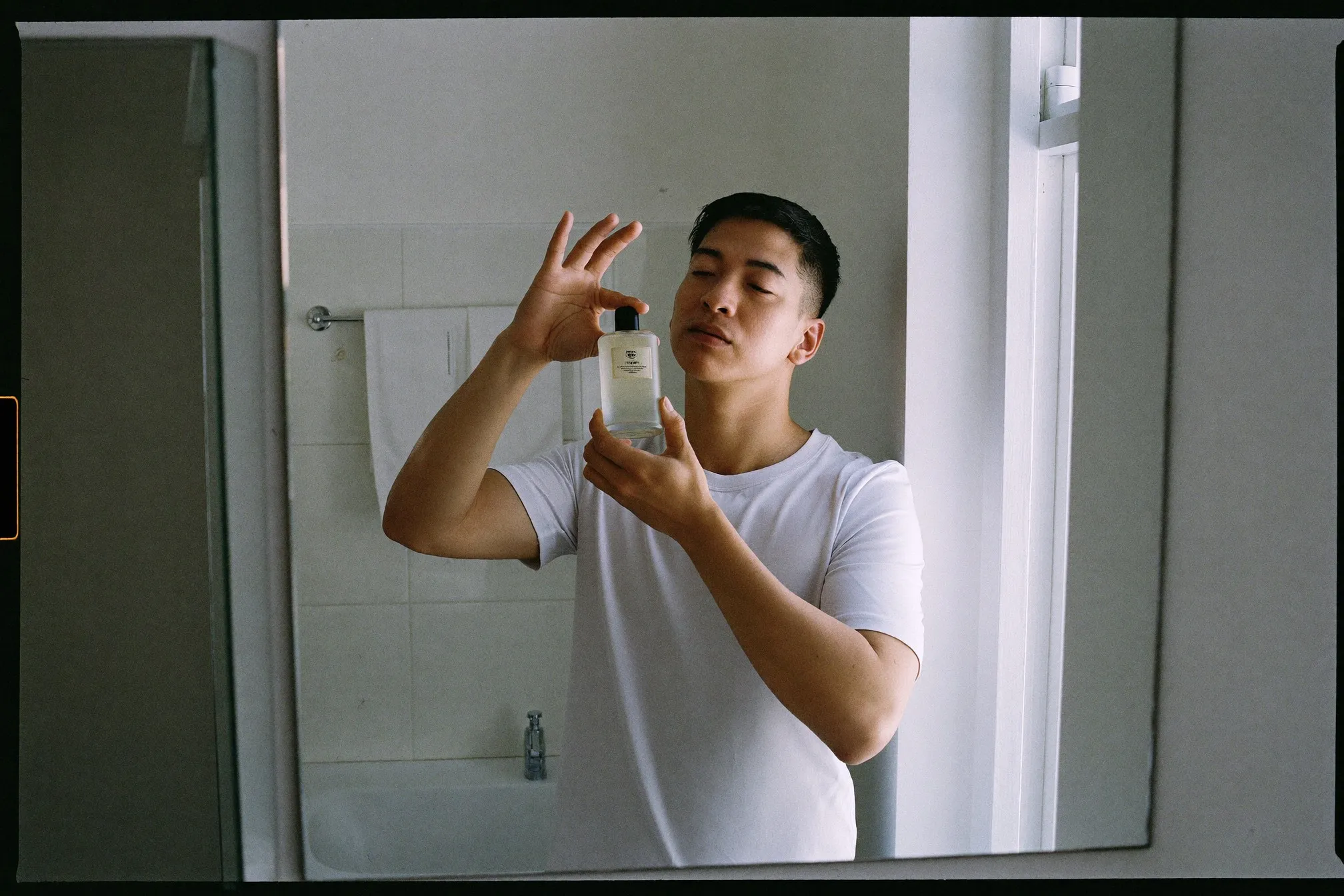
Eau de toilette and eau de parfum differ by one measurable thing: how much fragrance oil is dissolved in the alcohol. EDT runs roughly 5 to 15 percent oil, EDP roughly 15 to 20 percent, and parfum (sold as extrait or extrait de parfum) sits at 20 to 30 percent. More oil buys more hours on skin and more reach into the room, at a higher price per millilitre.
That is the whole mechanism. What you get at the counter instead is “richer” and “more luxurious”, which tells you nothing about whether the extra RM150 does anything for you at 33°C. So here is the version with numbers, plus the part nobody at the counter mentions: in this climate the cheaper concentration is often the better buy.
What do the labels on the box mean?
The label describes concentration, nothing else. It is not a quality tier and it is not regulated. Each house sets its own percentages, so one brand’s EDT can outmuscle another brand’s EDP. Use the table below as the industry convention, then trust your nose over the box.
| Label | Typical oil concentration | Rough hours on skin | Built for |
|---|---|---|---|
| Eau fraîche | 1 to 3% | 1 to 2 | Post-gym, post-shower |
| Eau de cologne (EDC) | 2 to 5% | 2 to 3 | Splashing on liberally in the heat |
| Eau de toilette (EDT) | 5 to 15% | 3 to 5 | Daytime, work, outdoors |
| Eau de parfum (EDP) | 15 to 20% | 5 to 8 | Evenings, aircon, events |
| Parfum / extrait | 20 to 30% | 8+ | Occasions, cold rooms, dabbing |
Note the width of those bands. A 14 percent EDT and a 16 percent EDP are near-identical liquids sold at a RM120 gap. The label is a marketing decision as much as a formulation one, which is why “Intense”, “Elixir” and “Parfum Intense” have appeared on shelves over the last decade. Those names sit outside the convention entirely. Treat them as “the house made a stronger version”, nothing more precise.
Find out what you own: the concentration is printed on the shoulder of the bottle or in small type under the name on the box. If it says nothing at all, it is almost always an EDT.
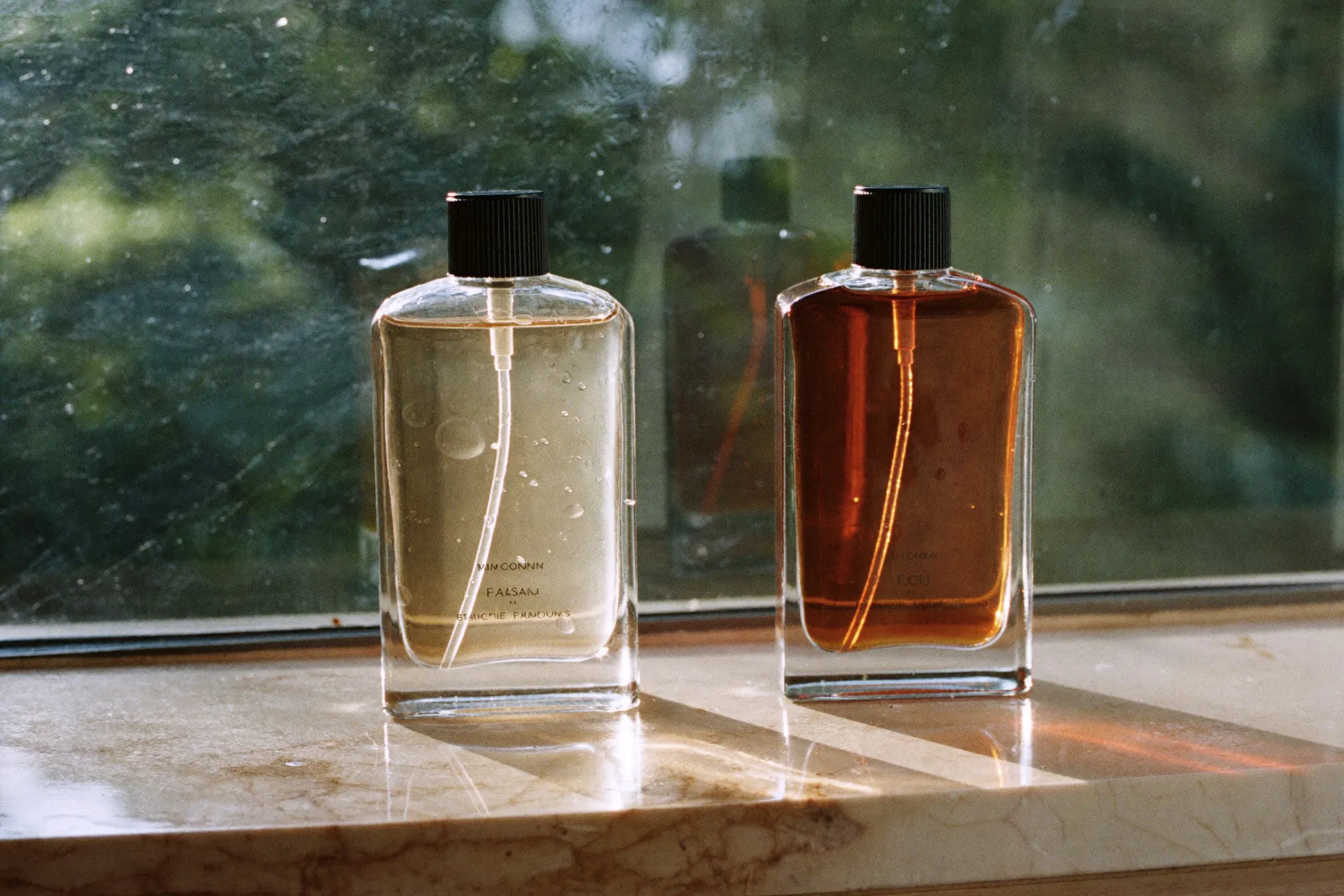
Does EDP last twice as long as EDT?
No. Doubling the oil does not double the hours, because longevity depends on which oils are in the mix. Citrus and aquatic notes evaporate fast at any concentration. Woods, amber, resins and musks cling for hours even in a light formula. A heavy sandalwood EDT outlasts a bright citrus EDP most days.
Two words worth separating here, because reviewers use them loosely. Longevity is how long you can still detect the scent on your own skin. Sillage (or projection) is how far it travels to the people around you. EDP wins on both, but it wins harder on sillage, and sillage is what gets you side-eye in a lift. An EDP does not just last longer in the aircon. It arrives before you do.
Your skin decides a lot of the rest. Dry skin sheds fragrance faster because there is less oil for the molecules to bind to, which is why a scent that lasts eight hours on your friend gives you four. Moisturised skin holds any concentration longer, and an unscented lotion underneath is the cheapest longevity upgrade available.
Which concentration works in this heat?
Buy EDT for daytime and EDP for evenings in Malaysia and Singapore. Warm, humid air amplifies projection, so a fragrance behaves roughly one concentration step stronger here than it does in a temperate country. The EDP that reads as elegant in a London autumn becomes a weather system in a Bangsar lift at noon.
Sweat is the other variable. Fragrance sprayed on skin that is already damp goes sour within the hour, and the stronger the concentration the more obvious the turn. This is the practical argument for EDT on workdays: you will sweat between the carpark and the lobby, and a lighter formula forgives it.
The trade-off is honest. Your EDT is gone by 3pm. Accept it, and carry a 5ml atomiser for the mid-afternoon respray rather than buying more concentration than the day can hold. Two sprays at 3pm cost you nothing and read far better than one heavy morning dose still radiating at dinner.
One exception: heavily air-conditioned days. If you go office to car to mall to restaurant and barely meet outdoor air, an EDP behaves the way it would in a cold climate and the extra depth earns its place. Read the day, not the season. We have one season.
Do the EDT and EDP versions of the same scent smell the same?
They rarely do. Houses reformulate rather than dilute, so the EDP is usually a different composition wearing the same name. As a pattern, EDT versions lean brighter and more citrus-forward at the top, while EDP versions carry more sweetness and weight in the base: vanilla, amber, tonka, deeper woods.
Sometimes the gap is small. Sometimes the EDP is a scent you would not have bought. This matters because of how most people shop: you like the EDT on a friend, you assume the EDP is the same thing with better stamina, you order the EDP online during a Shopee sale, and the bottle that arrives smells like a cousin of the one you wanted.
Test both on skin before you upgrade. One concentration on each wrist, then walk away for two hours, because the drydown is the part you live with. Paper strips tell you about the top notes and nothing else. Our three-bottle rotation guide covers the wider testing routine if you are building from scratch.
Is the EDP premium worth the money?
Run the cost per wear before you decide. A spray delivers about 0.1ml, so a 100ml bottle holds roughly 1,000 sprays. Say a scent sells for around RM350 as an EDT and around RM480 as an EDP, which is a typical gap at a mall counter.
| EDT | EDP | |
|---|---|---|
| Bottle, 100ml | ~RM350 | ~RM480 |
| Sprays you need | 4 | 2 to 3 |
| Wears per bottle | ~250 | ~330 to 500 |
| Cost per wear | ~RM1.40 | ~RM1.00 to RM1.45 |
The premium roughly evens out, because you use less. That kills the “EDP is a rip-off” argument and the “EDP is better value” argument in the same stroke. The decision is about behaviour, not price: pick the concentration that suits where you spend your hours.
Where the maths genuinely changes is parfum. A 50ml extrait at RM600 sounds absurd until you count two dabs per wear, which is 250 wears from half the bottle size, and the bottle stays good for years in a dark drawer. Buy it for the occasion slot and it becomes the cheapest bottle you own per year of ownership.

Which one for which occasion?
| Occasion | Concentration | Sprays | Notes |
|---|---|---|---|
| Office weekday | EDT | 2 to 3 | Respray at 3pm if the day runs long |
| Outdoor plans, futsal, errands | EDC or EDT | 2 | Or skip it and rely on your deodorant |
| Dinner or date | EDP | 2 | Chest and neck, not clothes |
| Wedding dinner, annual dinner, Raya, CNY | EDP or parfum | 2 | Ballroom aircon carries scent further than you think |
| Interview or first client meeting | EDT | 1 to 2 | Barely there beats memorable |
The unscented-deodorant rule applies at every row. A strongly perfumed antiperspirant fights your fragrance all day and usually wins, so sort that layer first with our deodorant guide. For the ballroom rows, the fragrance is the last thing you put on and the least important thing you are wearing, so get the wedding guest outfit sorted before you worry about concentration.
Do this next
Go and look at the bottle on your dresser. Find the concentration on the shoulder or the box, then match it against how you have been wearing it. If you own an EDP and spray four times before an office day, drop to two and see whether anyone notices, because they will only notice if you were overdoing it. If you own an EDT and it dies by lunch, buy a 5ml atomiser for RM15 and decant a top-up rather than a bigger bottle.
Then, next time you are near a counter, test the EDT and EDP of the same scent on opposite wrists and check them at hour four. That single test teaches you more than this article. Everything else in the fragrance and body hub waits until you have done it.
Quick answers
What is the difference between EDT and EDP?
Concentration of fragrance oil. Eau de toilette holds roughly 5 to 15 percent oil, eau de parfum roughly 15 to 20 percent. The EDP projects further, lasts a few hours longer and costs more for the same bottle size. Neither is higher quality by definition.
Does EDP last twice as long as EDT?
No. Doubling the oil does not double the hours. Expect three to five hours from an EDT and five to eight from an EDP on most skin, less in humid weather. Skin type, the note structure and how much you spray move that range more than the label does.
Should I buy EDT or EDP in Malaysia and Singapore?
EDT for daytime, office and anything outdoors, because heat amplifies whatever you spray. EDP for evening events and air-conditioned rooms where the extra depth reads as intentional. If you can only own one bottle and you work in an office, buy the EDT.
Is parfum or extrait worth the money?
Only if you wear fragrance often and want one bottle to last years. Parfum runs 20 to 30 percent oil, so two dabs replace four sprays and a 50ml bottle outlives most relationships. For occasional wearers, the money goes further on a second EDT.