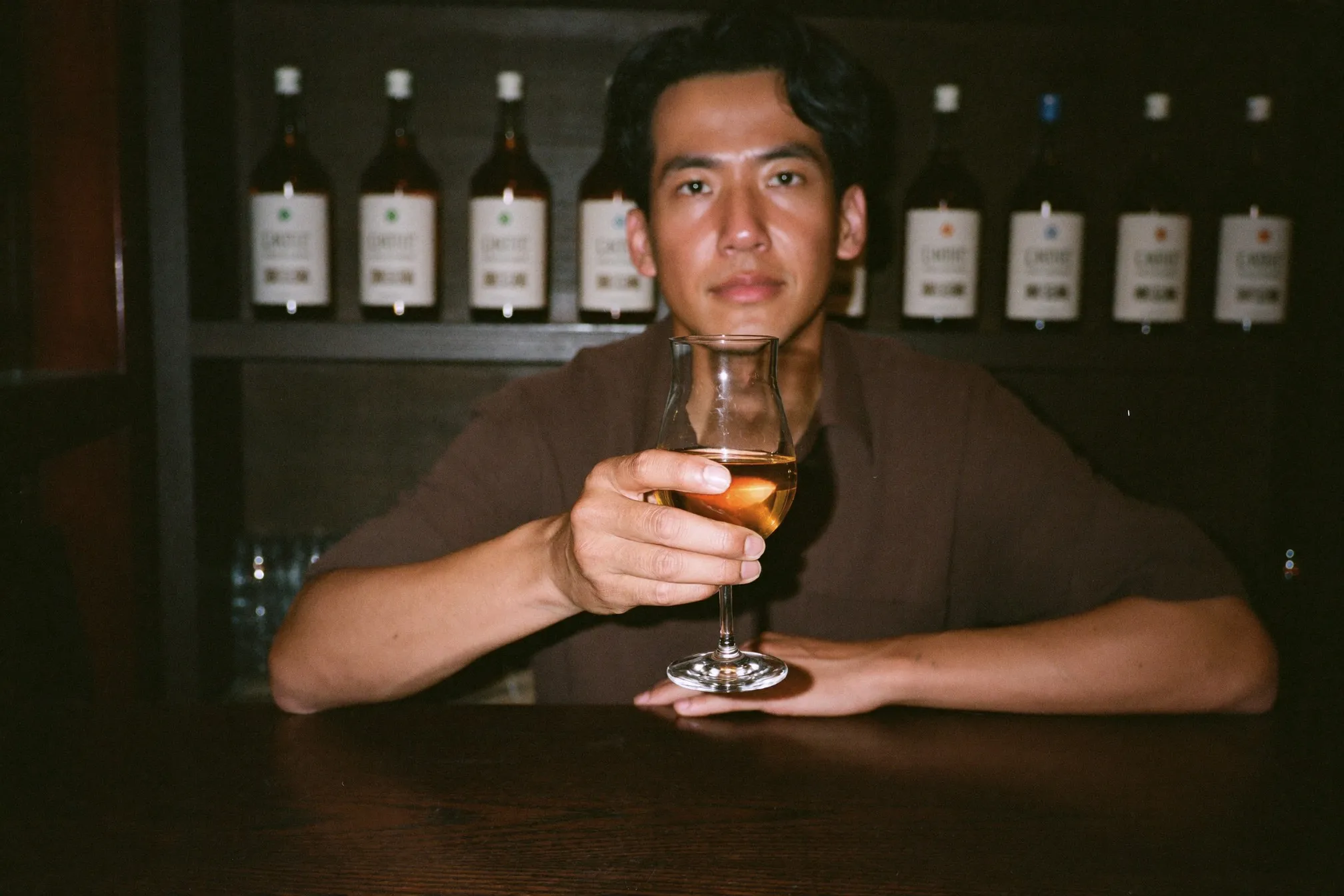
Start with a soft Speyside single malt or a well-made blend, drink it neat, then add two or three drops of water and taste it again. That is the entire beginner curriculum. Budget around RM250 in Malaysia or S$85 in Singapore for a first bottle worth the shelf space.
Whisky attracts more performance than any other drink. Someone will tell you that ice is a crime, that a bottle without an age statement is a scam, that you need a RM300 glass. Ignore all of it. The people who make whisky in Scotland add water to theirs at the distillery bench, and they drink it out of whatever is nearby.
What should your first bottle be?
Pick something fruity and unpeated. Speyside single malts and good blended malts taste of pear, honey and vanilla, which your palate already recognises. Peated Islay whisky tastes of bonfire and iodine, and it converts almost nobody on the first glass. Save it for month three.
| Bottle | Style | Tastes like | Rough price (MY / SG) |
|---|---|---|---|
| Glenfiddich 12 | Speyside single malt | Green apple, pear, light oak | RM250–300 / S$85–105 |
| Monkey Shoulder | Blended malt | Honey, vanilla, marmalade | RM200–260 / S$70–90 |
| Johnnie Walker Black | Blended Scotch | Dried fruit, a wisp of smoke | RM180–240 / S$65–85 |
| Buffalo Trace | Bourbon | Caramel, corn sweetness, spice | RM200–260 / S$70–90 |
| Kavalan Distillery Select | Taiwanese single malt | Mango, coconut, tropical fruit | RM350–450 / S$120–160 |
Prices move with duty changes and promotions, so treat those as the shape of the market rather than a quote. Shopee and Lazada run genuine liquor listings in Malaysia during sale weeks, and the Singapore supermarket chains discount the big blends often enough that paying full price is a choice.
One note on spelling before someone corrects you at a bar. Scotland, Japan and Canada spell it whisky. Ireland and the United States spell it whiskey. Nothing else changes.
Single malt vs blended: does the difference matter?
Single malt means malted barley from one distillery. Blended Scotch mixes malt whisky with lighter grain whisky from several distilleries. Neither is inherently better. Blends are built for consistency and cost less, single malts carry a house character you can learn to recognise.
| Category | What it means | Why you’d buy it |
|---|---|---|
| Single malt | Malted barley, one distillery | Distinct character, the enthusiast route |
| Blended malt | Malts from several distilleries, no grain | Malt flavour at a friendlier price |
| Blended Scotch | Malt plus grain whisky | Smooth, mixes well, the highball workhorse |
| Bourbon | Mostly corn, new charred oak, USA | Sweet and forgiving, good entry point |
| Rye | Mostly rye grain | Dry and peppery, brilliant in cocktails |
The age statement on the label refers to the youngest whisky in the bottle, not the average. A 12-year-old is a reliable marker of decent stock, though plenty of no-age-statement bottles taste better than older ones from a lazy distillery. Cask type does more work than age anyway: ex-bourbon barrels give vanilla and citrus, ex-sherry casks give raisin and Christmas cake.
How do you actually drink it?
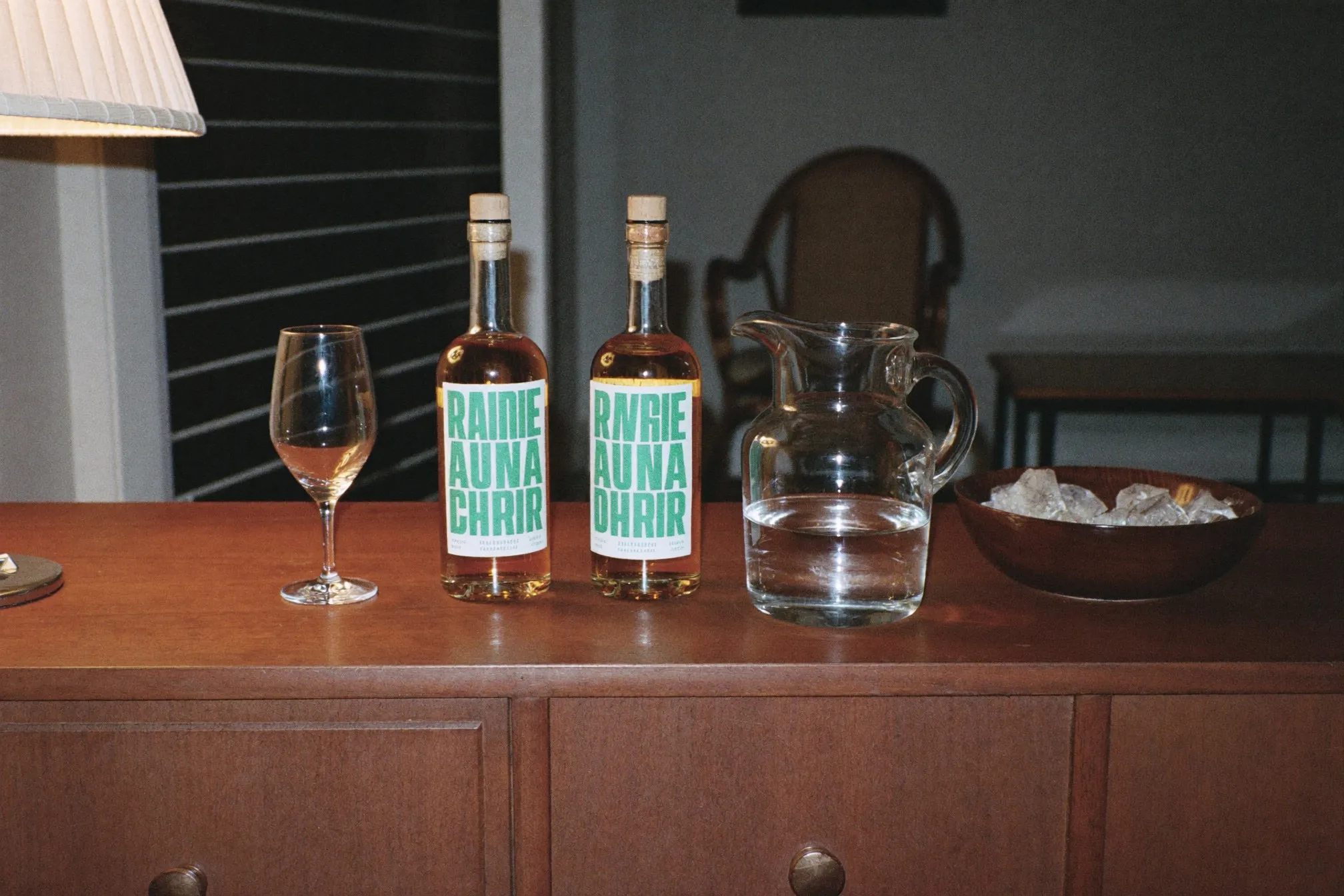
Pour about 30ml. Taste it neat, then add water drop by drop until the alcohol stops stinging your nose. That is your bottle’s sweet spot, and it will differ for every whisky you own. Ice, soda and green tea are all legitimate after that.
A tulip-shaped glass funnels aroma toward your nose and costs RM40 to RM60 at any decent kitchen shop. A small wine glass does 80% of the same job. The heavy square tumbler that came in your gift set looks the part and traps almost nothing, which is why nobody at a distillery uses one.
Four ways to serve it, all defensible:
- Neat. Room temperature, no additions. The reference point for everything else.
- A few drops of water. Opens the aroma and softens the burn. Standard practice among people who taste for a living.
- Over one big ice cube. A large cube melts slower than four small ones. In 33°C weather this is a reasonable trade.
- Highball. Two fingers of blended whisky, cold soda, plenty of ice, a lemon twist. The Japanese perfected this and it remains the best long drink you can make at home for under RM10 a glass.
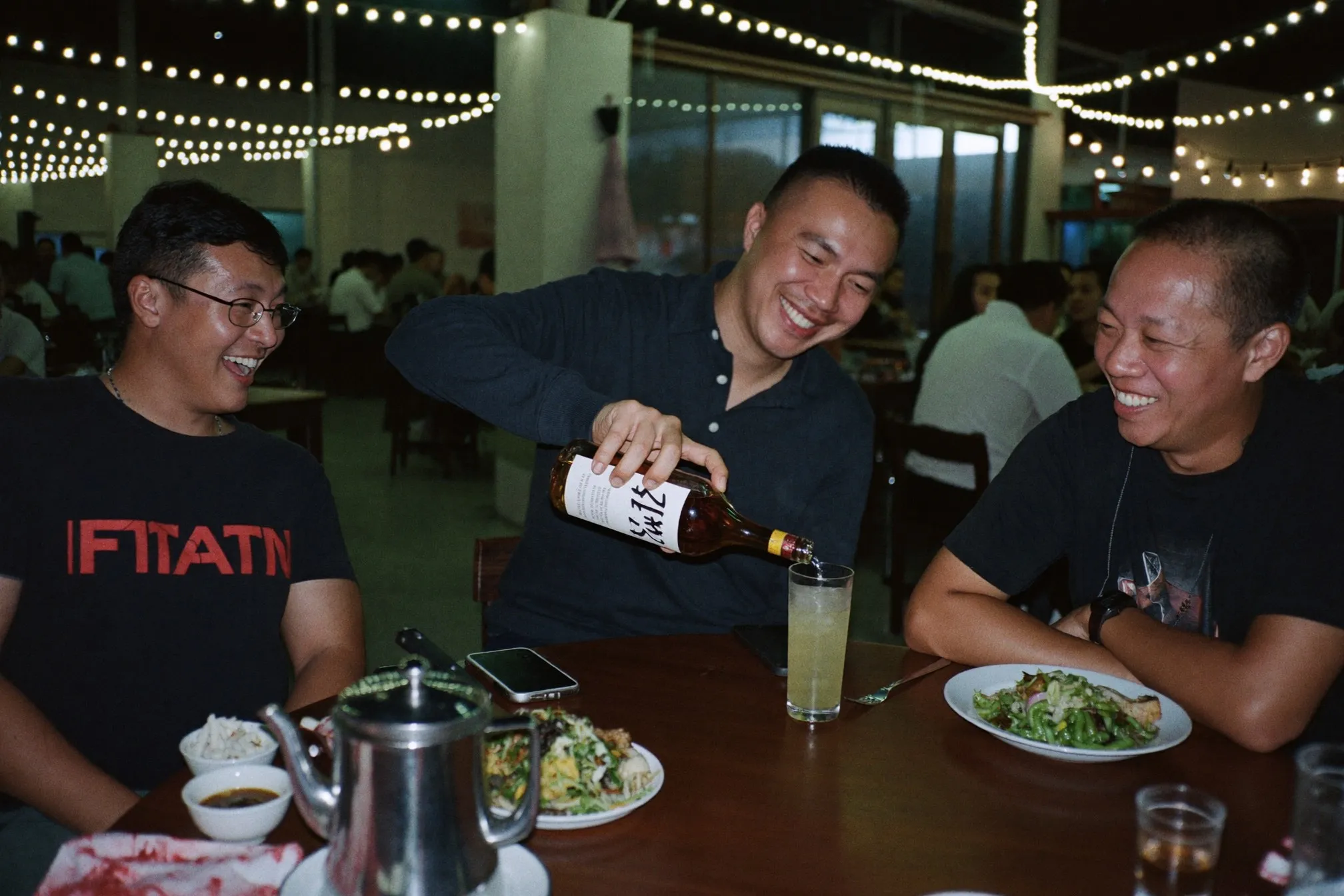
Then there is the pour you will meet at a tai chow table in KL or a wedding dinner in Singapore: whisky in a tall glass with ice and cold Chinese tea, topped up by whoever is nearest the bottle, drained on every yum seng. That is a social ritual rather than a tasting, and treating it as one is fine. Just know that the top-ups arrive faster than you are tracking.
What does whisky cost here, and why so much?
Malaysia charges among the highest alcohol excise duties in the world, so a bottle that sells for £30 in Britain can land near RM300 in a KL supermarket. Singapore taxes spirits heavily too, though the gap between shelf and duty-free is narrower. Neither market rewards impulse buying.
Where the price does drop:
- Langkawi and Labuan. Duty-free islands, and the difference on a litre bottle covers a decent chunk of the ferry ticket.
- Airport duty-free. Changi and KLIA both price the mainstream single malts well below town.
- Allowances change. Both countries have revised traveller alcohol concessions in recent years, and the rules differ depending on where you flew in from and how long you were away. Check the customs page before you build a trip around it.
In bars, a dram of entry-level single malt runs RM35 to RM60 in KL and S$18 to S$30 in Singapore before service charge and tax. Rare bottles climb fast. A good bar prices by the 30ml pour and will tell you the price without you having to ask twice.
How do you taste it without sounding ridiculous?
Nose it with your mouth slightly open so the alcohol vapour has somewhere to go. Take a small sip and let it sit on your tongue for a beat. Swallow, then notice what stays behind, which is the finish. Three plain words are a complete tasting note.
Tasting vocabulary is memory matching, nothing more. When someone says a whisky smells like banana bread, they are not being poetic, they are naming the closest thing in their head. Yours might be pisang goreng. That is a better note because it is true.
Two habits worth building. First, always taste a second whisky next to the first, since contrast teaches faster than any single glass. Second, write one line per bottle in your phone. Six months of that and you will know your own palate better than any shop assistant does.
Where do you drink it in KL and Singapore?
Whisky-forward bars cluster in a few streets. In KL, look around Changkat Bukit Bintang, the hidden-door places off Chinatown, and the hotel bars in Bangsar and the city centre. In Singapore, Keong Saik, Amoy Street, Duxton Hill and Ann Siang Hill hold most of the serious backbars.
Ordering is easier than the shelf suggests. Tell the bartender what you liked last, or describe a direction: sweeter, drier, smokier, nothing smoky at all. A decent bartender will pour you a small taste before committing you to a RM60 dram, and the ones who do that are the ones to go back to.
A 30ml dram at 40% carries roughly the alcohol of a half pint of beer, and it disappears a lot faster than a half pint does. Two drams across an evening, with a glass of water between them, is also the point where your palate stops reading detail, so pacing and pleasure happen to want the same thing. Malaysia lowered its legal blood alcohol limit in 2020 and stiffened the penalties, and Singapore was never soft on it. Grab costs less than a lawyer.
The beginner mistakes that cost money
- Starting with heavy peat. An Islay bottle bought on reputation sits unopened for two years. Taste peat at a bar first.
- Buying on age alone. An 18-year-old from a distillery you dislike is an expensive way to learn that.
- Storing bottles on their side. High-proof spirit degrades the cork. Whisky stands upright, away from sunlight.
- Nursing a half-empty bottle for years. Air dulls it. Once a bottle drops below a third, finish it within a few months or decant it into a smaller one.
- Treating bottles as investments. The secondary market is a specialist’s game, and the entry fee is bottles you never drink.
Read our watch buying guide for every budget if this is turning into a general appetite for well-made objects, or the rest of the culture desk for the wider rabbit holes. A whisky bar also makes a strong second-date venue, which we cover in our first date ideas piece, and a single good bottle earns its place on the shelf of a first apartment in KL.
Next payday, buy one bottle from the table above and a second one that sounds different from it. Pour both, side by side, 30ml each, and add water to the second glass only. You will learn more in those ten minutes than in a month of reading tasting notes, including this one.
Quick answers
What is the best whisky for a beginner?
A soft Speyside single malt like Glenfiddich 12 or a smooth blended malt like Monkey Shoulder. Both taste of orchard fruit and honey with no smoke to fight through. Expect around RM250 to RM300 in Malaysia and S$75 to S$100 in Singapore.
Should I add water or ice to whisky?
Try it neat first, then add two or three drops of water and taste again. Water lowers the alcohol burn and releases aromas the spirit was holding back. Ice does the same thing while numbing the flavour, which is a fair trade in this heat.
Is single malt better than blended whisky?
No, it is different. Single malt comes from one distillery and carries a distinct house character. Blends mix malt and grain whisky from several distilleries for consistency and smoothness. A good blend beats a mediocre malt, and blends usually cost less.
Why is whisky so expensive in Malaysia?
Malaysia levies some of the highest alcohol excise duties in the world, so a bottle here can cost roughly double its UK shelf price. Singapore taxes spirits too, though less punishingly. Langkawi, Labuan and airport duty-free shops are where the price gap shows.